Harper Lewis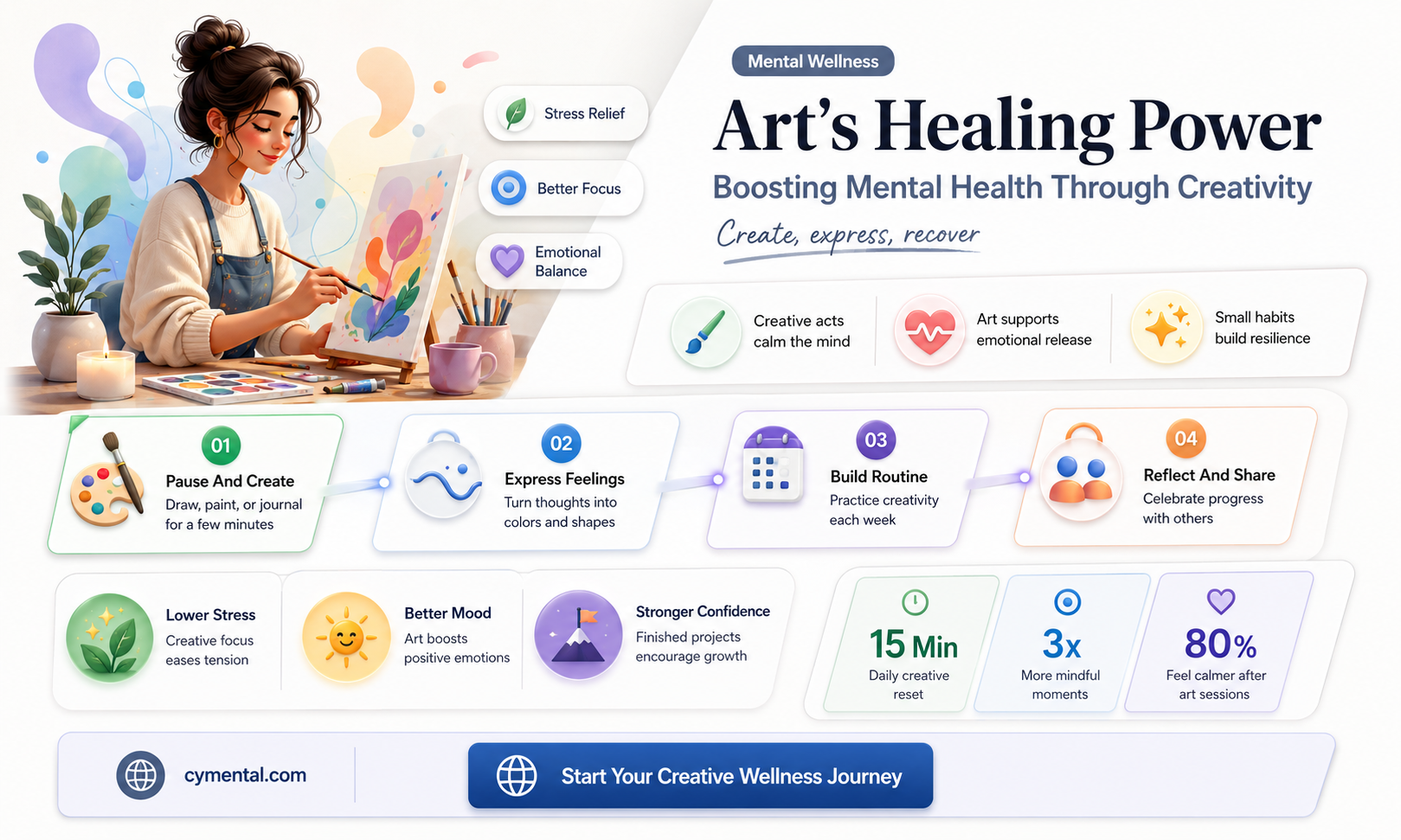
Art has long been recognized as a powerful tool for improving mental health, offering a unique and expressive outlet for individuals to explore and process their emotions. Engaging in creative activities, such as painting, drawing, sculpting, or even journaling, can reduce stress, anxiety, and depression by providing a sense of focus and mindfulness. The act of creating art allows people to communicate feelings that may be difficult to put into words, fostering self-awareness and emotional release. Additionally, art therapy, guided by trained professionals, can help individuals address trauma, build resilience, and develop coping strategies. Whether through personal expression or structured therapeutic practices, art has the ability to heal, inspire, and promote overall well-being.
| Characteristics | Values |
|---|---|
| Stress Reduction | Engaging in art activities like painting, drawing, or sculpting can lower cortisol levels, promoting relaxation and reducing stress. |
| Emotional Expression | Art provides a safe outlet for expressing complex emotions, helping individuals process feelings they may struggle to articulate verbally. |
| Improved Mood | Creating or viewing art stimulates the release of dopamine, enhancing mood and fostering a sense of accomplishment. |
| Enhanced Self-Esteem | Completing artistic projects boosts confidence and self-worth, particularly in individuals struggling with self-esteem issues. |
| Cognitive Stimulation | Art activities improve focus, problem-solving skills, and memory, benefiting overall cognitive function. |
| Mindfulness and Presence | Engaging in art encourages mindfulness, helping individuals stay present and reduce anxiety about the past or future. |
| Social Connection | Participating in group art therapy or community art projects fosters social interaction and reduces feelings of isolation. |
| Trauma Processing | Art therapy can help individuals process and heal from traumatic experiences in a non-verbal, symbolic way. |
| Coping Mechanism | Art serves as a healthy coping strategy for managing symptoms of mental health conditions like depression or anxiety. |
| Sense of Purpose | Engaging in creative activities can provide a sense of meaning and purpose, especially for those feeling lost or directionless. |
| Non-Verbal Communication | Art allows individuals to communicate thoughts and feelings without relying on words, which can be particularly beneficial for those who find verbal expression challenging. |
| Resilience Building | Regular artistic practice can build emotional resilience, helping individuals better cope with life’s challenges. |
| Improved Sleep | Engaging in calming art activities before bed can improve sleep quality by reducing anxiety and promoting relaxation. |
| Cultural and Personal Identity | Art can help individuals explore and affirm their cultural or personal identity, fostering a stronger sense of self. |
| Accessible Therapy | Art therapy is accessible to people of all ages and abilities, making it a versatile tool for mental health support. |
Explore related products

$8.5 $19.99

$18.36 $36.99


What You'll Learn

Creative Expression as Therapy
Art has long been recognized as a powerful tool for self-expression, but its therapeutic potential extends far beyond mere creativity. Engaging in artistic activities can significantly improve mental health by providing an outlet for emotions, reducing stress, and fostering a sense of accomplishment. Whether through painting, writing, music, or dance, creative expression allows individuals to process complex feelings in a non-verbal, often intuitive way. For instance, a study published in *Art Therapy: Journal of the American Art Therapy Association* found that just 45 minutes of art-making can reduce cortisol levels, the body’s primary stress hormone, by up to 75%. This physiological response underscores the immediate benefits of creative engagement.
Consider the act of journaling as a form of creative therapy. Writing about one’s thoughts and emotions for 20 minutes a day, three to five times a week, has been shown to improve mood, reduce symptoms of depression, and even boost immune function. This practice, known as expressive writing, encourages individuals to confront and articulate their feelings, often leading to greater emotional clarity. For those who find traditional talk therapy intimidating, journaling offers a private, low-pressure alternative. Pairing this with visual art, such as sketching or collage-making, can further enhance its therapeutic effects by engaging both hemispheres of the brain.
While creative expression is accessible to all ages, its application varies across different life stages. For children, art therapy can help them communicate emotions they lack the vocabulary to express verbally. Simple activities like drawing or molding clay allow them to externalize fears, anger, or confusion in a safe and controlled environment. Adolescents, who often struggle with identity and peer pressure, may find solace in music or photography, mediums that offer both self-expression and a sense of belonging. Adults, particularly those dealing with trauma or chronic stress, can benefit from structured art programs that combine mindfulness techniques with creative processes, such as Zentangle or mandala drawing.
However, it’s important to approach creative therapy with realistic expectations. While art can be profoundly healing, it is not a substitute for professional mental health treatment. Individuals with severe conditions like PTSD or bipolar disorder should integrate creative expression into a broader treatment plan, not rely on it exclusively. Additionally, not all forms of art will resonate with everyone; experimentation is key. For example, someone who finds painting frustrating might discover a passion for pottery or digital design. The goal is to find a medium that feels authentic and enjoyable, as forced creativity can negate its therapeutic benefits.
Incorporating creative expression into daily life doesn’t require artistic talent or expensive materials. Start small: doodle in a notebook, hum a tune while commuting, or rearrange your living space to reflect your mood. Consistency is more important than perfection. For those seeking structure, online platforms like Skillshare or local community centers often offer affordable art classes tailored to beginners. Group settings can also provide social support, amplifying the therapeutic impact. Ultimately, creative expression as therapy is about reclaiming agency over one’s emotional landscape, one brushstroke, note, or word at a time.
Healing Hooves: How Horses Boost Mental Health and Well-being
You may want to see also
Explore related products


$7.96 $9.95


Art Reduces Stress and Anxiety
Engaging in art, whether through creation or observation, triggers physiological changes that counteract stress and anxiety. Studies show that just 45 minutes of art-making can significantly lower cortisol levels, the body’s primary stress hormone. This effect is observed across age groups, from children to seniors, making art a universally accessible tool for relaxation. For instance, coloring in structured patterns or painting with calming colors like blues and greens can induce a meditative state, slowing heart rate and reducing mental tension. Even passive engagement, such as visiting an art gallery or viewing nature-inspired artwork, has been shown to lower stress markers in as little as 10 minutes.
Consider the process of creating art as a form of mindfulness in action. When focused on brushstrokes, sculpting clay, or arranging collage pieces, the mind shifts away from anxious thoughts and into the present moment. This cognitive redirection is particularly effective for individuals with generalized anxiety disorder, as it interrupts the cycle of rumination. Art therapists often recommend journaling through doodles or abstract painting as a daily practice, emphasizing that technical skill is irrelevant—the goal is emotional release, not aesthetic perfection. For those hesitant to start, beginning with simple materials like pencil and paper or digital drawing apps can lower the barrier to entry.
Comparing art to traditional stress-relief methods highlights its unique advantages. While exercise releases endorphins and meditation calms the mind, art combines sensory engagement, emotional expression, and cognitive focus in a single activity. For example, knitting or pottery engages tactile senses, while watercolor painting encourages fluid, non-judgmental creativity. Unlike structured activities, art allows for spontaneous expression, which is particularly beneficial for individuals who struggle with verbalizing emotions. Research from the American Art Therapy Association suggests that combining art with deep breathing exercises amplifies its stress-reducing effects, making it a versatile tool for holistic well-being.
To integrate art into a stress-reduction routine, start small and prioritize consistency. Dedicate 15–20 minutes daily to a creative activity, such as sketching, journaling, or even rearranging found objects into a mini-installation. For those with busy schedules, keeping a portable sketchbook or digital art app handy allows for spontaneous creation during breaks. Group activities, like community painting sessions or collaborative murals, add a social element that further reduces anxiety by fostering connection. Remember, the goal is not to produce a masterpiece but to engage in a process that feels grounding and enjoyable. Over time, this practice can build emotional resilience, transforming art from a hobby into a vital self-care strategy.
Overcoming Mental Blocks: Strategies to Support Athletes' Performance and Resilience
You may want to see also
Explore related products


Boosts Emotional Awareness
Art serves as a mirror to the soul, reflecting emotions that often lie dormant or unacknowledged. Through the act of creating or engaging with art, individuals can unearth feelings they might not have the words to express. A study published in *Art Therapy: Journal of the American Art Therapy Association* found that participants who engaged in art-making experienced heightened emotional clarity, identifying emotions like grief, joy, or anger with greater precision. This process isn’t limited to visual art—writing poetry, composing music, or even interpreting a painting can unlock emotional layers, fostering a deeper understanding of one’s inner world.
Consider this practical exercise: set aside 20 minutes daily to sketch or paint without judgment. Use colors and shapes intuitively, allowing your emotions to guide the process. Afterward, reflect on the piece. What emotions does it evoke? Is there a recurring theme or symbol? This practice, akin to emotional journaling, helps bypass the logical mind, tapping into the subconscious. For children, this can be particularly effective; a 2018 study in *The Arts in Psychotherapy* noted that art-based interventions improved emotional regulation in kids aged 8–12, reducing anxiety and increasing self-expression.
The power of art in boosting emotional awareness lies in its ability to bridge the gap between feeling and understanding. Unlike verbal communication, which relies on language, art transcends linguistic barriers, making it accessible to people of all ages and backgrounds. For instance, a teenager struggling with anger might find solace in sculpting clay, physically molding their frustration into something tangible. Similarly, an elderly individual grappling with loneliness could find comfort in watercolor painting, using soft hues to express their melancholy. The medium becomes a safe space for emotional exploration, free from the constraints of words.
However, it’s crucial to approach this practice with mindfulness. Art can sometimes unearth intense emotions, so pairing it with grounding techniques—like deep breathing or guided meditation—can prevent overwhelm. For those new to art therapy, starting small is key. Begin with simple activities like doodling or collage-making, gradually moving to more complex forms as emotional resilience builds. Group art sessions can also provide a supportive environment, though individual preferences vary; some may find solitude more conducive to introspection.
In conclusion, art isn’t just a creative outlet—it’s a tool for emotional excavation. By engaging with it regularly, individuals can develop a heightened sense of self-awareness, turning abstract feelings into recognizable patterns. Whether through painting, sculpting, or even digital art, the act of creation becomes a dialogue with one’s emotions, fostering clarity and healing. As the saying goes, “Art enables us to find ourselves and lose ourselves at the same time.” In this duality lies its transformative power.
Music's Power: Boosting Middle Schoolers' Mental Health and Well-Being
You may want to see also
Explore related products



Enhances Self-Esteem and Confidence
Artistic expression serves as a mirror, reflecting one’s abilities and creativity back to the creator in tangible form. Completing a painting, sculpting a figure, or even journaling with doodles provides concrete evidence of accomplishment. For individuals struggling with self-doubt, these finished pieces act as physical proof of capability, countering internal narratives of inadequacy. Unlike abstract achievements, art offers immediate, visible results that can be shared, admired, or simply held as personal triumphs.
Consider the process of learning a new technique, such as watercolor blending or pottery wheel throwing. Each small mastery—a smooth gradient, a symmetrical bowl—builds confidence incrementally. Studies suggest that engaging in structured art activities for as little as 20 minutes daily can foster a sense of progression, particularly in adolescents and young adults. The key lies in setting achievable goals, like completing a sketchbook page or mastering a single brushstroke, to accumulate a series of "wins" that reinforce self-worth.
However, the boost in confidence isn’t solely tied to technical skill. Art therapy often emphasizes the act of creation over the outcome, encouraging participants to embrace imperfections as part of their unique voice. For instance, a child’s abstract painting or an elder’s experimental collage can be celebrated for their originality, shifting focus from "perfection" to "expression." This reframing helps individuals of all ages view themselves as capable creators, not just critics of their own work.
Practical integration of art into daily life can amplify these benefits. Keeping a dedicated art journal allows for consistent practice and reflection, while joining community art groups provides external validation through shared appreciation. For those hesitant to start, beginning with simple prompts—like drawing a daily emotion or collaging magazine clippings—lowers the barrier to entry. Over time, these practices cultivate not just artistic skill, but a deeper belief in one’s ability to create and contribute meaningfully.
Reading the Bible: A Path to Mental Health and Healing?
You may want to see also
Explore related products



Promotes Mindfulness and Focus
Engaging in art demands presence—a deliberate focus on the task at hand that naturally cultivates mindfulness. Whether it’s the rhythmic stroke of a brush, the precision of sculpting clay, or the deliberate choice of a color, artistic activities anchor the mind in the moment. This immersion disrupts the cycle of rumination, a common trigger for anxiety and depression, by redirecting attention away from intrusive thoughts and toward the sensory experience of creation. Studies show that even 20 minutes of focused art-making can significantly reduce cortisol levels, the body’s primary stress hormone, offering a physiological benefit akin to meditation.
Consider the practice of Zentangle, a structured art form that combines repetitive patterns with deliberate focus. Unlike freeform doodling, Zentangle follows a step-by-step process that requires concentration yet remains accessible to all skill levels. Participants are instructed to work on small 3.5-inch squares, completing a piece in 15–30 minutes. This constrained format encourages deep focus while preventing overwhelm, making it an ideal tool for beginners or those with short attention spans. Educators and therapists often recommend this technique for adolescents and adults alike, as it fosters mindfulness without the pressure of creating a "perfect" piece.
For those seeking a more dynamic approach, the Japanese art of *kintsugi*—repairing broken pottery with gold-laced lacquer—offers a metaphorical lesson in focus and acceptance. The process demands meticulous attention to detail, from reassembling shards to applying the resin. Practitioners often report a heightened sense of clarity as they work, their minds fully absorbed in the task. This method is particularly effective for individuals processing grief or trauma, as it encourages mindfulness while reframing brokenness as an opportunity for beauty. Workshops typically span 2–3 hours, providing ample time for immersion without overstimulation.
To integrate art-based mindfulness into daily life, start small. Dedicate 10 minutes each morning to sketching a single object in your environment, focusing on its textures and contours. Alternatively, try a digital detox by replacing screen time with coloring—adult coloring books with intricate designs are proven to lower heart rate and improve focus within 5–10 minutes of use. For children, structured activities like origami or beadwork not only enhance concentration but also develop fine motor skills. Pair these practices with deep breathing for amplified benefits, inhaling for 4 seconds, holding for 4, and exhaling for 6 to synchronize creativity with calm.
The key to leveraging art for mindfulness lies in consistency, not complexity. Whether through painting, pottery, or even mindful photography, the act of creating engages the brain’s prefrontal cortex, enhancing focus while quieting the amygdala’s stress response. Unlike passive activities, art demands active participation, making it a powerful tool for grounding. Incorporate it into your routine as you would exercise or sleep—a non-negotiable investment in mental clarity. After all, in a world that fragments attention, art offers a rare invitation to be fully present, one stroke, fold, or stitch at a time.
Exercise Boosts Elderly Mental Health: Benefits and Strategies for Wellbeing
You may want to see also
Frequently asked questions
Creating art, whether through painting, drawing, or sculpting, activates the brain’s reward system, releasing dopamine, which reduces stress and anxiety. It also provides a healthy distraction from negative thoughts and allows for emotional expression in a non-verbal way.
Yes, viewing art can improve mental well-being by evoking positive emotions, reducing cortisol levels (the stress hormone), and promoting relaxation. It can also inspire reflection and connection, fostering a sense of calm and perspective.
Art therapy is a recognized form of therapy that can be highly effective for treating depression and other mental health conditions. It helps individuals process emotions, improve self-awareness, and develop coping strategies through creative expression, often complementing traditional talk therapy.