Lucas Bennett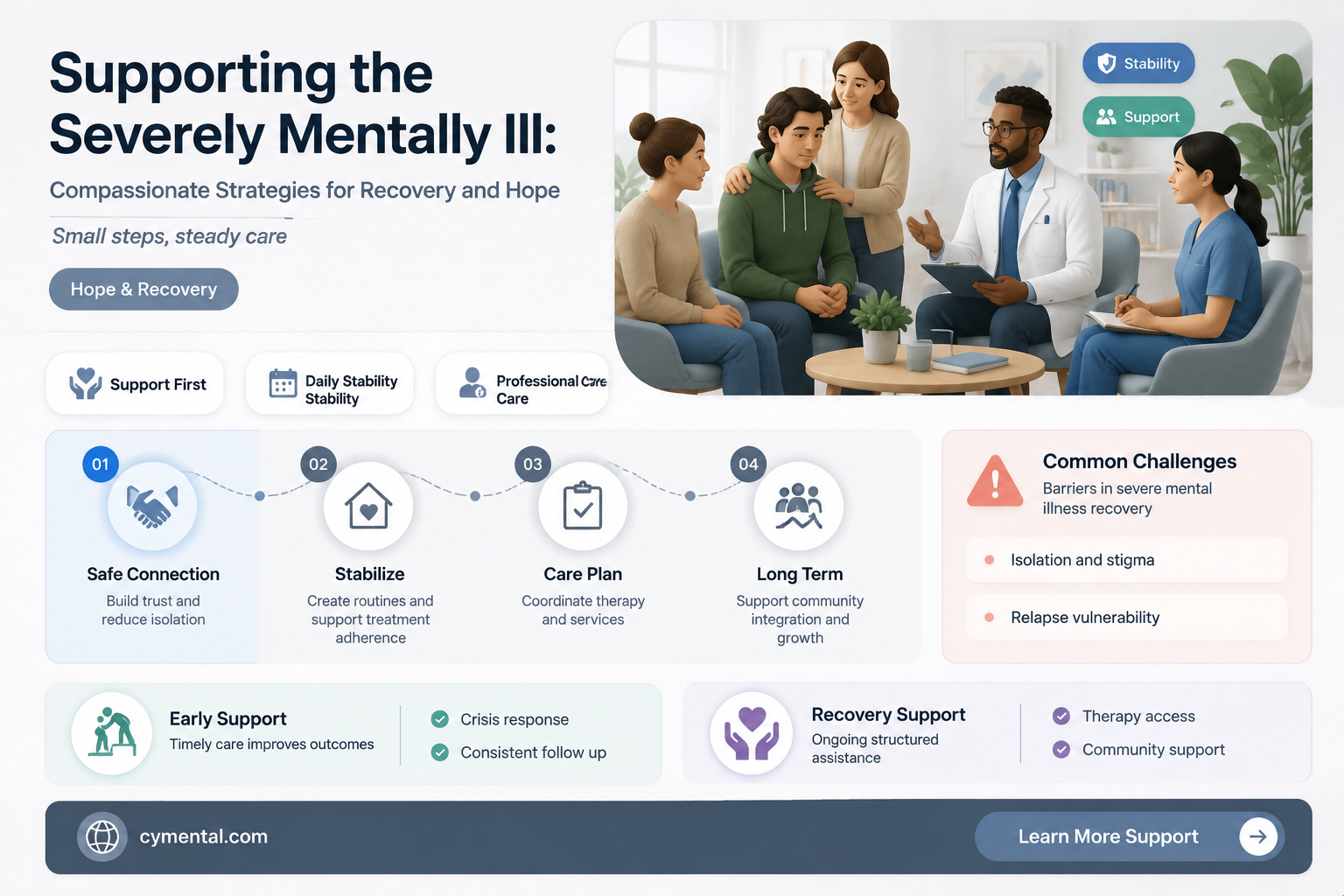
Helping individuals with severe mental illness requires a multifaceted approach that addresses their complex needs with compassion, understanding, and evidence-based interventions. These individuals often face significant challenges, including social isolation, stigma, and limited access to resources, which can exacerbate their conditions. Effective support systems must include accessible mental health services, such as therapy, medication management, and crisis intervention, alongside community-based programs that foster social inclusion and vocational opportunities. Family and caregiver education is also crucial, as they play a vital role in providing ongoing support. Additionally, policy changes are needed to ensure adequate funding, reduce barriers to care, and promote public awareness to combat stigma. By combining clinical treatment, community engagement, and systemic support, we can improve outcomes and quality of life for those living with severe mental illness.
| Characteristics | Values |
|---|---|
| Early Intervention | Identifying and treating severe mental illness early can significantly improve outcomes. This includes prompt access to mental health services, crisis intervention teams, and early psychosis programs. |
| Integrated Care | Coordinating physical and mental healthcare services to address the whole person. This involves collaboration between primary care providers, psychiatrists, therapists, and social workers. |
| Evidence-Based Treatments | Utilizing proven therapies like Cognitive Behavioral Therapy (CBT), Dialectical Behavior Therapy (DBT), and medication management tailored to individual needs. |
| Housing Support | Providing stable and supportive housing options such as supported housing, group homes, or Housing First programs to prevent homelessness. |
| Employment and Vocational Training | Offering job training, supported employment programs, and workplace accommodations to help individuals with severe mental illness find and maintain employment. |
| Peer Support | Connecting individuals with peers who have lived experience of severe mental illness for support, encouragement, and shared understanding. |
| Family Education and Support | Educating families about severe mental illness and providing them with resources and support to effectively help their loved ones. |
| Crisis Services | 24/7 access to crisis hotlines, mobile crisis teams, and crisis stabilization units to provide immediate assistance during acute episodes. |
| Community-Based Services | Offering accessible mental health services within the community, including outpatient clinics, day programs, and community mental health centers. |
| Stigma Reduction | Public awareness campaigns and education to combat stigma and promote understanding of severe mental illness. |
| Access to Benefits | Assisting individuals in navigating and accessing disability benefits, healthcare coverage, and other social services. |
| Recovery-Oriented Approach | Focusing on individual strengths, goals, and personal recovery rather than solely symptom management. |
| Technology-Based Interventions | Utilizing digital tools like telehealth, mobile apps, and online therapy platforms to increase access to care and support. |
| Cultural Competence | Providing culturally sensitive and responsive services that address the unique needs of diverse populations. |
| Research and Innovation | Continued research into the causes, treatments, and prevention of severe mental illness to improve outcomes. |
Explore related products


What You'll Learn

Improving Access to Affordable, Quality Care
Access to affordable, quality mental health care remains a critical barrier for individuals with severe mental illness. Despite advancements in treatment, many face financial, logistical, or systemic hurdles that prevent them from receiving the care they need. For instance, in the United States, nearly 60% of counties lack a single practicing psychiatrist, leaving millions underserved. Addressing this gap requires a multi-faceted approach that prioritizes affordability, availability, and quality of care.
One practical step is expanding Medicaid and ensuring it covers comprehensive mental health services, including therapy, medication management, and crisis intervention. Medicaid is often the primary insurer for low-income individuals with severe mental illness, yet coverage gaps persist. States should adopt Medicaid expansion under the Affordable Care Act to increase eligibility and fund programs like Assertive Community Treatment (ACT), which provides integrated care to high-need populations. Additionally, reimbursing providers at competitive rates can incentivize more mental health professionals to accept Medicaid, reducing wait times and improving access.
Another strategy involves leveraging technology to bridge geographic and resource gaps. Telepsychiatry, for example, has proven effective in rural areas where specialists are scarce. Platforms like telehealth can connect patients with licensed therapists or psychiatrists remotely, offering timely interventions without the need for travel. However, this approach requires robust broadband infrastructure and digital literacy training for both providers and patients. Policymakers should invest in expanding internet access and subsidizing devices for low-income individuals to ensure equitable participation.
A third critical area is integrating mental health care into primary care settings. Many individuals with severe mental illness first seek help from primary care physicians, who may lack the resources to address complex psychiatric needs. Implementing collaborative care models, where primary care providers work alongside mental health specialists, can improve outcomes. For example, the Collaborative Care Model (CoCM) has demonstrated significant reductions in symptoms of depression and anxiety, with patients receiving coordinated treatment plans tailored to their needs. Training primary care staff in basic mental health screening and intervention techniques can further enhance this approach.
Finally, addressing affordability requires tackling the high cost of psychiatric medications. Generic versions of antipsychotics and antidepressants are often available, but brand-name drugs can still be prohibitively expensive. States can establish prescription drug assistance programs or negotiate bulk purchasing agreements to lower costs. Patients should also be educated about medication adherence, as inconsistent use can lead to relapses and hospitalizations, driving up long-term expenses. For example, long-acting injectable antipsychotics, administered monthly, can improve compliance for individuals with schizophrenia, reducing the risk of symptom exacerbation.
In conclusion, improving access to affordable, quality care for the severely mentally ill demands systemic changes that address financial, geographic, and logistical barriers. By expanding Medicaid, embracing telehealth, integrating mental health into primary care, and reducing medication costs, we can create a more equitable and effective care system. These measures not only improve individual outcomes but also reduce the societal burden of untreated mental illness.
Supporting Mental Health: How Loved Ones Can Make a Difference
You may want to see also
Explore related products





Reducing Stigma and Promoting Awareness
Stigma surrounding severe mental illness often stems from misinformation and fear, perpetuating isolation and delaying treatment. To dismantle this barrier, we must reframe public perception through education and personal narratives. Start by integrating mental health literacy into school curricula, targeting ages 12–18 when stigma begins to solidify. Include modules on schizophrenia, bipolar disorder, and major depression, using case studies to humanize these conditions. Pair this with media campaigns featuring real stories of recovery, emphasizing that severe mental illness is treatable, not a personal failing. For instance, the "Like Minds, Like Mine" campaign in New Zealand reduced stigma by 15% over five years by showcasing diverse individuals living with mental illness.
Language matters in shaping attitudes. Replace stigmatizing terms like "psycho" or "crazy" with accurate, neutral descriptors such as "individuals experiencing schizophrenia." Train healthcare providers, educators, and journalists to model this language, as their influence extends widely. Encourage workplaces to adopt policies that promote mental health days and provide resources for employees, fostering an environment where seeking help is normalized. For example, companies like Unilever report a 20% increase in productivity after implementing mental health awareness programs. Small changes in vocabulary and policy can create ripple effects, challenging ingrained biases.
One of the most powerful tools for reducing stigma is contact-based education—facilitating interactions between the public and individuals with lived experience of severe mental illness. Organize community events like panel discussions or art exhibitions where people with conditions such as bipolar disorder or schizophrenia share their journeys. Studies show that direct contact reduces prejudice by 70% more effectively than passive education. Pair these events with Q&A sessions to address misconceptions directly. For instance, a program in Canada called "Opening Minds" uses peer-led workshops to debunk myths, leading to a 30% increase in empathy among participants.
Promoting awareness requires sustained effort, not one-off campaigns. Establish annual Mental Health Weeks with targeted activities like film screenings, workshops, and social media challenges. Use hashtags like #BeyondTheLabel to encourage sharing of personal stories and facts about severe mental illness. Collaborate with influencers and celebrities who can amplify these messages to younger audiences. For example, the "Time to Change" campaign in the UK engaged over 500 organizations and reduced discrimination by 4%, proving that collective action yields measurable results. Consistency is key—stigma won’t vanish overnight, but persistent, multifaceted efforts can reshape societal attitudes.
Setting Goals: A Powerful Tool for Mental Health and Well-Being
You may want to see also
Explore related products


Enhancing Community Support Systems
Severe mental illness often isolates individuals, severing their connections to the very communities that could offer solace and support. Enhancing community support systems requires a deliberate shift from passive sympathy to active engagement, transforming neighborhoods into networks of understanding and assistance.
One effective strategy involves training community members in Mental Health First Aid (MHFA). This evidence-based program equips individuals with the skills to recognize signs of mental distress, provide initial support, and guide those in crisis toward professional help. Studies show that MHFA participants demonstrate increased confidence in assisting someone experiencing a mental health crisis, reducing stigma and fostering a culture of empathy.
Consider the implementation process: local organizations, libraries, or community centers can host MHFA workshops, targeting diverse demographics, including parents, teachers, faith leaders, and law enforcement officers. These workshops, typically 8 hours long, cover a range of mental health topics, from depression and anxiety to psychosis and substance use disorders. Participants learn a structured action plan: Approach, Assess, Assist, with a focus on listening non-judgmentally and connecting individuals to appropriate resources.
However, training alone is insufficient. Communities must also establish accessible support structures. Peer support programs, for instance, connect individuals with lived experience of severe mental illness to offer guidance, encouragement, and a sense of belonging. These programs can take various forms, from drop-in centers and support groups to online forums and mentorship schemes. A study published in the *Journal of Mental Health* found that peer support significantly improved social functioning, reduced hospitalization rates, and enhanced overall well-being among participants.
To ensure sustainability, communities should explore funding options, such as grants, partnerships with mental health organizations, or local fundraising initiatives. Additionally, fostering collaboration between mental health professionals, community leaders, and individuals with lived experience is crucial for developing culturally sensitive and responsive support systems.
By combining training initiatives like MHFA with accessible peer support programs, communities can become powerful allies in the lives of those struggling with severe mental illness. This approach not only provides practical assistance but also challenges stigma, promotes social inclusion, and ultimately, saves lives.
Labeling Mental Health: Empowerment or Stigma? Exploring Its Impact
You may want to see also
Explore related products




Integrating Mental Health in Primary Care
Severe mental illness often goes untreated due to fragmented healthcare systems that silo physical and mental health services. Integrating mental health care into primary care settings can bridge this gap, ensuring that patients receive holistic treatment in a familiar, accessible environment. This approach leverages the existing infrastructure of primary care to address mental health needs early and effectively, reducing stigma and improving outcomes.
Consider the Collaborative Care Model, a team-based approach where primary care providers work with care managers and psychiatric consultants. In this model, care managers—often nurses or social workers—track patient progress, deliver brief interventions, and facilitate communication between the patient and the psychiatric consultant, who provides oversight and recommendations. Studies show that this model significantly improves depression and anxiety outcomes, with patients experiencing a 50% reduction in symptoms within 6–12 months. Implementing this requires training primary care staff in mental health basics, such as administering the PHQ-9 depression screening tool and initiating low-dose antidepressants (e.g., sertraline 25–50 mg/day) under psychiatrist guidance.
However, integration isn’t without challenges. Primary care providers often feel ill-equipped to manage severe mental illness due to time constraints and limited mental health training. To address this, practices can adopt stepped-care protocols, where mild cases are managed in-house, and complex cases are referred to specialists. For example, a patient with treatment-resistant depression might be referred for transcranial magnetic stimulation (TMS) after failing two antidepressant trials. Additionally, embedding mental health professionals within primary care clinics—even part-time—can provide real-time consultation and support.
Technology plays a critical role in facilitating integration. Telepsychiatry platforms enable primary care providers to consult psychiatrists remotely, ensuring timely access to expertise. Electronic health records (EHRs) can be customized to flag high-risk patients, such as those with comorbid diabetes and schizophrenia, who require coordinated care. Apps like myStrength or SilverCloud can supplement treatment with evidence-based cognitive-behavioral therapy modules, particularly for patients aged 18–65 who are comfortable with digital tools.
Ultimately, integrating mental health into primary care requires a cultural shift toward viewing mental and physical health as inseparable. Policymakers must incentivize this integration through reimbursement models that reward collaborative care, while clinics should prioritize staff training and workflow redesign. For patients, this means receiving compassionate, comprehensive care in one setting—a lifeline for those with severe mental illness who often face barriers to accessing specialized services. By breaking down silos, we can transform primary care into a cornerstone of mental health treatment.
Black Music's Healing Power: Boosting Mental Health and Well-being
You may want to see also
Explore related products


Expanding Crisis Intervention Resources
Severe mental illness often escalates into crises that demand immediate, specialized intervention. Yet, many communities lack the infrastructure to respond effectively, leaving individuals and families stranded during their most vulnerable moments. Expanding crisis intervention resources isn’t just about adding more services—it’s about creating a seamless, accessible, and compassionate system that meets people where they are.
Consider the Mobile Crisis Units (MCUs), teams of mental health professionals and peer specialists who respond to emergencies in the community. These units, often dispatched via a dedicated hotline, can de-escalate situations on-site, provide immediate assessments, and connect individuals to long-term care. For example, in Oregon, MCUs have reduced psychiatric hospitalizations by 40% by offering in-the-moment support tailored to the individual’s needs. To implement this effectively, communities should ensure 24/7 availability, integrate peer support for relatability, and train teams in trauma-informed care.
Another critical resource is Crisis Stabilization Units (CSUs), short-term residential facilities designed to stabilize individuals experiencing acute mental health episodes. Unlike emergency rooms, CSUs offer a calm, therapeutic environment with stays typically ranging from 24 to 72 hours. In Arizona, CSUs have shown a 60% success rate in preventing hospital admissions by providing medication management, therapy, and discharge planning. When establishing CSUs, prioritize staffing ratios of 1:4 (staff to patients) and ensure seamless transitions to outpatient care to prevent relapse.
Expanding resources also means integrating technology into crisis intervention. Apps like Crisis Text Line and 988 Lifeline offer real-time support via text or call, catering to those who prefer digital communication. For instance, Crisis Text Line has exchanged over 10 million messages, with 75% of users reporting feeling less suicidal after a conversation. To maximize impact, these platforms should incorporate AI for triage, ensure multilingual support, and partner with local providers for warm handoffs to in-person care.
Finally, peer respite centers offer a unique, non-clinical alternative for individuals in crisis. Staffed by peers with lived experience, these centers provide a safe space for emotional support, skill-building, and recovery-focused activities. In Vermont, peer respite centers have reduced psychiatric hospitalizations by 50% among regular visitors. When developing these centers, focus on creating a homelike atmosphere, offering flexible hours, and training peers in de-escalation techniques.
Kathy Murphy's Mental Health Journey: Seeking Support and Healing
You may want to see also
Frequently asked questions
Improving access involves expanding healthcare coverage, increasing the number of mental health professionals, offering telehealth services, reducing stigma, and providing community-based outreach programs to connect individuals with care.
Stable housing is critical for recovery. Supportive housing programs, such as Housing First, provide safe and affordable living environments with integrated mental health services, reducing homelessness and improving overall well-being.
Families can educate themselves about the illness, encourage treatment adherence, provide emotional support, set boundaries, and seek respite care or support groups to prevent caregiver burnout.
Strategies include public education campaigns, sharing personal stories, promoting accurate media representation, and fostering open conversations about mental health to challenge misconceptions and encourage empathy.
Communities can establish crisis intervention teams, train law enforcement in mental health first aid, create mobile crisis units, and ensure access to emergency psychiatric services to provide timely and appropriate care.