Harper Lewis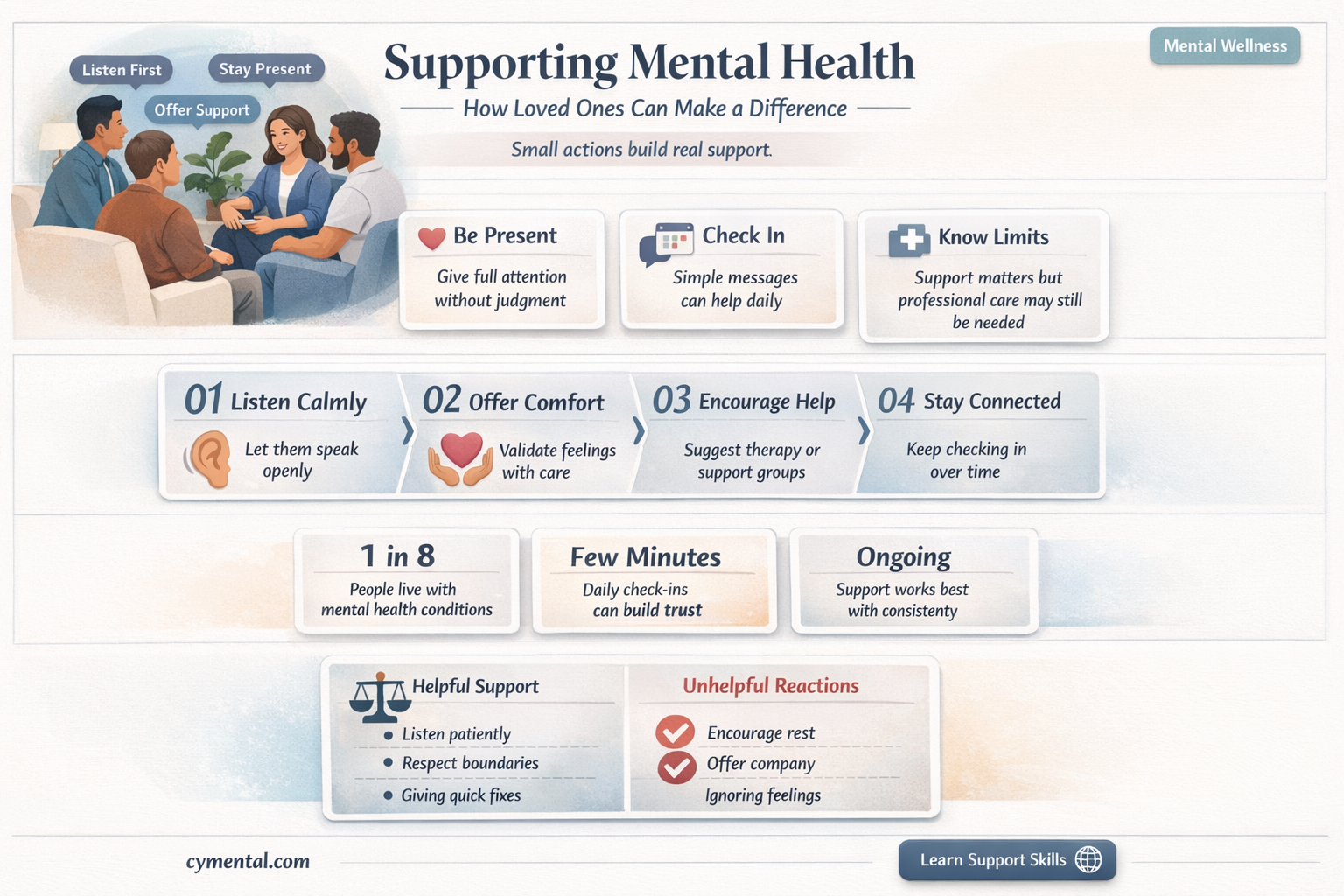
Family and friends play a crucial role in supporting mental health by offering emotional, practical, and social assistance. Their presence alone can provide comfort and a sense of belonging, reducing feelings of isolation that often accompany mental health struggles. By actively listening without judgment, they create a safe space for open communication, allowing individuals to express their thoughts and feelings. Encouraging professional help, such as therapy or counseling, while also being patient and understanding, can significantly aid recovery. Additionally, engaging in shared activities, maintaining routines, and offering practical help with daily tasks can alleviate stress and foster a supportive environment. Ultimately, the consistent love, empathy, and advocacy of loved ones can be a powerful force in promoting mental well-being and resilience.
| Characteristics | Values |
|---|---|
| Active Listening | Provide undivided attention, avoid interrupting, and validate feelings without judgment. |
| Education & Awareness | Learn about mental health conditions to better understand and support their loved one. |
| Encouragement | Motivate the individual to seek professional help, adhere to treatment plans, and maintain self-care routines. |
| Emotional Support | Offer empathy, patience, and reassurance during difficult times. |
| Practical Assistance | Help with daily tasks, such as cooking, cleaning, or running errands, to reduce stress. |
| Social Inclusion | Invite them to social activities, maintain regular contact, and combat feelings of isolation. |
| Non-Judgmental Attitude | Avoid blaming, shaming, or stigmatizing the individual for their mental health struggles. |
| Consistency & Reliability | Be dependable and maintain regular communication to build trust. |
| Encouraging Healthy Habits | Promote physical activity, balanced nutrition, and adequate sleep to support mental well-being. |
| Crisis Support | Know emergency contacts, recognize warning signs, and assist during crises. |
| Respecting Boundaries | Acknowledge and respect the individual's limits and preferences in seeking help. |
| Positive Reinforcement | Celebrate progress and small achievements to boost self-esteem and motivation. |
| Avoiding Enabling Behaviors | Support without encouraging harmful behaviors or dependency. |
| Patience & Understanding | Recognize that recovery is a gradual process and setbacks may occur. |
| Open Communication | Foster an environment where the individual feels safe to express their thoughts and feelings. |
Explore related products


What You'll Learn
- Active Listening: Show empathy, focus fully, avoid judgment, and validate feelings during conversations about mental health struggles
- Encourage Professional Help: Gently suggest therapy, counseling, or medical support when needed, without forcing decisions
- Create Safe Spaces: Foster open, non-judgmental environments where individuals feel comfortable sharing their thoughts and emotions
- Offer Practical Support: Help with daily tasks, provide transportation, or assist with appointments to reduce stress
- Stay Connected: Maintain regular contact, check in consistently, and show genuine care through actions and words

Active Listening: Show empathy, focus fully, avoid judgment, and validate feelings during conversations about mental health struggles
One of the most powerful ways family and friends can support mental health is through active listening. This isn’t about offering solutions or advice; it’s about creating a safe, nonjudgmental space where the person feels heard and understood. Active listening involves four key elements: empathy, full focus, absence of judgment, and validation of feelings. When someone is struggling, these elements can make the difference between feeling isolated and feeling supported.
Consider this scenario: a friend confides in you about their anxiety, explaining how it paralyzes them in social situations. Instead of jumping to reassurance like, “It’s not that bad,” or offering quick fixes like, “Just try to relax,” active listening requires you to reflect their emotions. You might say, “It sounds like this anxiety feels overwhelming, especially in social settings. That must be really hard for you.” This response shows empathy by acknowledging their experience and validates their feelings without dismissing them. The goal is to communicate, “I’m here, I hear you, and your feelings matter.”
To practice active listening effectively, start by eliminating distractions. Put away your phone, make eye contact (if culturally appropriate), and give the person your undivided attention. This signals that their struggles are important enough to warrant your full presence. Avoid interrupting or preparing your response while they’re speaking. Instead, use verbal and nonverbal cues like nodding, saying “I see,” or paraphrasing what they’ve said to show you’re engaged. For example, if they mention feeling trapped by depression, you could say, “It sounds like you’re feeling stuck and unable to move forward.” This not only confirms you’re listening but also helps clarify their thoughts.
A common pitfall is letting personal biases or judgments creep into the conversation. Phrases like, “You shouldn’t feel that way,” or “Others have it worse,” can shut down communication and invalidate the person’s experience. Instead, focus on understanding their perspective, even if it differs from yours. Validation doesn’t mean you agree with their feelings; it means you recognize them as real and significant. For instance, if someone expresses guilt over not being productive during a depressive episode, respond with, “It’s completely understandable to feel that way, especially when depression makes everything feel heavier.”
Active listening is a skill that improves with practice. Start small by setting aside dedicated time for conversations, even if it’s just 10–15 minutes a day. Be mindful of your tone and body language, as these can convey empathy or judgment just as much as words. Remember, the goal isn’t to “fix” the person but to provide a safe space for them to express themselves. Over time, this kind of support can foster trust, reduce feelings of isolation, and encourage the individual to seek further help if needed. In the realm of mental health, sometimes the most meaningful thing you can offer is your presence and your ears.
The Power of Friendship: How Friends Support Mental Health
You may want to see also
Explore related products


Encourage Professional Help: Gently suggest therapy, counseling, or medical support when needed, without forcing decisions
Recognizing when a loved one might benefit from professional mental health support is a delicate but crucial skill. Often, individuals struggling with mental health issues may not realize the extent of their condition or feel hesitant to seek help. As a family member or friend, your role is not to diagnose but to observe patterns—persistent sadness, sudden changes in behavior, or withdrawal from social activities—that suggest deeper issues. These signs, when coupled with a gentle, non-judgmental conversation, can open the door to discussing professional help.
Encouraging therapy or counseling requires empathy and timing. Start by expressing concern in a way that feels supportive, not accusatory. For example, "I’ve noticed you’ve been feeling overwhelmed lately, and I think talking to someone who specializes in this might help." Avoid phrases like "You need therapy" or "You’re not handling this well," which can feel dismissive. Instead, frame professional help as a collaborative tool, not a last resort. Share resources discreetly, such as contact information for therapists or mental health hotlines, and let them know you’re willing to help with logistics, like scheduling appointments or accompanying them to the first session.
It’s essential to respect boundaries while advocating for professional support. Forcing decisions or repeatedly pressuring someone can backfire, creating resentment or deepening their reluctance. If your initial suggestion is met with resistance, don’t push further immediately. Instead, let them know the offer stands and revisit the conversation later. Remember, the goal is to empower, not control. For adolescents or young adults, involving a trusted adult or school counselor can sometimes bridge the gap, as they may be more receptive to authority figures outside the family.
Practical considerations matter, too. Cost and accessibility are common barriers to seeking professional help. Offer to research sliding-scale therapists, free community resources, or online counseling platforms like BetterHelp or Talkspace. For medical support, such as medication, emphasize that it’s a valid and often necessary part of treatment for conditions like depression or anxiety. Share factual information, such as how antidepressants typically take 4–6 weeks to show full effects, to dispel myths and reduce stigma.
Ultimately, encouraging professional help is an act of patience and persistence. It’s about planting a seed and nurturing it over time, not demanding immediate action. By approaching the conversation with sensitivity, providing practical support, and respecting autonomy, you can help your loved one take the first step toward healing—when they’re ready.
Empowering Care: How Advanced Practice Nurses Support Homeless Mental Health
You may want to see also
Explore related products




Create Safe Spaces: Foster open, non-judgmental environments where individuals feel comfortable sharing their thoughts and emotions
One of the most powerful ways to support mental health is by creating safe spaces where individuals feel free to express themselves without fear of judgment. These environments act as emotional sanctuaries, allowing people to process their thoughts and feelings openly. For instance, a study by the American Psychological Association highlights that individuals who feel heard and understood in their social circles are 30% more likely to report better mental well-being. This statistic underscores the importance of fostering such spaces, not just in therapy settings but within everyday interactions with family and friends.
To create a safe space, start by actively listening without interrupting. This means setting aside distractions like phones or screens and giving the speaker your undivided attention. For example, if a friend begins to share their struggles with anxiety, resist the urge to offer solutions immediately. Instead, reflect back what they’ve said to show understanding, such as, “It sounds like this situation has been really overwhelming for you.” This simple act validates their experience and encourages further openness. Additionally, avoid phrases that minimize their feelings, like “It could be worse” or “Just stay positive.” Such statements can inadvertently shut down the conversation.
Another critical aspect is maintaining confidentiality. When someone shares personal struggles, assure them that their words will remain private unless there’s a serious safety concern. This builds trust and reinforces the safety of the space. For families, establishing a “no-judgment zone” during dinner conversations or weekly check-ins can be particularly effective. For instance, a family might implement a rule where everyone shares one thing they’re proud of and one challenge they’re facing, creating a balanced and supportive dialogue.
However, creating safe spaces isn’t without challenges. It requires self-awareness and emotional regulation on the part of the listener. If you find yourself feeling defensive or overwhelmed by what’s being shared, take a moment to pause and recenter. Acknowledge your feelings without letting them derail the conversation. For example, you might say, “I’m feeling a bit emotional hearing this, but I’m here for you and want to understand.” This honesty models vulnerability and strengthens the connection.
In conclusion, fostering open, non-judgmental environments is a proactive way to support mental health. By listening attentively, maintaining confidentiality, and practicing self-awareness, family and friends can create spaces where individuals feel safe to share their innermost thoughts and emotions. These efforts not only strengthen relationships but also contribute to a culture of empathy and understanding, which is essential for collective mental well-being.
Doctors Without Borders: Addressing Mental Health in Global Crisis Zones
You may want to see also
Explore related products


$18.01 $29.99


Offer Practical Support: Help with daily tasks, provide transportation, or assist with appointments to reduce stress
Daily life can become overwhelming for someone struggling with mental health, turning mundane tasks into insurmountable hurdles. Offering practical support by helping with daily tasks, providing transportation, or assisting with appointments can significantly reduce stress and create a sense of stability. This type of assistance is not just about completing chores; it’s about acknowledging the invisible weight of mental health challenges and lightening the load. For instance, something as simple as driving a friend to a therapy session or helping them fold laundry can free up mental energy for healing and self-care.
Consider the logistics of practical support as a form of emotional first aid. Start by identifying specific areas where help is needed—perhaps meal prep, grocery shopping, or managing appointments. Be proactive rather than waiting to be asked; mental health struggles often come with a reluctance to reach out. For example, if a family member is dealing with depression, offering to accompany them to a doctor’s appointment can remove the anxiety of navigating it alone. Similarly, setting up a shared calendar to track medication schedules or therapy sessions can provide structure without being overbearing.
However, practical support must be balanced with respect for autonomy. Avoid taking over tasks entirely, as this can strip the individual of agency and worsen feelings of helplessness. Instead, collaborate. For instance, if you’re helping with household chores, ask, “Would it be more helpful if I did the dishes while you rested, or if we tackled them together?” This approach maintains dignity while still providing relief. Additionally, be mindful of the frequency and duration of your assistance. Overdoing it can lead to dependency, while underdoing it may leave the person feeling unsupported. Aim for a sustainable rhythm that aligns with their needs.
The impact of practical support extends beyond the immediate task. It communicates care, reliability, and a willingness to engage with the realities of mental health struggles. For someone battling anxiety, having a friend handle transportation to a social event can make the difference between attending and isolating. For a parent with postpartum depression, having a partner take over bedtime routines for a few nights can offer crucial respite. These actions not only reduce stress but also reinforce the message that they are not alone in their fight.
In conclusion, offering practical support is a tangible way to help loved ones manage mental health challenges. It requires attentiveness, flexibility, and a commitment to easing their daily burdens without undermining their independence. By focusing on specific tasks, respecting boundaries, and maintaining consistency, family and friends can provide a foundation of stability that fosters healing and hope. This kind of support doesn’t require expertise—just a willingness to show up and help carry the load.
Breathing Fresh Air: Unlocking Mental Health Benefits and Well-Being
You may want to see also
Explore related products



Stay Connected: Maintain regular contact, check in consistently, and show genuine care through actions and words
Social connection is a cornerstone of mental well-being. Research consistently shows that individuals with strong social support networks experience lower rates of depression, anxiety, and loneliness. Conversely, social isolation can exacerbate existing mental health struggles and even contribute to the development of new ones.
Maintaining regular contact is a powerful way to combat this isolation. This doesn't necessarily mean daily phone calls or in-person meetings (though those can be wonderful). Consistency is key. Aim for a predictable rhythm of communication, whether it's a weekly video call, a daily text message, or a monthly coffee date. Predictability fosters a sense of security and reassurance, knowing that someone is reliably there.
For those struggling with mental health, initiating contact can feel daunting. This is where the onus falls on friends and family to take the lead. A simple "How are you doing today?" text, a thoughtful voicemail, or a handwritten card can make a world of difference. Remember, it's not about grand gestures, but about consistent, genuine expressions of care.
Checking in goes beyond surface-level pleasantries. It involves active listening, empathy, and a willingness to engage with the person's emotional state. Ask open-ended questions that encourage honest responses: "What's been on your mind lately?" "How are you feeling about [specific situation]?" "What can I do to support you right now?" Be present, validate their feelings, and avoid offering quick fixes or judgment.
Sometimes, the most powerful way to show you care is through actions. Offer practical help with daily tasks, cook a meal, run errands, or simply sit in silence together. Physical touch, when appropriate and welcomed, can be incredibly comforting – a hug, a hand on the shoulder, or a gentle pat on the back. These actions speak volumes, conveying support and understanding when words feel insufficient.
Remember, staying connected is a two-way street. Be patient, understanding, and adaptable. Mental health struggles are often unpredictable, and the person's needs may fluctuate. By maintaining regular contact, checking in consistently, and demonstrating genuine care through both words and actions, you can provide a vital lifeline of support and contribute significantly to their well-being.
Shipping the Mentally Ill to California: Nevada's Controversial Solution
You may want to see also
Frequently asked questions
Family and friends can offer emotional support by actively listening without judgment, validating their feelings, and letting them know they are not alone. Showing empathy, patience, and understanding can make a significant difference in their journey.
Practical support includes helping with daily tasks like cooking, cleaning, or running errands, encouraging them to seek professional help, and accompanying them to appointments if needed. Additionally, promoting healthy habits like exercise, proper sleep, and balanced meals can be beneficial.
Educating themselves about the specific mental health condition their loved one is facing, attending support groups, and reading reliable resources can help them understand the challenges better. This knowledge enables them to provide more informed and compassionate support.