Lucas Bennett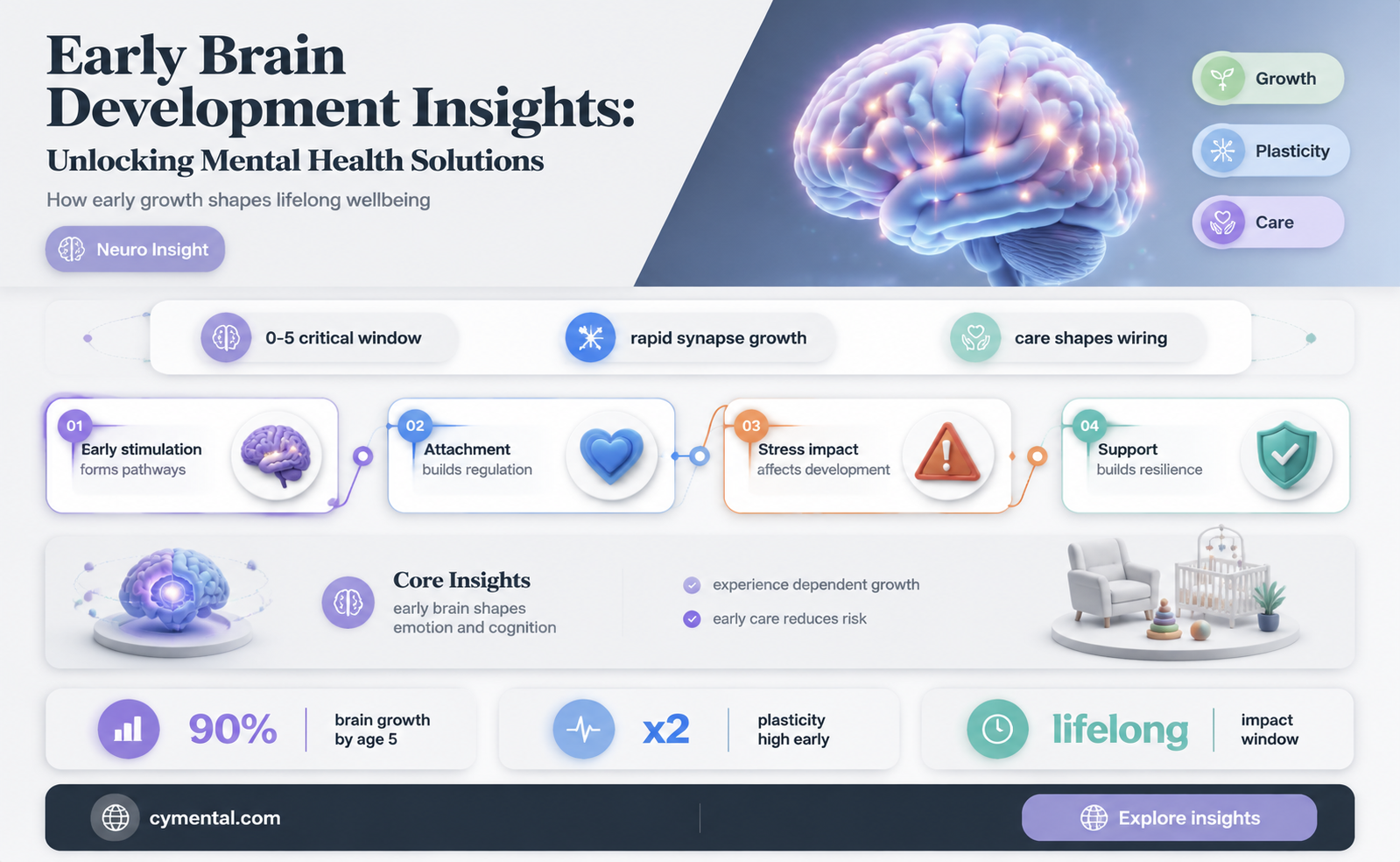
Studying early brain development is crucial for understanding and improving mental health, as the foundational years of life significantly shape neural circuitry, emotional regulation, and cognitive abilities. Research shows that experiences during critical periods, such as infancy and early childhood, can either foster resilience or increase vulnerability to mental health disorders later in life. By examining how factors like genetics, environment, and caregiver interactions influence brain maturation, scientists can identify early biomarkers of risk and develop targeted interventions. This knowledge not only helps in preventing mental health issues but also informs strategies for early detection and treatment, ultimately promoting healthier developmental trajectories and long-term well-being.
| Characteristics | Values |
|---|---|
| Identification of Critical Periods | Studying early brain development helps identify critical periods when the brain is most sensitive to environmental influences, allowing for targeted interventions during these windows. |
| Prevention of Mental Disorders | Early understanding of brain development can lead to preventive measures for mental health disorders like depression, anxiety, and schizophrenia by addressing risk factors early. |
| Neuroplasticity Insights | Research highlights the brain's plasticity in early years, enabling interventions that promote healthy neural connections and resilience against stress and trauma. |
| Early Intervention Strategies | Knowledge of early brain development informs the design of early intervention programs, such as parenting support, educational initiatives, and mental health screenings. |
| Impact of Adversity | Studies show how early adversity (e.g., neglect, abuse) affects brain structure and function, guiding efforts to mitigate these effects and improve long-term mental health outcomes. |
| Role of Environment | Understanding the interplay between genetics and environment in early brain development emphasizes the importance of nurturing, stable environments for healthy mental health. |
| Policy and Resource Allocation | Insights from early brain development research inform policy decisions, ensuring resources are allocated to programs that support early childhood mental health. |
| Long-Term Cost Savings | Investing in early brain development and mental health interventions reduces long-term healthcare costs associated with untreated mental disorders. |
| Personalized Approaches | Early brain development studies contribute to personalized mental health strategies by understanding individual differences in brain maturation and vulnerability. |
| Public Awareness and Education | Research findings raise public awareness about the importance of early childhood experiences, encouraging proactive mental health care from infancy. |
| Reduction of Stigma | By framing mental health issues as rooted in early brain development, stigma is reduced, fostering empathy and support for affected individuals. |
| Cross-Disciplinary Collaboration | Studying early brain development fosters collaboration between neuroscientists, psychologists, educators, and policymakers to create holistic mental health solutions. |
| Technological Advancements | Advances in neuroimaging and genetic research provide detailed insights into early brain development, enabling more precise mental health assessments and interventions. |
| Global Health Impact | Understanding early brain development has global implications, as it informs strategies to address mental health disparities in diverse cultural and socioeconomic contexts. |
| Lifelong Mental Health Foundation | Early brain development lays the foundation for lifelong mental health, making it a critical area of focus for preventing chronic mental health issues. |
Explore related products

$10.65 $19



What You'll Learn

Neural plasticity and resilience
The human brain's capacity for neural plasticity, or the ability to reorganize itself by forming new neural connections, is most pronounced during early childhood. This period, often referred to as a "critical window," is when the brain is highly sensitive to environmental stimuli, both positive and negative. For instance, studies show that children who engage in stimulating activities like reading, puzzles, and social interactions during their first five years exhibit stronger neural connections in areas associated with language, problem-solving, and emotional regulation. Conversely, adverse experiences such as neglect or trauma can disrupt these connections, increasing the risk of mental health issues later in life. Understanding this plasticity allows us to design interventions that harness the brain's natural ability to adapt, fostering resilience from the earliest stages of development.
To build resilience through neural plasticity, consider structured, age-appropriate activities tailored to a child’s developmental stage. For infants (0–12 months), sensory play—such as tactile exploration with safe objects or listening to varied sounds—strengthens neural pathways in the sensory cortex. Toddlers (1–3 years) benefit from activities that encourage motor skills and social interaction, like stacking blocks or cooperative play, which enhance connections in the cerebellum and prefrontal cortex. Preschoolers (3–5 years) thrive with cognitive challenges, such as storytelling or simple problem-solving games, which bolster executive function and emotional regulation. Consistency is key; aim for 20–30 minutes of focused activity daily, paired with unstructured play to allow for spontaneous neural growth.
While neural plasticity offers immense potential, it’s crucial to avoid overloading young brains with excessive stimulation or rigid expectations. For example, forcing a 2-year-old to sit through lengthy educational videos can lead to frustration and disengagement, potentially hindering rather than helping development. Similarly, overemphasis on academic skills at the expense of social-emotional learning can create imbalances in neural growth. Parents and caregivers should prioritize a balanced approach, incorporating activities that address cognitive, emotional, and physical development. Monitoring a child’s response to new stimuli—such as signs of stress or fatigue—and adjusting accordingly ensures that interventions remain supportive rather than stressful.
A comparative analysis of early intervention programs highlights the power of combining plasticity-focused strategies with resilience-building practices. For instance, the Nurse-Family Partnership program, which provides home visits to first-time mothers, has been shown to reduce childhood behavioral issues by 59% by age 15. This success stems from its focus on creating stable, nurturing environments that promote healthy brain development. Similarly, the Head Start program, which integrates cognitive, social, and emotional learning, has been linked to improved academic outcomes and reduced mental health risks in low-income children. These examples underscore the importance of leveraging neural plasticity within a holistic framework, addressing both the brain’s need for stimulation and its requirement for safety and support.
In conclusion, neural plasticity and resilience are intertwined processes that can be optimized through intentional, developmentally appropriate practices. By understanding the brain’s capacity for change during early childhood, we can design interventions that not only prevent mental health issues but also lay the foundation for lifelong well-being. Practical steps, such as engaging in sensory play, fostering social interactions, and maintaining a balanced approach, empower caregivers to nurture resilient brains. The takeaway is clear: early investment in neural plasticity pays dividends in mental health, offering a proactive path to a brighter future.
Supporting Mental Health: Compassionate Ways to Help a Loved One
You may want to see also
Explore related products


$16.33 $29.99




Impact of early stress on brain structure
Early life stress, whether from neglect, abuse, or chronic adversity, leaves a measurable imprint on the developing brain. Neuroimaging studies reveal that children exposed to significant stress in their first few years often exhibit reduced volume in the hippocampus, a region critical for memory and emotional regulation. This structural change is not merely a biological curiosity; it correlates with increased risk for anxiety, depression, and post-traumatic stress disorder later in life. The hippocampus, like a muscle, can atrophy under prolonged strain, compromising its ability to process and store emotional experiences effectively.
Consider the mechanism: stress triggers the release of cortisol, a hormone essential in small doses but toxic in excess. In infants and toddlers, whose brains are still wiring themselves, chronically elevated cortisol levels disrupt neurogenesis—the formation of new neurons. This disruption is particularly damaging in the prefrontal cortex, the brain’s executive center responsible for decision-making and impulse control. As a result, children who experience early stress may struggle with focus, emotional modulation, and problem-solving, behaviors often misdiagnosed as simple "acting out" rather than symptoms of deeper structural changes.
A comparative lens highlights the stark contrast between stressed and non-stressed brains. For instance, a 2019 study published in *Development and Psychopathology* found that 8-year-olds with a history of early institutionalization (a severe form of neglect) had cortical thinning in areas linked to language processing and social cognition. Conversely, children raised in nurturing environments showed thicker cortical regions associated with learning and adaptability. This divergence underscores the brain’s plasticity—its ability to be shaped, for better or worse, by early experiences.
To mitigate these effects, early intervention is key. Programs like the Nurse-Family Partnership, which pairs at-risk first-time mothers with nurses during pregnancy and the child’s first two years, have demonstrated significant reductions in childhood stress markers. Similarly, trauma-informed care in schools can help buffer the impact of early adversity by fostering safe, predictable environments. Parents and caregivers should prioritize consistent routines, emotional responsiveness, and opportunities for play, all of which promote healthy brain architecture.
The takeaway is clear: understanding how early stress alters brain structure is not just an academic exercise—it’s a call to action. By recognizing the biological roots of mental health challenges, we can design interventions that address not just behavior but the underlying neural circuitry. This knowledge empowers us to build resilience, one synapse at a time, ensuring that even the most vulnerable brains have a chance to thrive.
Counseling Conversations: Effective Therapy for Mental Health Recovery and Wellness
You may want to see also
Explore related products


$15.99 $19.99


Role of attachment in emotional regulation
The first three years of life are critical for brain development, with neural connections forming at a rapid pace. During this period, the foundation for emotional regulation is laid, and attachment plays a pivotal role. Secure attachment, typically formed with primary caregivers, serves as a blueprint for how individuals manage stress, express emotions, and build relationships throughout their lives. When a child’s emotional needs are consistently met, their brain develops the capacity to self-soothe and regulate emotions effectively. Conversely, insecure attachment can lead to difficulties in emotional regulation, increasing the risk of mental health issues later in life, such as anxiety or depression.
Consider the practical implications of fostering secure attachment. Caregivers can promote emotional regulation by responding sensitively to a child’s cues, such as crying or seeking comfort. For infants aged 0–12 months, this might involve prompt feeding, soothing touch, and consistent caregiving. Between 1–3 years, caregivers can help toddlers label emotions and provide a safe space to express them. For example, saying, “I see you’re upset because you dropped your toy. Let’s take a deep breath together,” teaches emotional awareness and coping strategies. These early interactions shape the brain’s stress response systems, particularly the hypothalamic-pituitary-adrenocortical (HPA) axis, which regulates cortisol levels. Chronic activation of this system due to insecure attachment can lead to long-term dysregulation, underscoring the importance of early intervention.
A comparative analysis reveals the stark differences between secure and insecure attachment outcomes. Children with secure attachment are more likely to explore their environment confidently, a behavior linked to healthy brain development in areas like the prefrontal cortex, responsible for decision-making and emotional control. In contrast, insecurely attached children may exhibit avoidance or anxiety, reflecting underdeveloped regulatory mechanisms. For instance, a study published in *Development and Psychopathology* found that securely attached preschoolers showed lower cortisol levels during stressful tasks compared to their insecurely attached peers. This biological marker highlights the tangible impact of attachment on emotional regulation.
To strengthen attachment and emotional regulation, caregivers can adopt specific strategies. First, prioritize consistent routines, as predictability fosters a sense of security. Second, engage in “serve and return” interactions, where caregivers respond to a child’s gestures or vocalizations, reinforcing their sense of being heard and valued. For older toddlers, introduce simple mindfulness activities, like counting breaths or naming emotions, to build self-awareness. Caution against dismissing a child’s emotions, as this can erode trust and hinder regulatory development. By understanding the science of attachment, caregivers can create environments that nurture emotional resilience, setting the stage for lifelong mental health.
Sex and Mental Health: Exploring the Surprising Benefits and Connections
You may want to see also
Explore related products


Critical periods for cognitive development
The first 1,000 days of life, from conception to age three, are a whirlwind of neural activity. During this time, the brain undergoes an explosive growth spurt, forming trillions of connections at a rate never seen again in life. This period, often referred to as a "critical period," lays the foundation for future cognitive abilities like language acquisition, problem-solving, and emotional regulation.
Imagine a sculptor shaping clay. The critical period is like the initial molding – the easier it is to shape during this phase, the more defined and intricate the final form can become. Miss this window, and reshaping becomes significantly harder. Similarly, experiences during these early years have a profound and lasting impact on brain architecture. For instance, research shows that children exposed to rich language environments during this period develop stronger vocabulary and grammar skills, advantages that persist into adulthood.
Conversely, neglect or deprivation during critical periods can lead to long-term deficits. Studies on institutionalized children reveal significant delays in language, social skills, and cognitive development, highlighting the brain's vulnerability during these formative years.
Understanding these critical periods isn't just academic; it's a call to action. Early intervention programs targeting language development, social interaction, and cognitive stimulation during these windows can have transformative effects. For example, programs like Early Head Start, which provide comprehensive support to infants and toddlers from low-income families, have been shown to improve cognitive and social-emotional outcomes, reducing the risk of later mental health issues.
Ancient Rome's Approach to Mental Health: Care or Neglect?
You may want to see also
Explore related products


Early interventions to prevent mental disorders
The first 1,000 days of life, from conception to age 2, are a critical window for brain development, with neural connections forming at a rate of 1 million per second. This rapid growth lays the foundation for cognitive, emotional, and social functioning, making early interventions during this period crucial for preventing mental disorders. For instance, studies show that infants exposed to chronic stress or neglect during this phase exhibit altered stress response systems, increasing their risk of anxiety and depression later in life. By understanding these developmental milestones, we can design targeted interventions to mitigate risks and foster resilience.
One evidence-based approach is the Nurturing Care Framework, which emphasizes responsive caregiving, early learning, and health support. For children aged 0–3, consistent, warm interactions with caregivers strengthen neural pathways associated with emotional regulation. Practical tips include daily routines like reading aloud, singing, and engaging in sensory play, which stimulate brain development. For example, a 20-minute daily “serve and return” interaction—where caregivers respond to a child’s cues—has been shown to improve language and social skills, reducing the likelihood of developmental delays linked to mental health issues.
Another powerful intervention is parent-child psychotherapy (PCP), particularly for families facing adversity such as poverty or trauma. PCP, typically delivered in 12–20 sessions, helps parents understand their child’s emotional needs and improves attachment security. A randomized controlled trial found that children who received PCP before age 5 had significantly lower rates of behavioral disorders by age 10 compared to controls. This highlights the importance of addressing relational dynamics early, as secure attachment is a protective factor against mental health problems.
Nutrition also plays a pivotal role in early brain development. Omega-3 fatty acids, found in fish and fortified foods, are essential for neural connectivity. A study in *The Lancet* found that children aged 6–12 months who received daily omega-3 supplements showed improved attention and problem-solving skills by age 3. Similarly, ensuring adequate iron intake—through foods like fortified cereals or leafy greens—prevents cognitive deficits linked to later mental health challenges. These dietary interventions are simple yet impactful, especially in resource-limited settings.
However, implementing early interventions requires caution. Overloading caregivers with unrealistic expectations can lead to stress, undermining the very outcomes we aim to achieve. For example, while structured activities like baby yoga or flashcard training are popular, research suggests that unstructured, child-led play is equally, if not more, beneficial for brain development. Additionally, cultural sensitivity is critical; interventions must align with local practices and beliefs to ensure acceptance and sustainability.
In conclusion, early interventions to prevent mental disorders are not one-size-fits-all but require a nuanced understanding of developmental biology, social context, and individual needs. By focusing on nurturing care, relational support, and targeted nutrition during the first 1,000 days, we can build a foundation for lifelong mental health. The challenge lies in scaling these interventions globally, ensuring they are accessible, affordable, and culturally relevant. The payoff, however, is immense: a generation less burdened by preventable mental disorders and better equipped to thrive.
Mental Health Courts: Reducing Recidivism Through Supportive Justice Approaches
You may want to see also
Frequently asked questions
Studying early brain development helps identify critical periods and processes that may contribute to mental health disorders later in life. By understanding how disruptions during these stages affect neural circuits, researchers can pinpoint risk factors and develop targeted interventions.
Yes, insights from early brain development research can inform preventive strategies by highlighting the importance of factors like nutrition, stimulation, and stress reduction during infancy and childhood, which can mitigate the risk of mental health problems.
Early brain development shapes the foundation for cognitive, emotional, and social functioning. Positive or adverse experiences during this period can have lasting effects on mental health, influencing resilience, stress response, and susceptibility to disorders.
Understanding early brain development allows for more personalized treatments by considering individual differences in brain maturation and early life experiences. This can lead to tailored therapies that address specific vulnerabilities or strengths.