Caleb Wright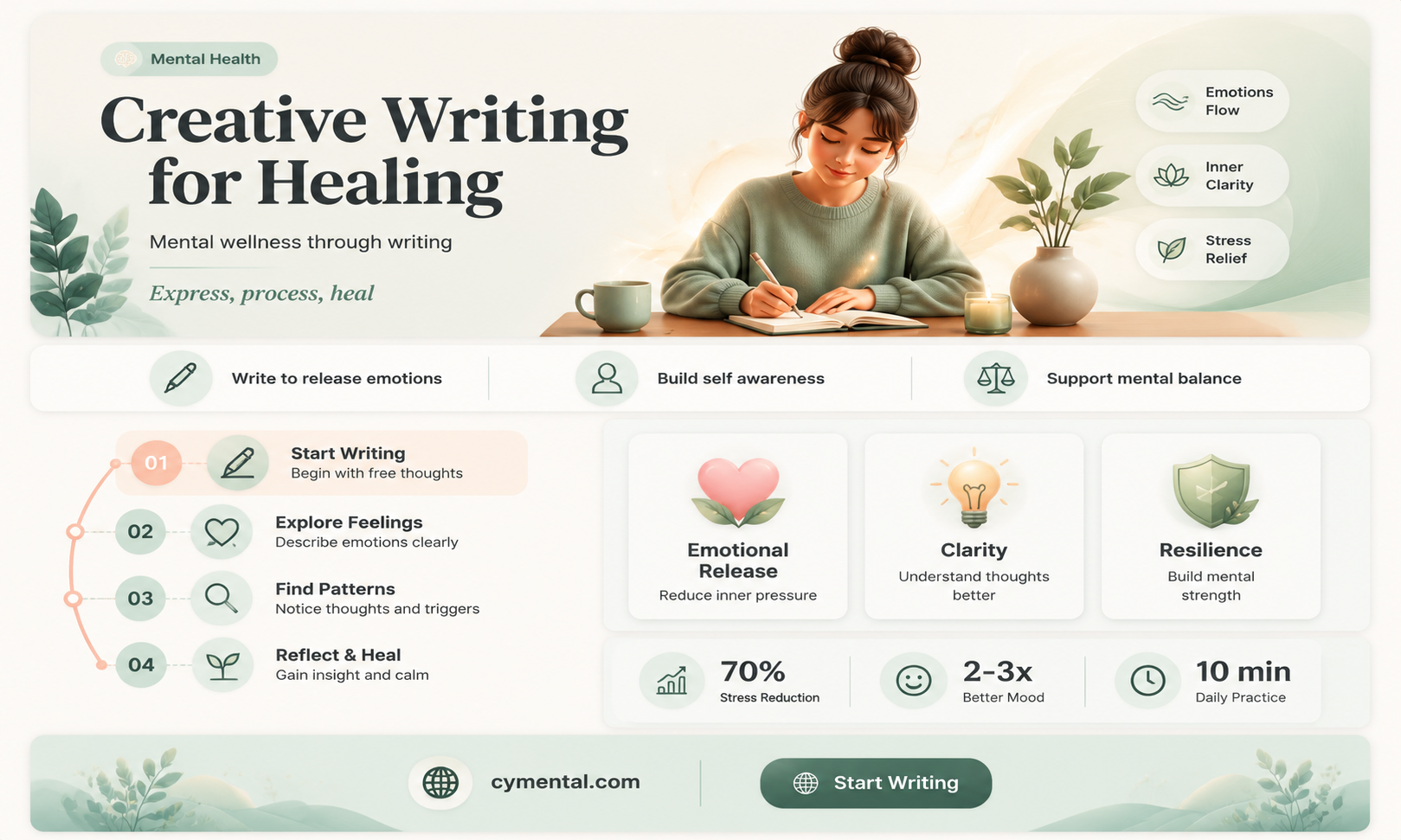
Creative writing serves as a powerful tool for improving mental health by offering a safe and expressive outlet for emotions, thoughts, and experiences. Through the act of crafting stories, poetry, or personal narratives, individuals can explore and process complex feelings, reduce stress, and gain clarity on their struggles. Writing allows for self-reflection, fostering a deeper understanding of one’s inner world and promoting emotional release. Additionally, it encourages mindfulness, as the focus on words and ideas can distract from negative thought patterns. For many, creative writing becomes a form of therapy, helping to alleviate symptoms of anxiety, depression, and trauma while building resilience and a sense of accomplishment. By transforming pain into art, individuals can find healing, connection, and a renewed sense of purpose.
Explore related products


$18.36 $36.99


What You'll Learn
- Expressing Emotions Safely: Writing allows for emotional release without judgment, aiding in processing complex feelings
- Stress Reduction: Creative writing acts as a calming outlet, lowering anxiety and promoting relaxation
- Building Resilience: Crafting narratives helps reframe challenges, fostering adaptability and mental strength
- Enhancing Self-Awareness: Writing encourages introspection, leading to better understanding of thoughts and behaviors
- Creating Safe Spaces: Fictional worlds offer escapism, reducing overwhelm and providing mental refuge

Expressing Emotions Safely: Writing allows for emotional release without judgment, aiding in processing complex feelings
Emotions, when bottled up, can fester like an untreated wound. Creative writing offers a sterile environment for emotional release, allowing individuals to confront and express feelings without fear of judgment or repercussions. Unlike verbal communication, which often demands immediate reactions, writing provides a private, controlled space. Here, one can dissect anger, sadness, or confusion at their own pace, transforming raw emotion into structured narratives. This process not only alleviates immediate distress but also fosters self-awareness, as the act of articulating feelings clarifies their origins and impacts.
Consider the practice of journaling, a simple yet powerful tool in this realm. Studies suggest that spending just 15–20 minutes daily writing about distressing experiences can significantly reduce symptoms of anxiety and depression over time. For instance, a 2005 study published in *Advances in Psychiatric Treatment* found that expressive writing improved both physical and mental health outcomes in participants. The key lies in the absence of censorship; when writing, individuals are free to explore even the most taboo or contradictory emotions without the risk of social stigma. This freedom encourages honesty, a critical step in emotional processing.
However, not all emotional writing is created equal. To maximize its therapeutic benefits, structure matters. Start by setting a timer to avoid overthinking—freewriting for 5–10 minutes can unlock thoughts buried beneath conscious awareness. Use prompts like "I feel conflicted because..." or "If my anger could speak, it would say..." to guide exploration. Avoid editing as you write; the goal is raw expression, not perfection. Later, revisit the text to identify patterns or recurring themes, which can reveal underlying issues. For those hesitant to confront intense emotions directly, metaphorical writing—such as crafting a story where characters embody their feelings—offers a safer entry point.
One caution: while writing can be cathartic, it’s not a substitute for professional therapy, especially in cases of severe trauma. If emotions become overwhelming, grounding techniques like deep breathing or consulting a mental health professional are essential. Additionally, avoid fixating on negative emotions; balance is key. Pair reflective writing with gratitude journaling or positive affirmations to prevent emotional spiraling. For younger individuals (teens and young adults), combining writing with art—sketching emotions alongside written descriptions—can enhance expression and engagement.
In practice, integrating this approach into daily life requires minimal effort but yields profound results. Keep a notebook or digital document dedicated solely to emotional writing, treating it as a sacred space. Over time, this practice not only aids in managing acute stress but also builds emotional resilience. By externalizing feelings through words, individuals gain distance from their emotions, making them easier to understand and manage. Writing, in essence, becomes a mirror and a map—reflecting the inner world while charting a path toward healing.
Children and Mental Health: Are They Aware of Available Support?
You may want to see also
Explore related products

$8.49 $15.99


$28.44 $43.95


Stress Reduction: Creative writing acts as a calming outlet, lowering anxiety and promoting relaxation
Creative writing isn’t just a hobby—it’s a therapeutic tool that can actively reduce stress by shifting focus away from anxiety-inducing thoughts. When you immerse yourself in crafting a story, poem, or even a journal entry, your mind temporarily escapes the cycle of worry. Research shows that this mental redirection can lower cortisol levels, the hormone associated with stress. For instance, a study published in the *Journal of the American Medical Association* found that expressive writing for as little as 15–20 minutes a day over four consecutive days significantly reduced stress markers in participants. The act of creating something, no matter how small, provides a sense of accomplishment that counters the helplessness often tied to stress.
To harness this benefit, start with a simple prompt: describe a place where you feel safe. This exercise grounds you in the present, calming the nervous system. For those new to creative writing, structured activities like freewriting or filling out a "five senses" template (what do you see, hear, smell, taste, touch?) can provide a framework without overwhelming you. Even doodling alongside your writing can enhance relaxation, as it engages both hemispheres of the brain, fostering a meditative state. The key is consistency—aim for daily practice, even if it’s just 10 minutes, to build a habit that acts as a buffer against stress.
Comparing creative writing to other stress-relief methods highlights its unique advantages. Unlike passive activities like watching TV, writing actively engages your cognitive and emotional faculties, offering both distraction and processing. It’s also more accessible than practices like meditation, which can feel intimidating for those with racing thoughts. Writing allows you to control the pace and content, making it adaptable to individual needs. For example, someone dealing with work-related stress might write a fictional story about overcoming a challenge, while another might journal about their feelings directly. Both approaches provide relief by externalizing internal pressures.
A cautionary note: while creative writing is powerful, it’s not a substitute for professional mental health treatment. If stress becomes chronic or debilitating, consult a therapist. However, as a complementary practice, writing can enhance the effectiveness of therapy by clarifying thoughts and emotions. For teens and young adults, who often face academic and social pressures, creative writing can be particularly beneficial. Schools incorporating journaling or storytelling into curricula have reported lower stress levels among students, as noted in a *Psychology Today* article. Pairing writing with deep breathing exercises amplifies its calming effects, creating a holistic stress-reduction routine.
Incorporating creative writing into your routine doesn’t require literary talent—it’s about expression, not perfection. Keep a notebook by your bed to jot down thoughts before sleep, or use apps like Day One for digital journaling. Group activities, like joining a writing circle or sharing prompts with friends, can add a social element that further reduces stress. The takeaway? Creative writing is a portable, cost-effective, and deeply personal way to reclaim calm in a chaotic world. By making it a regular practice, you’re not just writing—you’re rewriting your relationship with stress.
Positive Relationships: A Powerful Tool for Mental Health and Well-Being
You may want to see also
Explore related products


Building Resilience: Crafting narratives helps reframe challenges, fostering adaptability and mental strength
Creative writing isn’t just an artistic outlet—it’s a tool for reshaping how we perceive and respond to adversity. By crafting narratives, individuals can externalize their struggles, transforming abstract emotions into tangible stories. This process allows them to step back, analyze, and reinterpret challenges from a new perspective. For instance, a person grappling with job loss might write a story where the protagonist turns a setback into a catalyst for reinvention. Such reframing isn’t merely symbolic; it rewires neural pathways, fostering a mindset that views obstacles as opportunities rather than insurmountable barriers.
Consider this as a structured practice: Dedicate 15–20 minutes daily to journaling or storytelling, focusing on a current challenge. Start by describing the situation objectively, then experiment with alternate endings or perspectives. Over time, this practice trains the brain to approach real-life difficulties with greater flexibility. Research in cognitive-behavioral therapy supports this, showing that narrative reframing reduces anxiety and enhances problem-solving skills. Even adolescents, who often struggle with emotional regulation, can benefit from this technique, as it provides a safe space to explore and process complex feelings.
However, crafting resilience-building narratives isn’t about sugarcoating reality. It’s about acknowledging pain while actively seeking meaning and agency. For example, a cancer survivor might write a story where their illness becomes a backdrop for discovering inner strength rather than the central tragedy. This approach aligns with the principles of post-traumatic growth, where individuals emerge from hardship with newfound resilience. The key is consistency—treat creative writing as a mental exercise, not a sporadic activity, to maximize its therapeutic effects.
To integrate this practice effectively, pair it with mindfulness techniques. Before writing, take two minutes to ground yourself with deep breathing, clearing mental clutter. Afterward, reflect on the narrative’s themes: What patterns emerge? How do they mirror your coping strategies? For younger writers (ages 12–18), encourage the use of metaphors or allegories to explore sensitive topics indirectly. Adults, meanwhile, might benefit from experimenting with different genres—science fiction, for instance, can offer a metaphorical lens to confront fears of uncertainty.
In conclusion, crafting narratives isn’t just an act of creativity; it’s an act of empowerment. By reframing challenges through storytelling, individuals build mental muscle, learning to adapt and thrive in the face of adversity. Whether through daily journaling or structured exercises, this practice offers a tangible, accessible way to cultivate resilience—one story at a time.
Personal Training: A Powerful Tool for Mental Health Improvement
You may want to see also
Explore related products


Enhancing Self-Awareness: Writing encourages introspection, leading to better understanding of thoughts and behaviors
Creative writing serves as a mirror, reflecting the intricate landscapes of our minds. When we put pen to paper, we engage in a dialogue with ourselves, often uncovering thoughts and emotions that lie just beyond conscious reach. This process of introspection is not merely therapeutic; it is transformative. By externalizing our inner world, we gain clarity and perspective, allowing us to identify patterns, confront unresolved issues, and foster a deeper understanding of who we are. For instance, journaling about daily experiences can reveal recurring stressors or triggers, while crafting fictional narratives may expose subconscious fears or desires. This act of self-reflection is a cornerstone of mental health, as it empowers individuals to take control of their emotional narratives.
To harness the introspective power of writing, consider structured exercises designed to probe the mind. Start with a "stream-of-consciousness" session, where you write continuously for 10–15 minutes without editing or censoring. This technique bypasses the critical mind, allowing raw thoughts and feelings to surface. Another effective method is the "letter-writing" exercise, where you compose a letter to your past or future self, exploring regrets, aspirations, or lessons learned. For those who prefer visual prompts, try creating a mind map of your emotions, connecting words, images, and memories to uncover hidden associations. These practices, when done regularly—ideally 3–4 times per week—can significantly enhance self-awareness and emotional intelligence.
While the benefits of introspective writing are profound, it’s essential to approach this practice with caution. Writing about traumatic experiences without proper guidance can exacerbate distress. If you find yourself overwhelmed, consider working with a therapist who can provide a safe space to explore these emotions. Additionally, balance is key; pair introspective writing with positive affirmations or gratitude exercises to maintain emotional equilibrium. For younger writers (teens and young adults), incorporating creative elements like poetry or storytelling can make the process less daunting and more engaging.
The analytical lens reveals that self-awareness through writing is not just about uncovering truths but also about reframing them. Cognitive reframing, a technique often used in therapy, involves rewriting negative narratives into more constructive ones. For example, instead of writing, "I always fail," try, "I face challenges, and each one teaches me resilience." This shift in perspective can be practiced through rewriting past journal entries or crafting alternative endings to personal stories. Over time, this practice rewires thought patterns, fostering a more compassionate and adaptive mindset.
In conclusion, creative writing is a powerful tool for enhancing self-awareness, offering a pathway to understanding our thoughts and behaviors. By incorporating structured exercises, maintaining emotional balance, and reframing narratives, individuals can unlock the transformative potential of introspection. Whether through journaling, letter-writing, or storytelling, the act of putting words to experience bridges the gap between the conscious and subconscious, paving the way for personal growth and mental well-being. Start small, stay consistent, and let the pen guide you toward a deeper understanding of yourself.
Do Mentally Ill Individuals Seek Support? Breaking Barriers and Stigma
You may want to see also
Explore related products


Creating Safe Spaces: Fictional worlds offer escapism, reducing overwhelm and providing mental refuge
Fictional worlds serve as sanctuaries for the mind, offering a temporary reprieve from the relentless demands of reality. When life feels unmanageable, immersing oneself in a crafted narrative—whether as a reader or writer—can act as a mental reset. Research suggests that escapism through creative writing or reading reduces cortisol levels, the body’s primary stress hormone, by up to 68% within 30 minutes of engagement. This physiological response underscores the power of fictional spaces to create a buffer against overwhelm, allowing individuals to step back from their stressors without avoidance.
Consider the act of building a fictional world as a form of active meditation. Writers who construct detailed settings, characters, and plots engage multiple cognitive functions simultaneously, diverting mental energy away from anxiety-provoking thoughts. For instance, J.K. Rowling’s creation of Hogwarts not only captivated millions but also provided her with a refuge during personal struggles. Similarly, readers who lose themselves in such worlds experience a form of "psychic distancing," where their problems shrink in comparison to the grand scale of the narrative. This distance fosters perspective, making real-life challenges seem more manageable upon returning to reality.
However, escapism through fiction is not without caution. Over-reliance on fictional worlds can lead to dissociation from real-life responsibilities or emotional numbing. To maximize benefits, set boundaries: limit immersive sessions to 60–90 minutes daily, and pair them with grounding activities like journaling or mindfulness exercises. For younger audiences (ages 13–25), who are more prone to excessive escapism, encourage collaborative world-building with peers to foster social connection alongside creative expression.
Practical application begins with intentionality. Start by identifying the type of fictional world that resonates—fantasy, sci-fi, or even realistic fiction—and allocate dedicated time for exploration. Writers can use prompts like "design a place where fear cannot exist" to craft safe spaces, while readers can seek narratives with themes of resilience or transformation. Pairing this practice with a "reality re-entry ritual," such as a 5-minute reflection on how the fictional experience relates to personal challenges, ensures the escapism remains therapeutic rather than avoidant.
Ultimately, fictional worlds are not just distractions; they are tools for emotional regulation and cognitive reframing. By offering a controlled environment to explore fears, desires, and possibilities, they empower individuals to confront their mental health struggles indirectly. Whether through crafting a utopia or inhabiting one, these spaces remind us that safety can be found not just in the physical world, but in the boundless realms of imagination.
Magnesium's Role in Mental Health: Benefits, Research, and Potential Impact
You may want to see also
Frequently asked questions
Creative writing provides an outlet for self-expression, allowing individuals to process emotions, reduce stress, and gain clarity on their thoughts and feelings. It can also foster a sense of accomplishment and boost self-esteem.
Yes, creative writing can be therapeutic for anxiety and depression by offering a safe space to explore and release difficult emotions. It encourages mindfulness and can help individuals reframe negative thought patterns.
Journaling, poetry, and storytelling are particularly effective, as they allow for personal reflection and emotional exploration. Even free-writing without structure can be beneficial for releasing pent-up emotions.
Consistency is key, but even short, regular sessions (e.g., 10–15 minutes daily) can yield benefits. The goal is to make it a habit, not to overwhelm yourself with lengthy writing sessions.