Ava Ramirez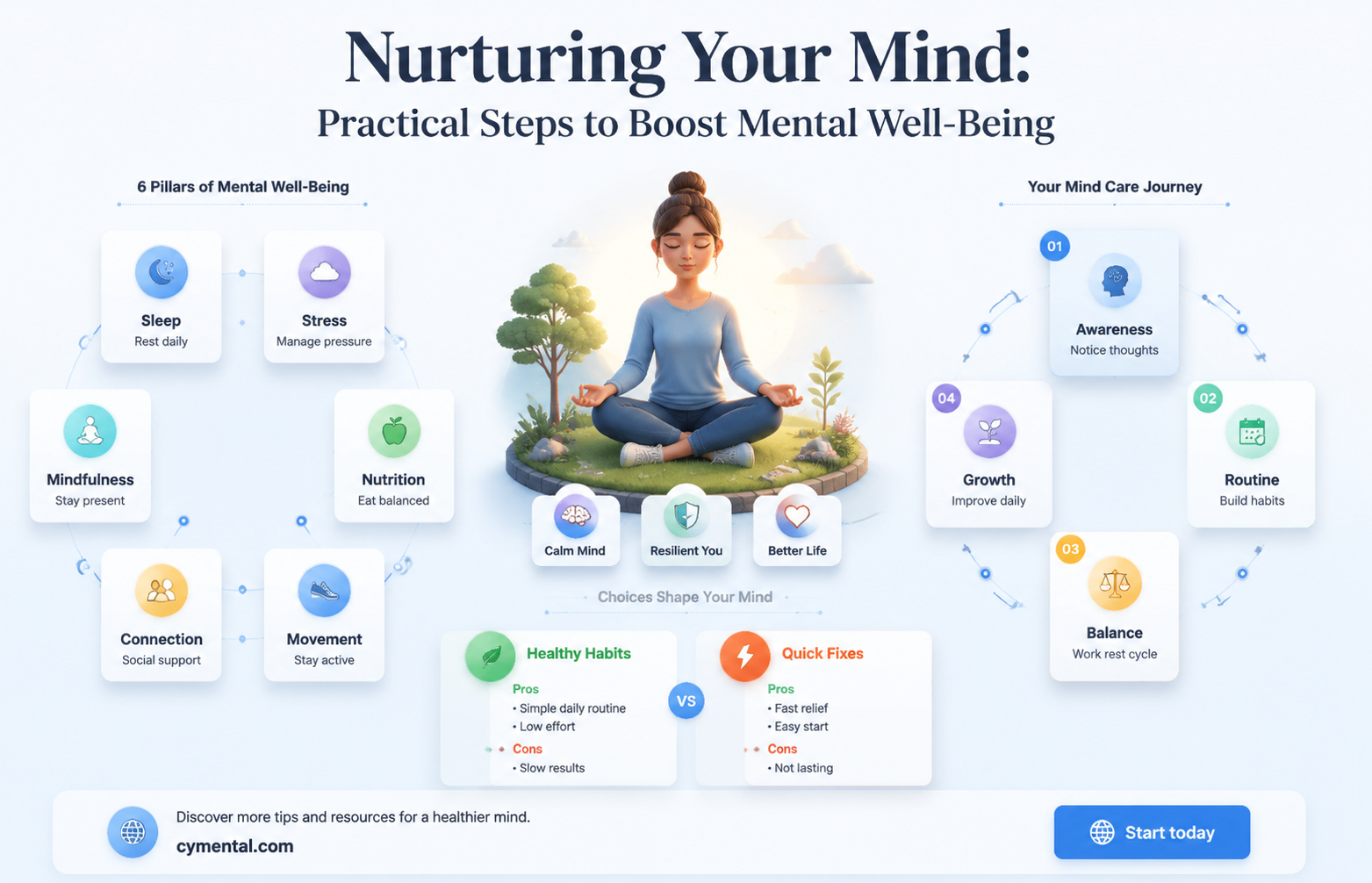
Taking care of your mental health is essential for overall well-being, and there are numerous proactive steps you can take to support yourself. Engaging in regular physical activity, such as walking or yoga, can reduce stress and boost mood, while maintaining a balanced diet rich in nutrients supports brain function. Prioritizing sleep and establishing a consistent routine helps regulate emotions and improve focus. Practicing mindfulness or meditation can foster self-awareness and reduce anxiety, and connecting with loved ones or seeking social support combats feelings of isolation. Setting realistic goals, managing time effectively, and allowing yourself moments of relaxation are also crucial. Additionally, seeking professional help when needed, whether through therapy or counseling, can provide valuable tools and insights for managing mental health challenges. By incorporating these habits into your daily life, you can actively nurture your mental well-being and build resilience.
Explore related products


$14.99 $29.99


What You'll Learn
- Practice Mindfulness: Focus on the present moment to reduce stress and improve clarity
- Stay Active: Regular exercise boosts mood, reduces anxiety, and enhances overall well-being
- Build Connections: Foster supportive relationships to combat loneliness and strengthen emotional health
- Prioritize Sleep: Quality rest is essential for emotional regulation and mental resilience
- Set Boundaries: Protect your mental space by limiting stressors and saying no when needed

Practice Mindfulness: Focus on the present moment to reduce stress and improve clarity
The human mind is a restless wanderer, often darting between past regrets and future anxieties. This mental time travel, while natural, can amplify stress and cloud judgment. Mindfulness—the practice of anchoring your attention to the present moment—serves as a counterbalance, offering a sanctuary of calm amidst the chaos. By consciously observing your thoughts, feelings, and sensations without judgment, you disrupt the cycle of rumination and worry. Research shows that even brief periods of mindfulness can reduce cortisol levels, the body’s primary stress hormone, and enhance cognitive clarity.
To begin, set aside 5–10 minutes daily for a simple mindfulness exercise. Sit comfortably, close your eyes, and focus on your breath. Notice the air entering and leaving your nostrils, the rise and fall of your chest. When your mind wanders (and it will), gently guide your attention back to the breath. This practice isn’t about emptying your mind but cultivating awareness of the present. For those new to mindfulness, guided apps like Headspace or Calm can provide structure. Over time, increase the duration to 15–20 minutes, but consistency matters more than length.
Mindfulness isn’t confined to formal meditation sessions. Incorporate it into daily activities by engaging your senses fully. For instance, when eating, savor each bite—notice the texture, flavor, and aroma. During a walk, pay attention to the sensation of your feet touching the ground or the sounds around you. This "informal mindfulness" transforms mundane tasks into opportunities for grounding. Studies suggest that such practices can improve emotional regulation and reduce symptoms of anxiety and depression, particularly in adults aged 18–65.
However, mindfulness isn’t a cure-all, and it requires patience. Some individuals may feel frustrated by the inability to "quiet" their minds immediately. Others might misinterpret mindfulness as suppressing emotions, which is counterproductive. The key is to approach it with curiosity rather than criticism. If you find yourself resisting the practice, acknowledge the resistance as part of the process. For those with severe mental health conditions, mindfulness should complement, not replace, professional treatment.
Incorporating mindfulness into your routine is akin to building a mental muscle—it strengthens over time. Start small, stay consistent, and adapt the practice to fit your lifestyle. Whether through formal meditation or mindful moments in daily life, the goal is to create a habit of presence. By doing so, you’ll not only reduce stress but also cultivate a deeper appreciation for the here and now, where life truly unfolds.
Ensure Plus and Mental Health: Exploring Nutritional Support for Well-Being
You may want to see also
Explore related products


Stay Active: Regular exercise boosts mood, reduces anxiety, and enhances overall well-being
Physical activity isn't just about building muscle or losing weight; it's a powerful tool for reshaping your mental landscape. Research consistently shows that regular exercise acts as a natural antidepressant, increasing levels of serotonin and norepinephrine, neurotransmitters crucial for mood regulation. Imagine these chemicals as your brain's internal cheerleaders, and exercise is their megaphone. A study published in the *Journal of Psychiatric Research* found that just 30 minutes of moderate-intensity exercise, like brisk walking or cycling, three times a week, significantly reduced symptoms of depression in participants.
Think of it as a dose of happiness, prescribed by your body.
But how does this translate into everyday life? Picture this: you've had a stressful day at work, deadlines looming, emails piling up. Instead of reaching for a sugary snack or zoning out in front of the TV, you lace up your sneakers and go for a run. As your heart rate climbs, so does your mood. The rhythmic motion, the rush of endorphins, the sense of accomplishment – it's a natural stress reliever, leaving you feeling calmer and more in control. This isn't just anecdotal; studies show that exercise reduces cortisol, the stress hormone, leading to a more balanced and resilient mindset.
The beauty of using exercise for mental well-being lies in its accessibility. You don't need a gym membership or fancy equipment. A brisk walk in the park, a dance session in your living room, or even a vigorous gardening session can all contribute to that mood-boosting effect. The key is consistency. Aim for at least 150 minutes of moderate-intensity exercise or 75 minutes of vigorous exercise per week, as recommended by the World Health Organization. Break it down into manageable chunks – 30 minutes a day, five times a week – and soon it'll become a habit, not a chore.
Remember, it's not about becoming an athlete; it's about moving your body in a way that feels good and nourishes your mind.
While the benefits are clear, it's important to be mindful of potential pitfalls. Don't fall into the trap of over-exercising, as this can lead to fatigue and increased stress. Listen to your body and rest when needed. If you're new to exercise, start slowly and gradually increase intensity. Consult a healthcare professional if you have any underlying health conditions. Think of exercise as a tool in your mental health toolkit, one that complements other strategies like therapy, mindfulness, and social connection. By incorporating regular physical activity into your routine, you're not just strengthening your body; you're building a stronger, more resilient mind.
Boxing's Impact: Boosting Mental Health and Emotional Resilience
You may want to see also
Explore related products


Build Connections: Foster supportive relationships to combat loneliness and strengthen emotional health
Human beings are inherently social creatures, and our mental health thrives on meaningful connections. Loneliness, often described as a silent epidemic, can have devastating effects on emotional well-being, increasing the risk of depression, anxiety, and even physical health problems. Building and nurturing supportive relationships acts as a powerful antidote, providing a sense of belonging, emotional support, and a buffer against life's stressors.
Imagine a safety net woven from threads of trust, empathy, and shared experiences. This is what supportive relationships offer. They provide a safe space to express vulnerabilities, celebrate triumphs, and navigate life's challenges together.
Cultivating these connections requires intentionality. Start by identifying individuals who uplift and energize you – friends, family, colleagues, or even online communities sharing common interests. Prioritize quality over quantity; a few deep, meaningful relationships are more beneficial than a large circle of acquaintances.
Make time for regular interactions, whether it's weekly coffee dates, phone calls, or shared activities. Active listening is crucial – be fully present, ask questions, and show genuine interest in the other person's life. Vulnerability is key; sharing your own thoughts and feelings fosters reciprocity and deepens the bond.
Remember, building connections is a two-way street. Be reliable, supportive, and celebrate the successes of those around you. Offer help when needed, and be willing to accept help in return. Consider joining clubs, volunteering, or taking classes to meet people with similar interests. Online platforms can also provide valuable connections, especially for those with limited mobility or social anxiety. However, strive for a balance between virtual and in-person interactions, as face-to-face contact offers unique benefits for emotional well-being.
Building supportive relationships is an investment in your mental health. It takes time and effort, but the rewards are immeasurable. By fostering these connections, you create a network of support that strengthens your resilience, enhances your sense of belonging, and enriches your life in countless ways.
Transgender Surgery: Impact on Mental Health and Well-Being Explored
You may want to see also
Explore related products

$12.68 $18.95


$20.49 $36.99


Prioritize Sleep: Quality rest is essential for emotional regulation and mental resilience
Sleep isn't just downtime for your body; it's active maintenance for your brain. During sleep, the brain consolidates memories, clears waste products, and recalibrates emotional circuits. Studies show that even one night of poor sleep can increase emotional reactivity by 60%, making everyday stressors feel insurmountable. Conversely, consistent quality sleep strengthens the prefrontal cortex, the brain region responsible for rational decision-making and emotional control. This biological process underscores why prioritizing sleep isn't a luxury—it's a cornerstone of mental resilience.
To harness sleep's restorative power, aim for 7-9 hours nightly, tailored to your age and lifestyle. Teenagers, for instance, require closer to 9 hours due to ongoing brain development, while adults over 65 may need slightly less. Consistency is key: maintain a regular sleep schedule, even on weekends, to reinforce your body's circadian rhythm. Create a sleep-conducive environment by keeping your bedroom cool (60-67°F), dark, and quiet. Invest in blackout curtains, earplugs, or a white noise machine if necessary. Avoid screens at least an hour before bed, as the blue light emitted by devices suppresses melatonin, the sleep-regulating hormone.
Practical strategies can further enhance sleep quality. Establish a calming pre-sleep routine—reading, journaling, or practicing deep breathing exercises—to signal to your brain that bedtime is approaching. Limit caffeine intake after 2 PM, as its effects can linger for up to 8 hours. Similarly, avoid heavy meals, alcohol, and vigorous exercise close to bedtime, as these can disrupt sleep patterns. If you struggle with falling asleep, try the "4-7-8" breathing technique: inhale for 4 seconds, hold for 7, and exhale for 8. This activates the parasympathetic nervous system, promoting relaxation.
While prioritizing sleep is crucial, it’s equally important to address underlying issues that may interfere with rest. Chronic stress, anxiety, or sleep disorders like insomnia require targeted interventions. Cognitive-behavioral therapy for insomnia (CBT-I) is a proven method to reframe negative thought patterns around sleep. For those with irregular schedules, gradual adjustments—shifting bedtime by 15 minutes nightly—can help realign the body’s internal clock. Remember, sleep isn’t a passive activity; it’s an active investment in your mental health. By treating it as a non-negotiable priority, you fortify your emotional resilience and equip yourself to navigate life’s challenges with greater clarity and stability.
Music Therapy: A Powerful Tool for Adult Mental Health Healing
You may want to see also
Explore related products




Set Boundaries: Protect your mental space by limiting stressors and saying no when needed
Boundaries are the invisible fences that safeguard your mental garden, keeping out weeds of stress and obligation. Without them, your mind becomes a public park, overrun by demands that drain your energy and cloud your clarity. Setting boundaries isn’t selfish—it’s a survival skill in a world that glorifies overcommitment. Start by identifying your limits: What tasks, people, or situations consistently leave you feeling depleted? Once you recognize these stressors, practice saying "no" without apology. For instance, if a coworker habitually dumps their workload on you, respond with, "I’m focused on my own tasks right now, but I’d be happy to help once I finish." This simple act of self-preservation frees up mental bandwidth for what truly matters.
The art of boundary-setting extends beyond words—it’s about actions and consistency. For example, designate tech-free hours to disconnect from the constant ping of notifications, a proven stressor for 60% of adults. Or, if family gatherings leave you emotionally drained, limit your stay to two hours instead of the usual six. These small, deliberate changes create a buffer between you and the chaos, allowing your mind to recharge. Think of it as installing a mental firewall: it filters out the noise while letting in the nourishment.
Critics might argue that boundaries risk damaging relationships, but the opposite is true. Healthy boundaries foster respect and clarity. When you communicate your limits, you teach others how to treat you. For instance, telling a friend, "I can’t talk right now, but I’ll call you later," preserves your peace without severing the connection. Over time, this practice strengthens relationships by eliminating resentment and burnout. It’s not about isolation—it’s about intentional engagement.
Finally, boundary-setting is a skill that requires practice and self-compassion. Start small: decline one non-essential request this week, or silence your phone during dinner. Celebrate these victories, no matter how minor. Remember, your mental space is sacred, and protecting it is an act of self-love. As you refine this skill, you’ll notice a shift: less overwhelm, more clarity, and a renewed sense of control. Boundaries aren’t barriers—they’re bridges to a healthier, more balanced life.
Spirituality and Mental Health: Exploring Inner Peace for Well-Being
You may want to see also
Frequently asked questions
Incorporating daily habits like regular exercise, mindfulness or meditation, adequate sleep, and maintaining a balanced diet can significantly boost mental health. Staying hydrated, limiting screen time, and engaging in hobbies or activities you enjoy also contribute to overall well-being.
Managing stress and anxiety involves practicing relaxation techniques such as deep breathing, progressive muscle relaxation, or yoga. Setting boundaries, prioritizing tasks, and seeking support from friends, family, or a therapist can also help. Avoiding excessive caffeine and alcohol is beneficial.
Social connection is vital for mental health as it reduces feelings of loneliness and isolation. Building and maintaining relationships, engaging in group activities, or joining community organizations can provide emotional support and a sense of belonging. Even small interactions, like talking to a friend or neighbor, can make a positive difference.