Ava Ramirez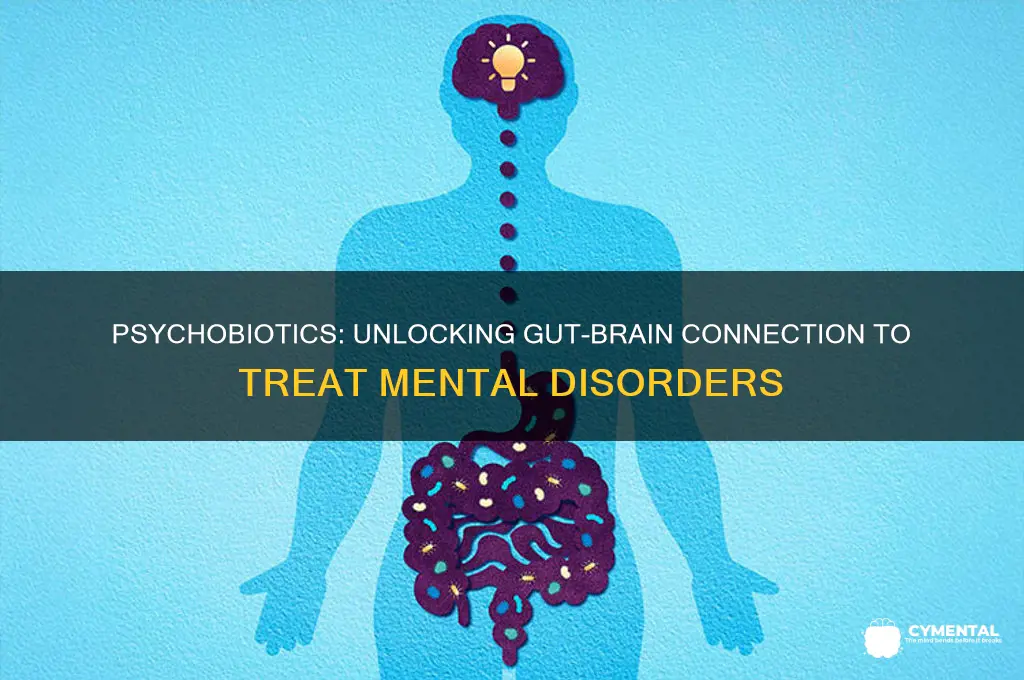
Psychobiotics, a class of probiotics and prebiotics that influence the gut-brain axis, have emerged as a promising avenue for treating mental disorders. By modulating the gut microbiome, these beneficial microorganisms can produce neuroactive compounds, reduce inflammation, and enhance neurotransmitter signaling, all of which play critical roles in mental health. Research suggests that psychobiotics may alleviate symptoms of anxiety, depression, and stress-related disorders by restoring microbial balance and improving communication between the gut and brain. This innovative approach offers a potential complementary or alternative treatment for mental health conditions, highlighting the intricate connection between gut health and psychological well-being.
| Characteristics | Values |
|---|---|
| Definition | Psychobiotics are live organisms (probiotics) or substances that, when ingested, affect the brain and behavior by modulating the gut-brain axis. |
| Mechanism of Action | They influence the gut microbiome, reduce inflammation, modulate neurotransmitter production (e.g., serotonin, GABA), and regulate the hypothalamic-pituitary-adrenal (HPA) axis. |
| Impact on Mental Disorders | Psychobiotics have shown potential in alleviating symptoms of anxiety, depression, stress-related disorders, and cognitive impairments by improving gut-brain communication. |
| Neurotransmitter Regulation | They enhance the production of serotonin (90% of which is produced in the gut) and GABA, which are crucial for mood regulation and stress reduction. |
| Anti-inflammatory Effects | Psychobiotics reduce systemic inflammation, which is often elevated in mental disorders like depression and anxiety. |
| HPA Axis Modulation | They help regulate the stress response by normalizing cortisol levels and reducing hyperactivity of the HPA axis. |
| Gut Barrier Integrity | Psychobiotics strengthen the intestinal barrier, reducing "leaky gut" and preventing harmful substances from entering the bloodstream, which can negatively impact brain health. |
| Microbiome Diversity | They promote a balanced and diverse gut microbiome, which is associated with better mental health outcomes. |
| Clinical Evidence | Studies have shown that specific strains (e.g., Lactobacillus and Bifidobacterium) can reduce anxiety and depression symptoms in both animal models and human trials. |
| Potential for Personalized Treatment | Psychobiotics may offer personalized therapy based on an individual's unique gut microbiome composition, though more research is needed. |
| Limitations | Effects vary among individuals due to differences in gut microbiota, and long-term efficacy and safety require further investigation. |
| Examples of Psychobiotics | Lactobacillus rhamnosus JB-1, Bifidobacterium longum 1714, and Lactobacillus helveticus R0051 are among the strains studied for their psychobiotic effects. |
| Future Research Directions | Ongoing research focuses on identifying specific strains, optimal dosages, and combinations with prebiotics (synbiotics) for enhanced efficacy in mental health treatment. |
Explore related products




What You'll Learn

Gut-Brain Axis Interaction
The gut-brain axis is a bidirectional communication network linking the central nervous system with the gastrointestinal tract, influencing mental health through microbial activity. Psychobiotics—live organisms that, when ingested, confer mental health benefits—modulate this axis by altering gut microbiota composition. For instance, *Lactobacillus* and *Bifidobacterium* strains produce neuroactive compounds like gamma-aminobutyric acid (GABA) and serotonin, which regulate mood and anxiety. Clinical trials show that daily supplementation with *Bifidobacterium longum* 1714 significantly reduces stress-related cortisol levels in adults aged 18–65, highlighting the gut’s role in emotional regulation.
To harness psychobiotics effectively, consider targeted strains for specific disorders. For depression, *Lactobacillus helveticus* and *Bifidobacterium longum* R0175 have shown promise in reducing depressive symptoms when taken at 1–2 billion CFUs daily for 4–8 weeks. In contrast, *Lactobacillus casei* Shirota may alleviate anxiety at 24 billion CFUs daily. Pairing these with prebiotic fibers like inulin enhances their efficacy by fostering microbial growth. However, individual responses vary, so monitoring symptoms weekly is crucial for adjusting dosages or strains.
A comparative analysis reveals that psychobiotics act via multiple pathways: they reduce intestinal permeability, lowering systemic inflammation, and produce short-chain fatty acids (SCFAs) like butyrate, which protect the blood-brain barrier. For example, butyrate increases brain-derived neurotrophic factor (BDNF), a protein critical for neuronal health, often deficient in depression. Unlike pharmaceuticals, psychobiotics offer a holistic approach with minimal side effects, making them suitable for long-term use, particularly in adolescents and adults seeking non-invasive interventions.
Practical implementation requires consistency and patience. Start with a single-strain probiotic to assess tolerance, gradually introducing multi-strain formulations. Combine with a fiber-rich diet (e.g., garlic, bananas, oats) to optimize results. Caution is advised for immunocompromised individuals or those on antibiotics, as microbial interactions may be unpredictable. Regular stool testing can track microbiota changes, ensuring the intervention aligns with mental health goals. This gut-brain synergy underscores the potential of psychobiotics as a personalized, evidence-based strategy for mental wellness.
Free Clinics and Mental Health: Accessible Support or Limited Services?
You may want to see also
Explore related products


Microbiome Imbalance Correction
The gut-brain axis is a bidirectional communication network linking the central nervous system with the gastrointestinal tract, and its imbalance has been implicated in various mental disorders. Microbiome imbalance correction aims to restore this delicate equilibrium by targeting the gut microbiota, which plays a pivotal role in modulating mood, cognition, and behavior. Psychobiotics, a class of probiotics and prebiotics with demonstrated psychological benefits, offer a promising avenue for achieving this correction.
Consider the case of Lactobacillus rhamnosus (JB-1), a well-studied psychobiotic strain. In a 2011 study published in *Proceedings of the National Academy of Sciences*, healthy mice administered this strain exhibited reduced stress-induced corticosterone levels and anxiety-like behaviors compared to controls. Translating this to humans, a 2017 randomized controlled trial in *Translational Psychiatry* found that daily supplementation of 3 billion CFU of *Bifidobacterium longum 1714* for four weeks significantly lowered stress responses and improved memory in adults aged 18–65. These findings underscore the potential of targeted psychobiotic interventions to correct microbiome imbalances associated with mental health conditions.
To implement microbiome imbalance correction effectively, follow these steps: 1) Assess baseline gut health through stool tests or symptom tracking; 2) Select evidence-based psychobiotics like *Lactobacillus helveticus R0052* and *Bifidobacterium longum R0175* (combined in commercial formulations such as Probio’Stick), which have shown efficacy in reducing anxiety and depression symptoms; 3) Start with a low dosage (e.g., 1–5 billion CFU daily) and gradually increase to minimize gastrointestinal side effects; 4) Pair probiotics with prebiotic fibers (e.g., inulin or fructooligosaccharides) to enhance microbial colonization. Caution: Individuals with compromised immune systems or severe mental health conditions should consult a healthcare provider before initiating psychobiotic therapy.
A comparative analysis reveals that while pharmaceutical interventions for mental disorders often target neurotransmitter systems directly, psychobiotics act indirectly by modulating the gut-brain axis. For instance, selective serotonin reuptake inhibitors (SSRIs) increase serotonin availability in the brain, whereas psychobiotics like *Lactobacillus brevis* and *Bifidobacterium dentium* promote serotonin production in the gut, where 90% of the body’s serotonin is synthesized. This dual-action approach not only addresses symptoms but also potentially corrects underlying microbiome dysregulation, offering a more holistic treatment strategy.
In practice, combining psychobiotics with lifestyle modifications amplifies their efficacy. Incorporate fermented foods (e.g., kimchi, kefir) into the diet to naturally diversify gut microbiota, prioritize sleep hygiene (7–9 hours per night) to support microbial recovery, and manage stress through mindfulness practices. For children and adolescents, whose microbiomes are still developing, age-appropriate psychobiotic formulations (e.g., *Lactobacillus acidophilus* and *Bifidobacterium animalis* in kid-friendly dosages of 1–2 billion CFU) can be particularly beneficial in preventing early-onset anxiety or mood disorders.
In conclusion, microbiome imbalance correction through psychobiotics represents a nuanced, evidence-based approach to mental health management. By restoring gut-brain axis harmony, these interventions offer a complementary or alternative strategy to traditional therapies, with the added advantage of minimal side effects and broad-spectrum benefits. As research advances, personalized psychobiotic regimens tailored to individual microbiome profiles may become the gold standard in mental disorder treatment.
Social Care Services: Supporting Mental Health and Well-being Effectively
You may want to see also
Explore related products



Anxiety and Depression Reduction
Psychobiotics, a class of probiotics and prebiotics with demonstrated psychological benefits, have emerged as a promising adjunctive therapy for anxiety and depression. Clinical trials indicate that specific strains, such as *Lactobacillus rhamnosus* (JB-1) and *Bifidobacterium longum* (1714), modulate the gut-brain axis by reducing inflammation, normalizing stress hormone levels, and increasing neurotransmitter production like serotonin. For instance, a 2017 study published in *Translational Psychiatry* found that participants with mild to moderate anxiety experienced a 25% reduction in symptoms after four weeks of daily *Bifidobacterium longum* supplementation.
To harness these benefits, consider incorporating psychobiotic-rich foods or supplements into your routine. Fermented foods like kefir, sauerkraut, and kimchi are natural sources of beneficial bacteria, while targeted supplements offer precise strains and dosages. For adults, a daily dose of 1–10 billion CFUs (colony-forming units) of *Lactobacillus* or *Bifidobacterium* strains is commonly recommended, though individual needs may vary. Consult a healthcare provider to tailor dosage, especially if you’re pregnant, elderly, or have underlying health conditions.
While psychobiotics show potential, they are not a standalone cure for anxiety or depression. Their efficacy is maximized when paired with lifestyle modifications such as regular exercise, a balanced diet, and adequate sleep. For example, combining psychobiotics with mindfulness practices like meditation or yoga can enhance their anxiolytic effects. Conversely, high-sugar diets or chronic stress may undermine their benefits, as these factors disrupt gut microbiota balance.
A comparative analysis reveals that psychobiotics offer a gentler alternative to traditional antidepressants, with fewer side effects and a lower risk of dependency. Unlike SSRIs, which can take weeks to show results, some users report improvements in mood and anxiety within 2–4 weeks of starting psychobiotics. However, consistency is key—discontinuing use prematurely may halt progress. For sustained benefits, view psychobiotics as a long-term investment in mental health rather than a quick fix.
In conclusion, psychobiotics provide a scientifically grounded, accessible tool for reducing anxiety and depression symptoms. By targeting the gut-brain axis, they address root physiological imbalances while complementing conventional treatments. Practical implementation involves selecting the right strains, maintaining a supportive lifestyle, and managing expectations for gradual, cumulative results. As research evolves, psychobiotics stand out as a holistic, evidence-based approach to mental wellness.
Kicking Stigma: Football's Impact on Mental Health and Well-Being
You may want to see also
Explore related products




Stress Response Modulation
Stress, an inevitable part of life, triggers a cascade of physiological responses that, when chronic, can contribute to mental disorders such as anxiety and depression. Psychobiotics, beneficial bacteria that influence the gut-brain axis, offer a novel approach to modulating this stress response. Research indicates that certain strains, like *Lactobacillus rhamnosus* and *Bifidobacterium longum*, can reduce cortisol levels—the primary stress hormone—and lower markers of inflammation, which are often elevated under stress. For instance, a study published in *Psychopharmacology* found that participants who consumed *Lactobacillus helveticus* and *Bifidobacterium longum* for 30 days exhibited reduced anxiety and improved mood compared to a placebo group.
To harness psychobiotics for stress modulation, consider incorporating specific strains into your daily routine. A typical dosage ranges from 1 to 10 billion colony-forming units (CFUs) per day, depending on the strain and formulation. For example, *Lactobacillus rhamnosus* (strain JB-1) has shown efficacy at 1 billion CFUs daily in reducing stress-related symptoms in adults aged 18–65. Pairing psychobiotics with prebiotic-rich foods like garlic, bananas, or chicory root can enhance their effectiveness by promoting the growth of beneficial bacteria. However, consistency is key—results often take 4–6 weeks to manifest, so patience is essential.
While psychobiotics show promise, they are not a one-size-fits-all solution. Individual responses vary based on factors like gut microbiome composition, diet, and baseline stress levels. For instance, individuals with irritable bowel syndrome (IBS) may experience heightened sensitivity to certain strains, requiring lower dosages or alternative formulations. Additionally, combining psychobiotics with lifestyle interventions—such as mindfulness practices, regular exercise, and adequate sleep—can amplify their stress-reducing effects. Caution should be exercised in those with compromised immune systems or severe gastrointestinal conditions, as high-dose probiotics may pose risks.
A comparative analysis of psychobiotics versus traditional stress management tools reveals their unique advantages. Unlike pharmaceuticals, which often target specific neurotransmitters, psychobiotics address the underlying gut-brain connection, offering a holistic approach. For example, while selective serotonin reuptake inhibitors (SSRIs) directly increase serotonin levels, psychobiotics enhance serotonin production indirectly by promoting gut health. This makes them a valuable adjunct or alternative for individuals seeking natural, systemic solutions. However, they should not replace prescribed treatments without medical consultation.
In practice, integrating psychobiotics into a stress management regimen requires a tailored approach. Start with a single strain at a low dose to assess tolerance, gradually increasing as needed. Keep a symptom journal to track changes in stress levels, mood, and digestive health. For children and adolescents, consult a pediatrician, as research on psychobiotics in younger populations is still emerging. Ultimately, psychobiotics represent a promising tool in the arsenal against stress-related mental disorders, but their effectiveness lies in informed, personalized use.
Kratom and Mental Health: Exploring Its Potential Benefits and Risks
You may want to see also
Explore related products



Neurotransmitter Production Enhancement
Psychobiotics, beneficial bacteria that influence mental health, have emerged as a promising avenue for treating mental disorders. Among their many mechanisms, one of the most significant is their ability to enhance neurotransmitter production. Neurotransmitters, the brain's chemical messengers, play a critical role in regulating mood, anxiety, and cognitive function. Imbalances in these chemicals are often linked to conditions like depression, anxiety, and even schizophrenia. Psychobiotics, primarily through their interaction with the gut-brain axis, can modulate the production and availability of key neurotransmitters such as serotonin, dopamine, and GABA.
Consider serotonin, often dubbed the "feel-good" neurotransmitter, which is largely produced in the gut. Studies show that certain strains of psychobiotics, such as *Lactobacillus* and *Bifidobacterium*, can increase tryptophan availability—a precursor to serotonin. For instance, a 2017 study published in *Psychopharmacology* found that participants who consumed a mix of *Lactobacillus helveticus* and *Bifidobacterium longum* for four weeks exhibited reduced stress and anxiety, likely due to enhanced serotonin synthesis. To harness this benefit, incorporating fermented foods like yogurt, kefir, or sauerkraut into your diet, or taking a probiotic supplement containing these strains (10–20 billion CFUs daily), could be a practical starting point.
Another critical neurotransmitter influenced by psychobiotics is gamma-aminobutyric acid (GABA), which helps regulate anxiety and stress. Certain psychobiotic strains, such as *Lactobacillus brevis* and *Bifidobacterium dentium*, have been shown to produce GABA directly in the gut. A 2016 study in *Frontiers in Psychology* demonstrated that GABA-producing psychobiotics reduced symptoms of depression and anxiety in participants. For those seeking to boost GABA levels, combining psychobiotic supplements with prebiotic-rich foods like garlic, onions, and bananas can enhance their efficacy. However, it’s essential to consult a healthcare provider before starting any new regimen, especially for individuals on medication, as interactions are possible.
Dopamine, the neurotransmitter associated with motivation and reward, is also influenced by psychobiotics. Research suggests that strains like *Bacillus subtilis* can modulate dopamine levels by reducing inflammation and oxidative stress in the brain. A 2019 study in *Neuroscience Letters* found that mice treated with *Bacillus subtilis* exhibited improved cognitive function and increased dopamine activity. While human studies are still emerging, incorporating psychobiotic-rich foods or supplements (5–10 billion CFUs daily) could support dopamine production, particularly in individuals with mood disorders or cognitive decline. Pairing these interventions with lifestyle changes, such as regular exercise and adequate sleep, can amplify their effects.
Incorporating psychobiotics to enhance neurotransmitter production is not a one-size-fits-all approach. Factors like age, gut health, and the severity of mental health symptoms influence efficacy. For example, older adults may require higher doses of psychobiotics due to age-related changes in gut microbiota, while younger individuals might respond more quickly to dietary modifications. Monitoring symptoms and adjusting dosages under professional guidance is crucial. Additionally, combining psychobiotics with other treatments, such as therapy or medication, can provide a more comprehensive approach to managing mental disorders. By understanding the specific mechanisms of neurotransmitter enhancement, individuals can make informed decisions to support their mental health effectively.
Nature's Healing Power: Boosting Mental Health and Well-being Naturally
You may want to see also
Frequently asked questions
Psychobiotics are live bacteria (probiotics) or prebiotics that, when ingested, have a positive effect on mental health by influencing the gut-brain axis. They help regulate mood, reduce anxiety, and improve cognitive function.
Psychobiotics can reduce anxiety and depression by modulating the gut microbiome, which produces neurotransmitters like serotonin and GABA. They also reduce inflammation and improve stress resilience, contributing to better mental health.
While psychobiotics show promise in supporting mental health, they are not a replacement for traditional treatments like medication or therapy. They are often used as a complementary approach to enhance overall well-being.
Psychobiotics may benefit conditions such as depression, anxiety, stress-related disorders, and even cognitive impairments like mild cognitive decline. Research is ongoing to explore their effectiveness in other disorders.
Psychobiotics are generally safe for most people, but some individuals may experience mild side effects like bloating or digestive discomfort. It’s important to consult a healthcare provider before starting any new supplement regimen.