Lucas Bennett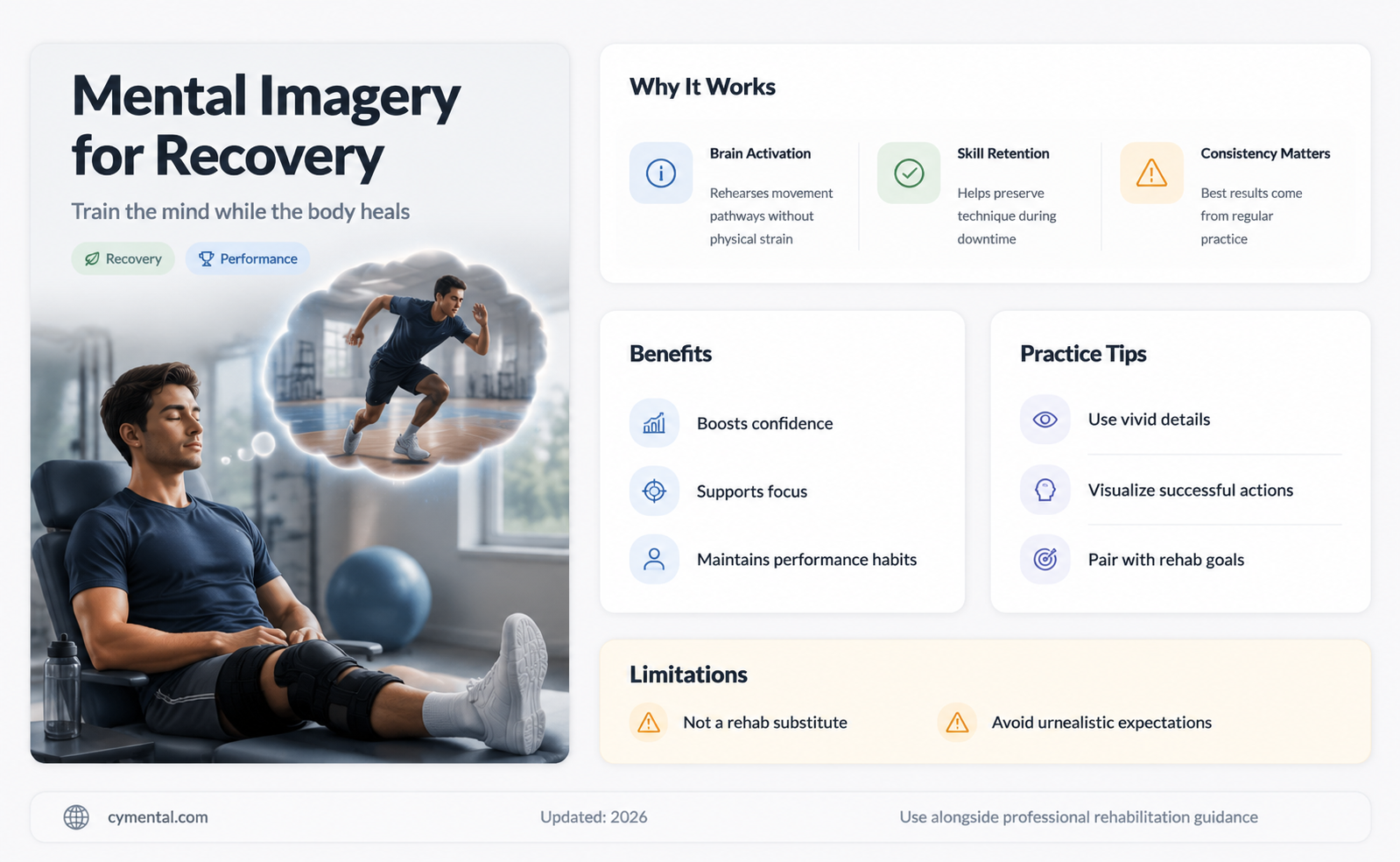
Mental imagery, often referred to as visualization, is a powerful tool that can significantly aid injured athletes in their recovery process. By mentally rehearsing movements, techniques, and scenarios, athletes can maintain and even enhance their cognitive and motor skills while physically unable to train. This practice not only helps in preserving muscle memory but also boosts confidence and reduces anxiety by keeping the athlete mentally engaged with their sport. Additionally, visualization can accelerate physical recovery by promoting a positive mindset, reducing stress, and fostering a stronger mind-body connection, ultimately enabling athletes to return to competition more prepared and resilient.
| Characteristics | Values |
|---|---|
| Pain Management | Reduces perceived pain intensity and discomfort during rehabilitation by distracting the mind and promoting relaxation. |
| Motivation & Adherence | Increases motivation to adhere to rehabilitation programs by visualizing successful recovery and return to sport. |
| Skill Retention & Refinement | Helps maintain and refine sport-specific skills by mentally rehearsing techniques, strategies, and movements even when physical practice is limited. |
| Confidence & Mental Toughness | Boosts confidence and mental resilience by visualizing successful performances and overcoming challenges. |
| Reduced Anxiety & Fear | Alleviates anxiety and fear associated with injury and recovery by creating a sense of control and familiarity with the rehabilitation process. |
| Improved Neuromuscular Activation | Enhances muscle activation patterns and movement efficiency by mentally simulating movements, potentially accelerating physical recovery. |
| Goal Setting & Visualization | Facilitates setting realistic recovery goals and visualizing the steps needed to achieve them, promoting a structured and focused approach to rehabilitation. |
| Psychological Well-being | Improves overall psychological well-being by reducing stress, depression, and feelings of isolation often experienced during injury recovery. |
| Performance Preparation | Prepares athletes mentally for returning to competition by visualizing game scenarios, strategies, and successful performances. |
Explore related products


What You'll Learn
- Visualization for Pain Management: Imagery reduces pain perception, aiding recovery and comfort during rehabilitation
- Maintaining Skill Memory: Mental rehearsal preserves technique and muscle memory despite physical inactivity
- Boosting Motivation: Vivid success imagery inspires athletes to stay committed to recovery goals
- Reducing Anxiety: Imagery calms nerves, easing fear of re-injury and promoting confidence
- Accelerating Recovery: Mental practice complements physical therapy, enhancing overall healing efficiency

Visualization for Pain Management: Imagery reduces pain perception, aiding recovery and comfort during rehabilitation
Mental imagery, particularly visualization, has emerged as a powerful tool in pain management for injured athletes. By engaging the mind’s ability to create vivid sensory experiences, athletes can alter their perception of pain, fostering a more comfortable and efficient recovery process. This technique leverages the brain’s neuroplasticity, retraining it to respond differently to pain signals, which can be particularly beneficial during the often-challenging rehabilitation phase.
Consider the case of a runner recovering from a stress fracture. Instead of fixating on the discomfort during physical therapy, they can practice guided visualization, imagining their bones strengthening with each step. Research suggests that such mental exercises can reduce pain intensity by up to 30%, as the brain shifts focus from the pain to the positive imagery. To implement this, athletes should dedicate 10–15 minutes daily to visualization, ideally in a quiet space. Start by closing your eyes and taking deep breaths, then vividly imagine the injured area healing—colors brightening, tissues regenerating, and strength returning. Pairing this with affirmations like, "My body is healing stronger every day," can amplify the effect.
However, visualization is not a one-size-fits-all solution. Its effectiveness depends on the athlete’s ability to concentrate and the consistency of practice. For younger athletes (under 18), simpler imagery, such as visualizing a favorite sport or activity, may be more engaging. Older athletes might benefit from more detailed, anatomically focused visualizations. Caution should be taken not to overuse this technique as a distraction from underlying issues; it should complement, not replace, medical treatment.
Comparatively, while medication provides immediate pain relief, visualization offers a sustainable, drug-free alternative with no side effects. It also empowers athletes by giving them an active role in their recovery. For instance, a study on post-surgery patients found that those who practiced visualization required 25% less pain medication than those who did not. This highlights its potential as a complementary therapy in rehabilitation programs.
Incorporating visualization into a recovery routine requires patience and practice. Begin with short sessions, gradually increasing duration as focus improves. Apps or guided audio can assist beginners, but personalized imagery tailored to the athlete’s injury and goals often yields better results. For maximum benefit, combine visualization with physical therapy exercises, using imagery to enhance the mental connection to the healing process. Over time, this practice not only reduces pain perception but also builds mental resilience, a critical asset for athletes returning to competition.
Reporting Mental Health Associations: When Help Falls Short, What Next?
You may want to see also
Explore related products


Maintaining Skill Memory: Mental rehearsal preserves technique and muscle memory despite physical inactivity
Injury sidelines athletes, forcing them to confront a stark reality: physical inactivity threatens hard-earned skills. Muscle memory fades, technique grows rusty, and confidence wavers. Yet, the mind remains a powerful tool, capable of bridging the gap between injury and recovery. Mental rehearsal, a cornerstone of sports psychology, emerges as a vital strategy for preserving skill memory during periods of physical inactivity.
Research demonstrates that mentally rehearsing movements activates similar neural pathways as actual physical practice. This "mental practice" strengthens the connections between brain regions responsible for motor control, effectively maintaining muscle memory even when the body is at rest. A study published in the *Journal of Sport and Exercise Psychology* found that athletes who engaged in regular mental imagery during injury rehabilitation retained significantly more skill proficiency compared to those who relied solely on physical therapy.
Imagine a gymnast, sidelined by a torn ACL, visualizing herself flawlessly executing a complex vault routine. She feels the grip on the springboard, the explosive push-off, the precise body positioning in mid-air. This mental rehearsal, repeated daily, keeps the neural pathways associated with the vault active, preventing the deterioration of muscle memory and technical precision.
Upon returning to training, the gymnast finds herself surprisingly closer to her pre-injury form than anticipated. This is the power of mental rehearsal – it acts as a mental gym, keeping the brain's motor programs "in shape" even when the body cannot physically perform.
Implementing mental rehearsal effectively requires structure and consistency. Athletes should dedicate 15-20 minutes daily to vivid, detailed visualizations of their sport-specific skills. They should engage all senses – sight, sound, touch, even smell – to create a realistic mental experience. For instance, a swimmer might imagine the feel of the water against their skin, the sound of their strokes, and the smell of chlorine as they mentally rehearse their race strategy. Combining mental rehearsal with relaxation techniques like deep breathing can further enhance its effectiveness by reducing stress and promoting focus.
While mental rehearsal is a powerful tool, it's crucial to remember it's not a replacement for physical training. Once cleared by a medical professional, athletes should gradually reintroduce physical activity, using mental rehearsal as a complementary strategy to accelerate skill recovery and rebuild confidence. By harnessing the power of the mind, injured athletes can emerge from their setbacks not just physically healed, but with their skills remarkably intact.
Napping for Mental Health: Can Short Sleeps Ease Symptoms?
You may want to see also
Explore related products


Boosting Motivation: Vivid success imagery inspires athletes to stay committed to recovery goals
Injured athletes often face a daunting mental battle alongside their physical recovery. Motivation wanes, doubts creep in, and the long road back can feel insurmountable. This is where vivid success imagery steps in as a powerful tool, reigniting the fire within and keeping athletes laser-focused on their recovery goals.
Imagine this: a sprinter, sidelined by a torn hamstring, visualizes herself exploding out of the blocks, her strides powerful and fluid, crossing the finish line in a personal best. This isn't mere daydreaming; it's a deliberate mental exercise, a rehearsal for success. Research shows that such vivid imagery activates the same neural pathways as actual physical performance, priming the athlete's mind and body for future action.
The key lies in the detail. The more vivid and multisensory the imagery, the greater its impact. Encourage athletes to engage all their senses: the feel of the starting block beneath their feet, the roar of the crowd, the burn in their legs as they push through the final meters. This immersive experience creates a powerful emotional connection to the desired outcome, fueling motivation and resilience.
Think of it as a mental blueprint for recovery. By repeatedly visualizing success, athletes essentially rehearse the steps needed to achieve it. This mental practice builds confidence, reduces anxiety, and fosters a sense of control over the recovery process. It's not about ignoring the challenges; it's about mentally conquering them, one vivid image at a time.
Implementing this technique is surprisingly simple. Dedicate 10-15 minutes daily to guided imagery sessions. Start with a relaxed state, then gradually build the scene, focusing on the athlete's specific goals and desired outcomes. Encourage them to record their own visualizations for personalized practice. Consistency is key; regular mental rehearsals reinforce the neural pathways associated with success, making the desired outcome feel increasingly attainable.
While vivid success imagery is a powerful tool, it's not a magic bullet. It should complement, not replace, physical therapy and medical treatment. Additionally, athletes should be mindful of setting realistic goals within their recovery timeline. The imagery should inspire, not create unrealistic expectations. When used strategically, however, vivid success imagery can be a game-changer, transforming the recovery journey from a grueling slog into a purposeful march towards triumph.
Supporting Your Mentally Ill Daughter: Practical Ways to Help and Heal
You may want to see also
Explore related products


Reducing Anxiety: Imagery calms nerves, easing fear of re-injury and promoting confidence
Injured athletes often face a silent adversary: anxiety. The fear of re-injury can cripple their mental state, hindering recovery and delaying their return to sport. Mental imagery, a powerful psychological tool, offers a solution by calming nerves and rebuilding confidence. By visualizing successful performances and pain-free movement, athletes can reframe their mindset, reducing the anxiety that often accompanies the rehabilitation process.
Consider the case of a runner recovering from a stress fracture. Daily imagery sessions, lasting 10-15 minutes, can involve visualizing themselves running effortlessly on their favorite trail, feeling the ground beneath their feet, and hearing the rhythm of their breath. This practice, when combined with physical therapy, helps dissociate the mental image of running from the fear of pain. Over time, the athlete’s confidence grows, and the anxiety surrounding re-injury diminishes. Research supports this approach, showing that athletes who incorporate mental imagery into their recovery report lower levels of anxiety and greater adherence to rehabilitation protocols.
To implement this strategy effectively, athletes should follow a structured routine. Begin by finding a quiet, comfortable space where distractions are minimized. Close your eyes and take deep breaths to center yourself. Then, vividly imagine performing the movements or skills related to your sport, focusing on sensations, emotions, and outcomes. For instance, a basketball player recovering from a knee injury might visualize dribbling, pivoting, and shooting without discomfort, emphasizing the strength and stability of their healed knee. Repeat this practice daily, gradually increasing the complexity of the imagery as confidence builds.
While mental imagery is a valuable tool, it’s essential to pair it with realistic expectations and professional guidance. Athletes should avoid rushing their recovery, even if their mental confidence outpaces their physical readiness. Working with a sports psychologist or coach can ensure the imagery techniques are tailored to individual needs and integrated seamlessly into the overall rehabilitation plan. When used correctly, mental imagery becomes a bridge between fear and confidence, helping athletes reclaim their mental and physical strength.
Red Light Therapy: A Mental Health Game-Changer or Myth?
You may want to see also
Explore related products


Accelerating Recovery: Mental practice complements physical therapy, enhancing overall healing efficiency
Mental practice, often referred to as visualization or mental imagery, is a powerful tool that can significantly accelerate recovery for injured athletes. When combined with physical therapy, it creates a synergistic effect, enhancing the overall healing process. Research shows that the brain activates similar neural pathways during mental rehearsal as it does during actual physical activity, which can help maintain muscle memory and reduce recovery time. For instance, a study published in the *Journal of Applied Sport Psychology* found that athletes who incorporated mental imagery into their rehabilitation saw a 20% faster return to sport compared to those who relied solely on physical therapy.
To implement mental practice effectively, athletes should dedicate 10–15 minutes daily to visualization exercises. Start by finding a quiet, comfortable space where you can focus without distractions. Close your eyes and vividly imagine performing the movements or skills associated with your sport, paying attention to details like muscle engagement, breathing, and even the environment. For example, a runner recovering from a knee injury might visualize their stride, the sensation of their feet hitting the ground, and the rhythm of their breathing. Consistency is key—treat these sessions as seriously as physical therapy appointments.
One of the most compelling aspects of mental practice is its ability to address psychological barriers that often accompany physical injuries. Fear of re-injury, anxiety, and loss of confidence can hinder progress. Mental imagery helps athletes rebuild mental resilience by repeatedly simulating successful performances, reducing fear and increasing self-efficacy. A study in the *British Journal of Sports Medicine* highlighted that athletes who used mental imagery reported lower levels of anxiety and higher confidence levels during their recovery.
However, mental practice is not a standalone solution; it works best when integrated with a structured physical therapy plan. Athletes should collaborate with their therapists to align mental imagery exercises with their rehabilitation goals. For instance, if a therapist is focusing on strengthening a specific muscle group, the athlete’s mental practice should include visualizations of that muscle being engaged and functioning optimally. This dual approach ensures that both the mind and body are prepared for the demands of returning to sport.
Incorporating mental practice into recovery requires patience and intentionality. Athletes should track their progress, noting improvements in both physical ability and mental readiness. Practical tips include recording guided visualization sessions for daily use, journaling about the imagery experience, and seeking feedback from coaches or therapists. By combining mental practice with physical therapy, athletes can not only accelerate their recovery but also return to their sport with greater confidence and preparedness.
Clean Spaces, Clear Minds: How Room Organization Impacts Mental Health
You may want to see also
Frequently asked questions
Mental imagery allows injured athletes to mentally rehearse skills, techniques, and strategies, keeping their neural pathways active and preventing skill deterioration while physically unable to train.
Yes, visualizing successful recovery and performance can boost confidence, reduce anxiety, and promote a positive mindset, helping athletes stay mentally resilient during challenging times.
Mental imagery can enhance motor learning and muscle memory, improving coordination and efficiency when athletes return to physical training, thus accelerating recovery and performance.
By visualizing their recovery progress and future success, athletes can maintain a sense of purpose, stay motivated, and remain committed to their rehabilitation and long-term athletic goals.