Harper Lewis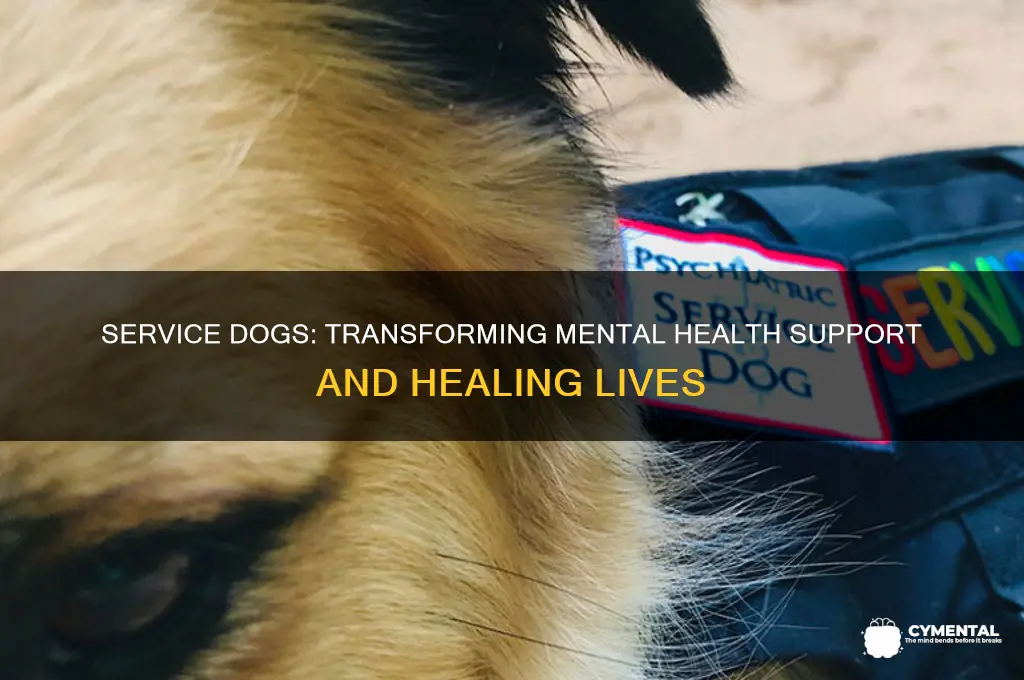
Service dogs play a crucial role in supporting individuals with mental illness by providing emotional stability, companionship, and practical assistance. Trained to perform specific tasks tailored to their handler’s needs, these dogs can interrupt anxiety or panic attacks, create physical space in crowded areas for those with PTSD, or remind their handlers to take medication. Beyond their functional tasks, service dogs offer unwavering emotional support, reducing feelings of loneliness and isolation. Their presence has been shown to lower stress levels, improve mood, and foster a sense of responsibility and routine, which can be particularly beneficial for conditions like depression, anxiety, and PTSD. By combining their intuitive nature with specialized training, service dogs empower individuals to manage their mental health challenges more effectively and enhance their overall quality of life.
Explore related products


What You'll Learn
- Anxiety Reduction: Dogs provide calming presence, interrupt panic attacks, and encourage grounding techniques through touch and routine
- PTSD Support: Trained to detect triggers, create safe spaces, and assist during flashbacks or nightmares
- Depression Management: Promote daily routines, physical activity, and emotional connection to combat isolation and lethargy
- Social Interaction: Facilitate conversations, reduce avoidance behaviors, and build confidence in public settings
- Emotional Regulation: Dogs sense distress, offer comfort, and redirect focus to stabilize mood and prevent crises

Anxiety Reduction: Dogs provide calming presence, interrupt panic attacks, and encourage grounding techniques through touch and routine
Service dogs are trained to sense the onset of anxiety episodes, often before their handlers are consciously aware of them. Through subtle changes in behavior, such as restlessness or increased heart rate, these dogs can initiate calming interventions. For instance, a dog might nudge its handler to sit down or guide them to a quieter space, effectively interrupting the escalation of anxiety. This proactive approach is particularly valuable for individuals with generalized anxiety disorder or post-traumatic stress disorder (PTSD), where early intervention can prevent full-blown panic attacks. Studies show that the presence of a service dog can reduce cortisol levels, the body’s primary stress hormone, by up to 20% in anxious individuals.
During a panic attack, service dogs employ specific techniques to ground their handlers in the present moment. One common method is deep pressure stimulation, where the dog applies gentle but firm pressure to the handler’s body, often by lying across their lap or chest. This tactile input mimics the effect of weighted blankets, which are clinically proven to reduce anxiety by promoting the release of serotonin and dopamine. Additionally, dogs may use their paws or noses to guide handlers through breathing exercises, encouraging slow, deliberate breaths that counteract hyperventilation. These actions not only provide immediate relief but also teach handlers to recognize and replicate grounding techniques independently.
Routine is a cornerstone of anxiety management, and service dogs excel at reinforcing structured daily habits. Whether it’s waking their handler at a consistent time, prompting them to take medication, or initiating a walk, these dogs create predictability in an often chaotic world. For individuals with anxiety disorders, routine acts as a psychological anchor, reducing uncertainty and fostering a sense of control. Over time, handlers may find that their reliance on the dog’s cues diminishes as the routines become second nature, illustrating the dog’s role as both a crutch and a teacher.
The calming presence of a service dog extends beyond active interventions, offering a constant source of emotional support. Their nonjudgmental companionship reduces feelings of isolation, a common trigger for anxiety. For example, a dog’s steady breathing and warm body temperature can act as a natural sedative, helping handlers relax during moments of tension. This passive yet powerful influence is particularly beneficial in public settings, where the dog’s presence can deter overwhelming stimuli and provide a sense of security. Unlike medication or therapy, which are often episodic, a service dog’s support is continuous, making them an invaluable ally in the long-term management of anxiety.
Supporting Loved Ones: A Guide to Accessing Mental Health Assistance
You may want to see also
Explore related products



PTSD Support: Trained to detect triggers, create safe spaces, and assist during flashbacks or nightmares
Service dogs for PTSD are trained to detect subtle changes in their handler's physiology, often before the individual themselves realizes they are experiencing a trigger. These dogs can sense shifts in heart rate, body temperature, or even the release of stress hormones like cortisol. For instance, a veteran with PTSD might start to sweat or tremble when exposed to a loud noise reminiscent of gunfire. The dog, trained to recognize these signs, will immediately intervene, nudging the handler or guiding them to a quieter, safer environment. This proactive approach can prevent a full-blown panic attack, demonstrating how these animals act as both early warning systems and immediate responders.
Creating a safe space is another critical role of PTSD service dogs. During moments of heightened anxiety or flashbacks, these dogs are trained to physically position themselves between the handler and potential triggers, such as crowds or unfamiliar people. For example, a dog might stand in front of its handler in a busy grocery store, providing a protective barrier that reduces sensory overload. Additionally, some dogs are taught to turn on lights or fetch medication, further enhancing the handler’s sense of security. This tactile and spatial support helps ground the individual in the present, mitigating the disorientation caused by traumatic memories.
Assisting during flashbacks or nightmares is where the training of PTSD service dogs truly shines. When a handler experiences a flashback, the dog may use deep pressure stimulation—lying across the person’s lap or chest—to provide a calming, grounding sensation. This technique is particularly effective because it mimics the feeling of a firm hug, which can reduce hyperarousal. For nightmares, dogs are often trained to wake their handlers gently by licking their face or nudging them, interrupting the distressing dream without startling them. One study found that individuals with PTSD who partnered with service dogs reported a 75% reduction in nightmare frequency, highlighting the tangible impact of this intervention.
Training a dog for PTSD support is a meticulous process that typically takes 18–24 months. Dogs are exposed to a variety of environments and scenarios to ensure they remain calm and focused under pressure. For example, they are trained to ignore distractions like other animals or food while performing tasks. Handlers also play a crucial role in this partnership, learning to interpret their dog’s signals and respond appropriately. Practical tips for handlers include maintaining a consistent routine for the dog, using positive reinforcement during training, and ensuring the dog receives regular veterinary care to stay healthy and effective in their role.
While PTSD service dogs offer transformative support, it’s important to acknowledge that they are not a one-size-fits-all solution. Not everyone with PTSD will benefit equally, and the presence of a dog may not address underlying psychological issues that require therapy or medication. Additionally, the cost and responsibility of owning a service dog can be significant, with expenses ranging from $20,000 to $40,000 for a fully trained animal. However, for those who do partner with these dogs, the bond formed often becomes a cornerstone of their recovery, offering not just practical assistance but also unwavering companionship in the face of trauma.
Hamsters as Emotional Support: Boosting Mental Health and Well-Being
You may want to see also
Explore related products





Depression Management: Promote daily routines, physical activity, and emotional connection to combat isolation and lethargy
Service dogs are not just companions; they are lifelines for individuals battling depression, offering structured routines, physical engagement, and emotional support that counteract the debilitating effects of isolation and lethargy. By requiring regular feeding, grooming, and exercise, these dogs impose a daily schedule that fosters consistency, a cornerstone of depression management. For instance, a morning walk with a service dog not only ensures physical activity but also exposes the handler to natural light, proven to regulate circadian rhythms and alleviate depressive symptoms. This simple act can be a game-changer for someone struggling to leave their bed.
Consider the role of physical activity, a natural antidepressant often sidelined by lethargy. Service dogs act as motivators, prompting their handlers to engage in movement through play, walks, or even training sessions. Studies suggest that 30 minutes of moderate exercise, such as brisk walking, can reduce symptoms of depression by up to 47%. A service dog transforms this recommendation into an enjoyable, non-negotiable part of the day, making it easier to meet this threshold. For older adults or those with mobility issues, even shorter, gentler activities like tossing a ball or practicing obedience commands can yield significant benefits.
Emotional connection is another critical aspect where service dogs excel. Depression often thrives in isolation, but the bond between a handler and their service dog creates a sense of purpose and belonging. These dogs provide unconditional love, reducing feelings of loneliness and worthlessness. For example, a service dog might nudge their handler during moments of emotional distress, offering comfort through physical touch or simply their presence. This tactile interaction releases oxytocin, a hormone associated with bonding and stress reduction, further combating depressive episodes.
Implementing a service dog into a depression management plan requires thoughtful integration. Start by establishing a daily routine that includes feeding, grooming, and exercise at consistent times. Gradually increase physical activity levels, aiming for at least 20–30 minutes of movement daily, tailored to the handler’s abilities. Encourage emotional bonding through training sessions, play, and quiet moments of connection. However, it’s essential to manage expectations; service dogs are not a cure-all but a complementary tool. Pairing their support with therapy, medication, and lifestyle changes maximizes their impact, creating a holistic approach to managing depression.
In essence, service dogs serve as catalysts for positive change, turning abstract recommendations for depression management into actionable, meaningful interactions. Their ability to promote daily routines, physical activity, and emotional connection makes them invaluable allies in the fight against isolation and lethargy. By weaving these elements into the fabric of daily life, service dogs empower individuals to reclaim control, one step—and one wagging tail—at a time.
Talking to Friends: A Powerful Tool for Mental Health Support
You may want to see also
Explore related products


Social Interaction: Facilitate conversations, reduce avoidance behaviors, and build confidence in public settings
Service dogs can transform social interactions for individuals with mental illness by acting as natural conversation starters. Their presence often draws attention, prompting strangers to approach with questions or comments. For someone struggling with social anxiety or depression, this can be a gentle nudge into engagement. A simple inquiry like, "What breed is your dog?" or "Is this a service dog?" provides a low-stakes opportunity to practice communication. Over time, these small interactions can help reduce avoidance behaviors by making social contact feel less intimidating.
Consider the mechanics of this process. When a service dog is present, the focus shifts from the individual to the animal, reducing the pressure to perform socially. This dynamic allows the handler to engage at their own pace, using the dog as a buffer. For instance, someone with PTSD might find it easier to answer questions about their dog’s training than to discuss their own experiences. This indirect approach builds confidence gradually, as the handler learns to navigate conversations without feeling exposed.
However, leveraging a service dog for social interaction requires intentionality. Handlers should practice brief, rehearsed responses to common questions to avoid becoming overwhelmed. For example, preparing a concise explanation of the dog’s role or a friendly redirect like, "She’s working right now, but thank you for asking!" can help maintain boundaries while still engaging. Additionally, setting small goals, such as initiating one conversation per outing, can make the process feel manageable and measurable.
A cautionary note: not all interactions will be positive. Some individuals may intrude or ask inappropriate questions. Handlers should prioritize their comfort and safety, using phrases like, "I’d rather not discuss that," or simply walking away. The goal is not to force social engagement but to create opportunities for connection on the handler’s terms. Over time, this selective participation can rebuild confidence in public settings, turning avoidance into approachability.
Ultimately, the role of a service dog in facilitating social interaction is twofold: they provide a safe entry point into conversations while offering emotional support during the process. For someone with agoraphobia, for instance, the dog’s presence might make leaving the house feel less daunting, while their calming influence helps manage anxiety during interactions. By combining practical assistance with emotional reassurance, service dogs empower handlers to re-engage with the world, one conversation at a time.
Empowering Mental Health: The Role of Social Workers in Healing
You may want to see also
Explore related products


Emotional Regulation: Dogs sense distress, offer comfort, and redirect focus to stabilize mood and prevent crises
Dogs possess an extraordinary ability to detect subtle changes in human behavior and physiology, often sensing distress before their handlers are fully aware of it themselves. This intuitive awareness stems from their acute sensitivity to body language, scent, and vocal cues. For instance, a service dog might notice increased sweating, a quickened heartbeat, or tense muscles—all indicators of an impending anxiety attack or emotional crisis. By recognizing these early signs, the dog can intervene proactively, offering comfort and support before the situation escalates. This preemptive action is a cornerstone of emotional regulation, helping individuals with mental illness maintain stability in moments of vulnerability.
Once distress is detected, service dogs employ a variety of strategies to provide comfort and reassurance. Physical contact, such as leaning against their handler or placing a paw on their lap, can ground the individual in the present moment, disrupting the cycle of escalating anxiety or panic. The rhythmic motion of petting a dog has been shown to lower cortisol levels and increase oxytocin, promoting a sense of calm. Beyond physical interaction, the mere presence of a dog can serve as a soothing constant in an unpredictable world. For someone experiencing emotional turmoil, the dog’s unwavering companionship acts as a reminder that they are not alone, fostering a sense of security and emotional balance.
One of the most powerful ways service dogs assist with emotional regulation is by redirecting their handler’s focus away from distressing thoughts or triggers. Dogs are trained to initiate specific behaviors, such as nudging a hand or bringing a toy, to shift attention outward. This redirection not only interrupts negative thought patterns but also encourages engagement with the present environment. For example, a dog might prompt their handler to play a game of fetch or practice obedience commands, fostering mindfulness and reducing the intensity of emotional distress. By anchoring the individual in the here and now, the dog helps prevent crises from spiraling out of control.
Practical integration of a service dog into emotional regulation strategies requires consistency and collaboration. Handlers should establish clear signals and routines with their dogs, such as a specific command for deep pressure therapy or a cue for redirection activities. Regular training sessions reinforce these behaviors, ensuring the dog remains responsive and effective. Additionally, handlers can enhance the dog’s impact by pairing their interventions with other coping techniques, such as deep breathing or grounding exercises. For instance, while the dog provides physical comfort, the handler might practice box breathing (inhale for 4 seconds, hold for 4 seconds, exhale for 4 seconds, pause for 4 seconds) to further stabilize their mood. This combined approach maximizes the dog’s role as a partner in emotional regulation.
While service dogs are highly effective in supporting emotional regulation, it’s essential to acknowledge their limitations and the need for a holistic approach to mental health care. Dogs are not a substitute for therapy, medication, or other professional treatments but rather a complementary tool. Handlers should work closely with mental health providers to integrate the dog’s assistance into a broader treatment plan. Furthermore, the well-being of the dog must be prioritized, ensuring they receive adequate rest, exercise, and veterinary care. By fostering a healthy partnership, individuals can harness the unique abilities of service dogs to sense distress, offer comfort, and redirect focus, ultimately stabilizing their mood and preventing crises.
Social Media's Impact: Breaking Mental Health Stigma or Amplifying Struggles?
You may want to see also
Frequently asked questions
Service dogs are trained to perform specific tasks that help mitigate symptoms of mental illness. For example, they can interrupt self-harm behaviors, provide deep pressure therapy during anxiety attacks, remind their handlers to take medication, or create physical space in crowded areas to reduce overwhelm.
Yes, service dogs can assist with depression and anxiety by providing emotional support, grounding their handlers during panic attacks, and encouraging routine through activities like walks or playtime, which can improve mood and reduce feelings of isolation.
A service dog is specifically trained to perform tasks directly related to a person’s disability, such as alerting to anxiety attacks or providing tactile stimulation. An emotional support animal (ESA) provides comfort and companionship but is not trained to perform specific tasks and does not have the same public access rights as a service dog.
Service dogs for PTSD are trained to recognize signs of distress, such as hyperventilation or increased heart rate, and intervene by nudging, licking, or applying pressure to ground the individual. They can also create a barrier in public spaces, turn on lights in dark rooms, or retrieve items to help their handler feel safe.