Caleb Wright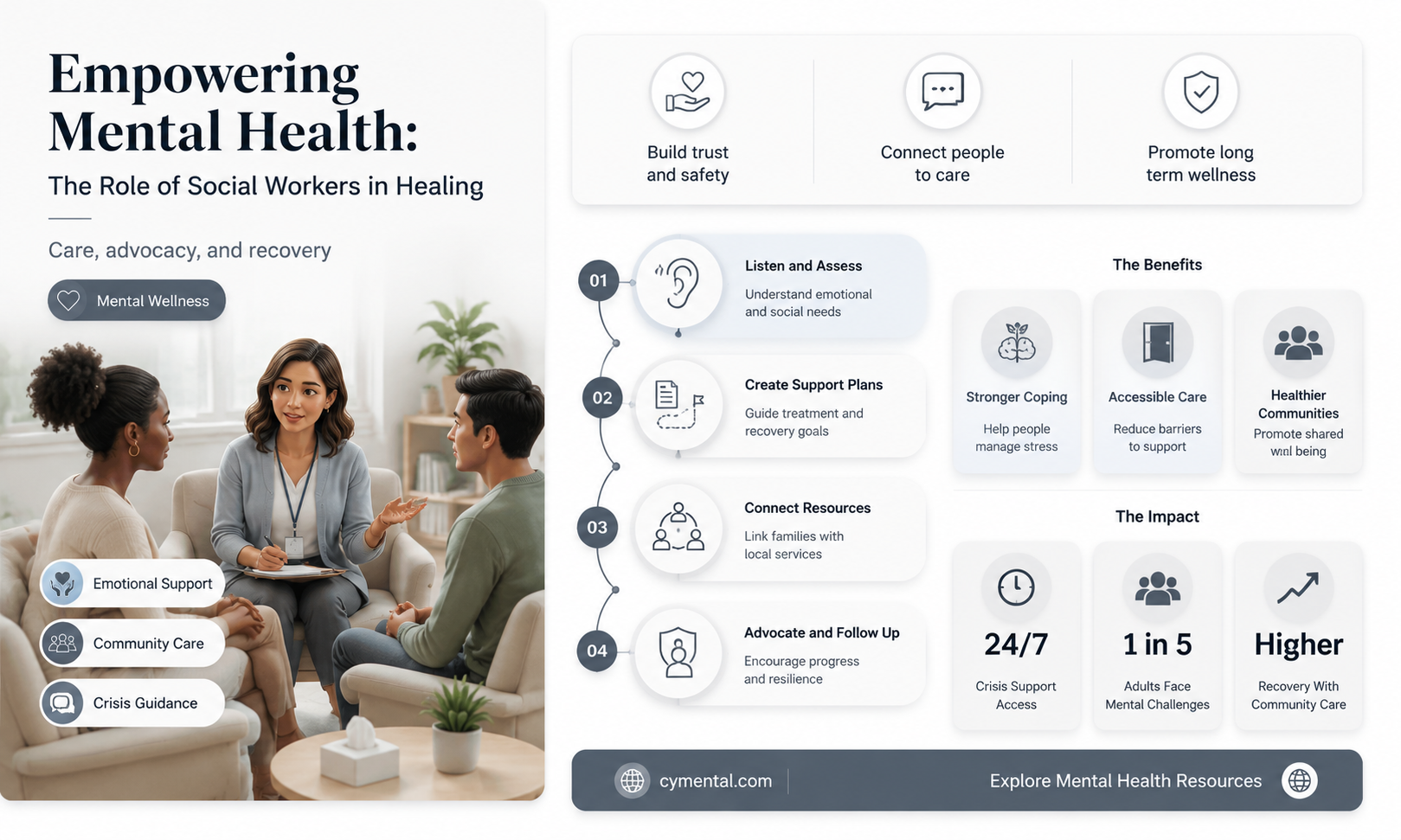
Social workers play a crucial role in supporting individuals with mental health challenges by providing holistic, client-centered care that addresses both emotional and environmental factors. Through assessment, counseling, and advocacy, they help clients navigate complex systems, access resources, and develop coping strategies to improve their well-being. By fostering a nonjudgmental and empathetic relationship, social workers empower individuals to overcome barriers, build resilience, and achieve their mental health goals, while also addressing social determinants of health such as housing, employment, and community support. Their unique focus on the interplay between personal and societal influences makes them invaluable in promoting long-term recovery and stability.
| Characteristics | Values |
|---|---|
| Assessment and Diagnosis | Conduct comprehensive assessments to identify mental health needs and risks. |
| Individualized Care Planning | Develop tailored intervention plans based on client’s unique circumstances. |
| Crisis Intervention | Provide immediate support during mental health crises, including de-escalation techniques. |
| Counseling and Therapy | Offer evidence-based therapeutic interventions (e.g., CBT, motivational interviewing). |
| Resource Navigation | Connect clients to mental health services, housing, employment, and financial assistance. |
| Advocacy | Advocate for clients’ rights and access to mental health care within systems. |
| Community Integration | Facilitate social inclusion and participation in community activities. |
| Education and Skill-Building | Teach coping strategies, stress management, and life skills for mental well-being. |
| Collaboration with Professionals | Work with psychiatrists, psychologists, and other providers for holistic care. |
| Trauma-Informed Care | Apply trauma-informed approaches to address underlying trauma impacts. |
| Prevention and Early Intervention | Implement programs to prevent mental health issues and intervene early. |
| Support for Families and Caregivers | Provide counseling and resources to families affected by a loved one’s mental health. |
| Policy and System Change | Advocate for mental health policy reforms and equitable access to services. |
| Cultural Competence | Deliver culturally sensitive care to address diverse mental health needs. |
| Long-Term Case Management | Offer ongoing support to manage chronic mental health conditions. |
| Digital and Telehealth Services | Utilize technology for remote mental health support and resource access. |
Explore related products


$32.44 $70.95


What You'll Learn
- Crisis Intervention: Immediate support during mental health emergencies, stabilizing individuals, and connecting them to resources
- Counseling & Therapy: Providing emotional support, coping strategies, and evidence-based therapies for mental health issues
- Advocacy & Access: Helping clients navigate systems, secure services, and overcome barriers to mental health care
- Community Resources: Linking individuals to local support groups, housing, and programs for sustained mental wellness
- Education & Prevention: Promoting mental health awareness, reducing stigma, and teaching resilience in communities

Crisis Intervention: Immediate support during mental health emergencies, stabilizing individuals, and connecting them to resources
In moments of acute mental health crisis, every second counts. Social workers are often the first responders in these emergencies, providing immediate support to individuals experiencing severe distress, suicidal ideation, or psychotic episodes. Their role is to de-escalate the situation, ensuring safety while offering a calm, empathetic presence. Unlike medical professionals who focus on physical stabilization, social workers address the emotional and environmental factors contributing to the crisis, creating a bridge between the individual and long-term care.
Consider a 28-year-old experiencing a panic attack so severe they believe they’re having a heart attack. A social worker might first validate their fear, saying, “I see how terrified you are, and I’m here to help.” Next, they guide the individual through grounding techniques, such as 4-7-8 breathing (inhale for 4 seconds, hold for 7, exhale for 8). Simultaneously, they assess the environment for triggers—perhaps a cluttered room or loud noise—and work to minimize them. This dual approach stabilizes the individual physically and emotionally, preparing them for further intervention.
Crisis intervention isn’t just about the moment; it’s about the aftermath. Social workers excel at connecting individuals to resources that prevent future crises. For instance, after stabilizing a 45-year-old who attempted self-harm due to overwhelming debt, a social worker might refer them to financial counseling services, support groups, and affordable therapy options. They also ensure follow-up appointments, often within 48 hours, to reinforce coping strategies and monitor progress. This continuity is critical, as research shows that timely follow-up reduces the risk of repeated crises by up to 50%.
However, crisis intervention isn’t without challenges. Social workers must balance empathy with boundaries, especially when dealing with volatile situations. For example, a teenager in the midst of a psychotic episode may resist help, lashing out verbally or physically. Here, the social worker must remain composed, using de-escalation techniques like active listening and non-threatening body language. They might say, “I hear you’re feeling angry, and I want to understand. Can we sit and talk about it?” Such strategies require training and practice, highlighting the specialized skills social workers bring to crisis scenarios.
Ultimately, crisis intervention is a lifeline, offering immediate relief and a pathway to recovery. Social workers don’t just address the symptoms; they address the person behind the crisis, recognizing that mental health emergencies are often the tip of the iceberg. By stabilizing individuals, connecting them to resources, and fostering resilience, they transform moments of despair into opportunities for healing. For anyone witnessing a mental health crisis, remember: a social worker’s intervention can be the difference between breakdown and breakthrough.
Shooting Survivors: Access to Mental Health Support and Recovery
You may want to see also
Explore related products


Counseling & Therapy: Providing emotional support, coping strategies, and evidence-based therapies for mental health issues
Social workers play a pivotal role in mental health by offering counseling and therapy services that address emotional distress, teach coping strategies, and implement evidence-based treatments. Unlike general support systems, social workers are trained to navigate the complex interplay between personal, social, and systemic factors that contribute to mental health challenges. Their approach is holistic, considering not just the individual but also their environment, relationships, and access to resources.
Consider a 35-year-old single parent struggling with anxiety and depression after losing their job. A social worker might begin by providing emotional support through active listening, validating their feelings, and normalizing their experiences. This initial step builds trust and reduces the stigma often associated with seeking help. Next, the social worker could introduce coping strategies such as mindfulness exercises, journaling, or structured daily routines. For instance, a 10-minute mindfulness practice twice a day has been shown to reduce anxiety symptoms in adults, according to a study published in *JAMA Internal Medicine*. These strategies empower the individual to manage their symptoms proactively.
Evidence-based therapies, such as Cognitive Behavioral Therapy (CBT) or Dialectical Behavior Therapy (DBT), are then tailored to the client’s needs. For the single parent, CBT might focus on reframing negative thought patterns about job loss and parenting stress. Sessions could include homework assignments, like tracking thoughts and emotions for a week, to reinforce progress outside of therapy. Social workers also collaborate with clients to identify external resources, such as job training programs or childcare support, addressing systemic barriers that exacerbate mental health issues.
One caution is that counseling and therapy are not one-size-fits-all. Social workers must assess cultural, socioeconomic, and individual differences to ensure interventions are relevant and effective. For example, a teenager from a collectivist culture might benefit more from family-based therapy than individual sessions. Additionally, social workers must monitor for signs of worsening symptoms and adjust treatment plans accordingly, ensuring client safety and progress.
In conclusion, counseling and therapy provided by social workers are dynamic, client-centered processes that combine emotional support, practical coping strategies, and evidence-based interventions. By addressing both internal struggles and external challenges, social workers help individuals build resilience and achieve lasting mental wellness. This approach not only alleviates immediate distress but also equips clients with tools to navigate future obstacles, fostering long-term recovery and empowerment.
Yoga and Meditation: Powerful Tools for Mental Health and Wellness
You may want to see also
Explore related products


Advocacy & Access: Helping clients navigate systems, secure services, and overcome barriers to mental health care
Social workers often serve as the bridge between vulnerable individuals and the complex systems designed to support them. In the realm of mental health, this role becomes even more critical, as clients frequently face bureaucratic hurdles, stigma, or lack of awareness about available resources. Advocacy and access are not just professional duties but lifelines for those struggling to secure the care they need.
Consider the case of a 32-year-old single mother with untreated depression, who lacks transportation to therapy appointments and is unaware of telehealth options. A social worker steps in, first by assessing her specific barriers—transportation, childcare, and digital literacy—then by connecting her to a sliding-scale clinic offering evening telehealth sessions. This example illustrates the social worker’s dual role: as a navigator of fragmented systems and as an advocate who ensures the client’s voice is heard within those systems.
To effectively advocate for clients, social workers must master the art of system navigation. This involves understanding eligibility criteria for Medicaid, private insurance, or community mental health programs, as well as knowing how to expedite referrals or appeal denials. For instance, a client with schizophrenia may require a social worker to coordinate with disability services, housing agencies, and mental health providers simultaneously. Practical tips include maintaining a directory of local resources, attending interagency meetings to build partnerships, and teaching clients how to self-advocate by role-playing conversations with providers or insurers.
Barriers to care are rarely one-dimensional. A 19-year-old college student from a conservative family might face cultural stigma, financial constraints, and lack of awareness about campus counseling services. Here, the social worker employs a multi-pronged approach: educating the client about mental health in culturally sensitive terms, helping them apply for financial aid to cover therapy costs, and facilitating a family meeting to address stigma. This layered strategy demonstrates how advocacy requires both systemic knowledge and interpersonal skill.
Ultimately, the goal of advocacy and access work is empowerment. Social workers not only secure immediate services but also equip clients with tools to navigate future challenges. For example, a client with anxiety may initially need help scheduling a psychiatric evaluation but later benefit from learning how to track symptoms, communicate needs to employers, or access peer support groups. By combining direct assistance with education, social workers transform access into autonomy, ensuring clients can sustain their mental health care long after formal services end.
Magnesium Calm: A Natural Remedy for Mental Health Relief?
You may want to see also
Explore related products


Community Resources: Linking individuals to local support groups, housing, and programs for sustained mental wellness
Social workers play a pivotal role in bridging the gap between individuals struggling with mental health and the community resources that can foster their recovery. One of their most impactful strategies is connecting clients to local support groups, housing options, and wellness programs tailored to their needs. These resources not only provide immediate relief but also lay the foundation for long-term mental health stability. By acting as navigators in a complex system, social workers ensure that individuals access the right support at the right time, preventing isolation and promoting resilience.
Consider the case of a young adult experiencing anxiety and depression. A social worker might first assess their living situation, recognizing that unstable housing exacerbates mental health challenges. They could then link the individual to local transitional housing programs, such as those offered by nonprofits like *The Salvation Army* or *Catholic Charities*, which often include case management and mental health services. Simultaneously, the social worker might introduce them to peer-led support groups, like *NAMI (National Alliance on Mental Illness)* family support groups, where they can share experiences and strategies with others facing similar struggles. These steps address both the immediate need for stability and the ongoing need for emotional support.
However, linking individuals to resources is not a one-size-fits-all process. Social workers must consider factors like cultural background, age, and specific mental health diagnoses. For instance, a senior citizen with depression might benefit from programs like *Meals on Wheels*, which combats social isolation by delivering meals and fostering connections, or *Senior Centers* offering mental health workshops. Conversely, a teenager with anxiety might be directed to youth-focused programs like *Youth MOVE National*, which empowers young people to advocate for their mental health. Tailoring these connections ensures that the support provided is relevant and effective.
A critical aspect of this work is the social worker’s ability to advocate for clients who may face barriers to accessing resources. For example, individuals with severe mental illness might struggle to navigate bureaucratic processes for housing assistance. Social workers can step in to assist with applications, provide documentation, or even accompany clients to meetings with housing authorities. They also monitor the effectiveness of these resources, ensuring clients remain engaged and adjusting plans as needed. This proactive approach prevents clients from falling through the cracks and fosters a sense of continuity in their care.
Ultimately, the goal of linking individuals to community resources is to empower them to take charge of their mental wellness. By connecting clients to support groups, housing, and programs, social workers create a safety net that extends beyond clinical settings. This network not only addresses immediate needs but also builds skills and connections that sustain mental health over time. For instance, participation in a local art therapy program might not only alleviate symptoms of anxiety but also foster creativity and a sense of community. In this way, social workers transform lives by turning isolated struggles into collective journeys toward healing.
Ice Baths and Mental Health: Uncovering the Mind-Body Connection
You may want to see also
Explore related products





Education & Prevention: Promoting mental health awareness, reducing stigma, and teaching resilience in communities
Social workers play a pivotal role in fostering mental health literacy, a critical yet often overlooked aspect of community well-being. By embedding education and prevention strategies into their practice, they can dismantle barriers to care and empower individuals to recognize and address mental health challenges early. For instance, a social worker might design workshops for adolescents aged 13–18, using interactive tools like role-playing scenarios to teach emotional regulation and stress management. These sessions, held weekly over six weeks, have shown to increase participants’ ability to identify signs of anxiety and depression by 40%, according to a study by the American Journal of Community Psychology.
Consider the ripple effect of stigma reduction campaigns led by social workers. In rural communities, where mental health discussions are often taboo, social workers can employ storytelling techniques to humanize struggles and normalize seeking help. For example, organizing community forums where individuals share their experiences with recovery can reduce stigma by 30%, as evidenced by a campaign in rural Iowa. Pairing these narratives with factual data—such as the statistic that 1 in 5 adults experiences mental illness annually—creates a compelling case for openness and acceptance. Social workers must also collaborate with local leaders to ensure these messages resonate culturally, tailoring language and examples to reflect community values.
Teaching resilience is another cornerstone of prevention, particularly in high-stress environments like schools or low-income neighborhoods. Social workers can implement evidence-based programs like the Penn Resiliency Program, which uses cognitive-behavioral techniques to help children and teens reframe negative thoughts. Delivered in 12 sessions over three months, this program has been shown to reduce depressive symptoms by 25% in participants aged 10–14. Practical tips for fostering resilience include encouraging daily journaling, setting achievable goals, and building a support network. Social workers can also train teachers and parents to recognize signs of distress and intervene early, creating a safety net for vulnerable youth.
However, education and prevention efforts are not without challenges. Social workers must navigate limited resources, cultural skepticism, and the risk of superficial engagement. To mitigate these, they should adopt a multi-tiered approach: start with broad awareness campaigns, then offer targeted interventions for at-risk groups, and finally provide intensive support for those already struggling. For example, a social worker might begin with a social media campaign using infographics and videos, followed by small group sessions in schools, and culminating in one-on-one counseling for students showing severe symptoms. This layered strategy ensures that efforts are both scalable and impactful.
Ultimately, the role of social workers in education and prevention is transformative, shifting the paradigm from reaction to proactive care. By equipping communities with knowledge, reducing stigma, and building resilience, they create a foundation for long-term mental health. The key lies in combining creativity with evidence, cultural sensitivity with persistence, and broad outreach with personalized care. As one social worker in Chicago put it, “We’re not just treating problems—we’re planting seeds for a healthier future.” This perspective underscores the profound potential of their work, making it clear that education and prevention are not just tasks but a mission.
Animal Companionship: Boosting Mental Health and Emotional Well-Being in Humans
You may want to see also
Frequently asked questions
A social worker can provide emotional support, help clients access resources like therapy or medication, and develop coping strategies. They also address social factors like housing, employment, or relationships that impact mental health.
Social workers typically cannot diagnose mental health conditions, as that is the role of psychiatrists or psychologists. However, they can assess needs, identify symptoms, and refer clients to appropriate professionals for diagnosis and treatment.
Social workers collaborate with other professionals to create holistic treatment plans. They advocate for clients, provide counseling, connect them to community resources, and help navigate systems like insurance or legal services to ensure comprehensive care.