Noah Parker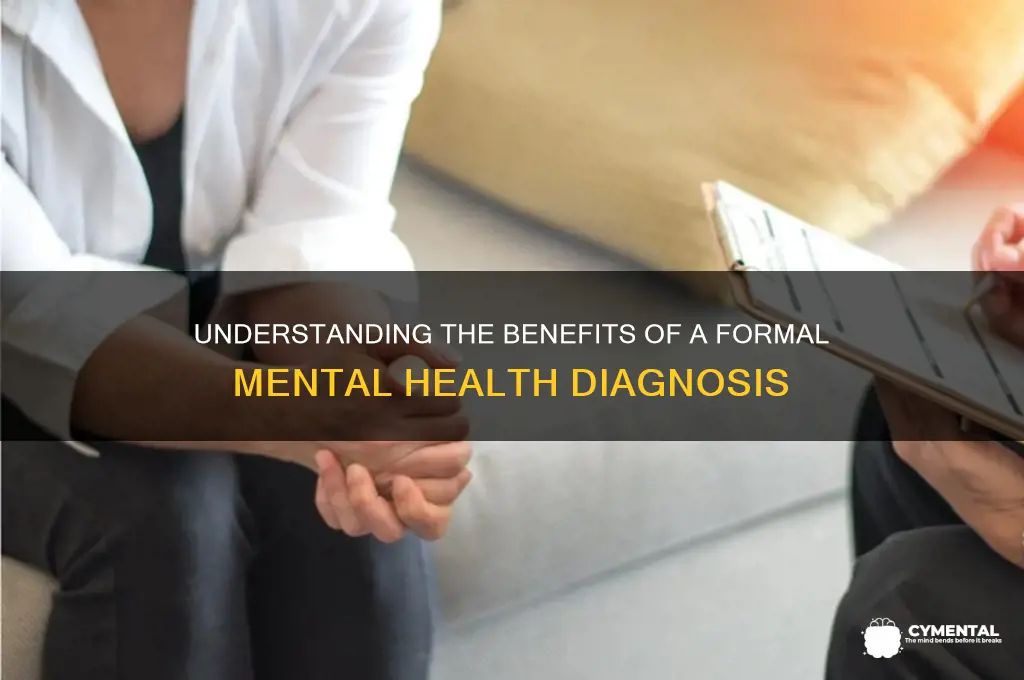
A formal mental health diagnosis serves as a critical foundation for understanding, treating, and managing psychological conditions. By providing a clear and standardized framework, it helps individuals and healthcare professionals identify the specific nature of the mental health issue, ruling out ambiguity and ensuring targeted interventions. This diagnosis enables access to evidence-based treatments, such as therapy or medication, tailored to the individual’s needs, improving the likelihood of recovery or symptom management. Additionally, it fosters self-awareness and validation for the individual, reducing stigma and encouraging proactive engagement in their mental health journey. A formal diagnosis also facilitates communication among healthcare providers, ensuring continuity of care and opening doors to resources, support networks, and legal protections, ultimately enhancing overall well-being.
How a Formal Mental Health Diagnosis Helps
| Characteristics | Values |
|---|---|
| Access to Treatment | Opens doors to evidence-based therapies, medications, and specialized care tailored to the specific diagnosis. |
| Understanding & Validation | Provides a framework to understand symptoms, reducing confusion and self-blame, and validating the individual's experiences. |
| Improved Communication | Offers a common language for communication with healthcare professionals, family, and friends, fostering better support. |
| Targeted Support | Connects individuals with support groups, resources, and communities specific to their diagnosis. |
| Early Intervention | Enables early intervention, potentially preventing symptom worsening and improving long-term outcomes. |
| Research & Development | Contributes to research efforts, leading to improved understanding, treatments, and potentially cures. |
| Legal & Financial Benefits | May qualify individuals for disability benefits, accommodations at work or school, and legal protections. |
| Personal Growth & Empowerment | Encourages self-awareness, self-advocacy, and active participation in one's own recovery journey. |
Explore related products




What You'll Learn
- Access to Treatment: Diagnosis guides tailored therapy, medication, and support for effective mental health management
- Validation & Relief: Provides clarity, reduces self-blame, and validates struggles, easing emotional burden
- Insurance Coverage: Enables access to funded therapies, medications, and services through insurance or public health
- Support Networks: Connects individuals to community resources, support groups, and peer networks for recovery
- Personal Understanding: Helps individuals understand symptoms, triggers, and coping strategies for better self-management

Access to Treatment: Diagnosis guides tailored therapy, medication, and support for effective mental health management
A formal mental health diagnosis is not just a label; it’s a roadmap to targeted care. Without it, treatment remains generic, often ineffective, and sometimes harmful. For instance, prescribing antidepressants like SSRIs (e.g., sertraline 50–200 mg/day) to someone with bipolar disorder can trigger mania, worsening their condition. A diagnosis ensures the right medication, dosage, and therapy align with the individual’s needs, avoiding such pitfalls.
Consider therapy: Cognitive Behavioral Therapy (CBT) is highly effective for anxiety disorders, but it may fall short for schizophrenia, where symptom management often requires antipsychotics (e.g., olanzapine 5–20 mg/day) paired with social skills training. A diagnosis clarifies which modalities—CBT, Dialectical Behavior Therapy (DBT), or psychodynamic therapy—are most appropriate. For children under 12, play therapy or family-based interventions may be prioritized, while adolescents benefit from peer-focused group therapies.
Medication management is another critical area where diagnosis drives precision. ADHD, for example, responds well to stimulants like methylphenidate (10–60 mg/day), but these are contraindicated in individuals with a history of substance abuse or cardiovascular issues. A diagnosis ensures such risks are assessed, and alternatives like atomoxetine (40–100 mg/day) are considered. Similarly, mood stabilizers like lithium (600–1200 mg/day) are essential for bipolar disorder but require regular blood monitoring to avoid toxicity—a protocol only initiated post-diagnosis.
Beyond therapy and medication, a diagnosis unlocks access to specialized support systems. Schools and workplaces often require documentation to provide accommodations, such as extended test times for ADHD or flexible scheduling for severe depression. Support groups, too, are diagnosis-specific; someone with OCD benefits more from sharing with others experiencing similar obsessions than from a general anxiety group. This tailored support accelerates recovery and fosters a sense of community.
Finally, a diagnosis empowers individuals to advocate for themselves. Understanding their condition—whether it’s PTSD, borderline personality disorder, or major depressive disorder—helps them communicate their needs to providers, employers, and loved ones. Practical tips, like keeping a symptom journal or using apps to track medication adherence, become more effective when informed by a clear diagnosis. In mental health, clarity is not just helpful—it’s transformative.
Mental Health Medication: Effective for Co-Occurring Disorders?
You may want to see also
Explore related products

$32.99 $32.99


Validation & Relief: Provides clarity, reduces self-blame, and validates struggles, easing emotional burden
A formal mental health diagnosis can act as a turning point, transforming a chaotic inner world into a landscape with recognizable features. For many, the process of receiving a diagnosis is akin to finally having a map after wandering in the dark. This clarity is not just about labeling symptoms; it’s about understanding the *why* behind behaviors, emotions, and struggles. For instance, someone who has been told they’re “lazy” or “overly sensitive” might discover they’ve been living with undiagnosed ADHD or borderline personality disorder. This shift from self-criticism to self-awareness is where validation begins, and relief often follows.
Consider the case of a 28-year-old professional who spent years berating herself for her inability to focus at work, assuming it was a moral failing. After receiving an ADHD diagnosis, she learned her struggles were not a result of weakness but of neurodivergence. This knowledge didn’t just provide clarity—it dismantled years of self-blame. Armed with this understanding, she could seek tailored strategies, such as cognitive-behavioral therapy or stimulant medication (e.g., methylphenidate, starting at 10mg daily under medical supervision), to manage her symptoms effectively. The emotional burden lifted, replaced by a sense of empowerment and direction.
Validation through diagnosis also extends to interpersonal relationships. A teenager diagnosed with generalized anxiety disorder might feel seen for the first time when their constant worry is recognized as a clinical condition, not just “teenage drama.” This validation can encourage open conversations with family and friends, fostering support rather than judgment. For parents, understanding their child’s diagnosis can shift their approach from punitive to compassionate, such as implementing structured routines or seeking therapy like dialectical behavior therapy (DBT) for emotional regulation.
However, validation isn’t instantaneous or universal. Some diagnoses carry stigma, and not everyone reacts with relief. For example, a diagnosis of bipolar disorder might initially feel overwhelming due to societal misconceptions. Here, education becomes critical. Support groups, online resources, and therapists can help reframe the diagnosis as a tool for management rather than a life sentence. Practical steps, like tracking mood patterns in a journal or setting medication reminders, can further ease the emotional weight.
Ultimately, the power of a formal diagnosis lies in its ability to humanize struggles. It says, “Your pain is real, and it has a name.” This validation doesn’t erase challenges, but it reshapes how they’re perceived and addressed. Whether it’s a child, a parent, or an adult, the relief of understanding can be the first step toward healing. For those hesitant to seek diagnosis, remember: clarity is not a luxury—it’s a right. Start with a trusted healthcare provider, and take it one step at a time. The journey toward validation is worth it.
Supporting NJ Residents: Mental Health Disability Assistance and Resources
You may want to see also
Explore related products


Insurance Coverage: Enables access to funded therapies, medications, and services through insurance or public health
A formal mental health diagnosis acts as a key that unlocks doors to essential treatments, often otherwise financially out of reach. Insurance coverage, whether private or public, typically requires this diagnosis to authorize funding for therapies, medications, and specialized services. Without it, individuals may face prohibitive out-of-pocket costs, delaying or preventing access to care. For example, cognitive-behavioral therapy (CBT), a first-line treatment for anxiety and depression, can cost $100–$200 per session without insurance. A diagnosis ensures these expenses are covered, making evidence-based care accessible to those who need it.
Consider the case of a 28-year-old diagnosed with major depressive disorder. With a formal diagnosis, their insurance plan may cover 80% of the cost of selective serotonin reuptake inhibitors (SSRIs), such as fluoxetine (20–60 mg daily), reducing monthly medication expenses from $150 to $30. Additionally, the diagnosis grants access to 12–20 sessions of CBT annually, fully funded under their plan. Without this coverage, the individual might forgo treatment due to cost, risking symptom escalation and long-term impairment. This example illustrates how a diagnosis bridges the gap between clinical need and financial feasibility.
Public health systems, too, rely on diagnoses to allocate resources effectively. In countries with universal healthcare, such as Canada or the UK, a diagnosis ensures priority access to psychiatrists, psychologists, and community mental health teams. For instance, a diagnosis of schizophrenia may qualify an individual for long-acting injectable antipsychotics (e.g., olanzapine 10–40 mg biweekly) and supported housing programs, both fully funded. Without a diagnosis, these services would remain inaccessible, leaving individuals to navigate their condition without adequate support.
However, navigating insurance systems can be complex. Practical tips include verifying coverage details, such as copays, deductibles, and preauthorization requirements, before starting treatment. Keep detailed records of diagnoses, prescriptions, and referrals to streamline claims processing. For those with public health coverage, inquire about wait times for specialized services and explore interim support options, such as peer counseling or digital therapy apps. By understanding and leveraging insurance benefits, individuals can maximize their access to life-changing mental health care.
In conclusion, a formal mental health diagnosis is not merely a label but a gateway to funded therapies, medications, and services. It transforms financial barriers into opportunities for healing, ensuring that cost does not dictate access to care. Whether through private insurance or public health systems, this diagnosis empowers individuals to pursue evidence-based treatments tailored to their needs, fostering recovery and resilience.
Exercise and Mental Health: Unlocking the Mind-Body Connection for Wellness
You may want to see also
Explore related products


Support Networks: Connects individuals to community resources, support groups, and peer networks for recovery
A formal mental health diagnosis acts as a gateway to support networks, which are often the lifeblood of recovery. These networks—comprising community resources, support groups, and peer connections—offer more than just emotional solace. They provide structured environments where individuals can share experiences, learn coping strategies, and access practical tools tailored to their specific conditions. For instance, a diagnosis of depression might connect someone to a local mental health clinic offering cognitive-behavioral therapy groups, while an anxiety diagnosis could lead to mindfulness-based stress reduction workshops. These resources are not one-size-fits-all; they are curated to address the unique challenges of each diagnosis, ensuring targeted and effective support.
Consider the power of peer networks, which are often overlooked but profoundly impactful. When individuals with similar diagnoses come together, they form a community of shared understanding. For example, a young adult diagnosed with bipolar disorder might join a peer-led group where members exchange strategies for managing mood swings, such as tracking sleep patterns or identifying early warning signs of an episode. These groups often meet weekly, providing consistent support without the clinical formality of therapy sessions. Peer networks also foster accountability; members encourage one another to adhere to treatment plans, whether that means taking medication as prescribed or attending regular therapy appointments.
Community resources, another pillar of support networks, bridge gaps in mental health care by offering services that traditional therapy might not cover. For instance, a diagnosis of PTSD could connect someone to a local art therapy program, where creative expression becomes a tool for processing trauma. Similarly, individuals diagnosed with schizophrenia might benefit from vocational training programs that help them reintegrate into the workforce, rebuilding confidence and financial stability. These resources are often free or low-cost, making them accessible to those who might otherwise face financial barriers to care.
However, navigating these networks can be overwhelming without guidance. Here’s a practical tip: start by contacting your local mental health authority or using online directories like the Substance Abuse and Mental Health Services Administration (SAMHSA) to find nearby resources. For support groups, platforms like Meetup or Mental Health America offer searchable databases. When joining a group, attend at least three sessions before deciding if it’s the right fit—consistency is key to building trust and rapport. Finally, don’t hesitate to ask for help; many organizations have case managers who can assist in creating a personalized support plan.
The takeaway is clear: a formal diagnosis is not just a label; it’s a key that unlocks doors to transformative support networks. These networks provide emotional, practical, and communal resources that empower individuals to navigate their mental health journeys with confidence. By connecting to community resources, support groups, and peer networks, individuals gain more than just coping mechanisms—they gain a sense of belonging and purpose, which are essential for long-term recovery.
Do Mental Hospitals Help: Exploring Effectiveness and Patient Outcomes
You may want to see also
Explore related products


Personal Understanding: Helps individuals understand symptoms, triggers, and coping strategies for better self-management
A formal mental health diagnosis acts as a roadmap, transforming abstract distress into tangible insights. For instance, someone experiencing persistent sadness might learn they have major depressive disorder, not just "the blues." This clarity demystifies symptoms, revealing patterns like sleep disturbances, appetite changes, or anhedonia (loss of interest in activities). Understanding these as symptoms of a diagnosable condition, not personal failings, reduces self-blame and fosters self-compassion.
Consider a 28-year-old professional who struggles with overwhelming anxiety in social settings. A diagnosis of generalized anxiety disorder (GAD) explains why their heart races, thoughts spiral, and they avoid gatherings. Knowing these are hallmark symptoms of GAD, not unique weaknesses, empowers them to seek evidence-based treatments like cognitive-behavioral therapy (CBT) or selective serotonin reuptake inhibitors (SSRIs), often prescribed at 10–20 mg/day for adults.
Beyond symptoms, diagnosis uncovers triggers—specific situations, thoughts, or environments that exacerbate distress. For someone with post-traumatic stress disorder (PTSD), loud noises or crowded spaces might provoke flashbacks. Identifying these triggers allows for proactive management, such as carrying noise-canceling headphones or practicing grounding techniques like 4-7-8 breathing (inhale for 4 seconds, hold for 7, exhale for 8).
Armed with this knowledge, individuals can tailor coping strategies to their needs. A person with bipolar disorder might track mood shifts in a journal to detect manic or depressive episodes early, while someone with obsessive-compulsive disorder (OCD) could use exposure and response prevention (ERP) to gradually confront feared stimuli. For example, someone with contamination fears might start by touching a doorknob without washing their hands for 30 seconds, incrementally increasing exposure time.
Ultimately, a formal diagnosis shifts the narrative from confusion to control. It transforms chaotic experiences into manageable components, enabling individuals to collaborate with healthcare providers, set realistic goals, and measure progress. This personalized understanding isn’t just about labeling a condition—it’s about reclaiming agency, one informed step at a time.
Erickson's Theory: A Powerful Tool for Mental Health Recovery
You may want to see also
Frequently asked questions
A formal diagnosis helps individuals and their loved ones understand the root cause of their symptoms, reducing confusion and stigma. It provides a clear framework to explain behaviors, emotions, and experiences, fostering self-awareness and empathy.
A diagnosis serves as a roadmap for mental health professionals to recommend evidence-based treatments, such as therapy, medication, or lifestyle changes. Tailored interventions based on a diagnosis often lead to more effective and efficient recovery.
A diagnosis can unlock access to specialized services, support groups, insurance coverage, and accommodations (e.g., workplace or academic adjustments). It also connects individuals to communities and resources specific to their condition.
A diagnosis validates an individual’s experiences, reducing feelings of isolation or self-blame. It empowers them to take proactive steps, set realistic goals, and advocate for their needs, fostering a sense of control and hope in their healing process.