Harper Lewis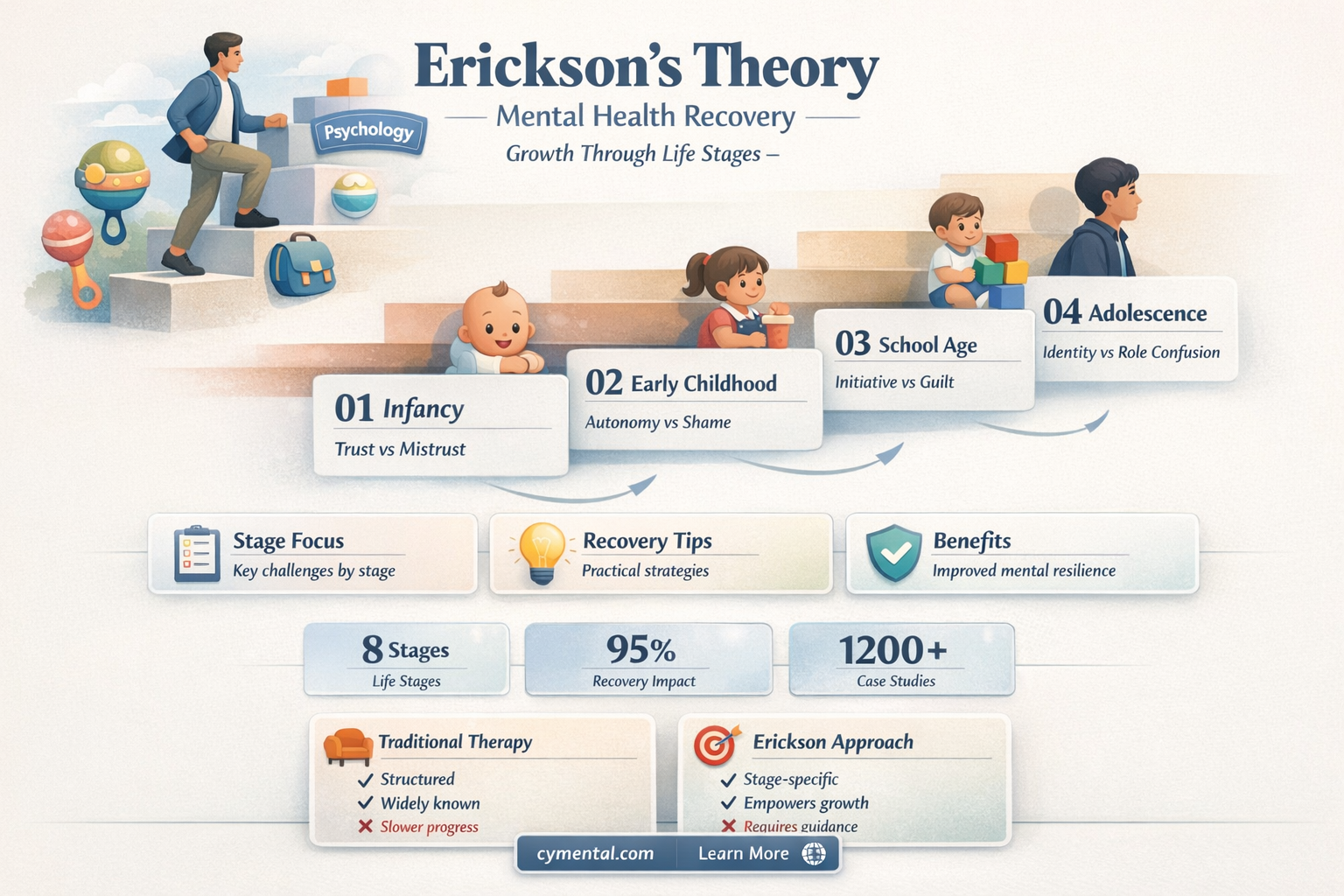
Erik Erikson's theory of psychosocial development offers valuable insights into understanding and addressing mental illness by framing it within the context of lifelong developmental stages. His theory posits that individuals face specific psychological challenges at each stage, from infancy to late adulthood, and successfully navigating these challenges fosters healthy personality growth. When disruptions occur, such as unresolved conflicts or unmet needs, they can contribute to mental health issues later in life. For example, unresolved trust issues in infancy or identity confusion in adolescence may manifest as anxiety, depression, or personality disorders. By applying Erikson's theory, mental health professionals can identify the root causes of psychological distress tied to developmental stages, tailor interventions to address these specific challenges, and promote healing through resolution of past conflicts. This approach not only helps individuals understand their struggles but also empowers them to achieve greater emotional and psychological well-being.
| Characteristics | Values |
|---|---|
| Psychosocial Stages | Erickson’s theory identifies eight stages of psychosocial development, each with a crisis. Understanding these stages helps therapists identify unresolved conflicts contributing to mental illness. |
| Identity Formation | The theory emphasizes the importance of identity formation, particularly in adolescence. Strengthening identity can reduce anxiety, depression, and personality disorders. |
| Crisis Resolution | Each stage involves a crisis (e.g., trust vs. mistrust). Resolving these crises can prevent or alleviate mental health issues like attachment disorders or chronic mistrust. |
| Ego Strengths | Successfully navigating each stage develops ego strengths (e.g., hope, will, competence). These strengths act as protective factors against mental illness. |
| Interpersonal Relationships | The theory highlights the role of relationships in mental health. Improving interpersonal connections can mitigate loneliness, depression, and social anxiety. |
| Lifelong Development | Erickson’s theory extends into late adulthood, emphasizing that mental health issues can arise at any stage. This encourages holistic, lifelong therapeutic approaches. |
| Cultural Sensitivity | The theory acknowledges cultural influences on development, making it useful for culturally sensitive mental health interventions. |
| Preventive Framework | By addressing developmental challenges early, therapists can prevent the onset of mental illness or reduce its severity. |
| Therapeutic Alliance | Understanding a client’s stage-specific struggles fosters empathy and a stronger therapeutic alliance, enhancing treatment outcomes. |
| Self-Exploration | Encouraging clients to explore their developmental history can uncover root causes of mental health issues, facilitating targeted therapy. |
Explore related products


What You'll Learn
- Identity Development: Understanding identity crises aids in treating identity-related mental health issues like depression or anxiety
- Psychosocial Stages: Applying Erickson’s stages helps address age-specific mental health challenges effectively
- Crisis Resolution: Managing crises (e.g., intimacy vs. isolation) reduces risks of long-term mental illness
- Ego Strengths: Building ego strengths (e.g., hope, will) enhances resilience against mental health disorders
- Therapy Applications: Erickson’s theory guides therapeutic interventions for trauma, anxiety, and personality disorders

Identity Development: Understanding identity crises aids in treating identity-related mental health issues like depression or anxiety
Identity crises, as conceptualized by Erik Erikson, often manifest during adolescence but can resurface in adulthood, triggering mental health issues like depression or anxiety. These crises stem from unresolved conflicts in identity formation, where individuals struggle to answer the question, "Who am I?" For example, a 25-year-old professional might experience anxiety if their career path feels misaligned with their values, reflecting a failure to achieve *identity achievement* in Erikson’s stage of *Identity vs. Role Confusion*. Recognizing this as a developmental challenge, rather than a personal failure, is the first step in addressing the psychological distress it causes.
To treat identity-related mental health issues, therapists can employ Eriksonian principles by guiding clients through a process of *identity exploration*. This involves encouraging individuals to examine their values, beliefs, and aspirations without judgment. For instance, a therapist might use journaling prompts like, "What are three things you’d pursue if societal expectations didn’t exist?" or "How do your current choices reflect your true self?" Such exercises help clients reconnect with their authentic identity, reducing the dissonance that fuels anxiety or depression. For adolescents, group therapy can be particularly effective, as peer interactions provide a mirror for self-reflection and validation.
A critical caution in this approach is avoiding the imposition of external expectations. Therapists must create a nonjudgmental space where clients feel safe to explore even contradictory or unconventional identities. For example, a client who feels pressured to pursue a family business might need permission to consider alternative paths. Without this freedom, the therapeutic process can exacerbate feelings of confusion or inadequacy. Additionally, therapists should be mindful of cultural contexts, as identity development is shaped by societal norms, and what constitutes a "crisis" varies across cultures.
In practice, integrating Erikson’s theory into treatment requires a structured yet flexible approach. Start by assessing the client’s stage of identity development using tools like the *Identity Status Interview*. For those in *identity diffusion* (e.g., a college student constantly changing majors), focus on building self-awareness through reflective exercises. For those in *foreclosure* (e.g., a young adult blindly following parental expectations), encourage critical evaluation of assumed roles. Over time, this process fosters *identity achievement*, reducing symptoms of depression or anxiety tied to identity confusion. The takeaway? By addressing the root of identity crises, mental health professionals can offer more than symptom management—they can facilitate lasting personal growth.
Mental Health Parity: Does It Truly Bridge the Care Gap?
You may want to see also
Explore related products


Psychosocial Stages: Applying Erickson’s stages helps address age-specific mental health challenges effectively
Erikson’s theory of psychosocial development offers a roadmap for understanding how individuals navigate life’s challenges across eight distinct stages, each tied to a specific age range and psychosocial crisis. By applying this framework, mental health professionals can tailor interventions to address age-specific vulnerabilities and strengths. For instance, a teenager struggling with identity confusion (Stage 5: Identity vs. Role Confusion) may exhibit symptoms of anxiety or depression, while an older adult facing stagnation (Stage 8: Integrity vs. Despair) might grapple with existential dread or hopelessness. Recognizing these stage-specific crises allows for targeted therapy that resonates with the individual’s developmental context.
Consider the adolescent years, a period marked by Erikson’s Identity vs. Role Confusion stage. During this phase (ages 12–18), individuals grapple with questions of self and purpose. Mental health challenges like mood disorders or substance abuse often emerge as maladaptive responses to unresolved identity struggles. Therapists can employ identity exploration exercises, such as journaling or role-playing, to help teens articulate their values and aspirations. For example, a 16-year-old experiencing depression might benefit from a structured program that combines cognitive-behavioral therapy (CBT) with identity-building activities, fostering a sense of self-worth and direction.
In contrast, middle adulthood (ages 40–65) corresponds to Erikson’s Generativity vs. Stagnation stage, where individuals focus on contributing to society and nurturing the next generation. Mental health issues like burnout or midlife crises often arise when individuals feel unproductive or disconnected from their purpose. Therapists can encourage clients to engage in generative activities, such as mentoring or community service, to combat feelings of stagnation. A 45-year-old experiencing anxiety might find relief through a combination of mindfulness practices and goal-setting exercises that align with their values of contribution and legacy.
Applying Erikson’s stages also highlights the importance of preventive interventions. For example, in early childhood (ages 1–3), the Trust vs. Mistrust stage lays the foundation for emotional security. Parents and caregivers can be educated on consistent caregiving practices to foster trust, reducing the risk of attachment disorders later in life. Similarly, during the Industry vs. Inferiority stage (ages 6–12), educators and therapists can promote competence-building activities, such as problem-solving tasks or group projects, to bolster self-esteem and prevent internalized feelings of inadequacy.
While Erikson’s theory provides a valuable lens, it’s essential to acknowledge its limitations. Not all individuals progress through stages in a linear fashion, and cultural or socioeconomic factors can influence developmental trajectories. Therapists must adapt the framework to fit the unique circumstances of each client, avoiding rigid interpretations. For instance, a young adult from a collectivist culture might prioritize family expectations over individual identity exploration, requiring a nuanced approach to Stage 5 interventions. By integrating Erikson’s stages with cultural sensitivity and flexibility, mental health professionals can design interventions that are both developmentally appropriate and personally relevant.
Mental Health Awareness: Impact on Well-Being and Societal Support
You may want to see also
Explore related products

$59.99 $59.99


Crisis Resolution: Managing crises (e.g., intimacy vs. isolation) reduces risks of long-term mental illness
Navigating life's pivotal crises, such as the intimacy vs. isolation stage in early adulthood, can significantly impact mental health trajectories. Erikson's theory posits that successfully resolving these conflicts fosters psychological growth, while unresolved issues may contribute to long-term mental illness. For instance, individuals who struggle to form meaningful relationships during this stage may experience chronic loneliness, a known risk factor for depression and anxiety disorders. Addressing these crises through targeted interventions can mitigate these risks, emphasizing the importance of early and proactive mental health support.
Consider a 25-year-old who avoids intimate relationships due to fear of rejection, a common manifestation of the intimacy vs. isolation crisis. Over time, this avoidance may lead to social withdrawal, reduced self-esteem, and heightened anxiety. A practical approach to crisis resolution involves cognitive-behavioral therapy (CBT), which helps challenge negative thought patterns and encourages gradual exposure to social situations. For example, a therapist might assign "homework" such as initiating one conversation per week with a stranger or joining a group activity. Pairing CBT with mindfulness practices, like daily 10-minute meditation, can further enhance emotional resilience.
Comparatively, individuals who resolve this crisis successfully often report stronger interpersonal skills and greater life satisfaction. Research shows that those who achieve intimacy—whether through romantic relationships, close friendships, or community involvement—are less likely to develop severe mental health issues later in life. For instance, a longitudinal study found that adults with robust social networks had a 50% lower risk of major depressive disorder compared to their isolated peers. This highlights the preventive power of crisis resolution during critical developmental stages.
To implement crisis resolution effectively, mental health professionals should adopt a staged approach. First, assess the individual’s current coping mechanisms and identify barriers to intimacy. Second, tailor interventions to their specific needs, incorporating techniques like role-playing, journaling, or group therapy. Third, monitor progress regularly, adjusting strategies as necessary. For young adults, peer support groups can be particularly beneficial, offering a safe space to practice vulnerability and build connections. Encouraging open dialogue about mental health within families and communities also fosters a supportive environment for crisis resolution.
Ultimately, managing crises like intimacy vs. isolation is not just about avoiding mental illness—it’s about cultivating a foundation for lifelong well-being. By integrating Erikson’s insights with evidence-based practices, individuals can navigate these challenges with greater confidence and resilience. Whether through therapy, self-reflection, or community engagement, proactive crisis resolution empowers people to transform potential mental health risks into opportunities for growth.
Psychiatrists: Expert Mental Health Support for Healing and Recovery
You may want to see also
Explore related products

$16.96 $14.95

$25.26 $29.99


Ego Strengths: Building ego strengths (e.g., hope, will) enhances resilience against mental health disorders
Erikson's theory of psychosocial development posits that individuals navigate a series of stages, each marked by a crisis that must be resolved to foster healthy psychological growth. Central to this theory are ego strengths—qualities like hope, will, purpose, and competence—that emerge when these crises are successfully overcome. For mental health, these ego strengths act as protective factors, bolstering resilience against disorders such as anxiety, depression, and trauma-related conditions. By understanding and intentionally cultivating these strengths, individuals can build a robust psychological foundation capable of withstanding stressors that might otherwise precipitate mental illness.
Consider the ego strength of hope, which Erikson associates with the first stage of development (infancy). Hope is not merely wishful thinking but a deep-seated belief in the possibility of positive outcomes. Research shows that individuals with higher levels of hope exhibit greater emotional regulation and coping mechanisms, reducing their susceptibility to depressive episodes. To build hope, practical strategies include setting small, achievable goals and practicing gratitude. For instance, a daily journal reflecting on three things one is grateful for can shift focus from negativity to possibility, reinforcing hope over time. This simple practice, when done consistently, can rewire neural pathways to foster a more optimistic outlook.
Another critical ego strength is will, developed during the toddler stage, which involves the drive to explore and assert independence. Willpower is closely linked to self-efficacy—the belief in one’s ability to achieve goals. Strengthening will can be particularly beneficial for individuals struggling with anxiety or procrastination, common symptoms of conditions like generalized anxiety disorder or ADHD. A structured approach to building will involves breaking larger tasks into manageable steps and using positive reinforcement. For example, a person aiming to complete a project might set a timer for 15 minutes of focused work, rewarding themselves with a short break afterward. Over time, this builds both discipline and confidence, enhancing resilience against mental health challenges.
While these strategies are effective, it’s crucial to acknowledge potential pitfalls. Overemphasis on willpower, for instance, can lead to burnout if not balanced with self-compassion. Similarly, cultivating hope without addressing underlying trauma or systemic barriers may feel superficial. To avoid these issues, integrate ego-strengthening practices with therapeutic interventions like cognitive-behavioral therapy (CBT) or mindfulness-based stress reduction (MBSR). For adolescents and young adults, group activities that foster collaboration and mutual support can also enhance ego strengths, as social connections reinforce qualities like purpose and fidelity.
In conclusion, Erikson’s theory offers a roadmap for building ego strengths that directly contribute to mental health resilience. By focusing on hope, will, and other psychosocial virtues, individuals can develop the psychological armor needed to navigate life’s challenges. Practical, consistent, and balanced application of these principles—coupled with professional guidance when necessary—can transform theoretical insights into tangible mental health benefits. Whether through journaling, task management, or community engagement, the path to resilience begins with intentional cultivation of these foundational strengths.
Diagnosis and Beyond: How Mental Health Labels Impacted My Journey
You may want to see also
Explore related products


Therapy Applications: Erickson’s theory guides therapeutic interventions for trauma, anxiety, and personality disorders
Erikson's theory of psychosocial development, with its focus on eight stages and corresponding crises, offers a roadmap for understanding how individuals navigate challenges throughout their lives. This framework proves particularly valuable in therapeutic settings, guiding interventions for trauma, anxiety, and personality disorders.
By identifying the specific stage at which a client's development may have been disrupted, therapists can tailor treatment to address the core issues contributing to their current struggles.
Trauma and the Interrupted Stage:
Imagine a 35-year-old woman struggling with anxiety and flashbacks after a car accident. Erikson's theory suggests examining her experiences during the "Industry vs. Inferiority" stage (ages 6-12), a period focused on developing competence and a sense of accomplishment. Perhaps childhood experiences, like excessive criticism or a lack of encouragement, left her feeling inadequate. The trauma of the accident may have reactivated these unresolved feelings of inferiority, exacerbating her anxiety. Therapy could then focus on rebuilding a sense of competence through skill-building exercises and challenging negative self-beliefs formed during that earlier stage.
Anxiety and the Search for Identity: Adolescents grappling with generalized anxiety disorder often find themselves stuck in the "Identity vs. Role Confusion" stage (ages 12-18). Erikson posits that this stage involves exploring different roles and values to form a coherent sense of self. Anxiety can arise when this exploration is hindered by fear of judgment, societal pressures, or a lack of supportive relationships. Therapists can utilize Erikson's framework to encourage clients to experiment with different identities, engage in values clarification exercises, and develop healthy coping mechanisms for managing the inherent uncertainty of this developmental phase.
Personality Disorders and Fixation: Borderline Personality Disorder (BPD), characterized by emotional instability and difficulty with relationships, can be understood through the lens of fixation in Erikson's stages. Individuals with BPD may have experienced significant disruptions during the "Trust vs. Mistrust" stage (infancy), leading to a pervasive sense of insecurity and fear of abandonment. Therapy informed by Erikson's theory might involve creating a safe and consistent therapeutic environment to foster trust, gradually helping clients develop healthier attachment styles and emotional regulation skills.
Practical Application: A Hypothetical Case
Consider a 28-year-old man diagnosed with Avoidant Personality Disorder, characterized by extreme social inhibition and fear of rejection. Erikson's theory suggests exploring his experiences during the "Intimacy vs. Isolation" stage (young adulthood). Perhaps past experiences of rejection or criticism led him to avoid close relationships altogether. Therapy could focus on gradually exposing him to social situations, building assertiveness skills, and challenging his negative beliefs about himself and others, ultimately helping him move towards healthier intimacy.
While Erikson's theory provides a valuable framework, it's crucial to remember that it's just one tool in a therapist's arsenal. Individual experiences are complex, and a comprehensive approach often involves integrating Erikson's insights with other therapeutic modalities like Cognitive Behavioral Therapy (CBT) or Dialectical Behavior Therapy (DBT). By understanding the interplay between developmental stages and current struggles, therapists can offer more targeted and effective interventions, helping clients navigate the challenges of trauma, anxiety, and personality disorders and move towards greater psychological well-being.
AI's Role in Mental Health: Support, Challenges, and Future Possibilities
You may want to see also
Frequently asked questions
Erickson's theory provides a framework for understanding how unresolved conflicts at specific developmental stages can contribute to mental health issues. For example, a person who struggles with trust issues in adulthood may have unresolved conflicts from the trust vs. mistrust stage in infancy, potentially leading to anxiety or attachment disorders.
Erickson’s emphasis on identity vs. role confusion in adolescence highlights how a weak or fragmented sense of self can predispose individuals to mental health challenges like depression, anxiety, or personality disorders. Therapists can use this insight to help clients explore and solidify their identity, fostering resilience and recovery.
Therapists can use Erickson’s stages to identify and address developmental gaps or traumas that may underlie mental health issues. By revisiting and resolving conflicts from earlier stages, individuals can achieve greater emotional balance and reduce symptoms of conditions like PTSD, depression, or borderline personality disorder.