Noah Parker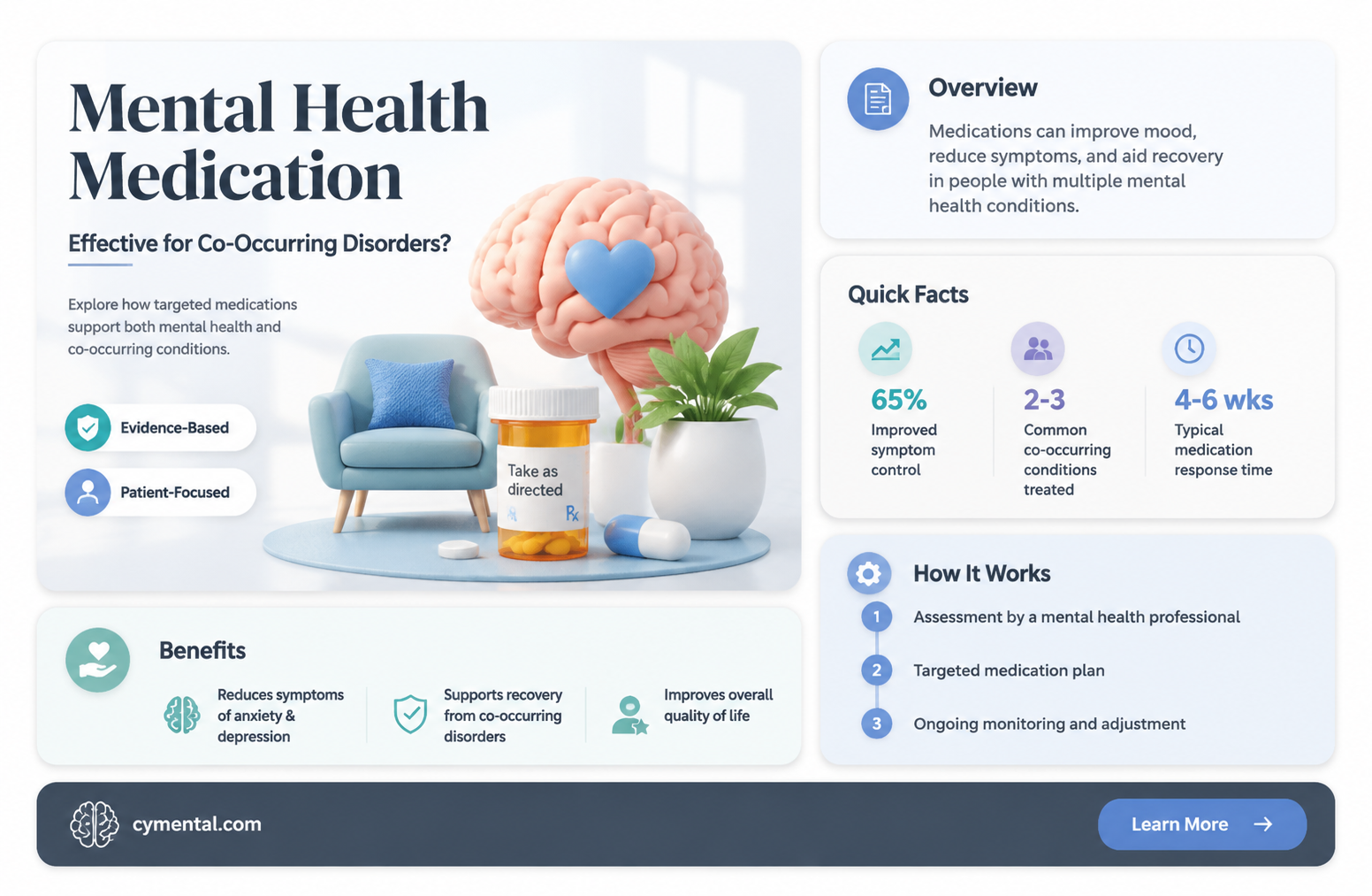
Mental health medication plays a crucial role in treating individuals with co-occurring disorders, a condition where someone experiences both a mental health disorder and a substance use disorder simultaneously. These medications, often prescribed as part of a comprehensive treatment plan, can help manage symptoms of mental health conditions such as depression, anxiety, or bipolar disorder, while also addressing the underlying issues that may contribute to substance abuse. By stabilizing mood, reducing cravings, and improving overall emotional well-being, mental health medications can enhance the effectiveness of therapy and support recovery efforts. However, their success often depends on individualized treatment approaches, careful monitoring, and integration with other therapeutic interventions to address the complex needs of those with co-occurring disorders.
Explore related products


What You'll Learn
- Effectiveness of integrated treatment plans for co-occurring mental health and substance use disorders
- Role of antipsychotics in managing dual diagnosis patients with schizophrenia and addiction
- Impact of mood stabilizers on individuals with bipolar disorder and comorbid anxiety
- Use of antidepressants for patients with depression and concurrent eating disorders
- Challenges of medication adherence in co-occurring mental health and personality disorders

Effectiveness of integrated treatment plans for co-occurring mental health and substance use disorders
Integrated treatment plans for co-occurring mental health and substance use disorders have emerged as a cornerstone of effective care, addressing the complex interplay between these conditions. Unlike traditional siloed approaches, integrated treatment simultaneously targets both disorders, recognizing that untreated mental health issues can fuel substance use and vice versa. For instance, a person with depression might self-medicate with alcohol, creating a cycle of dependency. Integrated plans disrupt this cycle by combining therapies like cognitive-behavioral therapy (CBT) with medications such as selective serotonin reuptake inhibitors (SSRIs), often starting at low doses (e.g., 20 mg of fluoxetine) and adjusting based on response and side effects. This dual focus not only improves symptom management but also enhances treatment adherence, as patients receive cohesive care rather than fragmented interventions.
One of the key strengths of integrated treatment is its adaptability to individual needs. For example, a young adult with bipolar disorder and opioid use disorder might benefit from a combination of mood stabilizers like lithium (starting at 300 mg daily) and contingency management, a behavioral therapy that rewards abstinence. In contrast, an older adult with anxiety and alcohol dependence may respond better to benzodiazepine tapering alongside mindfulness-based stress reduction techniques. This tailored approach ensures that treatment addresses the unique challenges of each patient, increasing the likelihood of sustained recovery. However, success often hinges on consistent monitoring and collaboration among healthcare providers, as co-occurring disorders can complicate medication interactions and side effect profiles.
Despite its promise, integrated treatment is not without challenges. Medication adherence remains a significant barrier, particularly for individuals with severe mental health symptoms or active substance use. For instance, antipsychotics like quetiapine (starting at 50 mg) can be effective for schizophrenia and co-occurring cannabis use disorder, but patients may discontinue use due to side effects such as sedation. To mitigate this, providers often employ motivational interviewing to engage patients in treatment goals and educate them about the benefits of long-term medication use. Additionally, integrating peer support programs can foster accountability and reduce stigma, further enhancing treatment outcomes.
Research underscores the effectiveness of integrated treatment, with studies showing reduced relapse rates and improved quality of life compared to standalone interventions. For example, a randomized controlled trial found that patients receiving integrated care for depression and alcohol use disorder had a 40% lower relapse rate at 12 months compared to those in traditional treatment. These findings highlight the importance of viewing co-occurring disorders as interconnected rather than isolated conditions. By addressing both mental health and substance use simultaneously, integrated treatment plans offer a more holistic and sustainable path to recovery, making them a vital tool in modern behavioral healthcare.
Unlocking Hope: Effective Mental Health Care in Prisons Explored
You may want to see also
Explore related products


Role of antipsychotics in managing dual diagnosis patients with schizophrenia and addiction
Antipsychotics, primarily used to manage schizophrenia, play a critical role in stabilizing patients with dual diagnoses, particularly those struggling with addiction. These medications, such as olanzapine, quetiapine, and risperidone, target dopamine and serotonin receptors in the brain, reducing hallucinations, delusions, and disorganized thinking. For dual diagnosis patients, this stabilization is essential because untreated psychotic symptoms can exacerbate substance use as individuals self-medicate to cope with distress. However, prescribing antipsychotics in this population requires careful consideration of potential side effects, such as weight gain and metabolic changes, which can deter adherence.
One practical approach is to start with low doses and gradually titrate upward, monitoring for both therapeutic effects and adverse reactions. For example, quetiapine may be initiated at 50 mg daily and increased to 300–800 mg based on response and tolerance. Combining antipsychotics with psychosocial interventions, like cognitive-behavioral therapy (CBT) or contingency management, enhances outcomes by addressing both psychiatric symptoms and addictive behaviors. It’s also crucial to involve patients in shared decision-making, explaining the benefits and risks of medication to improve engagement and reduce stigma.
A comparative analysis reveals that second-generation antipsychotics (SGAs) are often preferred over first-generation antipsychotics (FGAs) due to their lower risk of extrapyramidal symptoms, which can mimic withdrawal or intoxication states in addiction patients. However, SGAs’ metabolic side effects, such as insulin resistance, require regular monitoring of weight, blood glucose, and lipid levels. For younger patients (ages 18–25), who are at higher risk for addiction and schizophrenia co-occurrence, early intervention with antipsychotics can prevent the progression of both disorders, but close oversight is necessary to manage side effects in this age group.
Persuasively, the role of antipsychotics in dual diagnosis care extends beyond symptom control—it fosters a foundation for recovery. By alleviating psychotic symptoms, these medications enable patients to engage more effectively in addiction treatment programs. For instance, a patient stabilized on aripiprazole (10–30 mg daily) may find it easier to participate in group therapy or adhere to a methadone maintenance regimen. Yet, clinicians must remain vigilant for drug interactions, particularly with substances like alcohol or benzodiazepines, which can potentiate sedation or impair antipsychotic efficacy.
In conclusion, antipsychotics are indispensable in managing dual diagnosis patients with schizophrenia and addiction, but their use demands a tailored, multidisciplinary approach. From dosage adjustments to integrative therapy, every decision should prioritize the patient’s unique needs and challenges. With careful management, these medications not only mitigate psychotic symptoms but also pave the way for sustained recovery from addiction.
Can Psychiatrists Effectively Address and Resolve My Mental Health Issues?
You may want to see also
Explore related products


Impact of mood stabilizers on individuals with bipolar disorder and comorbid anxiety
Mood stabilizers are a cornerstone in the treatment of bipolar disorder, but their role in managing comorbid anxiety is less straightforward. Bipolar disorder, characterized by extreme mood swings, often co-occurs with anxiety disorders, complicating treatment. Lithium, valproate, and lamotrigine are commonly prescribed mood stabilizers, each with unique mechanisms and potential benefits for anxiety symptoms. For instance, lamotrigine has shown promise in reducing anxiety in bipolar patients, particularly when used at dosages of 100–200 mg daily. However, the effectiveness varies, and not all mood stabilizers address anxiety equally, necessitating a tailored approach.
Consider the case of a 32-year-old woman diagnosed with bipolar I disorder and generalized anxiety disorder. Her psychiatrist prescribed lithium at 900 mg daily to stabilize her mood. While her manic episodes subsided, her anxiety persisted, leading to the addition of lamotrigine. Over 12 weeks, her anxiety symptoms decreased significantly, illustrating how combining mood stabilizers can target both conditions. This example highlights the importance of monitoring individual responses and adjusting treatment plans accordingly.
When prescribing mood stabilizers for bipolar disorder with comorbid anxiety, clinicians must balance efficacy and side effects. Lithium, for example, requires regular blood monitoring to avoid toxicity, while valproate may cause weight gain or liver issues. Lamotrigine, though generally well-tolerated, carries a risk of rash, particularly at rapid titration rates. Starting lamotrigine at 25 mg daily and increasing by 25 mg weekly minimizes this risk. Patients should also be educated about potential interactions with other medications, such as benzodiazepines, which are often used for anxiety but may exacerbate bipolar symptoms.
A comparative analysis reveals that while mood stabilizers primarily target mood dysregulation, their anxiolytic effects are secondary. Valproate, for instance, may reduce anxiety in some patients but is less effective than lamotrigine in this regard. Combining mood stabilizers with psychotherapy, such as cognitive-behavioral therapy (CBT), can enhance outcomes. CBT helps patients develop coping strategies for anxiety, complementing the pharmacological approach. This dual strategy underscores the need for a holistic treatment plan in managing co-occurring disorders.
In conclusion, mood stabilizers can significantly benefit individuals with bipolar disorder and comorbid anxiety, but their use requires careful consideration. Clinicians should assess patient-specific factors, such as age, medical history, and symptom severity, to determine the most effective regimen. For adults, starting with a single mood stabilizer and titrating slowly is advisable, with adjustments based on response and tolerability. Practical tips include maintaining a consistent medication schedule, tracking symptoms, and communicating openly with healthcare providers. While not a one-size-fits-all solution, mood stabilizers, when used judiciously, can improve quality of life for those navigating these complex conditions.
Fasting and Mental Health: Unlocking the Mind's Potential Through Abstinence
You may want to see also
Explore related products


Use of antidepressants for patients with depression and concurrent eating disorders
Antidepressants, particularly selective serotonin reuptake inhibitors (SSRIs), are often prescribed for patients with depression and concurrent eating disorders, such as anorexia nervosa or bulimia nervosa. Fluoxetine, the only SSRI approved by the FDA for treating bulimia nervosa in adults, is commonly used due to its efficacy in reducing binge-eating and purging behaviors while simultaneously addressing depressive symptoms. For adolescents with anorexia nervosa, fluoxetine has shown limited effectiveness in weight restoration but may help manage comorbid anxiety and depression. Dosage typically starts at 20 mg/day for adults, with adjustments based on individual response and tolerability. It’s crucial to monitor patients closely, as antidepressants may take 4–6 weeks to show full effects, and abrupt discontinuation can lead to withdrawal symptoms.
The interplay between depression and eating disorders complicates treatment, as both conditions share neurobiological pathways involving serotonin and dopamine. SSRIs, by increasing serotonin levels, can alleviate depressive symptoms and reduce compulsive behaviors associated with eating disorders. However, not all patients respond uniformly. For instance, those with severe anorexia nervosa may require higher doses or adjunctive therapies, such as cognitive-behavioral therapy (CBT), to address the psychological rigidity and fear of weight gain that often accompany the disorder. Combining medication with psychotherapy is often more effective than medication alone, as it targets both the biological and psychological aspects of these co-occurring conditions.
Prescribing antidepressants for this population requires careful consideration of potential risks and benefits. Weight changes, a common concern for patients with eating disorders, are less likely with SSRIs compared to tricyclic antidepressants (TCAs) or monoamine oxidase inhibitors (MAOIs), which are generally avoided due to side effects and dietary restrictions. However, SSRIs can cause initial nausea, insomnia, or agitation, which may deter patients already struggling with body image or anxiety. Clinicians should educate patients about these side effects and emphasize that they are usually transient. Additionally, regular monitoring of weight, mood, and eating behaviors is essential to ensure the medication is not exacerbating symptoms.
A comparative analysis of SSRIs versus other antidepressants highlights their superiority in this population. Serotonin-norepinephrine reuptake inhibitors (SNRIs), such as venlafaxine, may be considered for treatment-resistant cases but carry a higher risk of increasing blood pressure and are less studied in eating disorders. Atypical antidepressants like bupropion, which can cause weight loss, are generally contraindicated due to the risk of triggering or worsening eating disorder behaviors. SSRIs remain the first-line choice due to their safety profile and dual action on depression and eating disorder symptoms. However, individual variability in response underscores the need for personalized treatment plans.
In conclusion, antidepressants, particularly SSRIs, can be a valuable tool in treating patients with depression and concurrent eating disorders, but their use must be tailored to the individual. Starting with a low dose, combining medication with psychotherapy, and closely monitoring side effects and symptom progression are key strategies for success. While not a cure-all, SSRIs offer a pathway to symptom relief and improved quality of life when integrated into a comprehensive treatment approach. Patients and clinicians alike should approach this treatment with patience and realism, recognizing that managing co-occurring disorders is a gradual process requiring ongoing collaboration and adjustment.
Exploring Ayahuasca's Potential in Treating Mental Health Disorders
You may want to see also
Explore related products





Challenges of medication adherence in co-occurring mental health and personality disorders
Medication adherence is a critical yet complex issue for individuals with co-occurring mental health and personality disorders. The interplay between these conditions often exacerbates challenges such as forgetfulness, ambivalence toward treatment, and heightened sensitivity to side effects. For example, a person with borderline personality disorder (BPD) and major depressive disorder (MDD) might struggle with the emotional dysregulation of BPD, making it difficult to consistently take antidepressants like selective serotonin reuptake inhibitors (SSRIs), which require strict adherence for therapeutic benefit. This inconsistency can lead to suboptimal outcomes, as SSRIs typically take 4–6 weeks to reach full efficacy, and missed doses can prolong symptom relief.
One of the primary barriers to adherence is the complexity of medication regimens. Individuals with co-occurring disorders often juggle multiple prescriptions, such as mood stabilizers (e.g., lithium 300 mg twice daily), antipsychotics (e.g., quetiapine 100 mg at night), and antidepressants (e.g., sertraline 50 mg in the morning). This polypharmacy increases the risk of confusion, especially when medications have different dosing schedules or side effects. For instance, lithium requires regular blood monitoring to avoid toxicity, while antipsychotics may cause sedation, making it harder for patients to maintain a routine. Simplifying regimens, such as using combination therapies or long-acting injectables, can mitigate these challenges but requires careful psychiatric oversight.
Another significant obstacle is the psychological resistance rooted in personality disorders. Individuals with conditions like BPD or narcissistic personality disorder (NPD) may view medication as a threat to their autonomy or a symbol of weakness, leading to intentional non-adherence. For example, a person with NPD might refuse medication due to a belief in their ability to manage symptoms without external help. Clinicians can address this by fostering a collaborative relationship, emphasizing shared decision-making, and framing medication as a tool for empowerment rather than control. Psychoeducation about the neurobiological basis of their disorders can also reduce stigma and increase buy-in.
Practical strategies can improve adherence in this population. Pill organizers, smartphone reminders, and caregiver support are simple yet effective tools. For younger adults (ages 18–25), integrating reminders into daily routines, such as taking medication with breakfast or before bed, can enhance consistency. For older adults (ages 50+), involving family members or caregivers in medication management can provide additional accountability. However, it’s crucial to balance support with autonomy to avoid triggering resistance, particularly in individuals with personality disorders who may be sensitive to perceived control.
Ultimately, addressing adherence in co-occurring disorders requires a multifaceted approach that considers both clinical and psychological factors. Clinicians must tailor treatment plans to individual needs, monitor progress closely, and adjust strategies as necessary. Patients, meanwhile, benefit from practical tools and a supportive environment that encourages consistency without coercion. By acknowledging the unique challenges of this population and implementing targeted interventions, medication can become a more effective component of comprehensive care.
Exercise and Mental Health: Unlocking the Mind-Body Connection for Wellness
You may want to see also
Frequently asked questions
Yes, mental health medication can be effective for people with co-occurring disorders when tailored to address both conditions simultaneously, often in combination with therapy.
Medications are chosen based on the specific disorders present. For example, antidepressants may be used for depression alongside mood stabilizers for bipolar disorder, but treatment plans vary widely.
Medication alone is often insufficient. Integrated treatment, including therapy like cognitive-behavioral therapy (CBT), is typically recommended for better outcomes.
Risks include potential side effects, drug interactions, and the possibility of one medication worsening symptoms of the other disorder. Close monitoring by a healthcare provider is essential.
The timeline varies, but it often takes 4–6 weeks to notice improvements. Patience and consistent follow-up with a provider are crucial for adjusting treatment as needed.