Lucas Bennett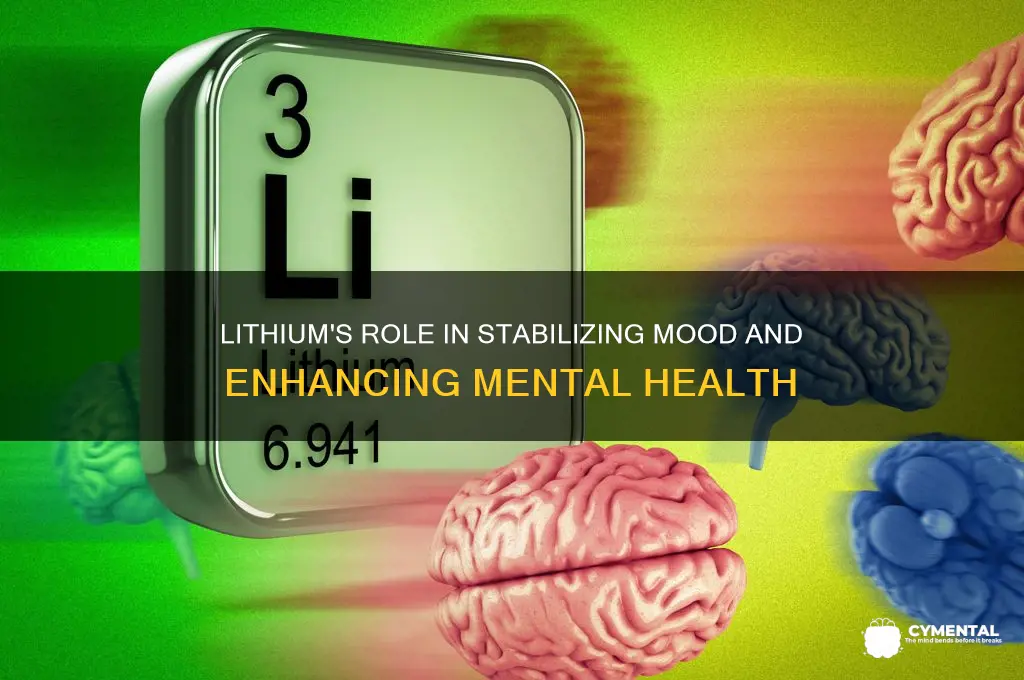
Lithium, a naturally occurring element, has been widely recognized as a cornerstone in the treatment of mental health disorders, particularly bipolar disorder. Its therapeutic effects were first discovered in the mid-20th century, and since then, it has become a standard treatment for stabilizing mood swings, reducing the severity of manic and depressive episodes, and preventing relapse. Beyond bipolar disorder, lithium has shown promise in managing other conditions such as major depressive disorder, schizoaffective disorder, and even certain aggressive or impulsive behaviors. Its mechanism of action is not fully understood but is believed to involve modulation of neurotransmitters, neuroprotection, and regulation of intracellular signaling pathways. Despite its benefits, lithium requires careful monitoring due to its narrow therapeutic window and potential side effects, making it a powerful yet nuanced tool in mental health treatment.
| Characteristics | Values |
|---|---|
| Mood Stabilization | Lithium is highly effective in stabilizing mood swings in bipolar disorder, reducing both manic and depressive episodes. |
| Suicide Prevention | It significantly lowers the risk of suicide in individuals with bipolar disorder and major depressive disorder. |
| Neuroprotective Effects | Lithium has been shown to promote neurogenesis (growth of new neurons) and protect against neuronal damage. |
| Anti-Inflammatory Properties | It reduces neuroinflammation, which is often associated with mood disorders. |
| Glutamate Regulation | Lithium modulates glutamate levels in the brain, helping to balance excitatory neurotransmission. |
| GABA Enhancement | It increases GABA (gamma-aminobutyric acid) activity, promoting relaxation and reducing anxiety. |
| Second Messenger Systems | Lithium affects intracellular signaling pathways, such as GSK-3 inhibition, which plays a role in mood regulation. |
| Long-Term Efficacy | It is effective for long-term maintenance therapy in bipolar disorder, preventing relapse. |
| Augmentation in Depression | Lithium is often used as an augmenting agent to enhance the effects of antidepressants in treatment-resistant depression. |
| Side Effects Management | Requires regular monitoring of blood levels to avoid toxicity, with common side effects including tremors, weight gain, and thyroid issues. |
| Mechanism of Action | Exact mechanisms are not fully understood but involve modulation of neurotransmitters, ion flux, and gene expression. |
| Evidence-Based Treatment | Supported by decades of research as a first-line treatment for bipolar disorder. |
Explore related products




What You'll Learn
- Mood Stabilization: Lithium balances brain chemicals, reducing extreme mood swings in bipolar disorder
- Mania Prevention: It effectively prevents manic episodes, promoting emotional stability
- Depression Management: Lithium aids in treating bipolar depression, enhancing overall mood
- Suicide Risk Reduction: Studies show lithium lowers suicidal thoughts and behaviors
- Long-Term Brain Health: It may protect neurons, supporting cognitive function over time

Mood Stabilization: Lithium balances brain chemicals, reducing extreme mood swings in bipolar disorder
Lithium's role in mood stabilization is a cornerstone of its therapeutic value in mental health, particularly for individuals with bipolar disorder. By modulating neurotransmitter activity, lithium helps restore balance to the brain’s chemical environment, mitigating the severe highs of mania and the crushing lows of depression. This delicate recalibration is achieved through its interaction with key signaling pathways, including those involving serotonin, norepinephrine, and dopamine, which are often dysregulated in bipolar disorder. Unlike many other psychotropic medications, lithium’s mechanism is multifaceted, affecting not only neurotransmitter release but also neuronal plasticity and cellular resilience.
For those prescribed lithium, adherence to a consistent dosage regimen is critical. Typically, therapeutic blood levels range from 0.6 to 1.2 mEq/L, with dosages often starting at 300 mg twice daily and adjusted based on individual response and tolerance. Regular blood tests are essential to monitor lithium levels, as toxicity can occur with even slight elevations above the therapeutic range. Patients must also be mindful of factors that can alter lithium levels, such as dehydration, dietary changes, and interactions with other medications like diuretics or nonsteroidal anti-inflammatory drugs (NSAIDs). Practical tips include maintaining a stable fluid intake, avoiding sudden dietary shifts, and keeping a log of symptoms and side effects to discuss with a healthcare provider.
The benefits of lithium extend beyond immediate symptom control, offering long-term protection against mood episodes and reducing the risk of hospitalization. Studies have shown that lithium is particularly effective in preventing manic episodes and may also have a role in reducing suicidal ideation, a significant concern in bipolar disorder. However, its use requires careful consideration, especially in specific populations. For instance, lithium is generally not recommended for children under 12 due to limited safety data, and pregnant individuals must weigh the risks of teratogenicity against the potential benefits, often in consultation with a specialist.
A comparative analysis highlights lithium’s unique position among mood stabilizers. While alternatives like valproate or lamotrigine are commonly used, lithium remains the gold standard for bipolar disorder due to its dual efficacy in treating acute mania and preventing relapse. Its neuroprotective properties, including the promotion of neurogenesis and reduction of oxidative stress, further distinguish it from other medications. However, its narrow therapeutic index and potential side effects, such as weight gain, tremors, and thyroid dysfunction, necessitate vigilant monitoring and patient education.
In conclusion, lithium’s ability to stabilize mood by balancing brain chemicals is a testament to its enduring relevance in psychiatry. For individuals with bipolar disorder, it offers not just symptom relief but a pathway to greater stability and quality of life. Success with lithium hinges on a collaborative approach between patient and provider, emphasizing regular monitoring, dose optimization, and proactive management of potential challenges. With careful use, lithium remains a powerful tool in the mental health arsenal, transforming lives marked by extreme mood swings into ones of greater predictability and control.
Social Services and Mental Health: A Path to Healing and Support
You may want to see also
Explore related products


Mania Prevention: It effectively prevents manic episodes, promoting emotional stability
Lithium's role in preventing manic episodes is a cornerstone of its therapeutic value in mental health, particularly for individuals with bipolar disorder. By stabilizing mood fluctuations, it acts as a bulwark against the euphoric highs that can lead to reckless behavior, damaged relationships, and impaired judgment. This preventive effect is not just theoretical; it’s supported by decades of clinical research and real-world application. For those who experience manic episodes, lithium offers a measure of predictability and control, transforming lives marked by chaos into ones of greater emotional stability.
To understand how lithium achieves this, consider its mechanism of action. It modulates neurotransmitter activity in the brain, particularly dopamine and norepinephrine, which are often overactive during manic phases. By dampening this hyperactivity, lithium creates a neurochemical environment less prone to extreme mood elevation. Typically, dosages range from 600 to 1200 mg per day, tailored to individual needs and monitored through regular blood tests to maintain therapeutic levels (0.6–1.2 mEq/L). Adherence to prescribed regimens is critical, as inconsistent use can diminish its preventive efficacy.
Practical implementation of lithium therapy requires a partnership between patient and provider. Patients must commit to routine blood monitoring to avoid toxicity, which can manifest as nausea, tremors, or cognitive fog. Hydration is key, as dehydration can elevate lithium levels dangerously. For younger adults and adolescents, lithium is often a first-line treatment, but caution is advised in older adults due to potential kidney function decline. Combining lithium with psychoeducation and therapy enhances its effectiveness, equipping individuals with tools to recognize early manic symptoms and intervene proactively.
A comparative lens reveals lithium’s unique position among mood stabilizers. Unlike antipsychotics or anticonvulsants, lithium has a dual action: it prevents both manic and depressive episodes, though its manic prevention is more pronounced. This specificity makes it invaluable for bipolar I disorder, where manic episodes are more severe and frequent. However, it’s not without drawbacks—side effects like weight gain or thyroid dysfunction require careful management. For those who tolerate it well, though, lithium remains unparalleled in its ability to anchor emotional stability over the long term.
Finally, the takeaway is clear: lithium’s role in mania prevention is both transformative and nuanced. It’s not a cure-all, but for many, it’s a lifeline. By understanding its mechanisms, adhering to treatment protocols, and integrating it into a holistic care plan, individuals can harness its potential to minimize manic episodes and reclaim a sense of balance. In the landscape of mental health treatments, lithium stands as a testament to the power of science to offer hope and stability where once there was unpredictability.
Struggling to Afford Mental Health Care? You're Not Alone
You may want to see also
Explore related products


Depression Management: Lithium aids in treating bipolar depression, enhancing overall mood
Lithium stands as a cornerstone in the treatment of bipolar disorder, particularly in managing depressive episodes. Its efficacy in stabilizing mood swings and preventing the recurrence of depressive phases is well-documented. For individuals with bipolar depression, lithium acts as a protective shield, reducing the severity and frequency of depressive symptoms. This mineral, often referred to as a mood stabilizer, works by modulating neurotransmitter activity in the brain, creating a more balanced emotional state.
Consider the practical application: a typical starting dose for adults is 300 mg to 600 mg daily, gradually increased under medical supervision to achieve therapeutic blood levels (0.5–1.5 mEq/L). Adherence to prescribed dosages is critical, as lithium’s narrow therapeutic window requires careful monitoring to avoid toxicity. Patients often notice improvements in mood within 1–3 weeks, though full benefits may take several months. For adolescents and older adults, dosages are adjusted based on weight, kidney function, and individual response, emphasizing the need for personalized treatment plans.
One of the most compelling aspects of lithium is its dual role in both acute treatment and long-term prevention. Unlike antidepressants, which may trigger manic episodes in bipolar patients, lithium offers a safer alternative for depression management. Studies show that lithium reduces the risk of suicide in bipolar patients by up to 60%, a statistic that underscores its life-saving potential. This makes it an indispensable tool for clinicians aiming to address not just symptoms but also the broader risks associated with bipolar depression.
However, integrating lithium into a treatment regimen requires vigilance. Common side effects, such as hand tremors, weight gain, and thyroid dysfunction, necessitate regular health checks. Patients are advised to stay hydrated, maintain a consistent sodium intake, and avoid nonsteroidal anti-inflammatory drugs (NSAIDs), which can interfere with lithium levels. Combining lithium with psychotherapy, such as cognitive-behavioral therapy (CBT), enhances its effectiveness, providing patients with coping strategies to manage depressive episodes proactively.
In conclusion, lithium’s role in depression management, particularly for bipolar disorder, is unparalleled. Its ability to enhance overall mood, coupled with its preventive benefits, makes it a vital component of mental health treatment. By understanding its mechanisms, adhering to dosage guidelines, and addressing potential side effects, patients and clinicians can harness lithium’s full potential to achieve lasting stability and improved quality of life.
Nature's Healing Power: Boosting Mental Health Through Outdoor Connection
You may want to see also
Explore related products


$13.19 $19.99

$12.23 $14.39


Suicide Risk Reduction: Studies show lithium lowers suicidal thoughts and behaviors
Lithium, a naturally occurring element, has long been recognized as a cornerstone in the treatment of bipolar disorder, but its role in reducing suicidal thoughts and behaviors is particularly noteworthy. Studies consistently demonstrate that lithium not only stabilizes mood but also exerts a protective effect against suicide, even in individuals without bipolar disorder. This unique property has led researchers to explore its broader applications in mental health, particularly in high-risk populations.
One of the most compelling aspects of lithium’s anti-suicidal effects is its ability to reduce impulsivity, a key factor in suicidal behavior. Research indicates that lithium modulates neurotransmitters like serotonin and norepinephrine, which play critical roles in regulating mood and impulse control. For instance, a meta-analysis published in the *British Journal of Psychiatry* found that lithium treatment was associated with a 60% reduction in suicide risk among patients with mood disorders. This effect is particularly pronounced in long-term use, suggesting that consistent adherence to lithium therapy may be crucial for sustained protection.
Practical implementation of lithium for suicide risk reduction requires careful consideration of dosage and monitoring. Typically, therapeutic blood levels of lithium range between 0.6 to 1.2 mEq/L, with lower doses often used for maintenance. However, individual tolerance varies, and regular blood tests are essential to avoid toxicity. Clinicians must also be mindful of contraindications, such as renal impairment or pregnancy, which may limit its use. For younger populations, particularly adolescents, lithium remains a viable option but requires close supervision due to potential side effects like weight gain or thyroid dysfunction.
A comparative analysis of lithium versus other mood stabilizers highlights its superiority in suicide prevention. Unlike medications like valproate or carbamazepine, lithium’s anti-suicidal effects are robust and well-documented across diverse patient groups. This distinction has prompted mental health professionals to prioritize lithium in treatment protocols for individuals at high risk of self-harm. However, it’s important to note that lithium is not a standalone solution; it should be integrated into a comprehensive treatment plan that includes psychotherapy, social support, and lifestyle interventions.
In conclusion, lithium’s role in reducing suicidal thoughts and behaviors is a critical yet underutilized aspect of its therapeutic potential. By addressing impulsivity and stabilizing mood, it offers a lifeline to individuals at risk. For clinicians and patients alike, understanding its mechanisms, optimal dosing, and monitoring requirements is essential to maximize its benefits while minimizing risks. As research continues to uncover its broader applications, lithium remains a vital tool in the fight against suicide.
Does a Mental Health Worker Certificate Boost Your Career?
You may want to see also
Explore related products


Long-Term Brain Health: It may protect neurons, supporting cognitive function over time
Lithium's role in long-term brain health extends beyond its well-known mood-stabilizing effects. Emerging research suggests it may act as a neuroprotective agent, safeguarding neurons from degeneration and supporting sustained cognitive function. This is particularly significant given the global rise in neurodegenerative disorders and age-related cognitive decline. By potentially preserving neuronal integrity, lithium could offer a proactive approach to maintaining brain health over decades.
Consider the mechanism: lithium is believed to enhance neuroplasticity, the brain’s ability to form and reorganize synaptic connections. Studies indicate it promotes the production of neurotrophic factors like BDNF (brain-derived neurotrophic factor), which fosters neuronal growth and resilience. For instance, a 2017 study in *JAMA Psychiatry* found that long-term lithium users exhibited slower rates of cognitive decline compared to those on alternative treatments. While not a cure-all, these findings highlight lithium’s potential as a preventive measure against cognitive deterioration.
Practical application requires careful consideration. Lithium is typically prescribed at doses of 300–1200 mg/day for mood disorders, but lower doses (e.g., microdosing at 0.3–0.5 mg/day) are being explored for neuroprotective benefits with fewer side effects. However, long-term use necessitates regular monitoring of kidney function and thyroid levels, as lithium can impact these organs. For older adults or those at risk of cognitive decline, consulting a neurologist or psychiatrist to weigh the risks and benefits is essential.
A comparative perspective underscores lithium’s uniqueness. Unlike many cognitive enhancers or nootropics, lithium has a decades-long track record in clinical use, providing a robust safety profile when managed properly. Its dual role in stabilizing mood and protecting neurons makes it a compelling option for individuals with bipolar disorder or those seeking to mitigate age-related cognitive changes. However, it’s not a one-size-fits-all solution; lifestyle factors like diet, exercise, and mental stimulation remain foundational to brain health.
Incorporating lithium into a long-term brain health strategy demands a nuanced approach. Start with a comprehensive assessment of cognitive and mental health history. If prescribed, adhere to therapeutic dosing guidelines and monitor biomarkers regularly. Pair lithium use with brain-healthy habits: prioritize omega-3-rich foods, engage in regular aerobic exercise, and challenge your mind with novel activities. While lithium’s neuroprotective potential is promising, it’s most effective as part of a holistic regimen tailored to individual needs.
Can Lawyers Improve Mental Health Outcomes in Legal Cases?
You may want to see also
Frequently asked questions
Lithium helps stabilize mood by modulating neurotransmitter activity in the brain, particularly by reducing excessive excitability of neurons. It also promotes neuroprotective effects, reduces relapse rates, and balances mood swings in bipolar disorder.
Yes, lithium is often used as an augmentation therapy for treatment-resistant depression. It enhances the effects of antidepressants by increasing neuroplasticity, protecting brain cells, and regulating mood-related neurotransmitters like serotonin and norepinephrine.
Lithium has been shown to reduce suicidal ideation and behavior, even in individuals without bipolar disorder. It is believed to work by stabilizing mood, reducing impulsivity, and exerting anti-aggressive effects in the brain.
Yes, long-term use of lithium is associated with neuroprotective benefits, such as reducing the risk of cognitive decline and promoting brain health. It also has anti-inflammatory properties and may support overall mental well-being in chronic conditions.