Lucas Bennett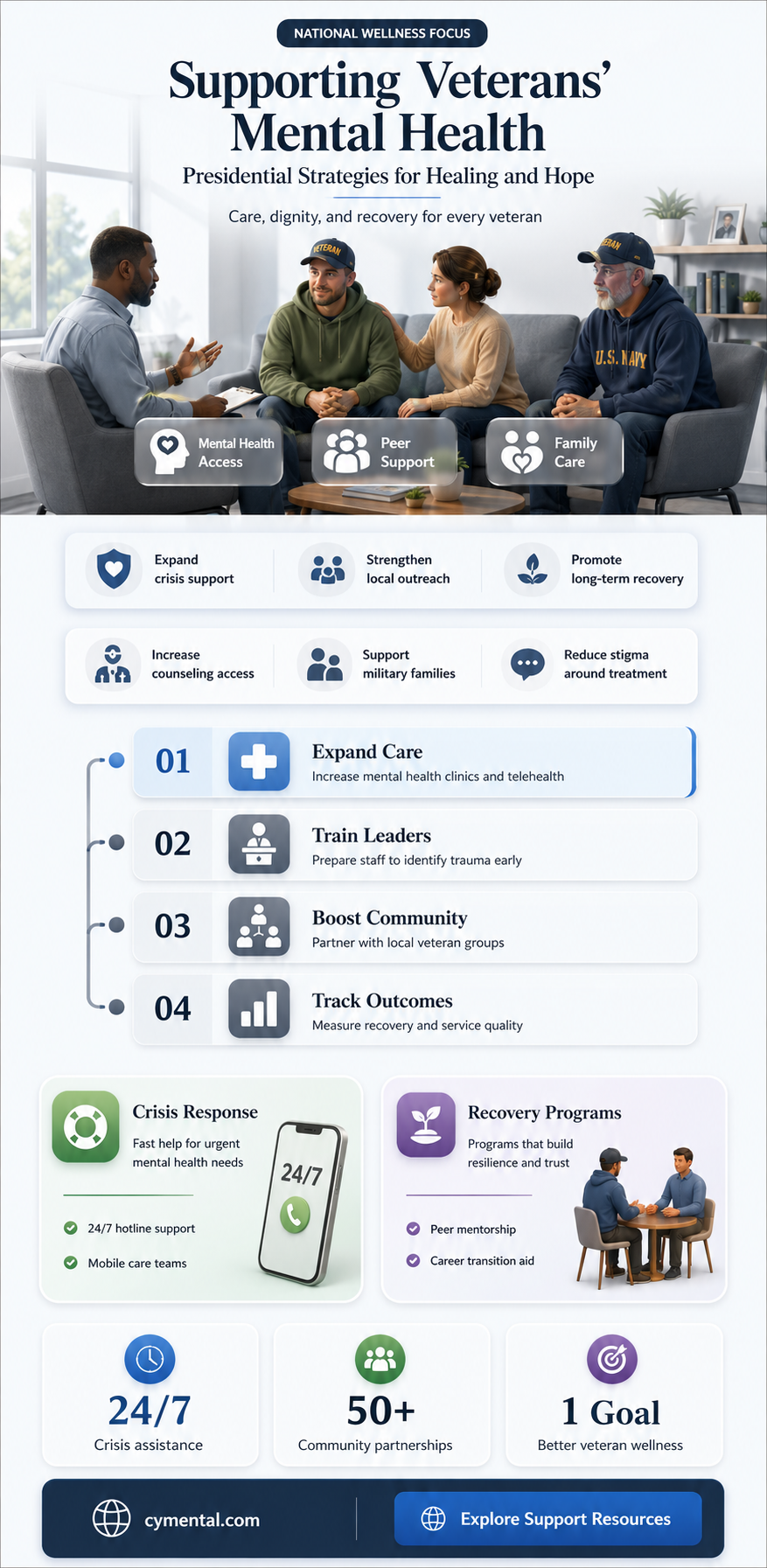
Addressing mental illness among veterans is a critical responsibility for any president, as these individuals often face unique challenges stemming from their service, including PTSD, depression, and anxiety. A president can significantly impact veterans' mental health by prioritizing funding for robust mental health programs within the Department of Veterans Affairs (VA), ensuring timely access to care, and reducing stigma through public awareness campaigns. Additionally, implementing policies that streamline disability claims, expand telehealth services, and foster community support networks can provide veterans with the comprehensive care and resources they need to heal and thrive. By demonstrating a commitment to veterans' well-being, a president can honor their sacrifices and improve their quality of life.
| Characteristics | Values |
|---|---|
| Increase Funding for Mental Health Services | Allocate more federal funds to the Department of Veterans Affairs (VA) for mental health programs, including therapy, counseling, and crisis intervention services. |
| Expand Access to Care | Reduce wait times for mental health appointments, increase telehealth options, and integrate community-based care providers to ensure veterans can access services closer to home. |
| Enhance Suicide Prevention Programs | Strengthen VA suicide prevention initiatives, such as the Veterans Crisis Line, and invest in research to identify at-risk veterans and develop effective intervention strategies. |
| Improve Mental Health Workforce | Recruit and retain more mental health professionals, including psychiatrists, psychologists, and social workers, to meet the growing demand for veteran mental health care. |
| Promote Mental Health Awareness | Launch national campaigns to reduce stigma around mental health issues, encourage veterans to seek help, and educate communities about the challenges veterans face. |
| Support Transition Assistance Programs | Enhance programs like the Transition Assistance Program (TAP) to provide veterans with mental health resources and support as they reintegrate into civilian life. |
| Invest in Research and Innovation | Fund research on PTSD, traumatic brain injury (TBI), and other mental health conditions common among veterans, and support the development of new treatments and therapies. |
| Strengthen Collaboration with NGOs | Partner with non-profit organizations and veteran service organizations to provide additional mental health resources, peer support, and community-based programs. |
| Address Homelessness and Substance Abuse | Implement programs to address homelessness and substance abuse among veterans, which are often linked to mental health issues, by providing housing, treatment, and recovery support. |
| Ensure Accountability and Oversight | Hold the VA and other agencies accountable for delivering high-quality mental health care, monitor program effectiveness, and address gaps in services. |
| Support Families and Caregivers | Provide resources and training for families and caregivers of veterans with mental illness, recognizing their role in the veteran’s recovery and well-being. |
| Focus on Women and Minority Veterans | Tailor mental health services to meet the unique needs of women veterans, veterans of color, and LGBTQ+ veterans, who may face additional barriers to care. |
| Implement Technology Solutions | Utilize technology, such as mobile apps and online platforms, to provide veterans with accessible mental health tools, resources, and peer support networks. |
| Legislative Support | Advocate for and sign legislation that prioritizes veteran mental health, such as bills to increase funding, expand benefits, and improve access to care. |
| Long-Term Support for Aging Veterans | Develop programs to address the mental health needs of aging veterans, including those with dementia or age-related mental health conditions, and ensure they receive appropriate care. |
Explore related products


What You'll Learn

Expand access to mental health services
Veterans face unique mental health challenges, often stemming from their service experiences. Expanding access to mental health services is crucial to addressing these challenges effectively. One practical step is to increase funding for the Department of Veterans Affairs (VA) to hire more mental health professionals, including psychiatrists, psychologists, and social workers. This would reduce wait times for appointments, ensuring veterans receive timely care. Additionally, the VA could implement telehealth services more broadly, allowing veterans in rural or underserved areas to access therapy and counseling remotely. By leveraging technology, the VA can bridge the gap between veterans and the care they need, regardless of their location.
Another critical aspect of expanding access is integrating mental health services into primary care settings. Many veterans are more likely to visit their primary care physician than a mental health specialist. By embedding mental health screenings and treatments within routine medical appointments, barriers to care are lowered. For instance, primary care providers could administer brief depression or PTSD screenings during annual check-ups and refer veterans to specialists as needed. This integrated approach not only normalizes mental health care but also ensures that issues are caught early, potentially preventing more severe conditions from developing.
A persuasive argument for expanding access lies in the cost-effectiveness of preventive mental health care. Untreated mental illness can lead to higher healthcare costs, increased disability claims, and reduced productivity. By investing in accessible mental health services, the government can save money in the long run. For example, providing veterans with evidence-based therapies like Cognitive Behavioral Therapy (CBT) or Prolonged Exposure Therapy (PE) can significantly reduce symptoms of PTSD and depression. These therapies, when delivered consistently and early, have proven to be highly effective, often requiring 12 to 16 sessions for noticeable improvement.
Comparatively, private sector models can offer valuable lessons for expanding access. Many corporations have successfully implemented Employee Assistance Programs (EAPs) that provide mental health resources to employees. A similar model could be adapted for veterans, offering 24/7 hotlines, confidential counseling, and referrals to specialized care. Furthermore, partnerships with community-based organizations could extend the reach of mental health services. Nonprofits and local clinics often have the flexibility to tailor programs to specific veteran populations, such as women veterans or those from minority backgrounds, ensuring that care is culturally competent and inclusive.
Finally, a descriptive approach highlights the human impact of expanded access. Imagine a veteran in a small town, struggling with anxiety and flashbacks, who can now connect with a therapist via video call from their living room. Or a young veteran who, during a routine check-up, is screened for depression and receives a referral to a counselor within days. These scenarios illustrate how expanded access transforms lives, providing hope and healing to those who have served their country. By prioritizing this initiative, a president can demonstrate a commitment to veterans' well-being, ensuring they receive the care they deserve.
Ginkgo Biloba: Enhancing Mental Function and Memory – Fact or Fiction?
You may want to see also
Explore related products


Increase funding for veteran suicide prevention programs
Veteran suicide rates are a stark reminder of the mental health crisis within this community, with an average of 17 veterans dying by suicide every day in the United States. To address this urgent issue, a president can play a pivotal role by increasing funding for suicide prevention programs tailored to veterans' unique needs. This investment is not just a moral imperative but a strategic one, as it can significantly reduce the human and economic costs associated with veteran suicide.
Identifying Effective Programs
The first step in allocating additional funds is to identify evidence-based programs that have proven successful in preventing veteran suicide. Initiatives like the Veterans Crisis Line, which provides 24/7 support, and peer support programs that connect veterans with those who have shared experiences, have shown promising results. Similarly, cognitive-behavioral therapy (CBT) and other trauma-focused therapies tailored for veterans have demonstrated efficacy in reducing suicidal ideation. By prioritizing programs with measurable outcomes, funding can be directed where it will have the greatest impact.
Expanding Access to Care
Increased funding should also focus on expanding access to mental health services, particularly in rural and underserved areas where veterans often face barriers to care. Telehealth services, for instance, can bridge the gap by providing remote counseling and therapy sessions. Additionally, funding can be used to train more mental health professionals in veteran-specific care, ensuring that providers understand the unique challenges faced by this population, such as PTSD, traumatic brain injury, and the transition to civilian life.
Community-Based Initiatives
Beyond clinical interventions, community-based programs play a critical role in suicide prevention. Funding can support local organizations that offer recreational therapy, vocational training, and social reintegration activities. These programs not only address mental health but also combat isolation, a significant risk factor for suicide. For example, initiatives like equine therapy or group hiking programs have been shown to foster camaraderie and provide veterans with a sense of purpose and belonging.
Monitoring and Evaluation
Finally, any increase in funding must be accompanied by robust monitoring and evaluation mechanisms to ensure accountability and effectiveness. This includes tracking key metrics such as the number of veterans served, reductions in suicide rates, and improvements in mental health outcomes. Data-driven approaches will allow for continuous refinement of programs, ensuring that resources are allocated efficiently and that veterans receive the best possible care.
By increasing funding for veteran suicide prevention programs, a president can address a pressing national issue while honoring the sacrifices made by those who have served. This investment is not just about saving lives—it’s about rebuilding them.
Stem Cells and Mental Retardation: Exploring Potential Therapies and Hope
You may want to see also
Explore related products


Promote awareness and reduce stigma around mental health
Veterans facing mental health challenges often encounter a silent barrier: stigma. This pervasive issue discourages them from seeking help, exacerbating their struggles. A president can dismantle this barrier by leveraging their platform to normalize conversations about mental health, ensuring veterans feel seen, understood, and supported.
One effective strategy is to launch nationwide campaigns featuring veterans who have successfully navigated mental health challenges. These narratives, shared through social media, television, and community events, humanize the issue and demonstrate that seeking help is a sign of strength, not weakness. Pairing these stories with factual data—such as the statistic that 1 in 5 veterans experience mental health issues—can further destigmatize the topic. For instance, a campaign could highlight a veteran who, after receiving therapy for PTSD, returned to a fulfilling career and family life, emphasizing the transformative power of support.
Another actionable step is to integrate mental health education into veteran reintegration programs. Workshops and seminars can teach veterans and their families how to recognize signs of mental illness, such as withdrawal, irritability, or changes in sleep patterns. Providing practical tools, like the 4-7-8 breathing technique (inhale for 4 seconds, hold for 7, exhale for 8) to manage anxiety, empowers veterans to take proactive steps toward wellness. These programs should also include peer support groups, where veterans can share experiences in a judgment-free environment, fostering a sense of community.
Policy changes can further reinforce awareness efforts. For example, mandating that all federal agencies and veteran service organizations include mental health resources in their communications ensures consistent messaging. Additionally, allocating funds to train community leaders, employers, and educators on veteran mental health can create a network of informed allies. A president could also propose tax incentives for businesses that hire veterans and provide mental health support, aligning economic goals with social responsibility.
Finally, the president’s own actions carry immense weight. Publicly acknowledging Mental Health Awareness Month, attending veteran mental health events, and sharing personal reflections on the importance of mental wellness can model vulnerability and compassion. By consistently prioritizing this issue, the president can shift cultural norms, making it clear that mental health is a priority for all Americans, especially those who have served. This top-down approach not only reduces stigma but also inspires systemic change, ensuring veterans receive the care and respect they deserve.
Melodies of Healing: Music's Powerful Impact on Mental Well-Being
You may want to see also
Explore related products


Enhance job training and employment opportunities for veterans
Veterans facing mental health challenges often struggle to reintegrate into the civilian workforce, exacerbating feelings of isolation and inadequacy. Enhancing job training and employment opportunities specifically tailored to their unique needs can serve as a powerful therapeutic tool, fostering purpose, stability, and community reintegration. This approach not only addresses economic concerns but also combats the stigma surrounding mental illness by positioning veterans as valuable contributors to society.
A multifaceted strategy begins with sector-specific training programs designed to align with veterans' existing skill sets and interests. For instance, leveraging their experience in logistics, security, or leadership, programs could fast-track certifications in supply chain management, cybersecurity, or project management. Partnerships with industries like healthcare, renewable energy, or technology—sectors facing labor shortages—could offer apprenticeships or on-the-job training, ensuring veterans gain both credentials and practical experience. For example, a pilot program in Texas paired veterans with wind energy companies, providing 12-week technical training followed by guaranteed interviews, resulting in an 85% employment rate within six months.
However, barriers to employment extend beyond skill gaps. Veterans with mental health conditions often face discrimination or lack confidence in disclosing their needs to employers. Implementing tax incentives for businesses that hire veterans and provide mental health accommodations—such as flexible schedules, access to counseling, or peer support groups—could encourage inclusive hiring practices. Simultaneously, public awareness campaigns highlighting the resilience and adaptability of veterans could shift employer perceptions, emphasizing their potential as assets rather than liabilities.
Critically, longitudinal support systems must accompany training initiatives. Case management services that connect veterans to mental health resources, financial counseling, and career coaching throughout their employment journey can prevent relapse and job attrition. For instance, a program in Colorado integrates mental health screenings into job training curricula, offering immediate access to therapists or support groups when triggers arise. Such holistic models recognize that stable employment is not just about securing a job but sustaining it in the face of ongoing challenges.
Finally, data-driven evaluation is essential to refine these efforts. Tracking metrics like retention rates, wage growth, and mental health outcomes over 1–3 years post-employment can identify which programs yield the greatest impact. For example, a study of veterans in manufacturing apprenticeships found that those paired with mentors experienced 40% lower turnover rates compared to peers without mentorship. By continuously adapting strategies based on evidence, policymakers can ensure resources are directed toward solutions that genuinely transform lives.
Supporting Veterans: Strategies to Address Mental Health Challenges Effectively
You may want to see also
Explore related products


Support research on PTSD and veteran-specific mental health issues
Post-traumatic stress disorder (PTSD) affects approximately 13-20% of veterans who served in Iraq or Afghanistan, yet our understanding of its long-term effects and effective treatments remains incomplete. A president can catalyze progress by prioritizing research funding for PTSD and other veteran-specific mental health issues. This includes allocating resources to the Department of Veterans Affairs (VA) and the National Institutes of Health (NIH) to study the neurological, genetic, and environmental factors contributing to these conditions. Such research could lead to breakthroughs in personalized treatment plans, early intervention strategies, and preventive measures tailored to the unique experiences of veterans.
To maximize impact, research initiatives should focus on interdisciplinary collaboration. For instance, pairing neuroscientists with psychologists and sociologists can provide a holistic understanding of how combat exposure, social support systems, and cultural factors influence mental health outcomes. Additionally, incorporating veterans themselves into the research process—as advisors, participants, or even researchers—ensures that studies address their real-world needs. A president could establish grants specifically for veteran-led research projects, fostering innovation and relevance in the field.
One practical step is to expand access to clinical trials for veterans. Currently, many trials exclude veterans due to comorbidities like traumatic brain injury (TBI) or substance use disorders, which are prevalent in this population. By funding trials that explicitly include these complexities, researchers can develop treatments that work for veterans, not just the general population. For example, a study might test the efficacy of prolonged exposure therapy in veterans with both PTSD and mild TBI, providing actionable insights for clinicians.
However, research alone is insufficient without translating findings into actionable policies and programs. A president should mandate regular reviews of research outcomes to inform updates to VA mental health protocols. For instance, if a study identifies a correlation between sleep disturbances and PTSD severity, the VA could integrate sleep therapy into standard treatment plans. Similarly, research on the effectiveness of telehealth services could expand remote mental health care options for rural veterans, who often face barriers to accessing in-person treatment.
Finally, international collaboration can amplify the impact of such efforts. Veterans worldwide share similar mental health challenges, yet research is often siloed by country. A president could initiate partnerships with allied nations to share data, methodologies, and best practices. For example, a joint U.S.-U.K. study on the long-term effects of military sexual trauma could yield insights applicable to both nations’ veteran populations. By championing global cooperation, a president can position the U.S. as a leader in veteran mental health research while benefiting from collective expertise.
Buddhism and Mental Health: Ancient Wisdom for Modern Well-Being
You may want to see also
Frequently asked questions
A president can allocate more funding to the Department of Veterans Affairs (VA) to expand mental health programs, reduce wait times, and increase the number of mental health professionals available to veterans. Additionally, they can promote telehealth services to reach veterans in rural or underserved areas.
A president can use their platform to raise awareness about mental health issues, encourage open conversations, and support public campaigns that destigmatize seeking help. They can also highlight success stories of veterans who have received treatment to inspire others.
A president can implement targeted suicide prevention programs, such as crisis hotlines, peer support networks, and early intervention strategies. They can also ensure veterans have access to emergency mental health care and follow-up support to prevent tragedies.
A president can create policies that provide job training, education benefits, and housing assistance to ease the transition. They can also mandate comprehensive mental health screenings for veterans upon discharge and ensure seamless access to care during this critical period.