Ava Ramirez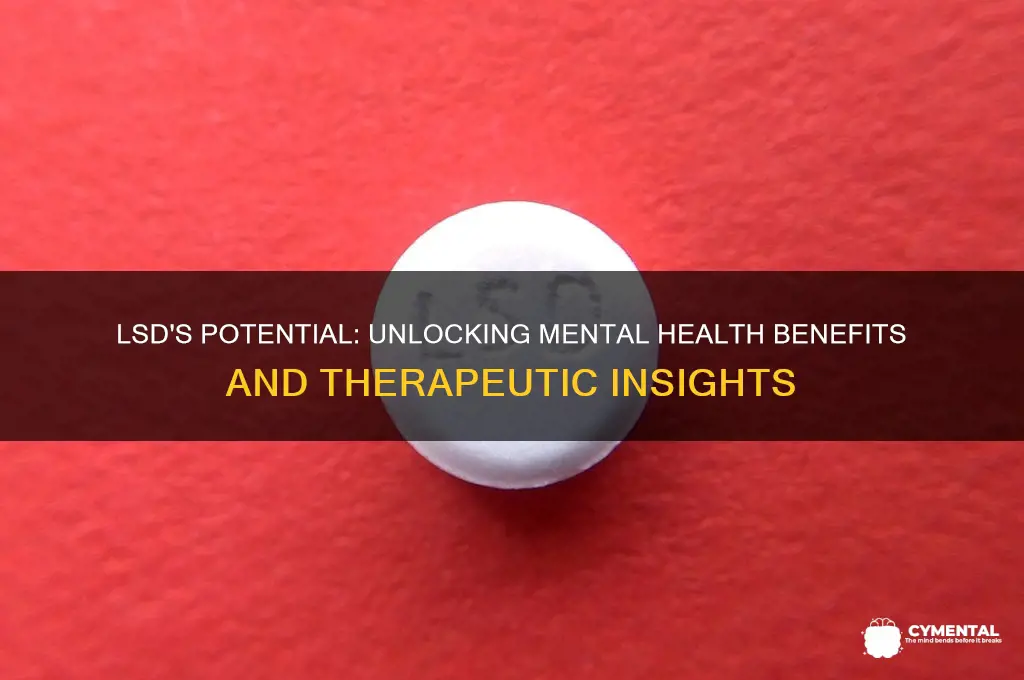
LSD, or lysergic acid diethylamide, has garnered significant attention in recent years for its potential therapeutic benefits in mental health treatment. Initially studied in the mid-20th century, research on LSD was largely halted due to its classification as a Schedule I substance, but recent clinical trials have reignited interest in its use for conditions like depression, anxiety, PTSD, and addiction. Studies suggest that LSD, when administered in controlled, therapeutic settings, can facilitate profound psychological insights, enhance emotional processing, and promote neuroplasticity, potentially rewiring maladaptive thought patterns. Its ability to induce altered states of consciousness may allow individuals to confront and process traumatic experiences or gain new perspectives on their mental health challenges. While still in the early stages of research, the resurgence of interest in LSD highlights its promise as a tool for addressing complex mental health issues when combined with psychotherapy.
Explore related products


What You'll Learn
- LSD and Depression: Potential to alleviate treatment-resistant depression through serotonin receptor stimulation
- Anxiety Reduction: Studies show decreased anxiety in terminally ill patients after LSD use
- PTSD Treatment: LSD-assisted therapy may help process traumatic memories and reduce symptoms
- Enhanced Creativity: Promotes neuroplasticity, fostering new perspectives and problem-solving abilities
- Addiction Recovery: LSD shows promise in reducing cravings and relapse rates in addiction

LSD and Depression: Potential to alleviate treatment-resistant depression through serotonin receptor stimulation
Depression, particularly treatment-resistant depression (TRD), remains a significant challenge for both patients and clinicians. Traditional antidepressants often fail to provide relief for a substantial subset of individuals, leaving them in a state of persistent suffering. Recent research, however, has shed light on the potential of lysergic acid diethylamide (LSD) as a novel therapeutic agent. By stimulating serotonin receptors in the brain, LSD may offer a breakthrough for those who have exhausted conventional treatments. This mechanism of action, distinct from standard antidepressants, suggests a new pathway to alleviating depressive symptoms.
Consider the following: LSD’s interaction with the 5-HT2A serotonin receptor is believed to induce neuroplasticity, allowing the brain to form new neural connections. This process could help disrupt entrenched negative thought patterns characteristic of depression. Clinical trials, such as those conducted by the Multidisciplinary Association for Psychedelic Studies (MAPS), have administered controlled doses of LSD (ranging from 20 to 200 micrograms) in therapeutic settings. Participants often report profound shifts in perspective, reduced rumination, and improved mood lasting weeks after a single session. For instance, a 2021 study published in *Nature* found that 60% of TRD patients experienced significant symptom reduction after two LSD-assisted therapy sessions.
To harness LSD’s potential, it’s crucial to approach its use with precision and caution. Dosage is critical; lower doses (20–50 micrograms) may produce subtle mood enhancements, while higher doses (100–200 micrograms) can induce intense psychedelic experiences. The latter, while potentially more transformative, require a highly structured therapeutic environment to ensure safety and efficacy. Patients should be screened for contraindications, such as a personal or family history of psychosis, and guided by trained professionals throughout the experience. Integration sessions post-treatment are equally vital, helping individuals process insights and translate them into lasting behavioral changes.
Comparatively, LSD’s rapid and enduring effects stand in stark contrast to the gradual and often incomplete relief provided by selective serotonin reuptake inhibitors (SSRIs). While SSRIs take weeks to months to show results, LSD’s benefits can manifest within hours and persist for extended periods. This disparity highlights the unique value of psychedelic-assisted therapy in addressing TRD. However, it’s essential to acknowledge the regulatory and cultural barriers to LSD’s widespread adoption. Despite its promise, LSD remains a Schedule 1 substance in many countries, limiting access to research and treatment.
In conclusion, LSD’s ability to stimulate serotonin receptors offers a compelling avenue for treating TRD. Its potential to induce neuroplasticity and provide rapid, lasting relief positions it as a transformative tool in mental health care. For those who have found no solace in conventional treatments, LSD-assisted therapy may represent a beacon of hope. As research progresses and societal attitudes evolve, this once-controversial substance could redefine our approach to depression, offering a new lease on life for millions.
Nutrition's Impact: How Eating Better Boosts Mental Health and Well-Being
You may want to see also
Explore related products


Anxiety Reduction: Studies show decreased anxiety in terminally ill patients after LSD use
Terminally ill patients often face overwhelming anxiety, a psychological burden that can be as debilitating as physical pain. Studies have shown that LSD, when administered in controlled, therapeutic settings, can significantly reduce this anxiety. Research conducted in the 1960s and more recent trials, such as those by Gasser et al. (2014), have demonstrated that a single dose of LSD (typically 200–800 micrograms) can lead to profound and lasting reductions in anxiety levels among patients confronting end-of-life distress. These findings highlight a unique potential for LSD to address existential dread and fear of death, offering a measure of peace during an otherwise tumultuous time.
The mechanism behind LSD’s anxiolytic effects in terminally ill patients is thought to involve its interaction with the serotonin system, particularly the 5-HT2A receptors in the brain. This interaction can lead to altered states of consciousness, often described as mystical or transcendent experiences. Such experiences frequently result in a shift in perspective, allowing patients to confront their mortality with greater acceptance and reduced fear. For example, participants in studies often report feeling a sense of unity with the universe, a diminished ego, and a reevaluation of life’s priorities, all of which contribute to decreased anxiety.
Implementing LSD-assisted therapy for anxiety reduction requires a structured, supportive environment. Sessions typically last 8–12 hours and are conducted by trained therapists who guide the patient through the experience. Preparation is key: patients undergo several preparatory sessions to build trust and set intentions for the experience. During the LSD session, a calm, safe setting with minimal sensory distractions is maintained. Follow-up integration sessions help patients process their experience and apply insights to their daily lives. This holistic approach ensures that the psychological benefits are maximized and sustained.
While the results are promising, caution is essential. LSD is a potent substance, and its use in terminally ill patients must be carefully monitored. Contraindications include a history of psychotic disorders or severe cardiovascular conditions. Additionally, the legality of LSD remains a barrier in many regions, limiting access to this treatment. However, ongoing research and advocacy efforts are pushing for regulatory changes, particularly as the therapeutic potential of psychedelics gains recognition. For those who can access it, LSD-assisted therapy offers a unique and powerful tool to alleviate end-of-life anxiety, providing not just relief but a transformative experience.
Breaking Free: How Leaving a Mental Ward Empowers Patient Recovery
You may want to see also
Explore related products


PTSD Treatment: LSD-assisted therapy may help process traumatic memories and reduce symptoms
Traumatic memories often become entrenched in the mind, resistant to conventional therapy. LSD-assisted therapy, a resurgence from mid-20th century research, offers a novel approach to dislodging these memories and facilitating their reprocessing. Clinical trials have shown that controlled doses of LSD (typically 100–200 micrograms) administered in a therapeutic setting can temporarily dissolve rigid thought patterns, allowing individuals with PTSD to confront and reframe traumatic experiences with reduced emotional distress. This "window of opportunity" enables therapists to guide patients through memory reconsolidation, a process where traumatic memories are reintegrated into a less harmful narrative.
Consider the mechanics: LSD acts as a serotonin receptor agonist, particularly at the 5-HT2A receptor, which plays a role in cognitive flexibility and emotional processing. Under its influence, the brain’s default mode network (DMN), responsible for self-referential thought, becomes less dominant, while connectivity between usually disconnected regions increases. For PTSD patients, this means traumatic memories, often compartmentalized and inaccessible, can surface in a manageable way. Therapists use this state to encourage insight, emotional release, and the formation of new, less distressing associations with the trauma.
Practical implementation requires strict protocols. Sessions last 8–12 hours, with patients lying comfortably, eyeshades and music enhancing introspection. Two therapists remain present, providing continuous support. Pre-screening is critical: individuals with personal or family histories of psychosis are excluded, as LSD can exacerbate latent conditions. Post-session integration is equally vital, with follow-up therapy sessions helping patients process insights and apply them to daily life. Studies, such as those by MAPS (Multidisciplinary Association for Psychedelic Studies), report significant symptom reduction in PTSD patients after just 2–3 LSD-assisted sessions, with effects lasting up to 12 months.
Comparatively, traditional PTSD treatments like SSRIs and prolonged exposure therapy often yield modest results, with high dropout rates due to emotional overwhelm. LSD-assisted therapy, while intensive, offers a condensed timeline and deeper emotional resolution. However, it’s not a standalone cure. Patients must commit to preparatory and integrative therapy, and the treatment remains experimental, available only in clinical trials or decriminalized regions. For those with treatment-resistant PTSD, though, it represents a promising frontier, blending pharmacology and psychotherapy to rewrite the brain’s traumatic script.
Community Service: A Powerful Boost for Mental Health and Well-being
You may want to see also
Explore related products


Enhanced Creativity: Promotes neuroplasticity, fostering new perspectives and problem-solving abilities
LSD's impact on neuroplasticity—the brain's ability to reorganize itself by forming new neural connections—is a key mechanism behind its potential to enhance creativity. Under the influence of LSD, typically in microdoses ranging from 10 to 20 micrograms, individuals often report heightened connectivity between brain regions that don’t usually communicate. This cross-talk fosters the emergence of novel ideas and unconventional associations, breaking down rigid thought patterns. For instance, a study published in *Psychopharmacology* found that participants on LSD demonstrated increased problem-solving abilities in tasks requiring creative insight, such as the nine-dot problem, where thinking "outside the box" is essential.
To harness this effect, consider a structured approach: start with a microdose in a controlled environment, free from distractions, and engage in activities that demand creative thinking, like brainstorming or artistic expression. Keep a journal to track insights and patterns, as the effects can be subtle yet profound. For example, a graphic designer might notice new color combinations or spatial arrangements that hadn’t occurred to them before. However, it’s crucial to avoid overstimulation; limit microdosing to once every three days to prevent desensitization and maintain the brain’s receptivity to these changes.
Comparatively, traditional creativity-enhancing methods, such as mindfulness or caffeine, often work within existing cognitive frameworks. LSD, on the other hand, appears to rewire these frameworks entirely. A 2016 study in *Scientific Reports* used fMRI scans to show that LSD increases blood flow to the visual cortex while decreasing activity in the default mode network, the brain’s "autopilot" system. This shift allows for a freer flow of ideas, unencumbered by habitual thought processes. For individuals in creative professions or those seeking innovative solutions to personal challenges, this can be transformative.
Yet, this neuroplasticity comes with caveats. Not everyone responds positively; some may experience anxiety or disorientation, particularly at higher doses. Age plays a role too: younger individuals, whose brains are already more plastic, may find the effects more pronounced but also risk destabilizing their mental health if used irresponsibly. For older adults, the benefits may lie in overcoming cognitive rigidity, but caution is advised due to potential interactions with medications. Always consult a healthcare professional before experimenting, especially if you have a history of mental health conditions.
In conclusion, LSD’s ability to promote neuroplasticity offers a unique pathway to enhanced creativity, but it requires intentional use. Microdosing, combined with reflective practices, can unlock new perspectives and problem-solving abilities. However, respect the substance’s power and approach it with preparation, awareness, and moderation to maximize its potential while minimizing risks.
Supporting Mental Health: Practical Ways to Help Someone in Need
You may want to see also
Explore related products

$43.99


Addiction Recovery: LSD shows promise in reducing cravings and relapse rates in addiction
Addiction recovery is a complex journey, often marked by intense cravings and high relapse rates. Recent studies suggest that LSD, a psychedelic substance, may offer a novel approach to breaking these cycles. Clinical trials have shown that controlled doses of LSD, typically ranging from 20 to 80 micrograms, administered in a therapeutic setting, can significantly reduce cravings for substances like alcohol and opioids. This effect is believed to stem from LSD’s ability to disrupt entrenched thought patterns and foster a sense of connection and self-awareness, which can be transformative for individuals struggling with addiction.
Consider the case of a pilot study where participants with alcohol dependence received two LSD-assisted therapy sessions. Follow-up assessments revealed a marked decrease in alcohol consumption and an increased sense of control over their addiction. The therapy sessions, combined with the psychedelic experience, allowed participants to confront underlying emotional issues and reframe their relationship with alcohol. This approach contrasts sharply with traditional addiction treatments, which often focus on symptom management rather than addressing root causes. LSD’s potential lies in its ability to catalyze profound psychological shifts, offering a new pathway to recovery.
However, integrating LSD into addiction treatment is not without challenges. The substance’s legal status remains a significant barrier in many countries, limiting research and accessibility. Additionally, the psychedelic experience can be intense and unpredictable, requiring a highly structured and supportive environment. Therapists must be trained to guide patients through the experience, ensuring safety and maximizing therapeutic benefit. For those considering this approach, it’s crucial to seek out reputable clinics or trials where LSD is administered under professional supervision, often in doses of 40–60 micrograms for therapeutic purposes.
Despite these hurdles, the potential of LSD in addiction recovery is too significant to ignore. Its ability to reduce cravings and relapse rates offers hope for individuals who have not found success with conventional treatments. As research progresses, it’s essential to balance caution with openness, ensuring that this powerful tool is used responsibly and effectively. For those trapped in the cycle of addiction, LSD-assisted therapy could represent a breakthrough, providing a chance to reclaim their lives with renewed perspective and resilience.
Finding Support: Where to Get Mental Health Help and Resources
You may want to see also
Frequently asked questions
LSD, when used in controlled, therapeutic settings, has shown potential in treating mental health conditions by promoting neuroplasticity, enhancing emotional processing, and facilitating profound introspective experiences. Studies suggest it may help break rigid thought patterns associated with depression and anxiety, offering new perspectives and emotional release.
LSD has been explored as a treatment for PTSD by helping individuals process traumatic memories in a safe, therapeutic environment. It may reduce fear responses and increase emotional openness, allowing patients to confront and reframe traumatic experiences under professional guidance.
While LSD shows promise, it carries risks such as psychological distress, anxiety, or paranoia, especially in unsupervised settings. It is not suitable for everyone, particularly those with a history of psychosis or certain mental health conditions. Proper screening, preparation, and professional supervision are essential to minimize risks.