Lucas Bennett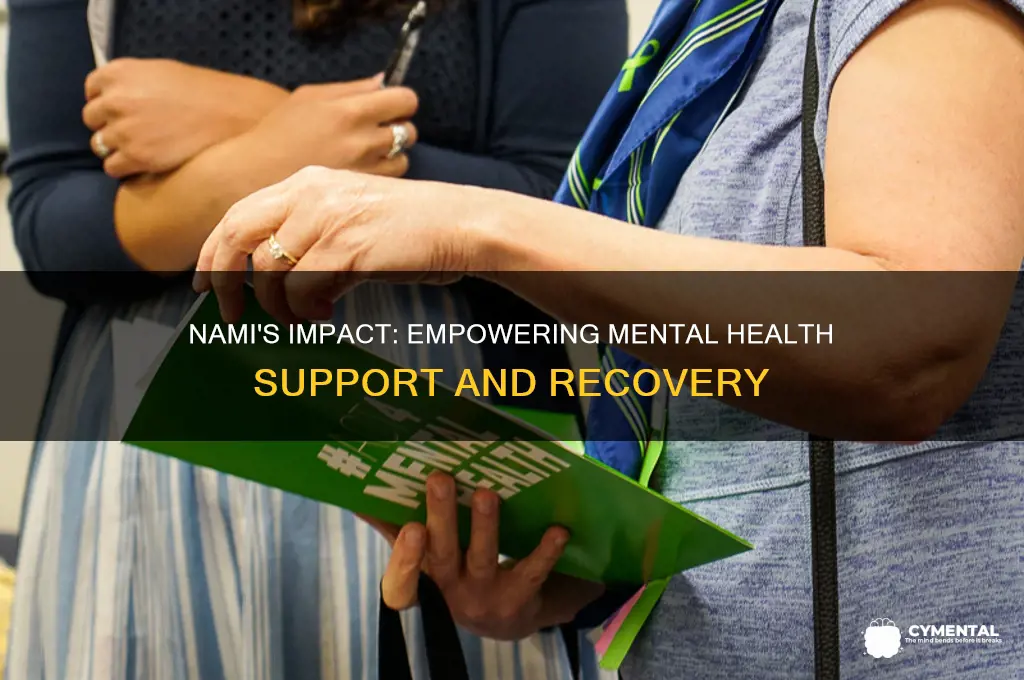
Nami, the National Alliance on Mental Illness, is a grassroots organization dedicated to improving the lives of individuals and families affected by mental illness. Through education, support, and advocacy, Nami provides invaluable resources such as free support groups, educational programs, and helplines, empowering those struggling with mental health challenges to navigate their journeys with confidence. By raising awareness, reducing stigma, and promoting access to care, Nami fosters a compassionate community where individuals feel understood, supported, and empowered to seek help and achieve recovery.
| Characteristics | Values |
|---|---|
| Education & Awareness | Offers programs like NAMI Family-to-Family and NAMI Basics to educate families and individuals about mental illness. |
| Support Groups | Provides peer-led support groups (e.g., NAMI Connection, NAMI Family Support Group) for individuals and families affected by mental illness. |
| Advocacy | Advocates for policies and legislation to improve mental health care access and reduce stigma. |
| Helpline | Operates the NAMI HelpLine (1-800-950-NAMI) to provide free, confidential support, information, and referrals. |
| Crisis Resources | Offers crisis intervention resources, including the Crisis Text Line and guidance on navigating mental health emergencies. |
| Community Outreach | Conducts outreach programs to raise awareness and provide resources in underserved communities. |
| Training Programs | Provides training like NAMI In Our Own Voice and NAMI Ending the Silence to reduce stigma and promote understanding. |
| Research & Innovation | Supports research initiatives to advance mental health treatments and interventions. |
| Online Resources | Offers a comprehensive website with articles, toolkits, and guides on mental health conditions and recovery. |
| Peer Support | Empowers individuals with lived experience to support others through peer-led programs. |
| Cultural Competency | Develops culturally sensitive programs and resources to address diverse community needs. |
| Youth & Family Focus | Provides specialized programs for youth and families, such as NAMI Basics and NAMI on Campus. |
| Policy & System Reform | Works to improve mental health systems, increase funding, and ensure equitable access to care. |
| Stigma Reduction | Campaigns like "StigmaFree" aim to eliminate the stigma surrounding mental illness. |
| Recovery-Oriented Approach | Promotes a recovery-focused model that emphasizes hope, empowerment, and community inclusion. |
| Collaboration | Partners with organizations, healthcare providers, and policymakers to enhance mental health services. |
Explore related products


What You'll Learn
- Education & Awareness: Nami provides resources to educate the public about mental illness, reducing stigma
- Support Groups: Offers peer-led support groups for individuals and families affected by mental health issues
- Advocacy Efforts: Advocates for policies and laws that improve mental health care access and rights
- Crisis Assistance: Provides helplines and guidance for those in mental health crises or emergencies
- Skill-Building Programs: Teaches coping skills, self-care, and recovery strategies through structured programs and workshops

Education & Awareness: Nami provides resources to educate the public about mental illness, reducing stigma
Stigma thrives on ignorance. NAMI combats this by arming individuals with knowledge. Their educational resources, ranging from brochures and fact sheets to online courses and in-person workshops, dismantle misconceptions about mental illness. These materials, often developed in collaboration with mental health professionals, provide accurate, up-to-date information on various conditions, symptoms, treatment options, and recovery stories.
Imagine a parent noticing their teenager withdrawing from social activities. NAMI's resources could help them recognize potential signs of depression, understand the importance of early intervention, and learn how to approach their child with empathy and support. This knowledge empowers individuals to move beyond fear and judgment, fostering a more compassionate and understanding environment for those struggling with mental health challenges.
NAMI's educational efforts extend beyond individual learning. They actively engage communities through awareness campaigns, public forums, and partnerships with schools and workplaces. These initiatives aim to normalize conversations about mental health, encouraging open dialogue and challenging the silence that often surrounds these issues. By bringing mental illness out of the shadows, NAMI helps to humanize the experience, making it more relatable and less frightening.
Think of a workplace seminar facilitated by NAMI volunteers. Employees learn about stress management techniques, the impact of burnout, and the importance of seeking help when needed. This not only benefits individuals but also creates a more supportive and productive work environment, where mental well-being is prioritized alongside physical health.
The impact of NAMI's education and awareness efforts is measurable. Studies have shown that increased knowledge about mental illness leads to reduced stigma, improved help-seeking behavior, and better overall mental health outcomes. By equipping individuals and communities with the tools to understand and support those affected by mental illness, NAMI is not just providing information; they are fostering a cultural shift towards empathy, acceptance, and hope.
Yoga's Transformative Power: Enhancing Mental Health and Well-being Naturally
You may want to see also
Explore related products


Support Groups: Offers peer-led support groups for individuals and families affected by mental health issues
Peer-led support groups are a cornerstone of NAMI’s mission, offering a safe, nonjudgmental space for individuals and families grappling with mental health challenges. Unlike clinical therapy, these groups are facilitated by trained volunteers who have firsthand experience with mental illness—either personally or as caregivers. This shared understanding fosters a unique environment where participants feel seen, heard, and validated. For example, a parent attending a NAMI Family Support Group might share strategies for managing a child’s schizophrenia, while receiving empathy from others who’ve navigated similar struggles. This exchange of lived experience transforms isolation into connection, proving that no one has to face mental illness alone.
Consider the structure of these groups: typically meeting weekly for 90 minutes, they follow a structured yet flexible format. Ground rules emphasize confidentiality, respect, and active listening, ensuring everyone feels secure. Sessions often begin with a check-in, allowing participants to share updates or concerns, followed by open discussion on topics like coping mechanisms, medication side effects, or communication strategies. For instance, a NAMI Connection group for adults with mental illness might delve into how to set boundaries with well-meaning but intrusive family members. Facilitators guide conversations without offering professional advice, instead encouraging participants to draw on collective wisdom. This peer-driven approach empowers individuals to find solutions that resonate with their own experiences.
One of the most compelling aspects of NAMI support groups is their accessibility. With over 600 affiliates nationwide, these groups are often free and require no formal diagnosis to attend. This low barrier to entry is critical, as stigma and financial constraints frequently prevent people from seeking help. For families, NAMI’s peer-led model provides a rare opportunity to learn from others who’ve “been there,” offering practical insights that complement professional treatment. For instance, a caregiver might learn how to advocate for their loved one during a psychiatric hospitalization, or discover local resources for affordable therapy. These tangible takeaways can be life-changing, especially in underserved communities where mental health services are scarce.
However, it’s important to acknowledge limitations. While peer support is invaluable, it’s not a substitute for professional care. NAMI groups explicitly state they do not provide therapy or crisis intervention, and facilitators are trained to recognize when a participant may need urgent help. For example, if someone expresses suicidal thoughts, the facilitator would follow a protocol to ensure safety, such as contacting emergency services or providing crisis hotline numbers. This boundary ensures the group remains a supportive, not therapeutic, space. Still, for many, these groups serve as a vital bridge—a stepping stone toward seeking formal treatment or a sustaining force during recovery.
Ultimately, NAMI’s peer-led support groups fill a critical gap in mental health care by addressing the emotional and practical needs of those affected by mental illness. They offer more than just sympathy; they provide a community where shared experiences become tools for resilience. Whether you’re a young adult managing bipolar disorder or a spouse supporting a partner with depression, these groups remind participants that recovery is possible—and that they don’t have to walk that path alone. By combining empathy, structure, and accessibility, NAMI’s support groups exemplify the power of collective healing in action.
Friendship's Power: Boosting Mental Health and Emotional Well-Being
You may want to see also
Explore related products





Advocacy Efforts: Advocates for policies and laws that improve mental health care access and rights
NAMI, the National Alliance on Mental Illness, plays a pivotal role in shaping mental health care through its advocacy efforts, which focus on influencing policies and laws to improve access and rights for individuals with mental illness. By leveraging grassroots activism and strategic partnerships, NAMI pushes for systemic changes that address gaps in care, reduce stigma, and ensure equitable treatment. Their work is grounded in the belief that mental health care is a fundamental right, not a privilege.
One of NAMI’s core strategies is to educate policymakers about the realities of living with mental illness. They achieve this by sharing personal stories, research data, and evidence-based solutions that highlight the urgent need for reform. For instance, NAMI advocates for the expansion of Medicaid in states where it remains unexpanded, ensuring that low-income individuals have access to mental health services. They also push for the enforcement of mental health parity laws, which require insurers to cover mental health care on par with physical health care. These efforts are critical in dismantling financial barriers that prevent millions from seeking treatment.
Another key area of focus is crisis intervention and prevention. NAMI champions policies that fund and implement programs like the 988 Suicide & Crisis Lifeline, a nationwide network providing 24/7 access to trained crisis counselors. They also advocate for the integration of mental health services into primary care settings, particularly in underserved communities. By embedding mental health care into existing systems, NAMI aims to reduce the stigma associated with seeking help and improve early intervention rates, which are crucial for long-term recovery.
NAMI’s advocacy extends to protecting the rights of individuals with mental illness within the criminal justice system. They support initiatives like Crisis Intervention Team (CIT) training for law enforcement officers, which equips them to de-escalate situations involving individuals in mental health crises. Additionally, NAMI pushes for the diversion of nonviolent offenders with mental illness into treatment programs rather than incarceration. These efforts not only improve outcomes for individuals but also reduce the strain on the criminal justice system.
To maximize impact, NAMI empowers local advocates to engage in policy discussions at the state and federal levels. They provide resources, training, and toolkits to help individuals and families effectively communicate with legislators. For example, NAMI’s annual Hill Day brings together advocates from across the country to meet with lawmakers and share their experiences, fostering a personal connection to the issues at hand. This grassroots approach ensures that policies are informed by the lived experiences of those they aim to serve.
In conclusion, NAMI’s advocacy efforts are a driving force in transforming mental health care in the United States. By targeting policies and laws that improve access, protect rights, and address systemic inequities, they create lasting change for individuals and families affected by mental illness. Their work serves as a reminder that advocacy is not just about changing minds—it’s about changing systems.
Nature's Healing Power: Boosting Mental Health Through Outdoor Activities
You may want to see also
Explore related products


![TAMASHII NATIONS - One Piece - [Extra Battle] Nami -Lighting Blast-, Bandai Spirits FiguartsZERO Collectible Figure](https://m.media-amazon.com/images/I/61bSndqogcL._AC_UL320_.jpg)

Crisis Assistance: Provides helplines and guidance for those in mental health crises or emergencies
In moments of mental health crisis, immediate access to support can be the difference between despair and hope. NAMI (National Alliance on Mental Illness) recognizes this critical need by offering dedicated helplines and guidance, ensuring that individuals in distress are not left to navigate their darkest hours alone. These services are designed to provide a lifeline, offering both emotional support and practical steps to manage emergencies effectively.
Consider the scenario of a young adult experiencing a panic attack or suicidal thoughts late at night. NAMI’s helplines, such as the NAMI HelpLine (1-800-950-NAMI), are staffed by trained professionals who can de-escalate crises, provide coping strategies, and connect callers to local resources. Unlike generic hotlines, NAMI’s services are tailored to mental health, ensuring that callers receive informed, empathetic assistance. For instance, a caller might be guided through deep breathing exercises or reminded of their personalized safety plan, tools that can stabilize them until further help arrives.
The effectiveness of these helplines lies in their accessibility and specificity. Available in multiple languages and catering to diverse age groups, they address the unique needs of children, teens, adults, and seniors. For parents of a teenager in crisis, NAMI offers actionable advice on how to communicate calmly, recognize warning signs, and seek professional intervention. Similarly, older adults may receive guidance on managing medication side effects or coping with isolation, tailored to their life stage.
However, it’s crucial to understand the limitations of helplines. While they provide immediate support, they are not a substitute for long-term treatment. NAMI emphasizes this by encouraging callers to follow up with mental health professionals or local support groups. For instance, someone experiencing chronic depression might be directed to NAMI’s peer-led support groups, where they can build a network of understanding individuals. This dual approach—crisis intervention paired with ongoing support—maximizes the potential for recovery.
In practice, utilizing NAMI’s crisis assistance requires awareness and preparedness. Families and individuals should save the helpline number in their contacts and familiarize themselves with the types of support available. For schools or workplaces, integrating NAMI’s resources into emergency protocols can ensure that staff and students know where to turn in a mental health emergency. By proactively incorporating these tools, communities can foster a culture of readiness and compassion, reducing the stigma surrounding mental health crises.
Ultimately, NAMI’s crisis assistance is more than a service—it’s a commitment to ensuring that no one faces mental health emergencies alone. Through targeted helplines and practical guidance, NAMI empowers individuals to reclaim control in their most vulnerable moments, offering a beacon of hope when it’s needed most.
Spirituality and Mental Health: Exploring Inner Peace for Well-Being
You may want to see also
Explore related products


Skill-Building Programs: Teaches coping skills, self-care, and recovery strategies through structured programs and workshops
Nami's skill-building programs are designed to empower individuals with mental illness by providing them with tangible tools and strategies to manage their symptoms and improve their overall well-being. Through a series of structured workshops and programs, participants learn evidence-based coping skills, such as deep breathing exercises, progressive muscle relaxation, and cognitive reframing techniques. For instance, a typical 8-week program might dedicate 2 hours per week to teaching mindfulness practices, with an additional 30 minutes of daily at-home exercises recommended for optimal results.
One of the key strengths of Nami's skill-building programs is their focus on self-care as a foundational component of recovery. Participants are guided through a process of identifying their personal self-care needs, which may include activities like journaling, exercise, or social connection. A study published in the Journal of Mental Health found that individuals who engaged in regular self-care practices experienced a 30% reduction in symptoms of anxiety and depression over a 6-month period. To maximize the benefits of self-care, Nami's programs often incorporate goal-setting exercises, where participants create a personalized self-care plan with specific, measurable objectives, such as attending a yoga class twice a week or practicing gratitude journaling for 10 minutes daily.
The recovery strategies taught in Nami's skill-building programs are rooted in a strengths-based approach, emphasizing the importance of building on existing skills and resources. For example, a workshop on emotional regulation might begin by assessing participants' current coping mechanisms, then introducing new techniques like dialectical behavior therapy (DBT) skills or acceptance and commitment therapy (ACT) principles. Participants are encouraged to experiment with these strategies in low-stakes situations, such as during a guided role-play exercise or in a supportive group setting. As they gain confidence and proficiency, they can gradually apply these skills to more challenging real-life scenarios, ultimately fostering a sense of autonomy and self-efficacy.
A critical aspect of Nami's skill-building programs is their adaptability to diverse populations and age categories. Programs tailored for adolescents (ages 13-17) may incorporate creative arts therapies or peer-led discussions, while those designed for older adults (ages 55+) might focus on age-related concerns like retirement or chronic illness management. Additionally, Nami offers specialized programs for individuals with co-occurring substance use disorders, which integrate evidence-based practices like motivational interviewing and contingency management. By meeting participants where they are and addressing their unique needs, Nami's skill-building programs facilitate a more inclusive and effective approach to mental health recovery. To ensure accessibility, many programs are offered on a sliding scale fee basis, with some scholarships available for those facing financial barriers.
To maximize the long-term benefits of skill-building programs, Nami emphasizes the importance of ongoing practice and reinforcement. Participants are provided with a range of resources, including workbooks, mobile apps, and online support groups, to help them maintain and build upon the skills they've acquired. For example, the Nami Self-Care Kit includes a daily tracker for monitoring self-care activities, as well as a list of crisis hotlines and local mental health resources. By fostering a culture of continuous learning and growth, Nami's skill-building programs empower individuals to take an active role in their recovery journey, ultimately leading to improved outcomes and a higher quality of life. As one program graduate noted, "The skills I learned at Nami didn't just help me manage my mental illness – they gave me the tools to thrive."
Do School Mental Health Services Truly Support Student Well-being?
You may want to see also
Frequently asked questions
NAMI (National Alliance on Mental Illness) offers a range of support services, including peer-led support groups, education programs, and advocacy efforts to help individuals and families affected by mental illness.
NAMI provides evidence-based education programs like Family-to-Family, Peer-to-Peer, and Basics, which are designed to increase understanding of mental health conditions, coping strategies, and recovery.
NAMI advocates for better mental health policies, increased funding for research and treatment, and the elimination of stigma through grassroots efforts, legislative action, and public awareness campaigns.