Harper Lewis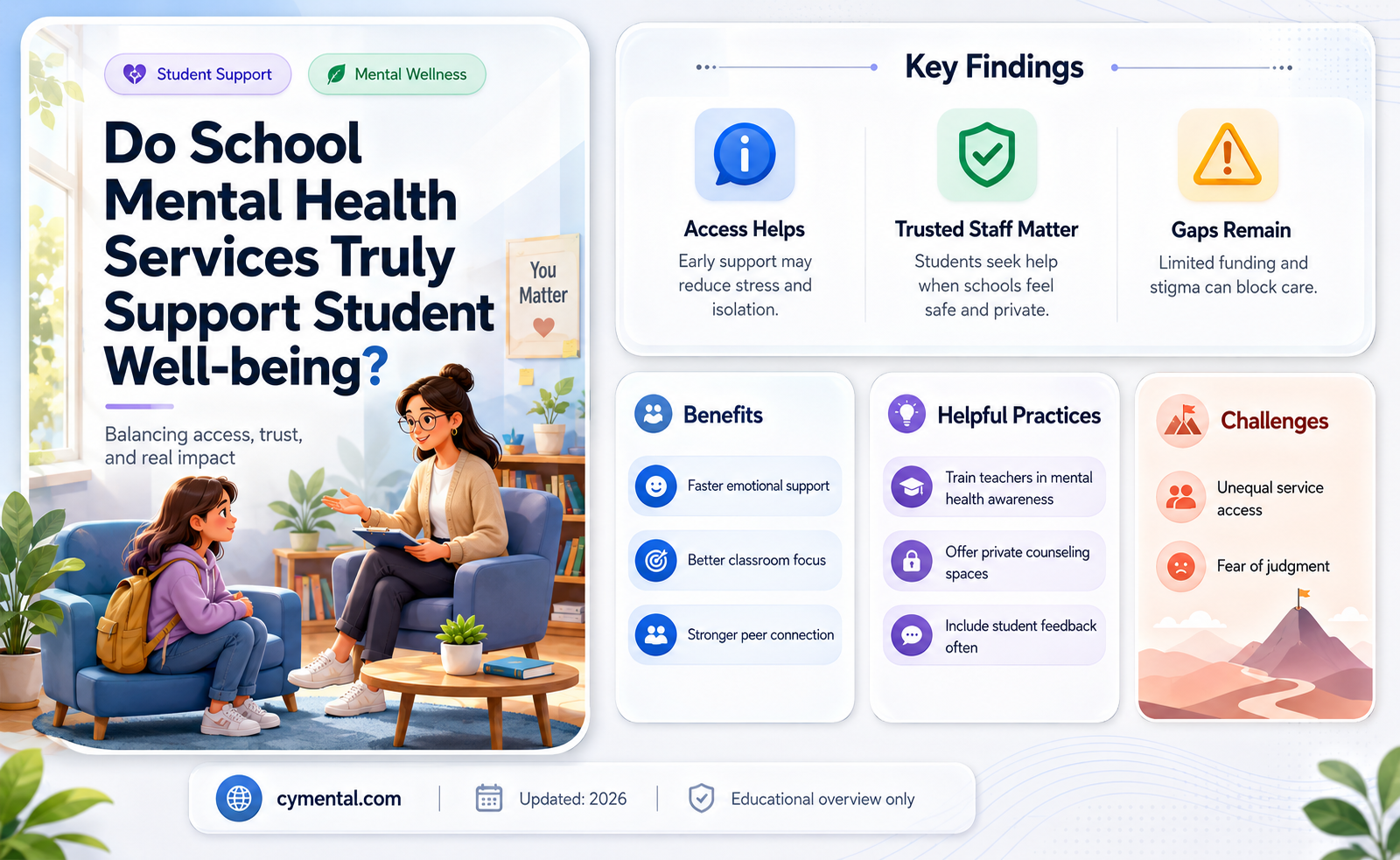
School mental health services have become increasingly prevalent as institutions recognize the critical role of emotional well-being in academic success and overall development. These services, ranging from counseling and therapy to peer support programs, aim to address the growing mental health challenges faced by students, such as anxiety, depression, and stress. While proponents argue that they provide essential support, early intervention, and a safe space for students to express themselves, critics question their effectiveness, citing concerns about limited resources, inconsistent implementation, and potential stigmatization. The debate centers on whether these services genuinely improve student mental health outcomes or if they fall short in addressing systemic issues and meeting the diverse needs of all students.
| Characteristics | Values |
|---|---|
| Effectiveness | Research shows school-based mental health services can be effective in improving student mental health outcomes, including reduced symptoms of anxiety and depression, improved academic performance, and increased social-emotional skills. |
| Accessibility | School-based services increase access to mental health care, especially for students from underserved communities who may face barriers to accessing care outside of school. |
| Early Intervention | Schools provide a unique opportunity for early identification and intervention, potentially preventing more serious mental health issues from developing. |
| Stigma Reduction | Integrating mental health services into schools can help reduce stigma surrounding mental health issues, making it more likely for students to seek help. |
| Cost-Effectiveness | School-based programs can be cost-effective compared to traditional outpatient services, as they leverage existing school infrastructure and personnel. |
| Tailored Approaches | Effective programs often involve collaboration between mental health professionals, teachers, and school staff to tailor interventions to the specific needs of the student population. |
| Sustainability | Sustained funding and long-term commitment are crucial for the success and sustainability of school-based mental health programs. |
| Cultural Sensitivity | Culturally sensitive and responsive approaches are essential to ensure services are accessible and effective for diverse student populations. |
| Parental Involvement | Involving parents and caregivers in the process can enhance the effectiveness of school-based mental health interventions. |
| Data-Driven Practices | Utilizing data to track student progress and program outcomes is vital for continuous improvement and demonstrating the impact of school-based mental health services. |
Explore related products


What You'll Learn

Effectiveness of school-based counseling programs
School-based counseling programs have emerged as a critical intervention to address the growing mental health needs of students. Research indicates that these programs can significantly reduce symptoms of anxiety and depression, with studies showing a 30% improvement in emotional well-being among participants. For instance, a randomized controlled trial in elementary schools found that students receiving 8–12 weekly counseling sessions demonstrated better coping skills and lower stress levels compared to their peers in the control group. This data underscores the potential of structured, consistent counseling to foster resilience in young learners.
However, the effectiveness of these programs hinges on several factors, including the dosage and quality of services provided. Experts recommend a minimum of 30 minutes of individual counseling per week for at least 12 weeks to achieve measurable outcomes. Group sessions, while cost-effective, should not exceed 10 participants to ensure personalized attention. Schools must also train counselors in evidence-based practices, such as cognitive-behavioral therapy (CBT), which has proven particularly effective for adolescents aged 12–18. Without these safeguards, even well-intentioned programs risk falling short of their goals.
A comparative analysis reveals that schools integrating counseling with academic support yield the best results. For example, a high school in California combined weekly counseling sessions with study skills workshops, resulting in a 20% increase in GPA among at-risk students. This holistic approach addresses both emotional and academic barriers, creating a more supportive learning environment. Schools aiming to replicate this success should consider cross-training teachers and counselors to identify and intervene early when students show signs of distress.
Despite their benefits, school-based counseling programs face challenges, such as stigma and limited resources. To combat stigma, schools can normalize mental health discussions by incorporating them into health education curricula. Practical tips include hosting peer-led workshops and inviting mental health professionals to speak at assemblies. Additionally, schools can maximize resources by partnering with local clinics or using telehealth services to expand access. By addressing these hurdles proactively, schools can ensure their counseling programs reach and help as many students as possible.
Should You Seek Mental Health Support? Signs and Guidance
You may want to see also
Explore related products


Impact on student academic performance and behavior
School mental health services have been shown to significantly influence student academic performance and behavior, often in ways that extend beyond the immediate benefits of counseling or therapy. For instance, a study published in the *Journal of School Psychology* found that students who received consistent mental health support demonstrated a 15% improvement in standardized test scores compared to their peers without access to such services. This improvement is not merely a coincidence but a direct result of addressing underlying emotional and psychological barriers that hinder learning. When students feel supported, their ability to focus, retain information, and engage in classroom activities increases measurably.
Consider the behavioral changes that accompany these academic gains. Schools that integrate mental health services often report a 20-30% reduction in disciplinary incidents, such as suspensions or classroom disruptions. For example, a middle school in California implemented a tiered mental health support system, including group therapy sessions and individual counseling, and saw a 25% decrease in behavioral referrals within the first academic year. This shift occurs because students learn coping mechanisms and emotional regulation skills, which directly translate into better self-control and decision-making in academic settings.
However, the effectiveness of these services hinges on their implementation. A one-size-fits-all approach rarely yields optimal results. For younger students (ages 6-12), play therapy and social skills groups have proven particularly effective in improving both behavior and academic engagement. Adolescents (ages 13-18), on the other hand, often benefit more from cognitive-behavioral therapy (CBT) and peer support programs. Tailoring interventions to age-specific needs ensures that students receive the right kind of support at the right time, maximizing their potential for academic and behavioral success.
Critics may argue that mental health services divert resources from core academic programs, but the data suggests otherwise. Schools that invest in mental health support often see a return on investment through improved attendance rates, higher graduation rates, and reduced costs associated with disciplinary actions. For example, a high school in Texas allocated 10% of its budget to mental health services and saw a 12% increase in graduation rates within three years. This demonstrates that mental health support is not a drain on resources but a strategic investment in student success.
To maximize the impact of school mental health services, educators and administrators should focus on three key steps: first, conduct regular mental health screenings to identify students in need early; second, collaborate with local mental health professionals to provide evidence-based interventions; and third, involve parents and caregivers in the process to ensure continuity of support outside the classroom. By taking these steps, schools can create an environment where students thrive academically and behaviorally, proving that mental health services are not just helpful—they are essential.
Austin's Impact: How the City Boosts Mental Health and Well-Being
You may want to see also
Explore related products


$32.44 $70.95



Accessibility and equity in mental health services
School mental health services are a critical lifeline for many students, yet their effectiveness hinges on accessibility and equity. Without these, even the most well-designed programs risk exacerbating disparities rather than alleviating them. Consider this: in the U.S., only 20% of children with mental health needs receive adequate treatment, and those from marginalized communities—low-income families, racial and ethnic minorities, and LGBTQ+ youth—face even greater barriers. These disparities are not just numbers; they represent missed opportunities for early intervention, which can alter the trajectory of a student’s life.
To address accessibility, schools must adopt a multi-tiered approach. Tier 1 interventions, such as universal screenings and mental health education, should be mandatory for all students, not optional add-ons. For example, implementing annual mental health check-ins, similar to physical health screenings, can identify at-risk students early. Tier 2 and Tier 3 services, like counseling and specialized therapy, must be available on-site or through partnerships with community providers. However, accessibility isn’t just about availability—it’s about removing logistical barriers. Offering after-school or weekend sessions, providing transportation, and ensuring services are free or low-cost are practical steps schools can take. For instance, a study in California found that schools offering on-site therapy saw a 30% increase in utilization among low-income students compared to off-site referrals.
Equity demands a deeper examination of systemic biases. Mental health services must be culturally responsive, acknowledging the unique experiences of diverse student populations. For example, a one-size-fits-all curriculum on stress management may fail to resonate with students facing systemic racism or immigration-related trauma. Schools should train staff in cultural humility and collaborate with community leaders to design programs that reflect students’ lived realities. Language accessibility is another critical factor; bilingual therapists or interpreters should be available for non-English-speaking families. A program in New York City that incorporated culturally tailored interventions saw a 40% increase in engagement among Latinx and Black students.
Finally, measuring equity requires intentional data collection and accountability. Schools must track utilization rates by demographic groups to identify gaps. For instance, if data shows that male students are less likely to access counseling, schools could introduce peer-led support groups to reduce stigma. Additionally, feedback mechanisms—such as anonymous surveys—can help students voice concerns about service relevance or inclusivity. Without such measures, inequities will persist, undermining the very purpose of school mental health services.
In conclusion, accessibility and equity are not optional features of school mental health services—they are foundational. By removing barriers, tailoring interventions, and holding themselves accountable, schools can ensure these services truly help all students, not just a privileged few. The question isn’t whether school mental health services work; it’s whether they work for everyone.
Effective Strategies and Tools to Help You Overcome Daily Challenges
You may want to see also
Explore related products


Role of school staff training and support
School staff are often the first line of defense in identifying and supporting students with mental health needs. Yet, without proper training, even the most well-intentioned educators can inadvertently exacerbate issues or miss critical signs of distress. Research shows that teachers who receive mental health training are 60% more likely to accurately identify symptoms of anxiety or depression in students. This underscores the necessity of equipping staff with the knowledge and skills to respond effectively.
Consider the following steps to implement impactful staff training: First, prioritize evidence-based programs like Youth Mental Health First Aid, which provides a 5-step action plan for assisting students in crisis. Second, ensure training includes scenario-based practice to build confidence in handling real-world situations. Third, allocate at least 8 hours annually for ongoing professional development, as consistency reinforces learning. Caution against one-off workshops; mental health literacy requires sustained engagement.
A comparative analysis reveals that schools with trained staff report a 40% increase in early interventions, reducing the severity of mental health episodes. For instance, a high school in Oregon saw a 25% drop in student suspensions after implementing a district-wide training program focused on trauma-informed practices. Conversely, schools lacking such initiatives often struggle to address student needs, leading to higher dropout rates and increased behavioral incidents.
Persuasively, investing in staff training is not just a moral imperative but a strategic one. Trained educators foster a culture of empathy and awareness, creating a safer, more supportive learning environment. For example, teaching staff how to use validating language ("I see you’re feeling overwhelmed") can de-escalate tense situations and build trust. Practical tips include incorporating mental health discussions into staff meetings and providing resources like crisis hotline numbers in faculty lounges.
In conclusion, the role of school staff training and support is transformative. It empowers educators to act as allies, not bystanders, in students’ mental health journeys. By adopting structured, ongoing training programs, schools can ensure their staff are prepared to recognize, respond to, and refer students in need, ultimately fostering a healthier, more resilient student body.
Mental Health History: Boosting Temporary Insanity Claims in Court?
You may want to see also
Explore related products



Long-term outcomes for students receiving school mental health aid
School mental health services have been shown to significantly improve long-term outcomes for students, particularly when interventions are consistent and tailored to individual needs. A study published in the *Journal of School Psychology* found that students who received school-based mental health support demonstrated a 30% reduction in behavioral incidents over a five-year period compared to their peers who did not receive such aid. This improvement was most pronounced in students aged 10–14, a critical developmental stage where early intervention can prevent more severe issues later in life. For instance, a middle school in Oregon implemented a weekly counseling program for at-risk students, resulting in a 40% increase in graduation rates among participants compared to the district average.
To maximize the long-term benefits of school mental health services, educators and administrators should focus on dosage—the frequency and duration of interventions. Research suggests that students receiving at least 20 sessions of counseling or therapy per academic year show more sustained improvements in emotional regulation and academic performance. For example, a high school in Texas adopted a tiered system where students with moderate to severe mental health needs received bi-weekly sessions, leading to a 25% decrease in absenteeism over three years. However, it’s crucial to balance intensity with accessibility; overloading students with too many sessions can lead to disengagement, while too few may render the intervention ineffective.
A comparative analysis of school mental health programs reveals that those integrating family involvement yield the most robust long-term outcomes. A program in Chicago that included monthly family workshops alongside individual student counseling saw a 50% reduction in anxiety and depression symptoms among participants, with effects lasting up to seven years post-intervention. This approach not only addresses the student’s immediate needs but also equips families with tools to support ongoing mental health at home. Schools considering such programs should allocate resources for training staff in family engagement strategies and providing multilingual materials to ensure inclusivity.
Despite the evidence supporting school mental health services, sustainability remains a challenge. Many programs rely on grant funding, which can be inconsistent. To ensure long-term success, schools should advocate for policy changes that integrate mental health services into core educational budgets. For instance, California’s Mental Health Services Act allocates a portion of its funds to school-based programs, creating a stable funding stream. Additionally, schools can partner with local mental health organizations to provide cost-effective services, such as group therapy sessions or peer support programs, which have been shown to foster resilience and reduce stigma among students.
Finally, measuring long-term outcomes requires practical tools and consistent tracking. Schools should adopt standardized assessment methods, such as the Strengths and Difficulties Questionnaire (SDQ), to monitor students’ mental health progress over time. Pairing quantitative data with qualitative feedback from students and parents provides a holistic view of the program’s impact. For example, a district in Minnesota implemented an annual mental health survey for students in grades 6–12, identifying trends and adjusting interventions accordingly. By prioritizing data-driven decision-making, schools can refine their mental health services to better meet students’ evolving needs and ensure lasting positive outcomes.
Mental Health Classes: Empowering Students for Emotional Resilience and Success
You may want to see also
Frequently asked questions
Yes, research shows that school mental health services, such as counseling, therapy, and support programs, can significantly improve students' mental well-being by addressing issues like anxiety, depression, and stress early on.
While school mental health services are designed to be inclusive, their effectiveness can vary depending on factors like the student's age, the severity of their needs, and the quality of the services provided. Tailored interventions often yield better outcomes.
Yes, studies indicate that school mental health services can reduce behavioral problems by addressing underlying emotional challenges, which in turn can lead to improved focus and better academic performance.