Harper Lewis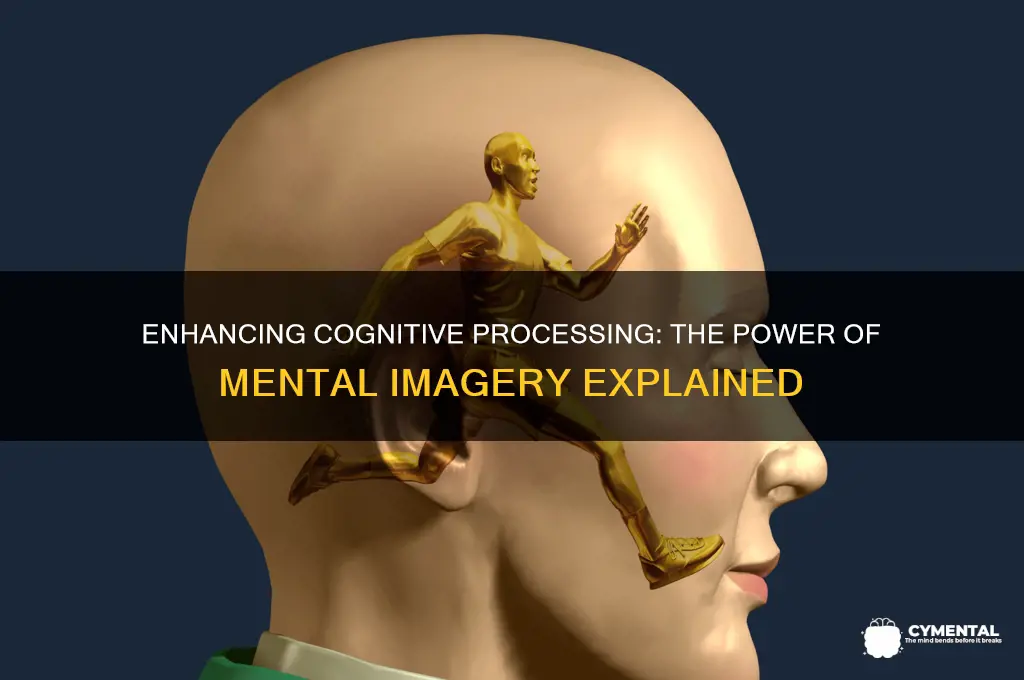
Mental imagery, the ability to form vivid mental representations of objects, scenes, or experiences in the absence of external sensory input, plays a crucial role in enhancing cognitive processing. By engaging multiple brain regions, including those involved in perception, memory, and emotion, mental imagery facilitates deeper encoding and retrieval of information, thereby improving learning and problem-solving abilities. It serves as a bridge between abstract concepts and concrete understanding, enabling individuals to simulate scenarios, rehearse actions, and explore creative solutions mentally. Furthermore, mental imagery strengthens memory consolidation, aids in decision-making, and fosters emotional regulation by allowing individuals to process and reinterpret experiences in a controlled mental space. This powerful cognitive tool not only enriches mental flexibility but also supports therapeutic applications, such as reducing anxiety and enhancing performance in various domains.
| Characteristics | Values |
|---|---|
| Enhances Memory Encoding | Mental imagery creates vivid, multisensory representations that are easier to encode and retrieve, improving long-term memory. |
| Facilitates Problem-Solving | Visualizing scenarios or objects aids in spatial reasoning and finding creative solutions to complex problems. |
| Improves Learning and Retention | Imagery-based learning techniques (e.g., the method of loci) enhance comprehension and recall of information. |
| Supports Decision-Making | Mental simulations of outcomes help evaluate options and predict consequences, leading to better decisions. |
| Boosts Motor Performance | Imagining physical actions activates similar neural pathways as actual movement, improving skill acquisition and performance. |
| Aids Emotional Regulation | Positive mental imagery can reduce stress, anxiety, and enhance mood by promoting relaxation and emotional resilience. |
| Enhances Attention and Focus | Visualizing tasks or goals helps maintain concentration and directs cognitive resources effectively. |
| Supports Language Processing | Mental imagery aids in understanding metaphors, abstract concepts, and narrative comprehension. |
| Promotes Creativity | Visualizing novel ideas or scenarios stimulates innovative thinking and artistic expression. |
| Assists in Planning and Organization | Mental imagery helps in organizing thoughts, sequencing actions, and structuring tasks efficiently. |
Explore related products

$0.99


What You'll Learn
- Enhances memory recall through vivid visualization techniques
- Improves problem-solving by simulating scenarios mentally
- Boosts learning by creating mental associations and connections
- Strengthens decision-making via imagined outcome evaluations
- Facilitates motor skills through mental rehearsal and practice

Enhances memory recall through vivid visualization techniques
Mental imagery acts as a cognitive bridge, transforming abstract information into tangible, memorable experiences. When you visualize a scene, object, or concept, your brain activates many of the same neural pathways as if you were actually perceiving it. This dual activation strengthens the encoding of memories, making them easier to retrieve later. For instance, imagining a vivid red apple sitting on a wooden table engages visual and spatial processing areas, creating a multi-layered memory trace that’s more resilient to forgetting.
To harness this power, incorporate visualization techniques into your daily learning routine. Start by breaking down complex information into visual components. For example, if memorizing historical dates, picture a timeline as a winding river, with key events represented by distinct landmarks along its banks. The more detailed and emotionally charged your imagery, the stronger the memory. Research suggests that spending just 5–10 minutes daily practicing such techniques can significantly improve recall accuracy, particularly for visual learners or those over 40, who often experience age-related memory decline.
However, not all visualization strategies are equally effective. Avoid passive imagery, like simply picturing a word or concept. Instead, use dynamic, interactive visualizations that involve movement, color, and spatial relationships. For instance, when learning vocabulary, imagine the word’s meaning as a physical action—“leap” could be visualized as a frog jumping across a lily pad. Studies show that such active imagery increases recall rates by up to 30% compared to rote memorization. Caution: Overloading your visualization with too many details can backfire, so focus on 2–3 key elements per concept.
For optimal results, combine visualization with other cognitive tools. Pairing imagery with verbal repetition or physical gestures creates a multi-modal memory trace, further enhancing retention. For example, while visualizing a mathematical formula, say it aloud and trace its shape in the air. This approach is particularly beneficial for children aged 8–12, whose brains are highly receptive to multi-sensory learning. Additionally, practice spaced repetition—reviewing visualized material at increasing intervals (e.g., 1 hour, 1 day, 1 week)—to solidify long-term memory.
In conclusion, vivid visualization techniques are a potent tool for enhancing memory recall, but their effectiveness depends on active, detailed, and multi-modal application. By dedicating a few minutes daily to purposeful imagery practice, individuals of all ages can significantly improve their cognitive processing and retention capabilities. Whether studying for exams, learning a new language, or simply trying to remember daily tasks, visualization transforms the act of remembering into a creative, engaging process.
Seeking Support: Navigating Mental Health Resources for Emotional Well-being
You may want to see also
Explore related products


Improves problem-solving by simulating scenarios mentally
Mental imagery serves as a powerful tool for enhancing problem-solving by allowing individuals to simulate scenarios in their minds before acting in the real world. This process, often referred to as mental simulation, enables people to explore potential outcomes, identify obstacles, and devise strategies without the risks or costs associated with physical trial and error. For instance, a chess player can mentally rehearse several moves ahead, visualizing the board and anticipating the opponent’s responses. This not only sharpens strategic thinking but also builds confidence in decision-making.
To harness this benefit, start by setting aside 5–10 minutes daily for focused mental rehearsal. Choose a specific problem or goal, close your eyes, and vividly imagine the steps required to achieve it. Incorporate as many sensory details as possible—what you see, hear, or feel—to make the simulation more realistic. For example, a student preparing for a presentation can visualize the room, the audience’s reactions, and even the tone of their own voice. Research suggests that this practice activates similar neural pathways as actual performance, improving readiness and reducing anxiety.
However, mental simulation is not without its pitfalls. Over-reliance on imagery can lead to unrealistic expectations or paralysis by analysis, especially if the imagined scenarios are overly idealized or complex. To avoid this, balance mental rehearsal with actionable steps in the real world. For instance, after mentally simulating a job interview, practice aloud with a friend or record yourself to bridge the gap between imagination and execution. Additionally, younger individuals (ages 18–25) may find mental imagery particularly effective due to heightened neuroplasticity, but older adults can still benefit by focusing on clarity and repetition.
Comparing mental imagery to traditional problem-solving methods highlights its efficiency. While brainstorming or listing pros and cons relies on linear thinking, mental simulation engages spatial and emotional intelligence, offering a more holistic approach. For example, an architect can mentally walk through a building design, noticing flaws in flow or aesthetics that might escape a 2D blueprint. This multidimensional perspective often leads to innovative solutions that static methods overlook.
In conclusion, mental imagery improves problem-solving by providing a risk-free environment to test ideas and refine strategies. By dedicating time to detailed mental simulations, balancing imagination with action, and leveraging its unique cognitive benefits, individuals can tackle challenges more effectively. Whether you’re a student, professional, or creative, incorporating this practice into your routine can unlock new levels of clarity and ingenuity. Start small, stay consistent, and watch as your mind becomes your most powerful problem-solving ally.
Abacus Training: Unlocking Mental Math Skills and Cognitive Benefits
You may want to see also
Explore related products


Boosts learning by creating mental associations and connections
Mental imagery acts as a cognitive glue, binding new information to existing knowledge through vivid associations. When you visualize a concept, your brain links it to sensory memories, emotions, and related ideas, creating a web of connections that enhance recall. For instance, imagining a historical event as a movie scene ties it to spatial and temporal cues, making it easier to retrieve during exams or discussions. This process, known as elaborative encoding, transforms abstract data into meaningful narratives, reducing the cognitive load required to remember and understand.
To harness this power, incorporate multisensory visualization into your learning routine. For example, if studying biology, picture the mitochondria as a bustling factory within a cell, complete with sounds of machinery and workers. This technique, backed by research in cognitive psychology, has been shown to improve retention by up to 30% in students aged 10–25. Pairing imagery with physical actions, like tracing shapes while visualizing geometry problems, further strengthens neural pathways, making learning both efficient and engaging.
However, not all mental associations are created equal. Avoid superficial connections, such as memorizing acronyms without understanding their components. Instead, focus on deep encoding by relating new information to personal experiences or real-world scenarios. For instance, linking the concept of photosynthesis to tending a garden fosters a richer, more durable memory. Studies indicate that learners who use such contextual imagery outperform peers by 20% on long-term retention tests.
A practical tip for educators and learners alike is to structure lessons around visual storytelling. Break complex topics into sequential images, like a comic strip explaining the water cycle. This method not only appeals to visual learners but also activates the brain’s hippocampus, the region responsible for memory consolidation. For younger learners (ages 6–12), combining imagery with rhymes or songs amplifies the effect, as multisensory input during this developmental stage is particularly potent.
In conclusion, mental imagery is a cognitive accelerator, turning passive learning into an active, associative process. By intentionally crafting vivid mental connections, you can transform how information is stored and retrieved, making learning faster, more enjoyable, and remarkably effective. Whether you’re a student, teacher, or lifelong learner, integrating this technique into your toolkit is a game-changer for mastering complex subjects.
Encouraging Mental Health Support for Your Husband: Options and Limits
You may want to see also
Explore related products


Strengthens decision-making via imagined outcome evaluations
Mental imagery serves as a cognitive rehearsal space, allowing individuals to simulate scenarios and evaluate potential outcomes before committing to a decision. This process leverages the brain’s ability to pre-experience situations, reducing uncertainty and enhancing confidence in choices. For instance, athletes often visualize their performance before a competition, mentally walking through each step to identify potential pitfalls and refine strategies. Similarly, in everyday life, imagining the consequences of a decision—such as choosing between two job offers—can clarify priorities and highlight long-term implications. This internal simulation acts as a risk-free trial run, sharpening decision-making by grounding choices in foresight rather than impulse.
To harness this benefit, start by dedicating 5–10 minutes daily to visualize key decisions. Close your eyes and vividly imagine each option, noting emotional responses, logistical challenges, and potential rewards. For complex decisions, break them into smaller scenarios and evaluate each separately. Research suggests that combining mental imagery with structured pros-and-cons lists amplifies effectiveness, as the visual component adds depth to analytical thinking. Caution: avoid over-imagining negative outcomes, as this can lead to paralysis by analysis. Instead, focus on balanced, realistic simulations that reflect both best- and worst-case scenarios.
A comparative analysis reveals that mental imagery outperforms traditional decision-making methods in scenarios with high emotional stakes. While logic-based approaches often overlook intangible factors like personal fulfillment or fear, imagery incorporates these elements by engaging the limbic system. For example, a study on career transitions found that participants who used mental imagery reported higher satisfaction with their decisions six months later compared to those who relied solely on rational analysis. This suggests that imagery bridges the gap between cognitive and emotional processing, leading to more holistic and fulfilling choices.
Practical application of this technique varies by age and context. Younger individuals, such as teenagers deciding on college majors, benefit from imagining daily life in each field—classes, internships, and future careers. Older adults, facing decisions like retirement planning, can visualize their ideal lifestyle and align financial choices accordingly. For group decisions, such as family relocations, collective imagery exercises foster shared understanding and reduce conflict. A useful tip: use sensory details (sounds, smells, textures) to make mental simulations more vivid and impactful, increasing their predictive power.
In conclusion, mental imagery strengthens decision-making by transforming abstract choices into tangible experiences. By evaluating imagined outcomes, individuals gain clarity, reduce anxiety, and align decisions with their values. Incorporating this practice into daily routines—whether through structured exercises or spontaneous reflection—can lead to more confident, informed, and satisfying choices. As with any cognitive tool, consistency is key; regular use enhances its effectiveness, turning mental imagery into a trusted ally in navigating life’s complexities.
Lifting Weights: A Powerful Tool for Mental Health and Well-Being
You may want to see also
Explore related products


Facilitates motor skills through mental rehearsal and practice
Mental rehearsal, often referred to as visualization, is a powerful tool for enhancing motor skills, particularly in sports, music, and other performance-based activities. By mentally simulating an action, individuals can activate the same neural pathways involved in physical execution, effectively priming the brain for actual performance. For instance, a study published in *Nature Neuroscience* found that mental practice of a finger-tapping task activated the same motor cortex regions as physical practice, leading to measurable improvements in speed and accuracy. This suggests that mental rehearsal isn’t just a passive exercise—it’s an active process that strengthens neural connections and builds muscle memory.
To harness this benefit, consider incorporating structured mental practice into your routine. Start by setting aside 10–15 minutes daily to visualize the specific movements or sequences you want to master. For athletes, this might involve imagining the precise angle of a golf swing or the timing of a sprint start. Musicians could mentally rehearse finger placements and transitions between chords. The key is to engage all senses—visualize the environment, feel the movement, and even hear the sounds associated with the action. Research indicates that combining mental rehearsal with physical practice can yield up to 25% greater skill improvement compared to physical practice alone, making it a valuable addition to any training regimen.
However, not all mental rehearsal is created equal. For optimal results, focus on high-quality imagery that is vivid, detailed, and closely aligned with real-world performance. Beginners may struggle with this initially, but techniques like guided imagery scripts or recording oneself performing the task can enhance clarity. Additionally, pair mental practice with physical feedback whenever possible. For example, a dancer might mentally rehearse a routine while standing in the correct starting position, using tactile cues to reinforce the imagery. This multisensory approach bridges the gap between mind and body, ensuring that mental practice translates effectively to physical execution.
One cautionary note: over-reliance on mental rehearsal without physical practice can lead to a phenomenon known as "mental fatigue," where the brain becomes saturated with information but lacks the kinesthetic feedback needed to refine skills. To avoid this, maintain a balanced training schedule, allocating no more than 20–30% of practice time to mental rehearsal. For children and adolescents, whose brains are still developing, mental practice can be particularly effective but should always complement, not replace, physical activity. Parents and coaches can encourage young learners by framing mental rehearsal as a fun, imaginative exercise, such as "pretending" to score a goal or play a melody perfectly.
In conclusion, mental rehearsal is a scientifically backed strategy for facilitating motor skills, offering a low-risk, high-reward supplement to traditional practice. By engaging neural pathways, enhancing muscle memory, and refining technique, it empowers individuals to perform at their best. Whether you’re an elite athlete, a budding musician, or simply looking to improve coordination, integrating mental practice into your routine can unlock new levels of proficiency. Start small, stay consistent, and watch as the power of the mind transforms your physical abilities.
Mental Health Nursing: A Career Path for Personal and Professional Growth
You may want to see also
Frequently asked questions
Mental imagery improves memory retention by creating vivid, multisensory representations of information in the brain. These detailed mental pictures activate multiple neural pathways, making it easier to encode, store, and recall information compared to abstract or verbal-only processing.
Yes, mental imagery aids problem-solving by allowing individuals to mentally simulate scenarios, visualize solutions, and explore possibilities without physical constraints. This spatial and conceptual manipulation enhances creativity and strategic thinking.
Mental imagery supports learning by making abstract concepts more concrete and relatable. Students who use visual or spatial imagery to understand and organize information often demonstrate better comprehension, retention, and application of knowledge across subjects.