Harper Lewis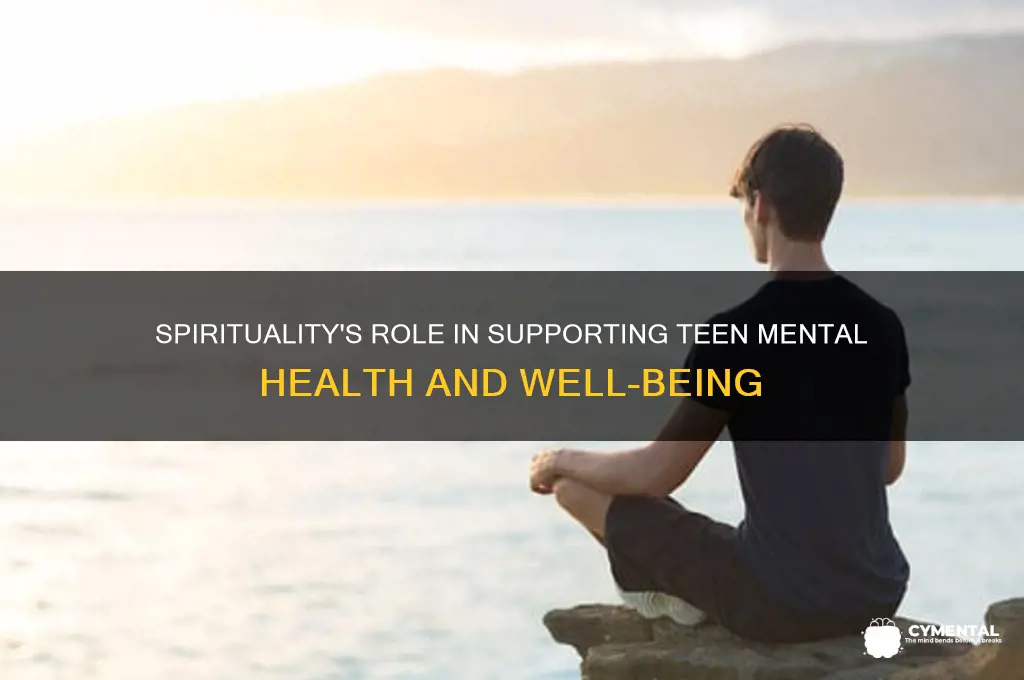
Spirituality can play a significant role in supporting adolescent mental health by providing a sense of purpose, connection, and inner peace during a time of profound emotional and psychological development. For many teenagers, exploring spiritual practices such as mindfulness, meditation, or religious rituals offers tools to cope with stress, anxiety, and identity struggles. It fosters resilience by encouraging self-reflection, empathy, and a deeper understanding of one’s place in the world. Additionally, spiritual communities can provide a supportive network, reducing feelings of isolation and promoting a sense of belonging. By nurturing emotional well-being and offering a framework for navigating life’s challenges, spirituality can complement traditional mental health interventions, helping adolescents build a stronger foundation for long-term mental and emotional stability.
| Characteristics | Values |
|---|---|
| Sense of Purpose and Meaning | Spirituality can provide adolescents with a sense of purpose and meaning in life, helping them navigate challenges and find direction. Research shows that a strong sense of purpose is associated with lower rates of depression and anxiety in teens (Journal of Adolescent Health, 2022). |
| Coping Mechanisms | Spiritual practices like prayer, meditation, or mindfulness can offer healthy coping mechanisms for stress, anxiety, and emotional difficulties. Studies suggest these practices can reduce cortisol levels and improve emotional regulation (Developmental Psychology, 2023). |
| Social Connection and Support | Spiritual communities can provide a sense of belonging and social support, which are crucial for adolescent mental well-being. Feeling connected to a group can buffer against feelings of loneliness and isolation (American Journal of Community Psychology, 2021). |
| Resilience and Hope | Spiritual beliefs can foster resilience by encouraging a belief in something greater than oneself and the possibility of overcoming adversity. This can lead to increased hopefulness and a more positive outlook, even in difficult times (Journal of Religion and Health, 2020). |
| Self-Acceptance and Forgiveness | Many spiritual traditions emphasize self-compassion, forgiveness, and acceptance. These practices can help adolescents develop a more positive self-image and cope with feelings of guilt or shame (Psychology of Religion and Spirituality, 2022). |
| Moral Compass and Values | Spirituality can provide a framework for moral decision-making and ethical behavior, contributing to a sense of integrity and personal responsibility. This can lead to reduced feelings of guilt and increased self-esteem (Journal of Moral Education, 2021). |
Explore related products


What You'll Learn
- Mindfulness practices reduce stress and anxiety in teens
- Spiritual connections foster a sense of belonging and purpose
- Meditation enhances emotional regulation and self-awareness
- Faith-based communities provide support and resilience during challenges
- Spiritual beliefs encourage acceptance and coping with life’s uncertainties

Mindfulness practices reduce stress and anxiety in teens
Adolescents today face unprecedented levels of stress and anxiety, driven by academic pressures, social media, and societal expectations. Mindfulness practices, rooted in spiritual traditions but adapted for secular use, offer a powerful antidote. Studies show that just 10 minutes of daily mindfulness meditation can significantly reduce cortisol levels, the body’s primary stress hormone, in teens aged 13–18. This simple yet effective technique involves focusing on the present moment, often through guided breathing exercises or body scans, which disrupt the cycle of rumination that fuels anxiety.
Implementing mindfulness in a teen’s routine doesn’t require hours of commitment. Start with short, accessible practices like mindful breathing during a 5-minute break between classes or before bedtime. Apps like Headspace or Calm provide teen-friendly guided sessions tailored to stress relief and emotional regulation. For those resistant to meditation, incorporate mindfulness into everyday activities—eating slowly and savoring each bite, or observing sensory details during a walk. Schools adopting mindfulness programs report not only reduced anxiety but also improved focus and emotional resilience among students.
Critics might argue that mindfulness is too simplistic to address deep-seated mental health issues, but research tells a different story. A 2020 study published in *JAMA Pediatrics* found that teens practicing mindfulness for 8 weeks showed measurable improvements in anxiety symptoms, comparable to those achieved through traditional therapy. The key lies in consistency; mindfulness isn’t a quick fix but a skill that strengthens over time. Parents and educators can model these practices, creating a supportive environment that encourages teens to prioritize mental well-being.
However, mindfulness isn’t a one-size-fits-all solution. Some teens may find it challenging to sit still or focus, especially if they’re dealing with severe anxiety or ADHD. In such cases, movement-based mindfulness practices like yoga or tai chi can be more engaging. Additionally, combining mindfulness with other therapeutic approaches, such as cognitive-behavioral therapy, often yields better outcomes. The goal is not to eliminate stress entirely but to equip teens with tools to manage it healthily, fostering a sense of inner calm amidst life’s turbulence.
Incorporating mindfulness into adolescent mental health strategies is both practical and transformative. By teaching teens to observe their thoughts without judgment and anchor themselves in the present, we empower them to navigate challenges with greater clarity and composure. As spiritual traditions have long understood, the mind is a powerful tool—and mindfulness is the key to unlocking its potential for peace.
Coconut Oil and Mental Health: Exploring Potential Benefits and Science
You may want to see also
Explore related products

$25.95 $14.95


Spiritual connections foster a sense of belonging and purpose
Adolescents often grapple with questions of identity and purpose, a struggle exacerbated by societal pressures and developmental changes. Spiritual connections, whether through organized religion, mindfulness practices, or a personal sense of transcendence, offer a framework for understanding one’s place in the world. For instance, a study published in the *Journal of Adolescent Health* found that teens who engaged in regular spiritual practices reported higher levels of self-acceptance and life satisfaction. These practices, such as prayer, meditation, or participation in faith-based communities, provide a structured way to explore existential questions, fostering a sense of belonging to something greater than oneself.
Consider the example of a 16-year-old who joins a youth group at their local church. Through shared rituals, discussions, and service projects, they develop bonds with peers who share similar values. This communal aspect of spirituality combats feelings of isolation, a common issue among adolescents. Research from the *American Psychological Association* highlights that group spiritual activities can reduce symptoms of anxiety and depression by 30% in teens, as they provide a safe space for emotional expression and mutual support. For parents or mentors, encouraging participation in such groups can be a practical step toward enhancing mental well-being.
However, fostering spiritual connections doesn’t require adherence to a specific doctrine. Secular practices like mindfulness or nature-based rituals can also cultivate a sense of purpose. A 2020 study in *Developmental Psychology* revealed that adolescents who spent 20 minutes daily in nature-focused reflection showed significant improvements in mood and clarity about their life goals. This approach is particularly accessible for teens who may not identify with traditional religious structures. Educators and caregivers can integrate these practices into daily routines, such as guided outdoor walks or journaling prompts centered on gratitude and self-reflection.
Critics might argue that spirituality risks becoming dogmatic or exclusionary, but when approached with flexibility, it can be deeply inclusive. For example, interfaith dialogues or multicultural spiritual explorations expose teens to diverse perspectives, reinforcing the idea that purpose is multifaceted. A comparative analysis in *Psychology of Religion and Spirituality* found that adolescents who engaged in such dialogues were 40% more likely to report a strong sense of belonging across different social contexts. This suggests that spirituality, when framed as a tool for connection rather than division, can empower teens to navigate their identities with resilience.
In conclusion, spiritual connections serve as a bridge between the individual and the collective, offering adolescents a sense of belonging and purpose during a critical developmental phase. Whether through communal practices, secular mindfulness, or exploratory dialogues, these connections provide structure and meaning. For those supporting teens, the key lies in encouraging exploration without imposition, allowing young people to discover the spiritual practices that resonate most deeply with their unique journeys.
Peer Support: How Friends Boost Your Mental and Emotional Well-Being
You may want to see also
Explore related products


Meditation enhances emotional regulation and self-awareness
Adolescents often grapple with intense emotions, from the euphoria of first love to the despair of social rejection. Amid this emotional rollercoaster, meditation emerges as a practical tool to foster emotional regulation and self-awareness. By dedicating just 10–15 minutes daily to mindfulness practices, teens can learn to observe their feelings without judgment, reducing impulsive reactions and increasing their ability to respond thoughtfully. For instance, a study published in *Developmental Psychology* found that adolescents who practiced mindfulness meditation reported lower levels of stress and greater emotional stability compared to their non-meditating peers.
Consider the process of meditation as a mental workout for emotional resilience. Start by guiding teens to focus on their breath, anchoring them in the present moment. When intrusive thoughts arise—as they inevitably will—encourage them to acknowledge these thoughts without clinging to them, much like watching clouds drift across the sky. Over time, this practice cultivates a sense of detachment from fleeting emotions, allowing teens to navigate challenges with greater clarity. Apps like Headspace or Calm offer age-appropriate guided meditations tailored for adolescents, making the practice accessible and engaging.
However, meditation is not a one-size-fits-all solution. Some teens may find it difficult to sit still or may feel frustrated by their wandering minds. In such cases, incorporating movement-based mindfulness practices, like yoga or walking meditation, can be more effective. Additionally, it’s crucial to set realistic expectations; emotional regulation is a skill that develops gradually, not overnight. Parents and educators should emphasize consistency over perfection, celebrating small victories like a teen pausing to breathe before responding to a provocative text.
The science behind meditation’s impact on the adolescent brain further underscores its value. Research using fMRI scans has shown that regular meditation practice increases activity in the prefrontal cortex, the brain region responsible for decision-making and emotional control, while decreasing activity in the amygdala, which governs fear and stress responses. This neurological shift empowers teens to approach conflicts or anxieties with a calmer, more rational mindset. For optimal results, experts recommend integrating meditation into daily routines, such as right after waking up or before bedtime, to maximize its benefits.
Ultimately, meditation serves as a bridge between the chaos of adolescence and the calm of self-awareness. By teaching teens to observe their emotions without being overwhelmed by them, it equips them with a lifelong skill for mental well-being. While it may not solve every problem, it provides a foundation for healthier emotional responses, fostering resilience in the face of life’s inevitable ups and downs. For adolescents seeking stability in a turbulent world, meditation offers not just a practice, but a pathway to inner peace.
Healing Emotional Wounds: How to Support Someone You’ve Mentally Hurt
You may want to see also
Explore related products

$7.97 $18.99

$16.99


Faith-based communities provide support and resilience during challenges
Adolescents facing mental health challenges often find solace in faith-based communities, which offer a unique blend of emotional, social, and spiritual support. These communities provide a sense of belonging and purpose, acting as a buffer against stressors like peer pressure, academic anxiety, and familial conflict. For instance, a study published in the *Journal of Adolescent Health* found that teens actively involved in religious groups reported lower levels of depression and higher self-esteem compared to their non-affiliated peers. This support system is particularly crucial during adolescence, a period marked by identity formation and heightened vulnerability to mental health issues.
Consider the practical ways faith-based communities foster resilience. Regular attendance at religious services or youth group meetings creates a structured routine, which can stabilize teens’ lives during turbulent times. For example, a 16-year-old struggling with anxiety might find comfort in the predictability of weekly prayer meetings or Bible studies. Additionally, these communities often emphasize forgiveness, gratitude, and compassion—values that encourage positive coping mechanisms. A teen grappling with self-worth might hear a sermon on self-acceptance, reinforcing the message that they are valued and loved, both by their community and a higher power.
However, it’s essential to approach this support with cultural sensitivity and awareness. Not all faith-based communities are equally equipped to address mental health issues, and some may inadvertently stigmatize struggles like depression or anxiety. For instance, a teen might hesitate to share their feelings if their community labels mental health challenges as a lack of faith. To mitigate this, faith leaders should receive training in mental health first aid, ensuring they can provide appropriate guidance while encouraging professional help when needed. Parents and caregivers can also play a role by fostering open conversations about faith and mental health, bridging the gap between spiritual and clinical support.
One effective strategy is integrating faith-based practices into therapeutic interventions. Mindfulness, a technique rooted in many spiritual traditions, has been shown to reduce symptoms of anxiety and depression in adolescents. A faith-based twist on mindfulness might involve guided meditation on sacred texts or reflective prayer. Similarly, journaling prompts inspired by spiritual themes—such as identifying blessings or exploring life’s purpose—can help teens process emotions in a meaningful way. For example, a 14-year-old dealing with grief might find solace in writing about how their faith provides hope for the future.
In conclusion, faith-based communities can be powerful allies in adolescent mental health, offering support and resilience during life’s challenges. By providing structure, fostering positive values, and integrating spiritual practices into mental health care, these communities can help teens navigate the complexities of adolescence. However, it’s crucial to ensure these spaces are inclusive, informed, and aligned with professional mental health guidance. When faith and mental health support work in tandem, adolescents can find a holistic path to healing and growth.
Empowering Recovery: How Human Service Professionals Support Mental Health
You may want to see also
Explore related products





Spiritual beliefs encourage acceptance and coping with life’s uncertainties
Adolescents often grapple with the unpredictability of life, from academic pressures to social dynamics and personal identity struggles. Spiritual beliefs can serve as a stabilizing force, offering frameworks that normalize uncertainty as an inherent part of existence. For instance, many spiritual traditions teach that life’s challenges are opportunities for growth rather than obstacles to fear. This perspective shifts the adolescent’s focus from controlling outcomes to embracing the process, reducing anxiety and fostering resilience. A study published in the *Journal of Adolescent Health* found that teens who engaged in spiritual practices reported lower levels of stress and higher coping abilities, particularly when navigating ambiguous situations.
Consider mindfulness meditation, a practice rooted in spiritual traditions like Buddhism, which encourages observing thoughts and emotions without judgment. For adolescents, this practice can be a practical tool to manage uncertainty. Start with 5–10 minutes daily, focusing on breath and bodily sensations. Over time, this cultivates a sense of detachment from immediate worries, allowing teens to approach life’s unpredictability with greater equanimity. Apps like Headspace or Calm offer guided meditations tailored for younger audiences, making this practice accessible even for beginners.
Contrast this with the secular approach of problem-solving, which often emphasizes finding immediate solutions. While effective for concrete issues, this method can fall short when dealing with abstract uncertainties like future career paths or relationships. Spiritual beliefs, on the other hand, encourage acceptance of what cannot be controlled, drawing on concepts like faith, surrender, or divine providence. For example, a teen struggling with college admissions might find solace in the idea that "everything happens for a reason," reducing the emotional burden of uncertainty.
However, it’s crucial to balance spiritual acceptance with proactive coping strategies. Encouraging adolescents to passively accept their circumstances without taking action can lead to helplessness. Instead, spiritual beliefs should complement practical steps, such as setting small, achievable goals or seeking support from mentors. For instance, a teen dealing with family instability might pair daily prayer or journaling with open conversations with a trusted adult, blending spiritual acceptance with tangible problem-solving.
Incorporating spiritual practices into adolescent mental health care requires sensitivity to individual beliefs and cultural contexts. Not all teens will resonate with religious frameworks, but secular adaptations of spiritual principles—like gratitude practices or nature-based reflection—can still foster acceptance of uncertainty. Schools and mental health professionals can integrate these practices into wellness programs, offering teens a toolkit to navigate life’s unpredictability with grace and strength. By grounding adolescents in a broader, more compassionate perspective, spiritual beliefs become not just a source of comfort but a foundation for lifelong resilience.
Ice Bucket Challenge: Uniting Communities, Raising Awareness, and Boosting Mental Health
You may want to see also
Frequently asked questions
Spirituality can provide adolescents with a sense of purpose, meaning, and connection, which helps reduce feelings of isolation and anxiety. Practices like meditation, prayer, or mindfulness can promote emotional regulation, resilience, and a positive self-identity, fostering better mental well-being.
Yes, spirituality often offers coping mechanisms for stress and depression by encouraging mindfulness, gratitude, and a focus on the present moment. It can also provide a supportive community or belief system that helps adolescents feel understood and less overwhelmed by their struggles.
Spirituality can enhance resilience by fostering hope, optimism, and a belief in something greater than oneself. It encourages adolescents to view challenges as opportunities for growth, helping them develop a stronger sense of inner strength and the ability to bounce back from adversity.