Noah Parker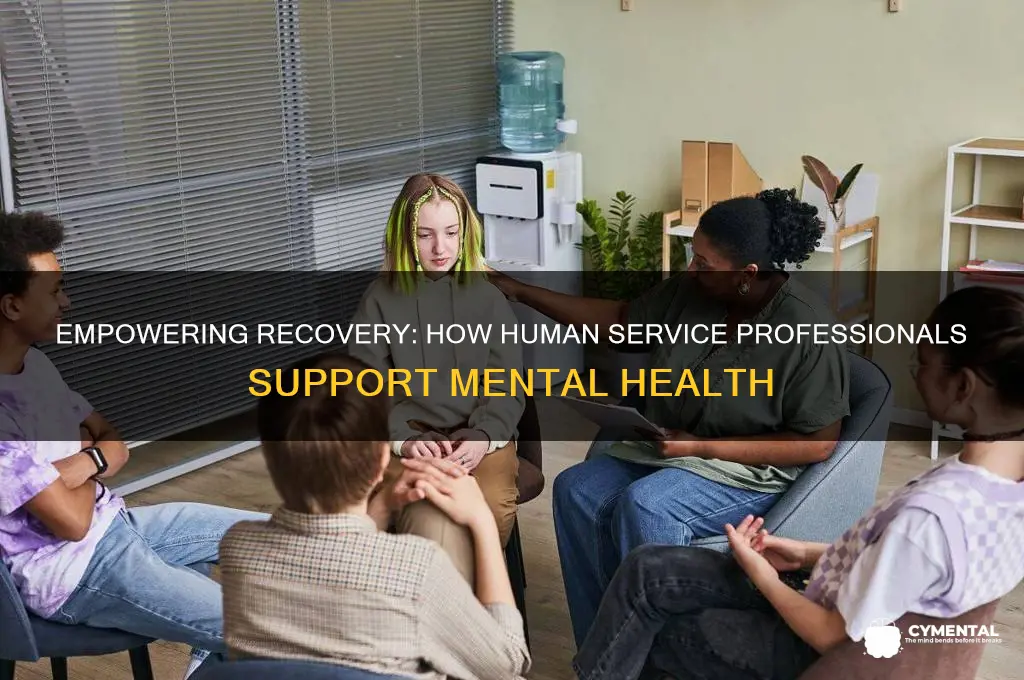
Human service professionals play a critical role in supporting individuals with mental illness by providing a range of services tailored to their unique needs. These professionals, including social workers, counselors, case managers, and psychologists, work to address the complex challenges faced by those with mental health conditions through assessment, treatment planning, and ongoing support. They help clients navigate healthcare systems, access resources such as housing and employment, and develop coping strategies to manage symptoms. By fostering a compassionate and non-judgmental environment, human service professionals empower individuals to achieve stability, improve their quality of life, and work toward recovery. Their holistic approach often involves collaboration with families, communities, and other healthcare providers to ensure comprehensive care and long-term success.
| Characteristics | Values |
|---|---|
| Assessment and Diagnosis | Conduct thorough evaluations to identify mental health conditions and develop personalized treatment plans. |
| Counseling and Therapy | Provide individual, group, or family therapy to address emotional, behavioral, and psychological issues. |
| Crisis Intervention | Offer immediate support during mental health crises, including de-escalation and stabilization techniques. |
| Case Management | Coordinate services, resources, and care plans to ensure comprehensive support for clients. |
| Advocacy | Advocate for clients' rights, access to services, and reduction of stigma surrounding mental illness. |
| Education and Skill-Building | Teach coping strategies, life skills, and self-management techniques to improve daily functioning. |
| Medication Management | Collaborate with psychiatrists to monitor medication effectiveness and side effects. |
| Community Integration | Assist clients in accessing community resources, employment, housing, and social support networks. |
| Prevention and Early Intervention | Implement programs to identify and address mental health issues before they escalate. |
| Holistic Support | Address physical, social, and environmental factors that impact mental health. |
| Cultural Competence | Provide services that are sensitive to and respectful of clients' cultural backgrounds and beliefs. |
| Collaboration with Families | Involve families in treatment plans and provide them with education and support. |
| Follow-Up and Aftercare | Ensure ongoing support and monitoring to prevent relapse and promote long-term recovery. |
| Policy and System Advocacy | Work to improve mental health policies, funding, and accessibility of services at local and national levels. |
| Research and Evidence-Based Practices | Utilize the latest research to implement effective and proven treatment methods. |
Explore related products


What You'll Learn
- Crisis Intervention: Providing immediate support during mental health emergencies to stabilize individuals and prevent harm
- Case Management: Coordinating resources, treatment plans, and services to ensure comprehensive care for clients
- Counseling & Therapy: Offering evidence-based therapies to address mental health issues and improve well-being
- Advocacy & Empowerment: Helping clients navigate systems, assert rights, and build self-advocacy skills
- Community Integration: Facilitating social inclusion and access to community resources for long-term recovery

Crisis Intervention: Providing immediate support during mental health emergencies to stabilize individuals and prevent harm
In the midst of a mental health crisis, every second counts. Crisis intervention is a critical component of human services, designed to provide immediate support and stabilization to individuals experiencing acute psychological distress. This rapid response can mean the difference between escalation and de-escalation, harm and safety. For instance, a person in the throes of a severe panic attack or suicidal ideation requires more than just a listening ear; they need structured, evidence-based strategies to regain control. Human service professionals trained in crisis intervention act as first responders in these situations, employing techniques such as active listening, grounding exercises, and safety planning to create a sense of security and prevent self-harm or harm to others.
Consider the steps involved in effective crisis intervention. First, assessment is key—professionals must quickly evaluate the individual’s level of risk, identifying immediate dangers such as suicidal intent or psychotic episodes. This often involves asking direct questions like, “Are you thinking about hurting yourself right now?” or “Do you have a plan?” Second, de-escalation techniques are applied to reduce emotional intensity. For example, a professional might guide a person through deep breathing exercises (inhale for 4 seconds, hold for 4 seconds, exhale for 6 seconds) or use distraction methods like naming objects in the room. Third, stabilization focuses on restoring a sense of calm and safety, often through the creation of a temporary safety plan that includes coping strategies and emergency contacts. These steps are not one-size-fits-all; they are tailored to the individual’s needs, age, and cultural background.
A cautionary note: crisis intervention is not therapy. Its primary goal is to address the immediate emergency, not to resolve underlying mental health issues. Professionals must resist the urge to delve into long-term solutions during the crisis phase, as this can overwhelm the individual further. Instead, the focus should remain on containment and safety. For example, a teenager experiencing a psychotic break may need immediate medication adjustments or hospitalization, while an older adult in crisis might require a calm environment and reassurance. Missteps in this phase, such as dismissing the person’s feelings or failing to establish trust, can exacerbate the situation.
The takeaway is clear: crisis intervention is a specialized skill that demands training, empathy, and quick thinking. Human service professionals in this role serve as lifelines during moments of extreme vulnerability. By providing immediate, practical support, they not only prevent harm but also lay the groundwork for future recovery. For instance, a successful intervention can lead to a person accepting referral to long-term therapy or psychiatric care, which they might have resisted in the absence of crisis support. In this way, crisis intervention is both a rescue mission and a bridge to ongoing care, highlighting its indispensable role in the mental health ecosystem.
Brahmi's Impact: Enhancing Mental Wellbeing and Cognitive Health Naturally
You may want to see also
Explore related products


Case Management: Coordinating resources, treatment plans, and services to ensure comprehensive care for clients
Effective case management is the linchpin of holistic mental health care, transforming fragmented services into a cohesive support system. At its core, case management involves assessing a client’s needs, identifying available resources, and orchestrating a tailored treatment plan. For instance, a 35-year-old client with schizophrenia may require a combination of antipsychotic medication (e.g., 10 mg of olanzapine daily), weekly therapy sessions, and vocational training. The case manager acts as the central coordinator, ensuring the psychiatrist, therapist, and job coach communicate regularly to align their efforts. Without this coordination, the client might receive conflicting advice or fall through gaps in the system, exacerbating their condition.
Consider the logistical complexity of managing such cases. A case manager must navigate a labyrinth of public and private services, from Medicaid coverage to housing assistance programs. For a client experiencing homelessness and bipolar disorder, the manager might secure a Section 8 housing voucher while arranging for a mobile crisis team to provide on-site psychiatric evaluations. This requires not only knowledge of available resources but also advocacy skills to expedite processes that often move at a glacial pace. Practical tips for professionals include maintaining a detailed timeline of interventions, using digital tools like shared care plans, and fostering relationships with community providers to streamline referrals.
The analytical lens reveals that case management is both an art and a science. It demands empathy to understand the client’s perspective—a 22-year-old with anxiety may resist medication due to stigma—and strategic thinking to adapt plans as circumstances change. Research shows that clients with consistent case management are 40% more likely to adhere to treatment plans and 25% less likely to be hospitalized. However, burnout is a significant risk for case managers, who often juggle caseloads of 30 or more clients. To mitigate this, agencies should enforce caseload limits and provide regular supervision, ensuring managers can deliver high-quality care without compromising their own well-being.
A persuasive argument for case management lies in its cost-effectiveness. By preventing crises and reducing hospital readmissions, it saves healthcare systems millions annually. For example, a study in *Health Affairs* found that every dollar invested in assertive community treatment (a form of intensive case management) yields $2.50 in savings. Policymakers should prioritize funding for case management programs, particularly in underserved areas where mental health resources are scarce. Clients, too, benefit from knowing they have a dedicated advocate, which fosters trust and engagement in their recovery journey.
In conclusion, case management is not merely administrative; it is transformative. It bridges the gap between diagnosis and recovery, ensuring clients receive the right care at the right time. For human service professionals, mastering this role requires a blend of clinical knowledge, organizational prowess, and unwavering compassion. By coordinating resources, treatment plans, and services, case managers empower clients to navigate the complexities of mental illness and reclaim their lives.
Empowering Parents: Strengthening School Mental Health Support Together
You may want to see also
Explore related products


Counseling & Therapy: Offering evidence-based therapies to address mental health issues and improve well-being
Mental health challenges are pervasive, affecting individuals across all demographics, and evidence-based therapies have emerged as a cornerstone in addressing these issues. Human service professionals, particularly counselors and therapists, play a pivotal role in delivering these interventions, which are grounded in rigorous research and tailored to individual needs. Unlike generic advice or self-help strategies, evidence-based therapies like Cognitive Behavioral Therapy (CBT), Dialectical Behavior Therapy (DBT), and Eye Movement Desensitization and Reprocessing (EMDR) are designed to target specific symptoms and underlying causes of mental illness. For instance, CBT, often delivered in 12 to 20 sessions, helps individuals reframe negative thought patterns, while DBT focuses on emotional regulation and is particularly effective for borderline personality disorder. These therapies are not one-size-fits-all; they are adapted to the client’s age, cultural background, and severity of symptoms, ensuring a personalized approach to healing.
Consider the case of a 28-year-old with generalized anxiety disorder. A therapist might employ CBT techniques, such as exposure therapy, gradually exposing the client to anxiety triggers in a controlled environment. Sessions could start with identifying specific fears, followed by systematic desensitization over 8 to 12 weeks. Alongside therapy, the professional might recommend practical tools like mindfulness exercises or journaling to reinforce progress between sessions. For adolescents, family involvement is often crucial; therapists may incorporate family therapy sessions to address systemic issues contributing to the youth’s mental health struggles. The key lies in the therapist’s ability to integrate these evidence-based methods with the client’s unique circumstances, fostering a collaborative and trusting therapeutic relationship.
While evidence-based therapies are powerful, their effectiveness hinges on consistent application and client engagement. Therapists must navigate challenges such as client resistance, limited access to resources, or cultural stigma surrounding mental health. For example, a therapist working with a client from a culture that views mental illness as a personal failing must adapt their approach to build trust and ensure the client feels understood. Additionally, therapists must stay updated on the latest research, as therapeutic techniques evolve with new findings. For instance, recent studies have highlighted the benefits of incorporating technology, such as mobile apps for mood tracking, into traditional therapy frameworks. These tools can enhance engagement, particularly among younger clients who are digitally native.
The impact of evidence-based therapies extends beyond symptom reduction; they empower individuals to develop coping mechanisms and resilience for long-term well-being. A study published in the *Journal of Consulting and Clinical Psychology* found that 75% of participants who completed a full course of CBT reported significant improvements in anxiety and depression symptoms, with effects lasting up to a year post-treatment. However, success is not solely measured by clinical outcomes. Therapists often emphasize the importance of small victories, such as a client regaining the ability to socialize or return to work. These milestones, though seemingly minor, are transformative for individuals grappling with mental illness.
In conclusion, counseling and therapy grounded in evidence-based practices are indispensable tools in the human service professional’s toolkit. By combining scientific rigor with empathy and cultural sensitivity, therapists create a safe space for clients to explore their struggles and chart a path toward recovery. Whether through CBT, DBT, or emerging modalities, these interventions offer hope and tangible results for those navigating the complexities of mental illness. For anyone seeking support, the message is clear: evidence-based therapy is not just about managing symptoms—it’s about reclaiming a life of purpose and fulfillment.
Supporting Mental Health: Practical Ways to Help Loved Ones Heal
You may want to see also
Explore related products




Advocacy & Empowerment: Helping clients navigate systems, assert rights, and build self-advocacy skills
Mental health systems can be labyrinthine, leaving individuals feeling disempowered and voiceless. Human service professionals step in as guides, advocates, and teachers, equipping clients with the tools to navigate these complexities and assert their rights. This process, known as advocacy and empowerment, is a cornerstone of effective support for the mentally ill.
Imagine a young adult diagnosed with schizophrenia, struggling to access disability benefits. A human service professional might accompany them to appointments, helping decipher bureaucratic jargon and ensuring their needs are accurately communicated. This immediate support is crucial, but true empowerment lies in teaching the client to advocate for themselves.
Advocacy takes many forms. It involves helping clients understand their legal rights regarding treatment, housing, and employment. This might include explaining the Americans with Disabilities Act (ADA) and its protections against discrimination. Professionals can also assist in drafting letters, making phone calls, or preparing for meetings with service providers, fostering confidence and self-efficacy. For instance, a professional might role-play a conversation with a landlord to practice requesting reasonable accommodations under the Fair Housing Act.
Empowering self-advocacy requires a tailored approach. For a teenager with anxiety, it might involve teaching relaxation techniques to manage stress during interactions with authority figures. For an older adult with depression, it could mean breaking down complex forms into manageable steps and providing encouragement throughout the process.
Building self-advocacy skills is an investment in long-term well-being. It allows individuals to become active participants in their own care, fostering a sense of control and agency. This, in turn, can lead to improved treatment adherence, better access to resources, and a higher quality of life. Human service professionals, through their advocacy and empowerment efforts, become catalysts for positive change, helping individuals with mental illness not just survive, but thrive within complex systems.
Religion's Impact on Seeking Mental Health Support: Barriers or Bridges?
You may want to see also
Explore related products



Community Integration: Facilitating social inclusion and access to community resources for long-term recovery
Social isolation exacerbates mental illness, creating a feedback loop where withdrawal from community diminishes access to resources critical for recovery. Human service professionals counteract this by designing structured integration plans that pair clients with community assets, such as vocational training programs, peer support groups, or subsidized housing initiatives. For instance, a case manager might connect a 28-year-old with schizophrenia to a local art therapy collective, providing both creative expression and a social network. Simultaneously, they would ensure the client knows how to navigate public transit to attend sessions independently, embedding skill-building into the intervention.
Effective community integration requires a dual focus: fostering belonging while dismantling systemic barriers. Professionals often employ a strengths-based approach, identifying clients’ existing skills (e.g., a talent for gardening) and linking them to communal opportunities (e.g., urban farming projects). However, this process demands vigilance against tokenism. A 45-year-old recovering from depression, for example, should not be placed in a volunteer role without clear goals, regular check-ins, and pathways to paid employment if desired. The professional must advocate for accommodations, such as flexible scheduling or sensory-friendly environments, to ensure inclusion is substantive, not symbolic.
A critical yet overlooked tool is the community resource map—a visual inventory of local assets like food banks, legal aid, and recreational centers. Professionals teach clients to navigate these maps, turning passive awareness into active engagement. For a 19-year-old with anxiety, this might mean starting with low-stakes activities (e.g., joining a library book club) before progressing to higher-commitment groups. The professional acts as a bridge, attending initial sessions to model participation strategies, then gradually withdrawing as the client builds confidence. This phased approach respects the client’s pace while preventing over-reliance on professional support.
Sustaining integration demands collaboration across sectors. Human service professionals often broker partnerships between mental health agencies, employers, and civic organizations to create pipelines for long-term engagement. For instance, a partnership with a local gym might offer discounted memberships to clients, paired with a peer-led fitness group to reduce intimidation. However, professionals must monitor these arrangements for reciprocity: the gym benefits from increased membership, but clients must also gain tangible outcomes, such as improved physical health metrics or social connections. Without such balance, integration risks becoming transactional rather than transformative.
Ultimately, community integration is not a checklist but a dynamic process requiring continuous adaptation. Professionals must track outcomes using measurable indicators—reduced hospitalization rates, increased employment, or improved self-reported social satisfaction—while remaining responsive to clients’ evolving needs. A 60-year-old with bipolar disorder, for example, might transition from group housing to independent living, necessitating new supports like budgeting workshops or neighbor introductions. By viewing integration as a lifelong journey rather than a destination, human service professionals empower clients to reclaim agency within their communities, turning isolation into interdependence.
Finding Support: Where to Get Mental Health Help and Resources
You may want to see also
Frequently asked questions
Human service professionals identify mental health issues through assessments, interviews, and observation. They use standardized tools, such as questionnaires and diagnostic criteria (e.g., DSM-5), to evaluate symptoms, behaviors, and functioning. Collaboration with clients, families, and other professionals also aids in accurate identification.
Human service professionals develop individualized treatment plans by assessing clients' needs, strengths, and goals. They collaborate with clients, families, and multidisciplinary teams to design interventions, such as therapy, medication management, and community resources, tailored to address specific mental health challenges.
Human service professionals connect clients to community resources like housing, employment programs, support groups, and healthcare services. They advocate for clients, provide referrals, and assist with navigating complex systems to ensure access to essential supports for recovery and stability.
Human service professionals empower clients by fostering self-advocacy, teaching coping skills, and promoting independence. They provide education about mental health, encourage goal-setting, and offer emotional support. Strength-based approaches and collaborative problem-solving help clients build confidence and resilience.