Madison Cole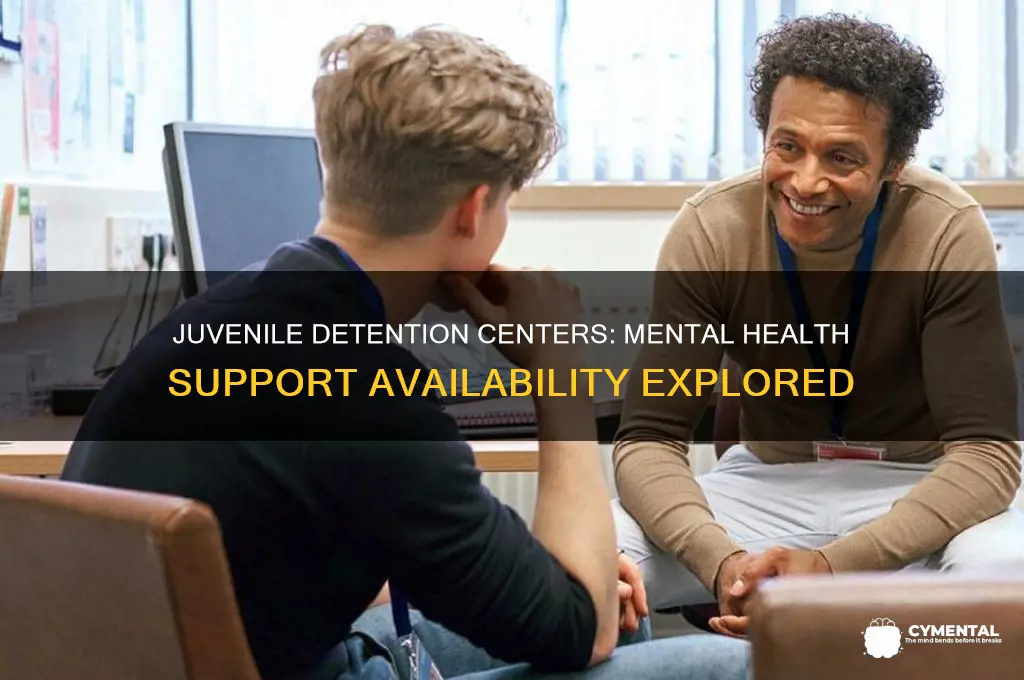
Juvenile detention centers play a critical role in the justice system, but their effectiveness often hinges on their ability to address the underlying mental health needs of the youth they serve. While many juveniles in these facilities struggle with mental health issues, the availability and quality of mental health services vary widely across centers. Understanding how many juvenile detention centers offer mental health support is essential for assessing their capacity to rehabilitate rather than merely punish young offenders. This disparity highlights the urgent need for standardized mental health resources to ensure that all detained youth receive the care necessary for their well-being and successful reintegration into society.
Explore related products



What You'll Learn
- Availability of mental health services in juvenile detention centers
- Types of mental health programs offered to detained youth
- Staff qualifications for providing mental health support in facilities
- Access to therapy and counseling for juveniles in detention
- Effectiveness of mental health interventions in reducing recidivism rates

Availability of mental health services in juvenile detention centers
The availability of mental health services in juvenile detention centers varies widely, with a significant gap between need and provision. Studies indicate that up to 70% of youth in these facilities exhibit mental health disorders, yet only an estimated 20-40% receive adequate treatment. This disparity highlights a critical issue: while many centers acknowledge the importance of mental health care, resource limitations, staffing shortages, and inconsistent policies often hinder effective implementation. For instance, a 2021 report by the National Center for Mental Health and Juvenile Justice found that only 35% of surveyed facilities had full-time mental health professionals on staff, leaving the majority reliant on part-time or contracted services.
To address this gap, some facilities have adopted innovative models, such as trauma-informed care and evidence-based practices like Cognitive Behavioral Therapy (CBT). These approaches aim to reduce recidivism and improve outcomes by addressing underlying trauma and behavioral issues. For example, the Missouri Model, implemented in several states, emphasizes small, home-like environments and individualized treatment plans, resulting in lower rates of violence and improved mental health outcomes. However, such programs require substantial funding and trained staff, which remain out of reach for many under-resourced facilities.
A comparative analysis reveals that urban detention centers often have better access to mental health services due to proximity to specialized providers and higher budgets. In contrast, rural facilities face significant challenges, including limited access to psychiatrists, psychologists, and even basic counseling services. Telehealth has emerged as a promising solution, allowing rural centers to connect youth with remote mental health professionals. However, this approach is contingent on reliable internet access and technological infrastructure, which are not universally available.
For stakeholders seeking to improve mental health services in juvenile detention centers, several practical steps can be taken. First, advocate for increased funding at the state and federal levels to hire full-time mental health professionals and implement evidence-based programs. Second, prioritize staff training in trauma-informed care and de-escalation techniques to better support youth in crisis. Third, leverage technology by integrating telehealth services and digital mental health tools, ensuring equitable access regardless of location. Finally, establish partnerships with community mental health organizations to provide seamless care upon release, reducing the risk of relapse and reoffending.
Despite these efforts, challenges persist. Stigma surrounding mental health, bureaucratic red tape, and the transient nature of the juvenile justice population complicate service delivery. For instance, youth often cycle in and out of detention before comprehensive treatment plans can be developed. To mitigate this, facilities should adopt a "warm handoff" approach, coordinating with community providers to ensure continuity of care. Additionally, policymakers must address systemic issues, such as over-reliance on detention for youth with mental health needs, by investing in diversion programs and community-based alternatives. By taking a multifaceted approach, juvenile detention centers can move closer to meeting the mental health needs of the youth they serve.
Mental Health Programs: Empowering Lives Through Support and Healing
You may want to see also
Explore related products


Types of mental health programs offered to detained youth
Juvenile detention centers increasingly recognize the critical need for mental health support, offering a range of programs tailored to the unique challenges faced by detained youth. These programs vary widely in scope and structure, reflecting the diverse needs of this vulnerable population. From evidence-based therapies to educational interventions, the goal is to address underlying issues and reduce recidivism.
Cognitive Behavioral Therapy (CBT) stands out as a cornerstone of many mental health programs. Designed to help youth identify and change destructive thought patterns, CBT typically involves 12 to 16 sessions, each lasting 45 to 60 minutes. Facilitated by trained therapists, this approach is particularly effective for youth aged 13 to 18 dealing with anger management, anxiety, or depression. For instance, a study in a California detention center found that participants in CBT programs showed a 30% reduction in aggressive behavior within six months.
Trauma-informed care is another essential program, given the high prevalence of trauma among detained youth. This approach focuses on creating a safe, supportive environment where youth can process their experiences without retraumatization. Programs often include group therapy sessions, art therapy, and mindfulness exercises. For example, a facility in Texas implemented a 10-week trauma-focused program that incorporated journaling and peer support, resulting in a 25% decrease in self-reported symptoms of PTSD among participants.
Educational and vocational programs also play a pivotal role in mental health support. By providing structure and purpose, these initiatives help youth build self-esteem and envision a future beyond detention. A notable example is a program in Ohio that offers daily two-hour vocational training sessions in fields like carpentry and culinary arts. Youth who completed the program reported higher levels of hope and lower levels of anxiety, as measured by standardized psychological assessments.
Peer support groups are increasingly integrated into mental health programs, leveraging the power of shared experiences. These groups, often led by trained facilitators, provide a platform for youth to express their feelings and learn coping strategies from one another. A detention center in New York introduced weekly 90-minute peer support sessions, which led to a 40% increase in participants’ willingness to seek help for mental health issues.
While these programs show promise, their effectiveness depends on consistent implementation and adequate staffing. Detention centers must prioritize training for staff and ensure that programs are culturally sensitive and age-appropriate. By addressing mental health holistically, these initiatives not only support individual youth but also contribute to safer communities.
Moving Out: A Mental Health Boost or Added Stress?
You may want to see also
Explore related products




Staff qualifications for providing mental health support in facilities
The effectiveness of mental health support in juvenile detention centers hinges on the qualifications of the staff providing it. While the presence of mental health services is crucial, the expertise of those delivering care determines its impact. Research indicates that facilities with staff trained in evidence-based practices, such as cognitive-behavioral therapy (CBT) and trauma-informed care, report better outcomes for youth, including reduced recidivism and improved emotional regulation.
To ensure competent care, facilities should prioritize hiring licensed mental health professionals, such as psychologists, social workers, or counselors, with specialized training in adolescent development and trauma. For example, staff certified in Trauma-Focused Cognitive Behavioral Therapy (TF-CBT) can address the high prevalence of trauma among detained youth, who experience it at rates up to 90%. Additionally, integrating psychiatric nurse practitioners or child psychiatrists ensures access to medication management when needed, though this should always be part of a comprehensive treatment plan.
Beyond formal credentials, staff must possess cultural competency and empathy. Youth in detention centers often come from marginalized communities, and providers must understand the intersection of race, class, and systemic inequities that shape their experiences. Facilities should invest in ongoing training on cultural humility and anti-racist practices to avoid retraumatization and build trust. For instance, a study in *Journal of Adolescent Health* found that culturally responsive care significantly improved treatment engagement among Black and Latino youth.
However, qualifications alone are insufficient without adequate staffing ratios. The Council of Juvenile Correctional Administrators recommends a minimum of one full-time mental health professional for every 15-20 youth. In practice, many facilities fall short, with ratios often exceeding 1:50. This undermines the ability of even highly qualified staff to provide individualized care. Policymakers and administrators must address this gap by allocating resources to hire and retain skilled professionals, offering competitive salaries, and providing opportunities for professional development.
Finally, oversight and accountability are critical. Facilities should implement regular performance evaluations and peer reviews to ensure staff adhere to ethical standards and evidence-based practices. For example, the use of seclusion or restraint, which can exacerbate mental health issues, should be monitored and minimized. By combining rigorous qualifications, cultural competency, adequate staffing, and accountability, juvenile detention centers can transform mental health support from a token service into a pathway to healing and rehabilitation.
Exercise and Mental Health: Unlocking the Mind-Body Connection for Wellness
You may want to see also
Explore related products

$8.5 $19.99


Access to therapy and counseling for juveniles in detention
Juvenile detention centers are increasingly recognizing the critical need for mental health services, yet access to therapy and counseling remains inconsistent and often inadequate. Studies indicate that while approximately 70% of detained youth suffer from at least one mental health disorder, only about 40% of facilities provide regular access to licensed therapists. This disparity highlights a systemic gap between need and provision, leaving many young people without the support necessary for rehabilitation and reintegration.
Consider the case of a 16-year-old in a Midwestern detention center diagnosed with anxiety and depression. Despite clear symptoms, the facility offers only monthly group sessions led by a part-time counselor. This minimal intervention falls short of clinical recommendations, which suggest weekly individual therapy for moderate to severe cases. Such scenarios underscore the urgency of standardizing mental health care in juvenile justice settings, ensuring that all youth receive evidence-based treatment tailored to their needs.
Implementing effective therapy programs requires a multi-faceted approach. First, facilities must hire full-time, licensed mental health professionals capable of conducting comprehensive assessments and delivering individualized care. Second, integrating trauma-informed practices is essential, as many detained youth have experienced significant adversity. For instance, cognitive-behavioral therapy (CBT) has proven effective in reducing recidivism rates by addressing underlying behavioral patterns. Third, collaboration with community organizations can extend support beyond detention, providing continuity of care during transitions back to society.
Critics argue that resource constraints limit the feasibility of such reforms. However, investing in mental health services is not only a moral imperative but also a cost-effective strategy. Research shows that every dollar spent on youth mental health programs can yield up to $7 in savings by reducing future criminal justice involvement and improving educational outcomes. By prioritizing funding for therapy and counseling, policymakers can break cycles of incarceration and foster healthier, more resilient communities.
Ultimately, access to therapy and counseling in juvenile detention centers is a matter of justice and human dignity. Without adequate mental health support, detained youth are at heightened risk of self-harm, prolonged incarceration, and lifelong struggles. Facilities that prioritize comprehensive care not only fulfill their ethical obligations but also contribute to a more equitable and compassionate society. The question is not whether such services are necessary, but how quickly we can make them universally available.
Working Out for Mental Health: Boost Mood, Reduce Stress, Enhance Well-being
You may want to see also
Explore related products


$9.39 $17.99


Effectiveness of mental health interventions in reducing recidivism rates
A significant portion of juveniles in detention centers struggle with mental health issues, yet access to adequate care remains inconsistent. Studies indicate that only about 40-60% of juvenile detention facilities offer comprehensive mental health services, leaving a substantial gap in treatment for vulnerable youth. This disparity raises critical questions about the effectiveness of mental health interventions in reducing recidivism rates, as untreated mental health issues often correlate with repeated offenses.
Consider the case of trauma-focused cognitive behavioral therapy (TF-CBT), a structured intervention delivered over 12-16 sessions. Research shows that juveniles who complete TF-CBT programs exhibit a 20-30% reduction in recidivism rates compared to those receiving standard care. This intervention is particularly effective for youth aged 12-17 with histories of trauma, a common demographic in detention centers. However, its success hinges on consistent implementation, trained staff, and follow-up care post-release—elements often lacking in underfunded facilities.
Contrastingly, pharmacological interventions alone show limited effectiveness in reducing recidivism. While medications like SSRIs can stabilize mood disorders, they are most effective when paired with therapy. A study of 500 juveniles found that those on medication without concurrent therapy had only a 5% reduction in recidivism, compared to a 25% reduction in those receiving both medication and behavioral interventions. This highlights the need for multimodal approaches tailored to individual needs.
Practical implementation is key. Detention centers should adopt evidence-based programs like multisystemic therapy (MST), which addresses familial, educational, and environmental factors contributing to delinquency. MST involves 4-6 months of intensive, in-home therapy and has been shown to reduce recidivism by up to 50% in high-risk youth. However, such programs require significant investment in training and staffing, posing challenges for facilities with limited resources.
Ultimately, the effectiveness of mental health interventions in reducing recidivism depends on accessibility, quality, and continuity of care. Facilities must prioritize integrated services, ensure staff competency, and establish partnerships with community providers for post-release support. Without these measures, even the most promising interventions risk falling short, perpetuating cycles of incarceration rather than fostering rehabilitation.
Empowering Actions: Simple Ways to Make a Positive Impact Today
You may want to see also
Frequently asked questions
While exact numbers vary, studies indicate that approximately 70-80% of juvenile detention centers provide some form of mental health services, though the quality and scope of these services can differ significantly.
Common services include individual counseling, group therapy, psychiatric evaluations, medication management, and crisis intervention. However, availability often depends on the facility’s funding and resources.
No, mental health services are not mandatory for all youth in detention. Access is usually based on individual assessments, court orders, or voluntary participation, though many facilities prioritize screening upon intake to identify needs.