Harper Lewis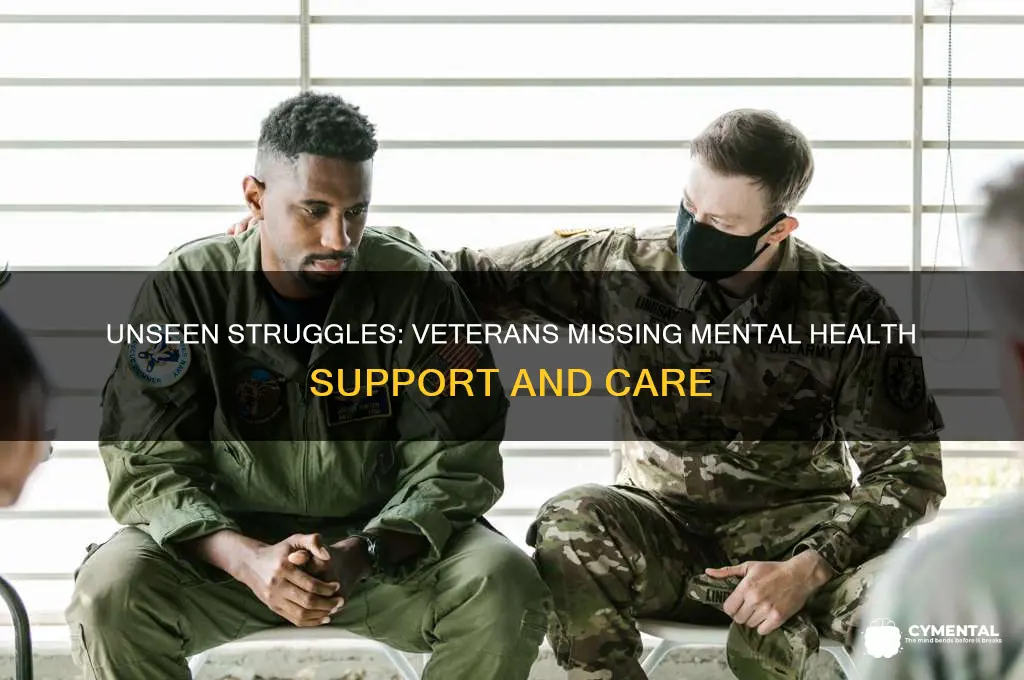
The issue of veterans not receiving adequate mental health support is a pressing concern that highlights significant gaps in care and resources. Despite the well-documented challenges many veterans face, including PTSD, depression, and anxiety, a startling number do not seek or receive the help they need. Barriers such as stigma, lack of awareness about available services, and difficulties accessing care contribute to this problem. Studies suggest that a substantial portion of veterans struggle in silence, often due to fears of being perceived as weak or concerns about the impact on their careers. Addressing this issue requires a multifaceted approach, including destigmatizing mental health, improving access to services, and fostering a culture that encourages veterans to seek support without hesitation.
Explore related products


What You'll Learn
- Stigma and Shame: Fear of judgment prevents veterans from seeking mental health treatment
- Lack of Awareness: Many veterans are unaware of available mental health resources
- Access Barriers: Rural locations and long wait times limit access to care
- Financial Constraints: High costs deter veterans from pursuing mental health services
- Misdiagnosis or Underdiagnosis: Veterans’ mental health issues often go unrecognized or untreated

Stigma and Shame: Fear of judgment prevents veterans from seeking mental health treatment
A staggering number of veterans struggle with mental health issues, yet a significant portion never seek the help they need. According to recent studies, approximately 50% of veterans experiencing mental health challenges do not receive treatment. One of the most pervasive barriers to care is the stigma surrounding mental health, coupled with the deep-seated fear of judgment. This stigma manifests in various ways, from self-imposed shame to societal misconceptions, creating an invisible wall that isolates veterans from the support they deserve.
Consider the culture of the military, where strength, resilience, and self-reliance are highly valued. For many veterans, admitting to mental health struggles feels like admitting weakness, a betrayal of the very qualities that defined their service. This internalized stigma is compounded by external judgments—real or perceived. Veterans often fear being labeled as "damaged goods" or "unreliable," which can jeopardize their civilian careers, relationships, and sense of self-worth. For example, a veteran might avoid seeking therapy for PTSD because they worry their employer will question their ability to handle stress, even though treatment could improve their overall functioning.
The fear of judgment is not just hypothetical; it has tangible consequences. Research shows that veterans who perceive stigma are significantly less likely to engage in mental health services. This reluctance perpetuates a cycle of suffering, as untreated conditions like depression, anxiety, and PTSD often worsen over time. Practical steps to combat this stigma include normalizing conversations about mental health within veteran communities and workplaces. Peer support programs, where veterans share their experiences without fear of judgment, have proven effective in reducing stigma and encouraging treatment-seeking behavior.
To address this issue, it’s essential to reframe mental health care as a sign of strength, not weakness. Veterans should be reminded that seeking help is a courageous act, akin to the bravery they demonstrated in service. Employers, friends, and family members can play a critical role by fostering an environment of understanding and support. For instance, organizations can implement policies that protect veterans’ privacy and provide flexible scheduling for therapy appointments. Veterans themselves can take small steps, like starting with anonymous helplines or online counseling, to ease into treatment without the pressure of face-to-face judgment.
Ultimately, dismantling the stigma and shame surrounding mental health requires collective effort. By challenging misconceptions, promoting empathy, and creating safe spaces for veterans to seek help, we can break down the barriers that prevent them from accessing the care they need. The cost of inaction is too high—untreated mental health issues can lead to isolation, substance abuse, and even suicide. It’s time to replace judgment with compassion and silence with solidarity, ensuring that no veteran feels alone in their struggle.
Keto Diet and Mental Clarity: Fact or Fiction?
You may want to see also
Explore related products


Lack of Awareness: Many veterans are unaware of available mental health resources
A staggering number of veterans struggle with mental health issues, yet a significant portion never seek help. One critical reason? They simply don’t know the resources exist. Veterans Affairs (VA) offers a wide array of mental health services, from counseling and therapy to crisis hotlines and peer support programs. However, studies show that up to 50% of veterans are unaware of these options. This lack of awareness creates a dangerous gap, leaving veterans to battle invisible wounds alone.
Consider the case of a 32-year-old Marine veteran diagnosed with PTSD. Despite experiencing severe anxiety and flashbacks, he avoided seeking help for years because he believed the VA only handled physical injuries. This misconception is common. Many veterans assume mental health services are limited, stigmatized, or inaccessible. Others may not realize they qualify for benefits, especially if they served in non-combat roles or were discharged years ago. The VA’s outreach efforts often fail to penetrate these misconceptions, leaving veterans in the dark.
To bridge this awareness gap, targeted education is essential. Veterans organizations, community groups, and healthcare providers must actively disseminate information about available resources. For instance, the VA’s *Make the Connection* website offers personal stories and a directory of services, but its existence remains unknown to many. Social media campaigns, local workshops, and peer-to-peer networks can amplify these messages. Additionally, integrating mental health education into military transition programs could ensure veterans leave service knowing where to turn.
Practical steps can also make a difference. Veterans should be encouraged to attend town hall meetings or webinars hosted by the VA, where they can learn about benefits and ask questions. Family members and friends can play a role by sharing resources and offering support. For example, a simple text with the Veterans Crisis Line number (988, then press 1) could save a life. Awareness isn’t just about knowing resources exist—it’s about understanding how to access them and feeling empowered to do so.
Ultimately, addressing this lack of awareness requires a collective effort. The VA, veterans groups, and communities must work together to ensure no veteran feels isolated or uninformed. By shining a light on available mental health resources, we can help veterans reclaim their lives and heal from the invisible scars of service. Awareness is the first step—and it’s a step we can’t afford to skip.
Turmeric's Potential Role in Supporting Mental Health and Wellness
You may want to see also
Explore related products


Access Barriers: Rural locations and long wait times limit access to care
Rural veterans face a stark reality: distance becomes a formidable obstacle when seeking mental health care. Imagine a veteran in Montana, where the nearest VA facility might be a three-hour drive away. This isn't just an inconvenience; it's a deterrent. Transportation challenges, compounded by harsh weather conditions and limited public transit options, create a logistical nightmare. For those with PTSD or depression, the mere thought of such a journey can trigger anxiety, leading to avoidance. The result? A significant portion of rural veterans forgo necessary treatment, their conditions worsening in silence.
Long wait times exacerbate this issue, turning a difficult situation into a nearly insurmountable one. Studies show that veterans in rural areas often wait twice as long as their urban counterparts for mental health appointments. A 2020 report revealed that 30% of rural veterans waited over 30 days for their initial mental health visit, compared to 15% in urban areas. This delay is critical, as the first few weeks after recognizing a mental health issue are crucial for intervention. Each passing day increases the risk of self-medication, substance abuse, or suicidal ideation. The system, though well-intentioned, fails these veterans by not addressing the urgency of their needs.
Consider the case of telehealth, often touted as a solution. While it bridges the geographical gap, it’s not a panacea. Rural areas frequently lack reliable high-speed internet, rendering video appointments impractical. Even when technology is available, older veterans, who make up a significant portion of the rural population, may struggle with digital literacy. A 65-year-old veteran with limited tech experience is unlikely to navigate telehealth platforms without assistance. Without local support systems, this "solution" becomes another barrier, not a gateway to care.
To address these challenges, a multi-faceted approach is essential. First, expand mobile mental health clinics to reach veterans in their communities. These clinics, equipped with licensed therapists and psychiatrists, can provide immediate care without the burden of travel. Second, incentivize mental health professionals to practice in rural areas through loan forgiveness programs or competitive salaries. Third, invest in infrastructure—both physical and digital—to ensure reliable transportation and internet access. Finally, train community members as mental health first responders, offering immediate support while veterans await professional care.
The takeaway is clear: rural veterans’ struggles with mental health care are not insurmountable, but they require targeted, innovative solutions. By addressing both geographical and systemic barriers, we can ensure that no veteran is left behind, regardless of their zip code. The cost of inaction is too high—both for the individual and for society. It’s time to close the gap, one mile and one wait time at a time.
Coffee and Mental Health: Exploring the Surprising Benefits and Risks
You may want to see also
Explore related products


Financial Constraints: High costs deter veterans from pursuing mental health services
Financial constraints often force veterans to choose between mental health care and other basic needs. For instance, a 2021 study revealed that 20% of veterans cited cost as the primary barrier to accessing mental health services. This is particularly alarming when considering that therapy sessions can range from $65 to $250 per hour, and medication costs can easily exceed $100 monthly. Without adequate insurance coverage, these expenses become insurmountable for many, especially those on fixed incomes or facing unemployment.
Consider the case of a 32-year-old veteran diagnosed with PTSD who requires weekly therapy and daily medication. At an average of $150 per session and $120 monthly for prescriptions, the annual cost surpasses $9,000—a figure that dwarfs the financial resources of many veterans. Even with VA benefits, copays and uncovered treatments can create significant financial strain. This economic burden often leads to delayed or forgone treatment, exacerbating mental health conditions over time.
To mitigate these costs, veterans can explore several practical strategies. First, leverage VA healthcare benefits, which offer low-cost or free mental health services for eligible veterans. Second, seek community-based organizations that provide sliding-scale fees or pro bono counseling. Third, inquire about telehealth options, which can reduce transportation costs and offer more affordable rates. Additionally, veterans should investigate state and federal assistance programs, such as the Veterans Crisis Line, which provides immediate support at no cost.
Despite these options, systemic changes are necessary to address the root of the problem. Policymakers must expand funding for veteran mental health programs and eliminate copays for essential services. Employers can also play a role by offering mental health benefits tailored to veterans' needs. Until these changes occur, veterans will continue to face a stark choice: prioritize their mental well-being or their financial stability. The cost of inaction, however, is far greater—both for individuals and society as a whole.
Therapy for Autism: How Mental Health Support Enhances Well-Being
You may want to see also
Explore related products


Misdiagnosis or Underdiagnosis: Veterans’ mental health issues often go unrecognized or untreated
A staggering number of veterans struggle with mental health issues, yet a significant portion remains untreated or misdiagnosed. Studies suggest that up to 50% of veterans with PTSD don't receive adequate treatment, often due to barriers like stigma, lack of access, or misidentification of symptoms. This isn't just a statistic; it's a silent crisis with devastating consequences.
Imagine a veteran experiencing flashbacks, nightmares, and hypervigilance, only to be told they have "adjustment disorder" or "generalized anxiety." This misdiagnosis delays proper treatment, allowing symptoms to worsen and potentially leading to substance abuse, homelessness, or even suicide.
The complexity of veteran mental health contributes to this issue. Combat experiences often manifest in unique ways, with symptoms overlapping with other conditions. For example, the hyperarousal associated with PTSD can mimic anxiety disorders, while emotional numbing might be mistaken for depression. Without specialized training, healthcare providers may miss the underlying trauma-related cause.
Additionally, veterans themselves may underreport symptoms due to fear of stigma or a desire to appear strong. This self-silencing further complicates accurate diagnosis and treatment.
Addressing this crisis requires a multi-pronged approach. Firstly, increasing access to mental health professionals trained in veteran-specific issues is crucial. This includes expanding VA resources and integrating trauma-informed care into primary care settings. Secondly, destigmatizing mental health struggles within the veteran community is essential. Peer support programs and public awareness campaigns can play a vital role in encouraging veterans to seek help. Finally, developing more nuanced diagnostic tools that account for the unique experiences of veterans is necessary to ensure accurate identification and treatment of mental health conditions.
Nature's Healing Power: How Outdoor Time Boosts Mental Well-Being
You may want to see also
Frequently asked questions
Studies suggest that approximately 50% of veterans with mental health issues do not seek treatment, often due to stigma, lack of awareness, or barriers to accessing care.
Common reasons include fear of stigma, lack of trust in the healthcare system, logistical challenges (e.g., distance to care), and a belief that they can handle their issues on their own.
Untreated mental health issues can lead to worsening symptoms, substance abuse, strained relationships, unemployment, homelessness, and in severe cases, suicidal ideation or attempts.
Veterans can access resources like the VA’s Veterans Crisis Line, Vet Centers, community-based outpatient clinics, and organizations like the Wounded Warrior Project or Give an Hour for support and treatment.