Noah Parker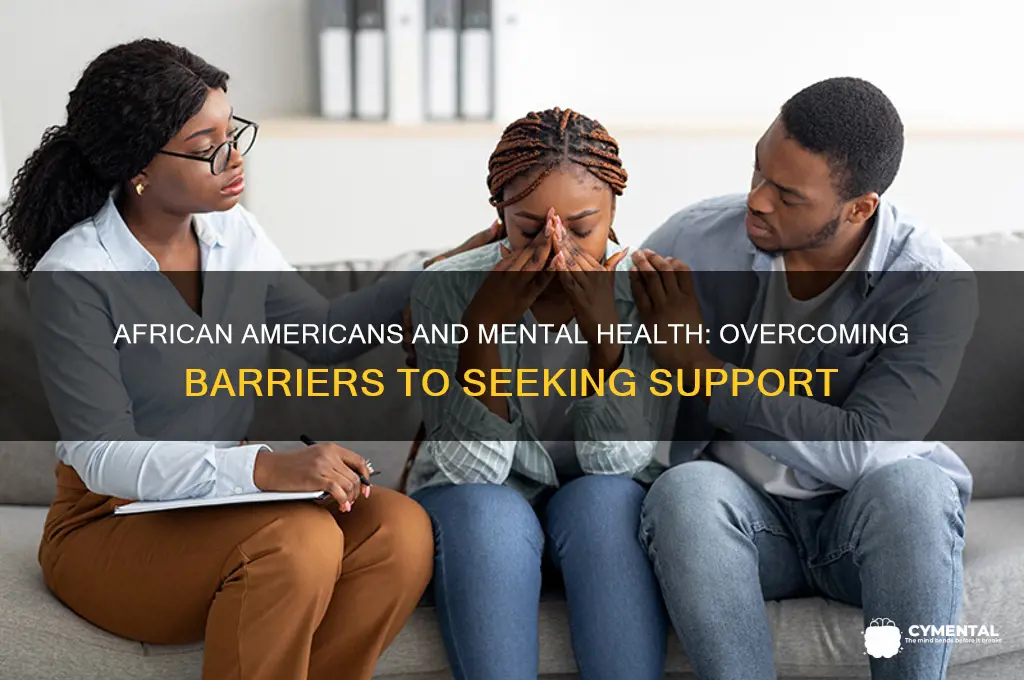
The topic of how many African Americans seek mental health help is a critical yet often overlooked issue, as it intersects with broader societal challenges such as stigma, systemic barriers, and historical mistrust of healthcare institutions. Despite growing awareness of mental health importance, studies indicate that African Americans are less likely to seek professional mental health services compared to other racial groups, often due to factors like lack of access to affordable care, cultural misconceptions about mental illness, and fear of discrimination. Understanding these disparities is essential for developing targeted interventions and fostering a more inclusive mental health care system that addresses the unique needs and experiences of the African American community.
Explore related products


What You'll Learn
- Stigma and cultural barriers to mental health care in African American communities
- Accessibility of mental health services for African Americans in urban areas
- Impact of systemic racism on African American mental health-seeking behaviors
- Role of faith and community support in African American mental health care
- Disparities in mental health treatment options for African American youth

Stigma and cultural barriers to mental health care in African American communities
African Americans are 20% more likely to experience serious mental health issues than the general population, yet they are significantly less likely to seek treatment. This disparity isn’t merely a gap in access—it’s deeply rooted in stigma and cultural barriers that discourage open dialogue and professional intervention. For instance, phrases like “pray it away” or “just stay strong” often overshadow clinical recommendations, reflecting a community-wide reluctance to acknowledge mental health struggles as legitimate medical concerns. This cultural narrative, while rooted in resilience, inadvertently perpetuates silence and suffering.
Consider the historical context: systemic racism, generational trauma, and ongoing discrimination have fostered a justified distrust of healthcare institutions among African Americans. Studies show that only one in three Black adults who need mental health care receive it, compared to one in two white adults. This isn’t solely about affordability or availability; it’s about a collective memory of medical exploitation, such as the Tuskegee Syphilis Study, which lingers in the psyche of the community. When mental health services are viewed as extensions of a historically harmful system, seeking help becomes an act of vulnerability many are unwilling to risk.
Stigma within the community further complicates matters. Mental illness is often mislabeled as a sign of weakness or a lack of faith, particularly in religious households. For example, depression might be dismissed as “the blues” or anxiety as “overthinking,” minimizing the need for professional intervention. This internalized stigma is reinforced by a lack of representation in mental health discourse—only 4% of psychologists in the U.S. are Black, creating a disconnect between providers and patients. Without culturally competent care, African Americans are less likely to engage with services that feel alienating or judgmental.
Practical steps can begin to dismantle these barriers. Community-based initiatives, such as faith-based mental health programs or peer support groups, can bridge the gap by framing mental health care as an extension of communal strength rather than individual failure. Providers can improve trust by incorporating cultural humility into their practice, acknowledging historical traumas, and involving family or community leaders in treatment plans. For individuals, starting small—like attending a single therapy session or joining a support group—can normalize the process and reduce fear of judgment.
Ultimately, addressing stigma and cultural barriers requires a dual approach: systemic change to make mental health care more accessible and culturally relevant, and grassroots efforts to shift community perceptions. Until mental health is destigmatized and seen as a vital component of overall well-being, disparities in treatment-seeking behavior will persist. The goal isn’t just to increase numbers but to create an environment where seeking help is an act of self-preservation, not a betrayal of cultural identity.
Legal Boundaries: Can You Mandate Mental Health Treatment for Your Spouse?
You may want to see also
Explore related products


Accessibility of mental health services for African Americans in urban areas
African Americans in urban areas face unique barriers to accessing mental health services, despite living in regions with higher concentrations of healthcare resources. One significant issue is the mismatch between the availability of services and their cultural relevance. Many mental health providers in cities lack training in culturally competent care, which can deter African Americans from seeking help. For instance, a study published in the *Journal of Urban Health* found that only 30% of urban mental health clinics offer services tailored to the cultural and historical experiences of African American clients. This gap often leads to misdiagnosis or inadequate treatment, discouraging individuals from returning for care.
To improve accessibility, urban mental health facilities must prioritize cultural competency training for their staff. Providers should be educated on the impact of systemic racism, intergenerational trauma, and socioeconomic stressors on mental health within the African American community. Incorporating practices like narrative therapy, which emphasizes personal storytelling, or group therapy sessions that foster community support, can make services more engaging and effective. Additionally, clinics could partner with local churches or community centers to offer mental health screenings and workshops, leveraging trusted institutions to reduce stigma and increase outreach.
Another critical factor is the affordability and location of mental health services. Urban areas often have a higher cost of living, making out-of-pocket expenses for therapy or medication prohibitive for many African Americans. Medicaid expansion in some states has helped, but coverage gaps remain, particularly for undocumented individuals or those with part-time employment. To address this, policymakers should advocate for sliding-scale fee structures and increased funding for community health centers. Mobile clinics or telehealth services could also bridge the gap, providing care directly to underserved neighborhoods without requiring lengthy commutes.
Finally, addressing the stigma surrounding mental health within the African American community is essential for increasing service utilization. Urban-based initiatives, such as peer-led support groups or social media campaigns featuring local influencers, can normalize conversations about mental health. Schools and workplaces in cities should also integrate mental health education into their programs, targeting youth and adults alike. By combining systemic changes with grassroots efforts, urban areas can create a more accessible and inclusive mental health landscape for African Americans.
Supporting Mental Health: Effective Ways to Help Someone in Need
You may want to see also
Explore related products


Impact of systemic racism on African American mental health-seeking behaviors
Systemic racism creates barriers that disproportionately deter African Americans from seeking mental health care. Historical injustices, such as the Tuskegee Syphilis Study, have fostered deep-seated mistrust in medical institutions. This legacy of exploitation, combined with ongoing racial biases in healthcare, makes many African Americans hesitant to engage with mental health services. Studies show that only one in three African Americans who need mental health care receive it, compared to one in two white Americans. This disparity highlights how systemic racism undermines access and willingness to seek help.
Consider the role of cultural stigma within the African American community. Mental health issues are often viewed as a sign of weakness or a lack of faith, discouraging open dialogue. Systemic racism exacerbates this stigma by limiting access to culturally competent care. Providers who lack understanding of African American experiences may misdiagnose or dismiss concerns, further alienating individuals. For example, symptoms of depression or anxiety may be misinterpreted as anger or aggression, leading to inappropriate treatment or avoidance of future care.
Practical steps can address these systemic issues. First, healthcare institutions must prioritize cultural competency training for providers. This includes educating staff on the historical and social contexts of African American mental health struggles. Second, community-based programs led by African American mental health professionals can foster trust and reduce stigma. For instance, initiatives like the Black Mental Health Alliance offer resources tailored to the community’s needs. Third, policymakers should expand Medicaid and fund mental health services in underserved areas, ensuring affordability and accessibility.
A comparative analysis reveals that African Americans are more likely to seek mental health support through religious institutions or informal networks rather than clinical settings. While these avenues provide comfort, they often lack the specialized care needed for severe conditions. Systemic racism limits the integration of these informal supports with formal healthcare systems, creating a gap in comprehensive care. Bridging this divide requires collaborative efforts between faith leaders, mental health professionals, and community organizers to create hybrid models of support.
Finally, addressing systemic racism’s impact on mental health-seeking behaviors demands a multifaceted approach. Advocacy for policy changes, investment in culturally sensitive care, and community engagement are essential. By dismantling structural barriers and fostering trust, African Americans can access the mental health support they deserve. This is not just a matter of healthcare equity—it’s a step toward healing generations of trauma inflicted by systemic racism.
Moving Out: A Mental Health Boost or Added Stress?
You may want to see also
Explore related products


$9.83 $16.99


Role of faith and community support in African American mental health care
African Americans are significantly less likely to seek mental health treatment compared to their white counterparts, with only about 25% receiving care for mental health issues. This disparity is influenced by systemic barriers, stigma, and a historical mistrust of healthcare institutions. However, within this gap lies a powerful resource: the role of faith and community support in fostering mental well-being. For many African Americans, churches and community networks serve as safe spaces where emotional and psychological struggles can be addressed, often in ways that traditional healthcare systems cannot.
Faith institutions, particularly Black churches, have long been pillars of support, offering not just spiritual guidance but also practical assistance and emotional solace. These spaces provide a culturally relevant framework for understanding mental health, often integrating biblical teachings with discussions on resilience, trauma, and healing. For example, programs like pastoral counseling or faith-based support groups create environments where individuals can openly discuss their struggles without fear of judgment. A study by the American Psychological Association found that African Americans who regularly attend religious services report higher levels of emotional well-being, highlighting the therapeutic potential of faith communities.
Community support extends beyond the church, encompassing grassroots organizations, cultural events, and peer networks that reinforce collective resilience. Initiatives like barbershop talks on mental health or community-led workshops on stress management are examples of how African Americans are leveraging shared cultural experiences to destigmatize mental health conversations. These efforts are particularly impactful because they are rooted in trust and familiarity, addressing mental health within the context of everyday life rather than isolating it as a clinical issue.
However, relying solely on faith and community support has limitations. While these systems provide emotional and spiritual relief, they often lack the resources to address severe mental health conditions that require professional intervention. For instance, conditions like major depressive disorder or schizophrenia may necessitate medication or therapy, which faith leaders are not equipped to provide. Bridging this gap requires collaboration between faith communities and mental health professionals to ensure individuals receive comprehensive care.
To maximize the benefits of faith and community support, practical steps can be taken. Churches can partner with mental health organizations to host workshops or provide referrals to licensed therapists. Community leaders can be trained in mental health first aid to identify and support individuals in crisis. Additionally, incorporating mental health screenings into existing community programs can help normalize the conversation and encourage early intervention. By combining the strengths of faith and community with professional expertise, African Americans can access a more holistic approach to mental health care that honors their cultural and spiritual values.
Supporting Mental Health: How to Effectively Help Someone Struggling with Illness
You may want to see also
Explore related products

$12.23 $14.99


Disparities in mental health treatment options for African American youth
African American youth face significant disparities in accessing mental health treatment, a gap that widens when considering factors like socioeconomic status, geographic location, and systemic biases. Studies show that only about 10% of African American adolescents receive mental health care, compared to 18% of their white peers. This disparity is not merely a numbers game; it reflects deeper systemic issues that hinder equitable access to care. For instance, African American youth are more likely to be misdiagnosed or undertreated due to cultural misunderstandings or biases in diagnostic tools, which are often calibrated for white populations.
One critical factor contributing to this disparity is the lack of culturally competent care. Mental health professionals often fail to address the unique experiences of African American youth, such as racial trauma, systemic discrimination, or the impact of generational poverty. For example, a therapist who does not acknowledge the psychological toll of police brutality or microaggressions may alienate a young patient, leading to disengagement from treatment. To bridge this gap, providers must integrate cultural humility into their practice, actively learning about and respecting the patient’s cultural background and lived experiences.
Another barrier is the stigma surrounding mental health within the African American community. Historically, mental health issues have been viewed as a sign of weakness or a lack of faith, discouraging youth from seeking help. Schools and community organizations can play a pivotal role in destigmatizing mental health by incorporating mental health education into curricula and hosting workshops that normalize conversations about emotional well-being. For instance, peer-led support groups or partnerships with local mental health organizations can provide safe spaces for youth to express themselves without fear of judgment.
Practical steps can also be taken to improve access to care. Telehealth services, for example, have emerged as a viable option for reaching underserved populations, particularly in rural areas where mental health providers are scarce. However, this solution requires addressing digital divides, such as ensuring access to reliable internet and devices. Additionally, schools can implement screening programs to identify at-risk youth early, offering interventions like cognitive-behavioral therapy (CBT) or mindfulness-based practices tailored to adolescents. For youth aged 12–17, CBT has shown efficacy in treating anxiety and depression, with sessions typically lasting 45–60 minutes over 12–16 weeks.
Ultimately, addressing disparities in mental health treatment for African American youth requires a multifaceted approach that tackles systemic barriers, cultural stigma, and access issues. By prioritizing culturally competent care, destigmatizing mental health, and leveraging innovative solutions like telehealth, we can begin to close the gap and ensure that all youth have the support they need to thrive.
Ownership Mentality: Driving Business Success Through Commitment and Initiative
You may want to see also
Frequently asked questions
Studies show that African Americans are less likely to seek mental health treatment compared to their White counterparts. Only about 25% of African Americans with mental health issues receive treatment, compared to 40% of Whites, due to factors like stigma, lack of access, and mistrust of the healthcare system.
Barriers include cultural stigma surrounding mental health, socioeconomic challenges, lack of access to affordable care, and historical trauma and mistrust of healthcare institutions. Additionally, the shortage of culturally competent mental health providers further discourages many from seeking help.
Yes, there is a growing trend of African Americans seeking mental health support, particularly among younger generations. Increased awareness, advocacy, and the rise of telehealth services have contributed to this shift. However, disparities in access and utilization persist.