Madison Cole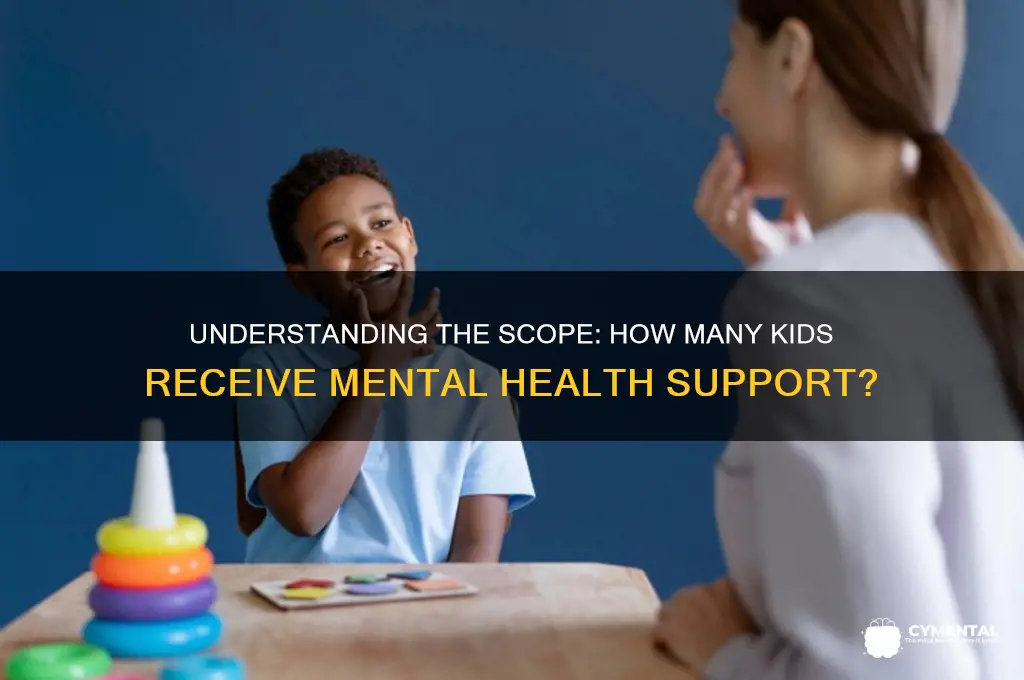
The prevalence of mental health issues among children and adolescents has become an increasingly pressing concern, prompting a closer examination of how many kids are receiving the necessary support. Recent studies indicate that a significant portion of young people worldwide struggle with conditions such as anxiety, depression, and ADHD, yet access to mental health services remains uneven. While some countries and regions have made strides in providing resources, many children still face barriers such as stigma, lack of awareness, and insufficient funding, leaving them without the help they need. Understanding the scope of this issue is crucial for policymakers, educators, and families to ensure that all children have access to effective mental health care and support systems.
Explore related products


What You'll Learn
- Access to Mental Health Services: Availability and barriers to mental health care for children
- Prevalence of Mental Health Issues: Statistics on children experiencing mental health challenges globally
- Types of Support Offered: Counseling, therapy, medication, and other interventions for kids
- Impact of Early Intervention: Benefits of timely mental health support for children’s development
- Role of Schools and Families: How schools and families contribute to children’s mental health care

Access to Mental Health Services: Availability and barriers to mental health care for children
Approximately 20% of children and adolescents worldwide experience mental health disorders, yet only a fraction receive adequate care. This disparity highlights a critical issue: access to mental health services for young people remains inconsistent and often insufficient. The availability of these services varies widely by region, socioeconomic status, and cultural factors, creating a patchwork of care that leaves many vulnerable children underserved.
One of the primary barriers to access is the shortage of mental health professionals trained to work with children. In the U.S., for example, there is one child psychiatrist for every 1,600 children, and this ratio is even more dire in rural areas. Telehealth services have emerged as a partial solution, offering remote therapy and consultations, but technological barriers and lack of insurance coverage limit their reach. Additionally, stigma surrounding mental health persists, particularly in communities where seeking help is seen as a sign of weakness, deterring families from pursuing care.
Another significant obstacle is the fragmentation of healthcare systems. Mental health services are often siloed from primary care, making it difficult for parents to navigate the system. Integrated care models, where mental health screenings and interventions are part of routine pediatric visits, show promise but are not widely implemented. Schools, which could serve as a critical access point, often lack the resources to provide comprehensive mental health support, leaving gaps that families struggle to fill.
Cost is a pervasive barrier, even in countries with robust healthcare systems. In the U.S., high out-of-pocket expenses and limited insurance coverage for mental health services disproportionately affect low-income families. Globally, many countries lack public funding for child mental health programs, forcing families to rely on private services that are often unaffordable. Financial assistance programs and sliding-scale fees exist but are underutilized due to lack of awareness or complex application processes.
To improve access, a multi-faceted approach is necessary. Policymakers must invest in training more child mental health professionals and incentivize practice in underserved areas. Schools should be equipped with mental health professionals and curricula that promote emotional well-being. Public awareness campaigns can reduce stigma and educate families about available resources. Finally, healthcare systems need to adopt integrated care models and expand telehealth options to reach children in remote or marginalized communities. Without these changes, millions of children will continue to face barriers to the care they desperately need.
Supporting Through Crisis: Essential Steps to Aid Mental Health Emergencies
You may want to see also
Explore related products


Prevalence of Mental Health Issues: Statistics on children experiencing mental health challenges globally
Globally, one in seven adolescents aged 10–19 years experiences a mental disorder, according to the World Health Organization (WHO). This staggering statistic underscores the widespread nature of mental health challenges among children, yet it represents only a fraction of the true prevalence, as many cases go unreported or undiagnosed. Anxiety and depression are the most common disorders, affecting an estimated 5% of children and adolescents worldwide. These figures highlight an urgent need for accessible mental health services tailored to younger populations, as early intervention can significantly alter long-term outcomes.
Consider the regional disparities in mental health prevalence. In high-income countries, up to 20% of adolescents experience mental health disorders, while in low- and middle-income countries, the reported rates are lower, likely due to limited access to diagnostic resources. For instance, in Africa, only 10% of children with mental health issues receive any form of treatment. This gap in care is exacerbated by cultural stigma, lack of trained professionals, and insufficient funding. Addressing these disparities requires localized strategies, such as integrating mental health education into school curricula and training community health workers to identify early warning signs.
The COVID-19 pandemic has further amplified the mental health crisis among children. UNICEF reports that globally, at least one in seven children has been directly affected by lockdowns, school closures, and social isolation, leading to increased anxiety, depression, and loneliness. For example, a study in the United States found that emergency department visits for mental health emergencies among children aged 5–11 increased by 24% during the pandemic. These findings emphasize the need for resilient mental health systems that can adapt to global crises and provide continuous support to vulnerable populations.
Despite the growing awareness of children’s mental health issues, only a small percentage receive adequate help. In the United States, for instance, 70% of children with diagnosable mental health conditions do not receive appropriate treatment. Similarly, in the UK, only 1 in 4 children with a mental health disorder is able to access specialist care. Barriers to treatment include long wait times, high costs, and a shortage of child psychiatrists. To bridge this gap, policymakers must prioritize funding for child mental health services, expand telehealth options, and promote evidence-based interventions like cognitive-behavioral therapy (CBT) and mindfulness programs in schools.
Finally, understanding the prevalence of mental health issues among children requires a shift in perspective—from viewing these challenges as individual problems to recognizing them as a global public health priority. For parents and caregivers, practical steps include monitoring changes in behavior, such as withdrawal, irritability, or declining academic performance, and seeking professional help early. Schools can play a pivotal role by implementing mental health screenings and fostering a supportive environment. By combining data-driven policies, community engagement, and early intervention, we can ensure that more children receive the mental health support they desperately need.
Nutrition's Power: How Healthy Foods Boost Mental Health and Well-being
You may want to see also
Explore related products


Types of Support Offered: Counseling, therapy, medication, and other interventions for kids
Children and adolescents facing mental health challenges have access to a variety of support options, each tailored to address specific needs. Counseling often serves as a first line of intervention, providing a safe space for young individuals to express their feelings and develop coping strategies. School counselors, for instance, may offer short-term guidance on issues like stress, bullying, or academic pressure, while specialized counselors focus on deeper emotional or behavioral concerns. This approach is particularly effective for ages 6–12, as it fosters self-awareness and communication skills during formative years.
Therapy, a more structured and long-term intervention, delves into underlying causes of mental health issues. Cognitive Behavioral Therapy (CBT) is widely used for children aged 8 and above, helping them reframe negative thought patterns. For younger children, play therapy becomes a powerful tool, allowing them to process emotions through activities like drawing or role-playing. Family therapy is another critical component, addressing relational dynamics that may contribute to a child’s struggles. Sessions typically last 45–60 minutes, with frequency depending on the severity of the case.
Medication is often considered when symptoms significantly impair daily functioning, such as in cases of severe anxiety, ADHD, or depression. Stimulants like methylphenidate (Ritalin) are commonly prescribed for ADHD in children over 6, with dosages starting as low as 5–10 mg and adjusted based on response. Antidepressants, such as fluoxetine (Prozac), may be introduced for adolescents aged 12 and older, but always under strict monitoring due to potential side effects. Parents should collaborate closely with pediatricians and psychiatrists to ensure medication is part of a comprehensive treatment plan.
Beyond traditional methods, other interventions like mindfulness, art therapy, and peer support groups offer additional avenues for healing. Mindfulness exercises, such as guided breathing or body scans, can help children as young as 4 manage anxiety. Art therapy encourages self-expression without the pressure of verbal communication, making it ideal for preteens. Peer support groups provide a sense of community, reducing feelings of isolation. These interventions are often integrated into broader treatment plans, enhancing their effectiveness by addressing emotional, creative, and social needs simultaneously.
Practical tips for parents include maintaining open communication, monitoring changes in behavior, and advocating for their child’s needs within educational and healthcare systems. Early intervention is key, as untreated mental health issues can escalate over time. By understanding the range of support available—from counseling to medication and beyond—caregivers can make informed decisions to help their children thrive.
Accessing Mental Health Care Without Insurance: Affordable Options and Resources
You may want to see also
Explore related products




Impact of Early Intervention: Benefits of timely mental health support for children’s development
Approximately 20% of children globally experience mental health challenges, yet only a fraction receive timely support. This disparity underscores the critical need for early intervention, which can significantly alter developmental trajectories. When mental health issues are addressed during childhood, the brain’s plasticity allows for more effective adaptation and recovery. For instance, children aged 6–12 who receive cognitive-behavioral therapy (CBT) for anxiety show a 60–70% reduction in symptoms within 12–16 sessions, compared to 20–30% in untreated cases. This data highlights the transformative potential of early action.
Consider the case of a 9-year-old with emerging depression. Without intervention, this child faces a 70% risk of recurrent episodes by adulthood. However, with timely support—such as a combination of play therapy and parental involvement—the risk drops to 20%. Practical steps for parents and educators include monitoring behavioral changes (e.g., withdrawal, irritability) and initiating conversations using open-ended questions like, “How does that make you feel?” Schools can integrate social-emotional learning (SEL) programs, which have been shown to improve emotional regulation in 80% of participating students within one academic year.
The benefits of early intervention extend beyond symptom reduction. Children who receive timely mental health support demonstrate improved academic performance, stronger peer relationships, and enhanced problem-solving skills. For example, a study in *JAMA Pediatrics* found that preschoolers with behavioral issues who underwent early intervention scored 15% higher in math and reading by third grade. This ripple effect emphasizes that mental health is not isolated from other developmental domains but is foundational to overall growth.
However, barriers to early intervention persist, including stigma, lack of access, and insufficient training for caregivers. To address these, policymakers should prioritize funding for school-based mental health services and mandate training for teachers in identifying early warning signs. Parents can advocate for their children by familiarizing themselves with local resources, such as telehealth platforms offering low-cost therapy sessions or community-based workshops on child mental health. The takeaway is clear: investing in early intervention is not just a moral imperative but a practical strategy for fostering resilient, thriving individuals.
Unleashing Creativity: A Powerful Tool to Combat Mental Illness
You may want to see also
Explore related products




Role of Schools and Families: How schools and families contribute to children’s mental health care
Schools and families are the front lines of mental health care for children, yet their roles often remain fragmented and underutilized. Data shows that 20% of children experience a mental health disorder each year, but only about half receive treatment. This gap highlights the critical need for integrated support systems within schools and homes. Schools, where children spend a significant portion of their day, are uniquely positioned to identify early signs of distress through behavioral changes, academic decline, or social withdrawal. Teachers and counselors can act as first responders, offering immediate interventions like counseling referrals or accommodations under a 504 plan or IEP. However, their effectiveness hinges on adequate training in mental health literacy and access to resources, which remain inconsistent across districts.
Families, on the other hand, provide the emotional foundation for children’s mental well-being. Research indicates that secure attachment and open communication within families reduce the risk of anxiety and depression by up to 30%. Yet, many parents feel ill-equipped to address mental health issues, citing stigma, lack of knowledge, or fear of overreacting. Practical steps for families include establishing routines that prioritize sleep (9–11 hours for school-aged children), limiting screen time to less than two hours daily, and modeling healthy coping strategies like mindfulness or journaling. Parent-teacher partnerships are equally vital; regular check-ins can align home and school strategies, ensuring consistency in support.
A comparative analysis reveals that schools in countries like Finland and Singapore integrate mental health into their curricula, treating it as essential as physical education. These systems report lower rates of childhood anxiety and higher resilience. In contrast, U.S. schools often treat mental health as an add-on, with only 20% of teachers receiving training in youth mental health first aid. Families in collectivist cultures, such as Japan, emphasize community support, which reduces parental burden and fosters early intervention. These examples underscore the need for systemic change, not just individual effort.
To bridge the gap, schools should adopt a tiered approach: universal screenings for all students, targeted interventions for at-risk groups, and intensive support for those in crisis. Families can complement this by advocating for mental health education in schools and accessing community resources like local support groups or telehealth services. A cautionary note: overreliance on schools or families alone can lead to burnout or missed opportunities. Collaboration is key—schools provide structure and early detection, while families offer emotional continuity and advocacy. Together, they create a safety net that ensures no child slips through the cracks.
Lithium's Role in Stabilizing Mood and Enhancing Mental Health
You may want to see also
Frequently asked questions
According to the World Health Organization (WHO), approximately 1 in 7 adolescents aged 10–19 years experiences a mental disorder globally, but only a fraction of them receive appropriate mental health help.
Studies indicate that roughly 20% of children and adolescents with mental health issues in the U.S. receive treatment, leaving a significant gap in care.
Yes, children from lower-income families or marginalized communities are less likely to access mental health services due to barriers like cost, lack of insurance, and limited availability of resources.
The demand for mental health services for children has increased significantly, particularly after the COVID-19 pandemic, which exacerbated issues like anxiety, depression, and loneliness among young people.
Common barriers include stigma surrounding mental health, lack of awareness about available services, limited access to mental health professionals, and financial constraints.