Caleb Wright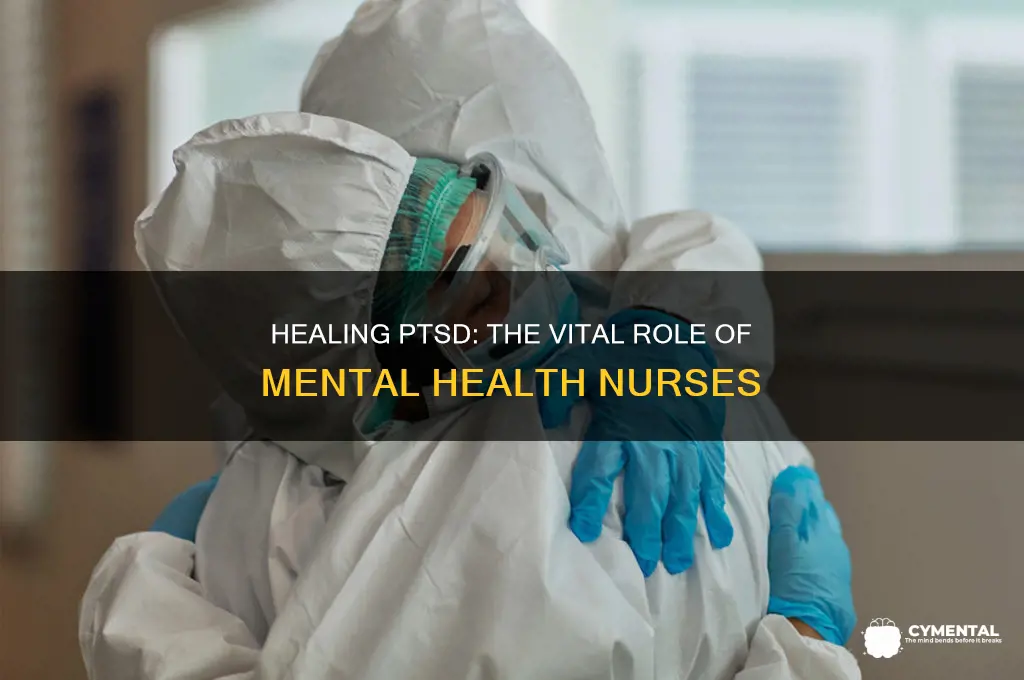
Mental health nurses play a crucial role in supporting individuals with Post-Traumatic Stress Disorder (PTSD) by providing compassionate, evidence-based care tailored to their unique needs. Through a combination of therapeutic interventions, such as cognitive-behavioral therapy (CBT), eye movement desensitization and reprocessing (EMDR), and mindfulness techniques, these nurses help patients process traumatic memories, manage symptoms like flashbacks and anxiety, and develop coping strategies. They also offer emotional support, education about PTSD, and assistance in rebuilding daily functioning and social connections. By fostering a safe and trusting environment, mental health nurses empower PTSD patients to regain control over their lives and work toward long-term recovery.
| Characteristics | Values |
|---|---|
| Assessment & Diagnosis | Conduct thorough assessments to identify PTSD symptoms, triggers, and co-occurring conditions. Utilize standardized tools and interviews to gather information about the patient's trauma history, current functioning, and support systems. |
| Psychoeducation | Provide education about PTSD, its symptoms, and treatment options. Help patients understand the connection between their trauma and current difficulties, normalizing their experiences and reducing self-blame. |
| Trauma-Focused Therapy | Implement evidence-based therapies like Cognitive Behavioral Therapy (CBT), Eye Movement Desensitization and Reprocessing (EMDR), or Prolonged Exposure (PE) under supervision. These therapies help patients process traumatic memories, challenge negative beliefs, and develop coping mechanisms. |
| Safety Planning | Collaborate with patients to develop personalized safety plans to manage distressing symptoms and prevent self-harm or suicidal ideation. Identify triggers, coping strategies, and emergency contacts. |
| Medication Management | Monitor medication adherence and side effects for patients prescribed psychotropic medications. Collaborate with psychiatrists to adjust dosages and ensure optimal symptom management. |
| Emotional Support & Validation | Provide a safe and non-judgmental space for patients to express their emotions and experiences. Offer empathy, validation, and encouragement throughout the recovery process. |
| Coping Skills Training | Teach and reinforce coping strategies such as relaxation techniques, mindfulness, grounding exercises, and distress tolerance skills to help patients manage anxiety, flashbacks, and other PTSD symptoms. |
| Sleep Hygiene | Address sleep disturbances, a common symptom of PTSD, by educating patients on sleep hygiene practices and providing interventions to improve sleep quality. |
| Social Support & Connection | Encourage participation in support groups, community activities, or social networks to combat isolation and foster a sense of belonging. |
| Collaboration & Coordination | Work collaboratively with other healthcare professionals, such as psychiatrists, social workers, and occupational therapists, to ensure comprehensive care and coordinate services. |
| Advocacy | Advocate for patients' needs and rights within the healthcare system and community, ensuring access to appropriate resources and services. |
| Crisis Intervention | Provide crisis intervention and stabilization during acute episodes of distress or suicidal ideation, connecting patients to emergency services if necessary. |
| Long-Term Support | Offer ongoing support and monitoring to prevent relapse and promote sustained recovery. Help patients develop relapse prevention plans and connect them with long-term resources. |
Explore related products


What You'll Learn

Active listening and empathy
Active listening is a cornerstone of effective communication, especially in mental health nursing, where patients with PTSD often struggle to express their trauma. Unlike casual conversations, active listening requires the nurse to focus entirely on the patient’s words, tone, and body language, signaling genuine engagement. For instance, repeating back key phrases like, “It sounds like you feel overwhelmed when crowds trigger your flashbacks,” validates the patient’s experience and fosters trust. This technique isn’t about solving problems immediately but creating a safe space for the patient to explore their emotions without judgment.
Empathy, the ability to understand and share another’s feelings, transforms active listening into a therapeutic tool. For PTSD patients, empathy means acknowledging their trauma without minimizing it. A nurse might say, “I can’t imagine how terrifying that must have been for you,” instead of, “At least you’re safe now.” This distinction is crucial because PTSD patients often fear their experiences are dismissed or misunderstood. Empathy bridges this gap, showing the patient their pain is recognized and respected.
Combining active listening and empathy involves specific strategies. First, maintain eye contact and use open body language to convey attentiveness. Second, ask open-ended questions like, “How does that memory affect you today?” to encourage deeper reflection. Third, avoid interrupting or rushing the patient, even if their narrative seems disjointed. For example, a PTSD patient might describe a nightmare in fragmented sentences; the nurse should patiently allow them to finish before responding. These techniques require practice but are essential for building rapport and facilitating healing.
One practical example is the use of grounding techniques during sessions. If a patient becomes distressed while recounting a traumatic event, an empathetic nurse might say, “Take a deep breath with me—inhale for four counts, exhale for six.” This not only demonstrates active listening by addressing the patient’s immediate distress but also models coping strategies. Over time, such interventions can help patients manage symptoms independently, a critical step in their recovery journey.
Ultimately, active listening and empathy are not just skills but acts of compassion that humanize the therapeutic process. For PTSD patients, who often feel isolated by their trauma, these approaches can be transformative. They remind patients that their voices matter, their pain is valid, and they are not alone. In a field where progress is often measured in small steps, these foundational practices lay the groundwork for meaningful, long-term healing.
Mental Health Care Access: How Many Americans Receive Adequate Support?
You may want to see also
Explore related products


Trauma-informed care techniques
Mental health nurses play a pivotal role in supporting PTSD patients by employing trauma-informed care techniques, which prioritize safety, trust, and empowerment. One foundational technique is creating a safe environment, both physically and emotionally. This involves ensuring the clinical space is calm, predictable, and free from triggers. Nurses can achieve this by using soft lighting, minimizing noise, and allowing patients to choose where they sit during sessions. For example, a nurse might offer a patient the option to face the door or sit in a corner to enhance their sense of control and security. This simple adjustment can significantly reduce anxiety and foster engagement in therapy.
Another critical technique is using clear, transparent communication to build trust. PTSD patients often struggle with hypervigilance and mistrust due to past trauma. Nurses should avoid ambiguous language or sudden changes in plans, as these can trigger distress. Instead, they should provide detailed explanations of procedures, ask for consent before physical contact, and respect the patient’s right to decline. For instance, before taking vital signs, a nurse might say, “I’m going to check your blood pressure now. It will take about a minute, and I’ll let you know when I’m done.” This approach reduces unpredictability and empowers the patient to feel in control.
Grounding techniques are also essential tools in trauma-informed care. These techniques help patients reconnect with the present moment when they experience flashbacks or dissociation. Nurses can teach patients the 5-4-3-2-1 method, which involves identifying five things they can see, four they can touch, three they can hear, two they can smell, and one they can taste. For example, during a therapy session, a nurse might guide a patient through this exercise if they appear distressed, saying, “Let’s focus on what’s around us right now. Can you name five things you see in the room?” This practical skill can be practiced daily, even outside clinical settings, to manage symptoms effectively.
Finally, collaborative goal-setting empowers PTSD patients by involving them in their treatment plans. Nurses should work with patients to identify realistic, achievable goals that align with their values and priorities. For instance, a patient might set a goal to attend one social event per week or practice deep breathing exercises twice daily. Nurses can support this process by providing resources, such as apps for mindfulness or local support groups, and regularly reviewing progress. This collaborative approach not only enhances motivation but also reinforces the patient’s autonomy and resilience.
Incorporating these trauma-informed care techniques—creating a safe environment, using transparent communication, teaching grounding techniques, and collaborative goal-setting—mental health nurses can significantly improve outcomes for PTSD patients. By addressing the unique needs of trauma survivors with sensitivity and skill, nurses foster healing, trust, and long-term recovery.
Mental Disorders and Bankruptcy: Unraveling the Complex Financial Impact
You may want to see also
Explore related products


Crisis intervention strategies
Mental health nurses play a pivotal role in crisis intervention for PTSD patients, often serving as the first line of defense during acute episodes. One critical strategy is the implementation of grounding techniques, which help patients reconnect with their immediate environment when they are experiencing flashbacks or dissociation. For instance, the "5-4-3-2-1" method—identifying five things you can see, four you can touch, three you can hear, two you can smell, and one you can taste—can anchor a patient in the present moment. This technique is particularly effective because it engages multiple senses, disrupting the cycle of intrusive thoughts. Nurses should practice these techniques with patients during stable periods to ensure familiarity and effectiveness during crises.
Another essential strategy is the use of de-escalation communication, which involves active listening, validation, and non-judgmental language. For example, a nurse might say, "I can see how upset you are, and that’s completely understandable. Let’s take a few slow breaths together." This approach helps patients feel heard and supported, reducing the intensity of their emotional response. It’s crucial for nurses to maintain a calm demeanor, as patients often mirror their caregiver’s emotional state. Research shows that de-escalation techniques can decrease the need for physical restraint or medication in crisis situations, making them a cornerstone of trauma-informed care.
Pharmacological interventions, while not always the first choice, can be necessary in severe cases. Rapid-acting medications like intranasal benzodiazepines (e.g., midazolam) or hydroxyzine may be used to manage acute agitation or panic. However, nurses must carefully weigh the risks and benefits, as these medications can have sedative effects and may not be suitable for all patients, particularly those with a history of substance use. Dosages should be individualized, and patients should be monitored closely for adverse reactions. The goal is to stabilize the patient enough to engage in therapeutic interventions, not to sedate them into compliance.
A comparative analysis of crisis intervention strategies reveals that peer support can be uniquely effective for PTSD patients. Nurses can facilitate connections with peer support specialists—individuals with lived experience of trauma recovery—who can offer empathy and practical advice in ways that clinical staff cannot. Studies indicate that peer support reduces feelings of isolation and increases treatment adherence. For example, a PTSD patient might benefit from hearing how a peer managed a similar crisis, such as using a pre-arranged "safe word" with loved ones to signal the need for grounding assistance.
Finally, crisis planning is a proactive strategy that empowers patients to manage their symptoms before they escalate. Nurses can assist patients in creating a written crisis plan that includes triggers, coping strategies, emergency contacts, and preferred interventions. This plan should be reviewed regularly and shared with the patient’s support network. For instance, a patient might include a step like, "If I’m hyperventilating, remind me to breathe into a paper bag for 10 minutes." By involving patients in the planning process, nurses foster a sense of agency and preparedness, which can mitigate the severity of future crises.
Nutrition's Power: How Healthy Foods Boost Mental Health and Well-being
You may want to see also
Explore related products




Cognitive behavioral therapy support
Cognitive Behavioral Therapy (CBT) is a cornerstone in treating PTSD, and mental health nurses play a pivotal role in delivering this evidence-based intervention. Unlike traditional talk therapy, CBT is structured, goal-oriented, and time-limited, typically spanning 12 to 16 sessions. Nurses trained in CBT help patients identify and challenge maladaptive thought patterns—such as catastrophic thinking or self-blame—that perpetuate trauma-related distress. For instance, a PTSD patient who avoids crowded places due to fear of danger might work with a nurse to reframe the thought, "I’m unsafe in crowds," to, "I feel anxious, but I am safe." This process, known as cognitive restructuring, is often paired with exposure therapy, where patients gradually confront feared situations in a controlled manner.
The nurse’s role extends beyond session facilitation; they act as educators, teaching patients practical skills to manage symptoms. For example, a nurse might introduce grounding techniques—like the 5-4-3-2-1 method (naming five things you see, four you can touch, etc.)—to help patients stay present during flashbacks. Homework assignments, such as thought records or behavioral experiments, reinforce learning between sessions. Research shows that CBT reduces PTSD symptoms in 50-60% of patients, with effects lasting up to a year post-treatment. However, success hinges on the therapeutic alliance, making the nurse’s empathy, consistency, and ability to tailor interventions to individual needs critical.
While CBT is effective, it’s not without challenges. Patients may resist confronting traumatic memories, or they might struggle with homework compliance. Nurses must balance encouragement with sensitivity, ensuring patients feel supported rather than pressured. For younger patients (adolescents aged 13-18), CBT is often adapted to include family involvement, as parental support can enhance engagement and outcomes. Additionally, nurses should monitor for comorbid conditions like depression or substance use, which can complicate treatment and may require integrated care approaches.
A key advantage of CBT is its adaptability across settings. Mental health nurses can deliver CBT in hospitals, clinics, or even via telehealth, making it accessible to patients in remote areas. Group CBT sessions, led by a nurse, offer another option, fostering peer support and reducing stigma. For veterans with PTSD, trauma-focused CBT (TF-CBT) is particularly effective, incorporating prolonged exposure to traumatic memories alongside cognitive restructuring. Nurses trained in TF-CBT follow a manualized protocol, ensuring consistency while allowing flexibility to address unique patient needs.
In conclusion, cognitive behavioral therapy support provided by mental health nurses is a dynamic, patient-centered approach to PTSD treatment. By combining structured techniques with compassionate care, nurses empower patients to reclaim control over their thoughts and lives. While CBT requires commitment from both patient and provider, its proven efficacy and adaptability make it an invaluable tool in the mental health nurse’s arsenal. Through education, skill-building, and therapeutic alliance, nurses not only alleviate PTSD symptoms but also equip patients with lifelong coping strategies.
Supporting Student Well-being: Practical Strategies for Schools to Enhance Mental Health
You may want to see also
Explore related products


Mindfulness and grounding exercises
PTSD patients often experience intrusive thoughts, flashbacks, and hyperarousal, making it difficult to stay present. Mindfulness and grounding exercises can serve as anchors, pulling them back to the here and now. These techniques, when taught and practiced with the guidance of a mental health nurse, can become powerful tools for managing symptoms and fostering resilience.
Mindfulness, the practice of paying attention to the present moment without judgment, helps PTSD patients observe their thoughts and feelings as passing events rather than overwhelming realities. Grounding exercises, on the other hand, engage the senses to reconnect individuals with their immediate surroundings, disrupting the cycle of distress. Together, these approaches empower patients to regain a sense of control and stability.
Implementing Mindfulness: A Step-by-Step Guide
Begin with short, structured mindfulness sessions, ideally 5–10 minutes daily. Guide patients through focused breathing exercises, encouraging them to notice the sensation of air entering and leaving their bodies. Progress to body scans, where attention is systematically directed to different parts of the body, noting sensations without judgment. For patients who struggle with sitting still, incorporate mindful movement, such as yoga or walking, emphasizing awareness of each step or stretch. Use apps or recorded meditations as supplementary tools, but ensure they are tailored to the patient’s comfort level and triggers.
Grounding Techniques: Practical and Immediate Relief
Grounding exercises are particularly effective during moments of acute distress. The "5-4-3-2-1" technique is a simple yet powerful method: identify five things you can see, four you can touch, three you can hear, two you can smell, and one you can taste. This sensory engagement redirects focus away from distressing thoughts. Another technique is the "ice plunge," where holding ice in the hand provides a sharp, immediate physical sensation that grounds the individual in the present. For patients with tactile sensitivities, adapt by using warm water or a textured object instead.
Challenges and Adaptations
While mindfulness and grounding exercises are beneficial, they are not without challenges. Some PTSD patients may find mindfulness practices triggering, as heightened awareness can bring suppressed emotions to the surface. In such cases, start with shorter sessions and gradually increase duration. For grounding exercises, avoid techniques that rely on senses that may be associated with trauma (e.g., certain smells or sounds). Mental health nurses should monitor patients closely, offering reassurance and modifying techniques as needed to ensure safety and comfort.
The Long-Term Impact: Building Resilience Through Practice
Consistent practice of mindfulness and grounding exercises can lead to significant improvements in PTSD symptom management. Patients often report reduced frequency and intensity of flashbacks, improved emotional regulation, and a greater ability to engage in daily activities. These techniques complement other therapeutic interventions, such as cognitive-behavioral therapy, by providing patients with immediate coping strategies. By integrating mindfulness and grounding into their routine, individuals can cultivate a sense of agency over their mental health, transforming these exercises from temporary relief to long-term tools for healing.
Meditation's Mental Benefits: Enhancing Mindfulness, Reducing Stress, and Improving Focus
You may want to see also
Frequently asked questions
A mental health nurse provides direct care, monitoring, and support for PTSD patients, including administering treatment plans, educating patients about their condition, and helping manage symptoms through therapeutic interventions.
A mental health nurse can teach coping strategies, such as grounding techniques, breathing exercises, and mindfulness, while also monitoring medication adherence and side effects to ensure comprehensive symptom management.
While mental health nurses do not typically provide formal therapy, they can facilitate therapeutic activities, support patients in trauma-informed care, and collaborate with therapists to reinforce treatment goals.
A mental health nurse can de-escalate crises by using calming techniques, assessing safety risks, and connecting patients to immediate resources, such as crisis hotlines or emergency services.
Mental health nurses educate patients about PTSD, its causes, triggers, and treatment options, empowering them to understand their condition and actively participate in their recovery process.


![First Honey Wound Healing Ointment [ 1oz - 28.4g ] | 100% Active Leptospermum | Fast Relief & Skin Repair | Manuka Honey from New Zealand | Antibiotic Free Burn Care, Scar Gel, Dressing Aid](https://m.media-amazon.com/images/I/71UM74F73hL._AC_UL320_.jpg)