Madison Cole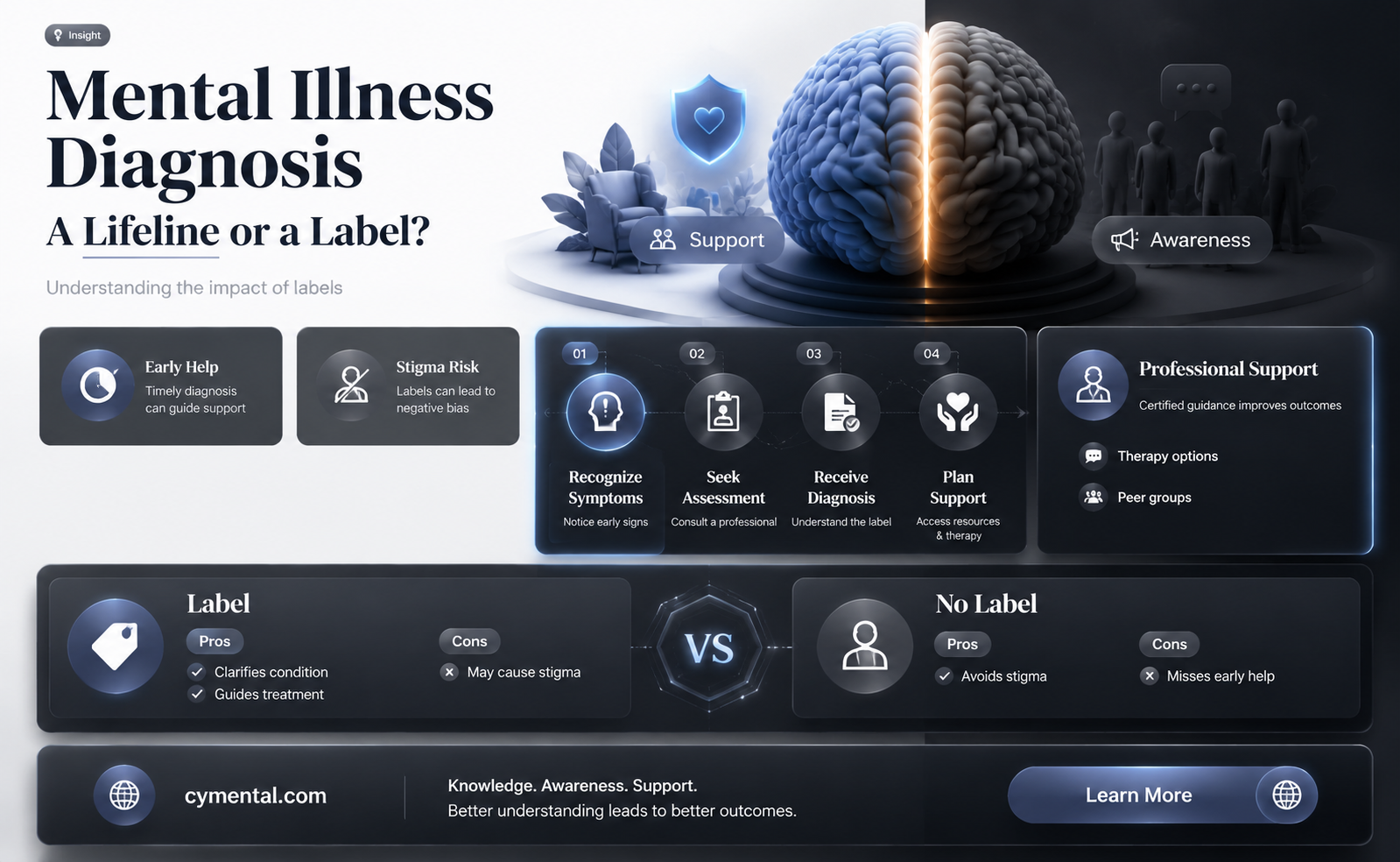
The question of whether a mental illness diagnosis helps or hurts is a complex and multifaceted issue that sparks considerable debate among mental health professionals, patients, and advocates. On one hand, a diagnosis can provide validation, access to treatment, and a framework for understanding one’s struggles, potentially reducing stigma and fostering a sense of community. It can also guide tailored interventions, such as therapy or medication, which may improve quality of life. However, on the other hand, a diagnosis can sometimes lead to labeling, self-limitation, or societal discrimination, potentially exacerbating feelings of hopelessness or isolation. Additionally, misdiagnosis or overdiagnosis can result in inappropriate treatment and long-term harm. Ultimately, the impact of a mental illness diagnosis depends on how it is delivered, received, and utilized within the broader context of an individual’s life and support systems.
Explore related products


What You'll Learn
- Stigma and Discrimination: Diagnosis can lead to societal prejudice, affecting relationships, employment, and self-esteem
- Access to Treatment: A diagnosis often opens doors to tailored therapies, medications, and support systems
- Self-Understanding: Labeling symptoms can provide clarity, reduce confusion, and foster self-compassion
- Over-Medicalization: Risk of reducing complex experiences to diagnoses, ignoring social or environmental factors
- Insurance and Legal Impact: Diagnosis affects coverage, disability claims, and legal protections or limitations

Stigma and Discrimination: Diagnosis can lead to societal prejudice, affecting relationships, employment, and self-esteem
A mental health diagnosis can be a double-edged sword, offering both clarity and a potential target for societal prejudice. While it provides a framework for understanding and managing symptoms, the label itself can become a catalyst for stigma and discrimination, permeating various aspects of an individual's life. This is particularly evident in the realms of personal relationships, professional environments, and one's own self-perception.
The Impact on Social Connections: Imagine a scenario where a person, recently diagnosed with depression, confides in a close friend. Instead of receiving empathy, they are met with a shift in behavior, as the friend now treats them with cautious distance, fearing the unknown depths of this 'illness'. This reaction is not uncommon, as mental health stigma often leads to social exclusion. Research suggests that individuals with mental health diagnoses may experience a reduction in social invitations, romantic opportunities, and overall social support, primarily due to the misconceptions and fear surrounding these conditions. For instance, a study published in the *Journal of Health and Social Behavior* found that people with depression were more likely to be avoided by peers, even when their symptoms were well-managed.
Employment Challenges: The workplace is another arena where the effects of stigma can be profoundly felt. Despite legal protections in many countries, discrimination against those with mental health diagnoses persists. Employers might hesitate to hire or promote individuals with a known mental health history, fearing absenteeism, reduced productivity, or potential liability. This bias can limit career prospects and contribute to financial instability. A practical tip for individuals in this situation is to familiarize themselves with their rights under relevant legislation, such as the Americans with Disabilities Act (ADA) in the US, which prohibits discrimination based on mental health conditions. Knowing these rights can empower individuals to advocate for themselves and seek legal recourse if necessary.
Self-Stigma and Its Consequences: Perhaps the most insidious form of discrimination is the internalized stigma that individuals may direct towards themselves. Self-stigma can lead to a diminished sense of self-worth, causing people to question their abilities and value. For instance, a young adult diagnosed with anxiety might start believing they are incapable of handling university-level studies, thus limiting their educational pursuits. This internal struggle can result in a self-fulfilling prophecy, where the individual's actions align with their stigmatized beliefs, ultimately hindering personal growth and recovery.
Breaking the Cycle: Addressing this issue requires a multi-faceted approach. Public education campaigns play a crucial role in dispelling myths and fostering understanding. By sharing accurate information and personal stories, these initiatives can humanize mental health struggles and challenge stereotypes. Additionally, implementing anti-stigma training in schools, workplaces, and healthcare settings can help identify and counteract discriminatory behaviors. On an individual level, seeking support groups or therapy can provide tools to manage self-stigma and build resilience against external prejudice.
In summary, while a mental illness diagnosis can offer a path towards treatment and self-understanding, it also exposes individuals to the risk of societal prejudice. This stigma can manifest in social rejection, employment barriers, and self-doubt, ultimately impacting overall well-being. Recognizing these potential consequences is the first step towards creating a more supportive environment, where a diagnosis becomes a tool for empowerment rather than a source of discrimination.
Drawing for Mental Health: Creative Therapy Benefits and Techniques
You may want to see also
Explore related products


$86.18 $100.95


Access to Treatment: A diagnosis often opens doors to tailored therapies, medications, and support systems
A mental health diagnosis is often the key that unlocks a world of targeted treatment options. Without it, individuals may find themselves navigating a maze of generic interventions, none of which fully address their unique struggles. Consider anxiety disorders: a diagnosis of generalized anxiety disorder (GAD) versus social anxiety disorder (SAD) dictates vastly different therapeutic approaches. Cognitive Behavioral Therapy (CBT) for GAD focuses on challenging catastrophic thinking patterns, while exposure therapy for SAD gradually desensitizes individuals to feared social situations. This specificity is crucial, as misaligned treatment can lead to frustration and a sense of hopelessness.
A diagnosis also grants access to medications tailored to the condition. For instance, selective serotonin reuptake inhibitors (SSRIs) like fluoxetine (Prozac) are commonly prescribed for depression and anxiety, with dosages typically starting at 20mg daily for adults and adjusted based on response and tolerance. However, for bipolar disorder, mood stabilizers such as lithium are essential, as antidepressants alone can trigger manic episodes. This precision in pharmacotherapy underscores the importance of an accurate diagnosis in ensuring safe and effective treatment.
Beyond therapies and medications, a diagnosis connects individuals to specialized support systems. Support groups, for example, are often condition-specific, providing a space where members share experiences and strategies relevant to their particular challenges. A person diagnosed with obsessive-compulsive disorder (OCD) would benefit far more from an OCD support group than a general mental health group, as the former offers insights into managing compulsions and resisting intrusive thoughts. Similarly, family members can access education and resources tailored to their loved one’s condition, fostering a more informed and empathetic home environment.
However, accessing these treatments is not without challenges. Stigma, cost, and availability of services can create barriers, particularly in underserved communities. For instance, a rural resident diagnosed with schizophrenia may face long travel distances to see a psychiatrist or limited access to second-generation antipsychotics like olanzapine, which are often preferred for their reduced side effects compared to older medications. Telehealth and sliding-scale clinics are emerging solutions, but awareness and infrastructure remain inconsistent.
Ultimately, while a diagnosis is a critical first step, it is the gateway to a continuum of care that transforms lives. For a teenager diagnosed with ADHD, a combination of stimulant medication (e.g., methylphenidate, starting at 5–10mg daily), behavioral therapy, and school accommodations can dramatically improve focus and academic performance. For a veteran with PTSD, trauma-focused therapies like Eye Movement Desensitization and Reprocessing (EMDR) paired with peer support groups can foster healing and resilience. The diagnosis is not the end—it is the beginning of a personalized journey toward recovery and well-being.
Arrested or Assisted: Mental Illness and the Justice System's Dilemma
You may want to see also
Explore related products


Self-Understanding: Labeling symptoms can provide clarity, reduce confusion, and foster self-compassion
Receiving a mental illness diagnosis can feel like a double-edged sword. While it may bring relief to finally have a name for your struggles, it can also trigger fear of stigma and uncertainty about the future. However, one powerful benefit often overlooked is the potential for self-understanding. Labeling symptoms isn't about boxing yourself in; it's about unlocking a door to clarity, compassion, and ultimately, healing.
Imagine experiencing persistent sadness, anxiety, and fatigue for years, feeling like you're somehow "broken" or simply not trying hard enough. A diagnosis of depression, for instance, can shift this narrative. It's not about weakness or personal failure; it's about a recognized condition with biological, psychological, and environmental factors. This reframing allows for self-compassion, replacing self-blame with understanding and the realization that you're not alone.
This newfound clarity extends beyond emotional relief. It empowers individuals to make informed decisions about treatment. Knowing you have generalized anxiety disorder, for example, might lead you to explore cognitive-behavioral therapy, a proven effective treatment. Understanding the cyclical nature of bipolar disorder can encourage adherence to medication regimens, crucial for managing mood episodes.
Instead of feeling overwhelmed by a jumble of symptoms, a diagnosis provides a roadmap, guiding individuals towards evidence-based interventions and support systems.
It's crucial to remember that a diagnosis is a tool, not a definition. It doesn't dictate your worth or limit your potential. It's a starting point, a lens through which to understand your experiences and take control of your mental health journey. Embracing self-understanding through diagnosis fosters resilience, allowing individuals to navigate challenges with greater awareness, compassion, and hope.
Medications for Mental Illness: A Helpful Treatment or Not?
You may want to see also
Explore related products


Over-Medicalization: Risk of reducing complex experiences to diagnoses, ignoring social or environmental factors
The over-medicalization of mental health risks simplifying intricate human experiences into neat diagnostic labels, often sidelining the profound impact of social and environmental contexts. For instance, a teenager exhibiting symptoms of depression might be prescribed antidepressants without exploring contributing factors like familial conflict, academic pressure, or socioeconomic instability. While medication can alleviate symptoms, it rarely addresses the root causes, leaving individuals dependent on pharmacological solutions rather than fostering resilience or systemic change. This reductionist approach not only overlooks the complexity of human suffering but also perpetuates a cycle of treatment that may never truly heal.
Consider the case of anxiety disorders, often treated with benzodiazepines like Xanax or SSRIs like Zoloft. While these medications can provide short-term relief, they do not account for stressors such as workplace toxicity, racial discrimination, or housing insecurity. A 2020 study published in *The Lancet* highlighted that up to 40% of mental health cases are significantly influenced by social determinants, yet only 10% of treatment plans incorporate these factors. This disparity underscores the danger of over-medicalization: it treats symptoms as isolated biological phenomena rather than manifestations of broader systemic issues.
To counteract this trend, mental health practitioners should adopt a biopsychosocial approach, integrating therapy, medication, and environmental interventions. For example, a patient diagnosed with PTSD might benefit from trauma-focused cognitive behavioral therapy (TF-CBT) alongside community support groups and advocacy for safer living conditions. Similarly, prescribing lower dosages of medication (e.g., starting with 10mg of escitalopram instead of 20mg) while prioritizing lifestyle changes—such as regular exercise, mindfulness practices, and social reconnection—can reduce reliance on pharmaceuticals. This holistic strategy acknowledges that mental health is not solely a chemical imbalance but a dynamic interplay of biology, psychology, and environment.
However, implementing such an approach requires systemic change. Healthcare providers must be trained to assess social determinants of health during diagnosis, and policymakers should fund initiatives addressing housing, education, and employment disparities. For instance, Finland’s need-based school system, which provides additional resources to underprivileged students, has been linked to lower rates of adolescent depression. By shifting focus from individual pathology to societal responsibility, we can mitigate the risks of over-medicalization and create more sustainable solutions for mental well-being.
Ultimately, the question is not whether diagnoses or medications are inherently harmful but whether they are being used as crutches to avoid confronting deeper issues. A diagnosis should serve as a starting point for understanding, not the endpoint for treatment. By acknowledging the limitations of medicalized approaches and embracing multifaceted interventions, we can ensure that mental health care is both compassionate and effective, honoring the complexity of the human experience.
Nourish Your Mind: How Healthy Eating Boosts Mental Well-Being
You may want to see also
Explore related products



Insurance and Legal Impact: Diagnosis affects coverage, disability claims, and legal protections or limitations
A mental illness diagnosis can be a double-edged sword when it comes to insurance and legal matters. On one hand, it provides access to necessary treatment and accommodations; on the other, it may trigger exclusions, higher premiums, or stigmatization. For instance, a diagnosis of major depressive disorder can qualify an individual for disability benefits under the Americans with Disabilities Act (ADA), offering job protections and reasonable accommodations. However, the same diagnosis might lead to denied life insurance coverage or inflated rates, as insurers often view mental health conditions as high-risk factors. This paradox underscores the need to navigate these systems strategically.
Consider the process of filing a disability claim. A formal diagnosis is often the linchpin for approval, as it provides medical evidence of impairment. For example, a 35-year-old software engineer diagnosed with generalized anxiety disorder might need to submit detailed medical records, including therapy notes and medication histories, to prove their inability to perform job functions. Without this documentation, the claim could be denied. Yet, even with a diagnosis, insurers may scrutinize the severity of the condition, requiring additional assessments or limiting benefit periods. Practical tip: Keep a comprehensive record of all medical appointments, treatments, and their impact on daily functioning to strengthen your case.
Legal protections also hinge on diagnosis but come with caveats. Under the ADA, individuals with diagnosed mental illnesses are entitled to workplace accommodations, such as flexible hours or a quiet workspace. However, employers are not required to provide accommodations if they create "undue hardship." For instance, a retail worker with PTSD might request a role away from customer-facing duties, but if the employer can prove this disrupts operations, the request could be denied. Similarly, in legal proceedings, a mental illness diagnosis can be a mitigating factor in sentencing, but it may also lead to involuntary commitment or guardianship if deemed a risk to self or others.
The insurance landscape further complicates matters with its varying policies and exclusions. Health insurance plans often cover mental health treatment, but the extent depends on the diagnosis and plan specifics. For example, a diagnosis of bipolar disorder might grant access to specialized therapy and medication, but pre-existing condition clauses could limit coverage if the diagnosis predates the policy. Life and long-term care insurance are even more restrictive; a history of schizophrenia or severe depression could result in policy denial or exorbitant premiums. To mitigate this, individuals can explore group insurance plans through employers or professional organizations, which often have fewer exclusions.
In conclusion, while a mental illness diagnosis can unlock critical insurance and legal benefits, it also exposes individuals to potential drawbacks. The key lies in understanding the nuances of each system and advocating proactively. For disability claims, thorough documentation is essential; for workplace accommodations, clear communication with employers is vital; and for insurance, researching policies and leveraging group options can minimize risks. By approaching these systems with knowledge and strategy, individuals can maximize protections while mitigating the unintended consequences of a diagnosis.
AI's Role in Mental Health: Support, Challenges, and Future Possibilities
You may want to see also
Frequently asked questions
While stigma can occur, a diagnosis often provides access to support, treatment, and a sense of validation, which can outweigh negative perceptions.
A diagnosis itself does not inherently limit opportunities, but discrimination or self-doubt may arise. Legal protections and self-advocacy can help mitigate these challenges.
No, a diagnosis is simply a tool to identify and address challenges. It does not define a person’s worth or strength.
Yes, a diagnosis can foster understanding and empathy in relationships, as it provides clarity and a framework for communication and support.
While a diagnosis is a crucial first step, the effectiveness of treatment depends on factors like access to care, personalized approaches, and individual commitment to therapy or medication.