Madison Cole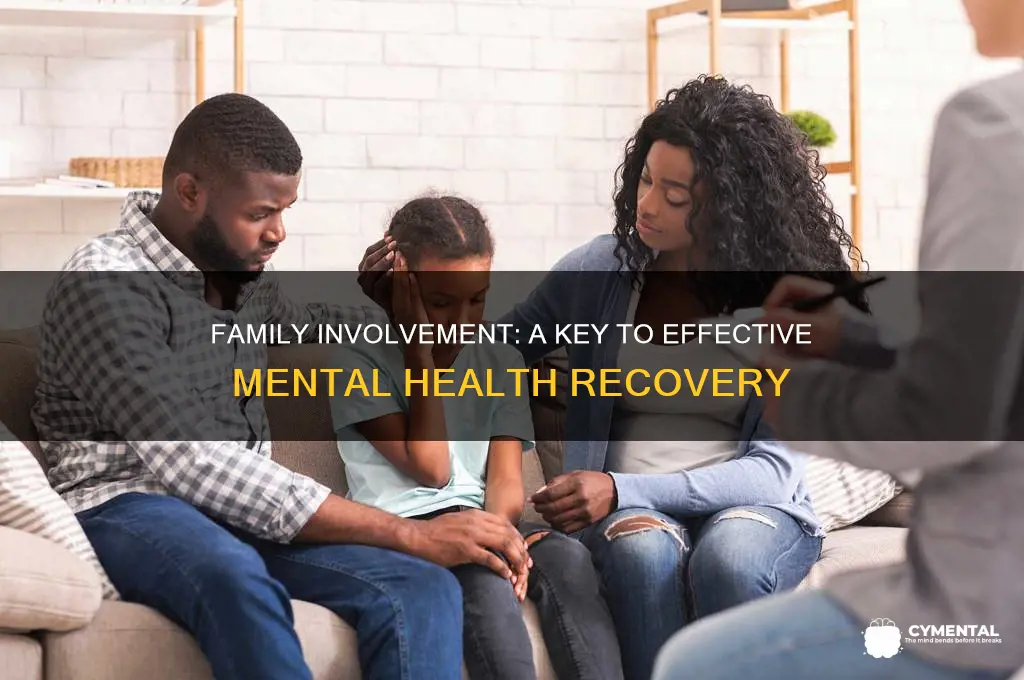
Family involvement plays a crucial role in mental health treatment by providing emotional support, fostering a sense of belonging, and enhancing the effectiveness of therapeutic interventions. When family members actively participate in the recovery process, they can help reduce stigma, improve communication, and create a stable environment that promotes healing. Their understanding and encouragement can motivate individuals to adhere to treatment plans, while shared coping strategies and education about mental health conditions empower both the individual and their loved ones. Additionally, family-based approaches often address systemic issues within the household, leading to long-term improvements in mental well-being and overall family dynamics. This collaborative effort not only strengthens relationships but also reinforces the individual’s resilience and ability to manage their mental health challenges.
Explore related products


$18.59 $19.95


$14.91 $20


What You'll Learn
- Emotional Support: Family provides comfort, reduces isolation, and fosters a sense of belonging during treatment
- Improved Communication: Open dialogue helps patients express feelings and enhances understanding among family members
- Medication Adherence: Family reminders and supervision increase consistency in taking prescribed mental health medications
- Early Intervention: Families often notice symptoms early, leading to timely professional help and better outcomes
- Reduced Stigma: Family acceptance and education combat societal stigma, encouraging patients to seek and continue treatment

Emotional Support: Family provides comfort, reduces isolation, and fosters a sense of belonging during treatment
Family involvement in mental health treatment is a cornerstone of emotional support, offering a unique blend of comfort, connection, and understanding that professional care alone cannot replicate. When a loved one is navigating the complexities of mental health challenges, the presence of family can act as a stabilizing force, reducing feelings of isolation and fostering a sense of belonging. This emotional scaffolding is particularly crucial during treatment, as it helps individuals feel grounded and supported, even in the face of uncertainty and vulnerability.
Consider the practical ways families can provide this support. Simple yet intentional actions, such as active listening without judgment, can make a profound difference. For instance, a family member who asks open-ended questions like, “How are you feeling today?” and truly listens to the response validates the individual’s experience. This validation counters the stigma often associated with mental health struggles, encouraging openness and trust. Additionally, creating a routine that includes shared activities—whether a weekly meal, a walk, or a movie night—can establish predictability and normalcy, which are often disrupted during treatment.
The impact of family emotional support extends beyond the individual to the treatment process itself. Research shows that when families are actively involved, treatment adherence improves significantly. For example, a study published in the *Journal of Family Psychology* found that patients with family support were 50% more likely to attend therapy sessions consistently. This is not merely about physical presence but about the emotional reassurance that comes from knowing one’s family is invested in their recovery. Such involvement can also help mental health professionals tailor treatment plans more effectively, as family insights often reveal nuances of the individual’s condition that might otherwise go unnoticed.
However, providing emotional support is not without its challenges. Families must navigate their own emotions while supporting their loved one, which can be exhausting. To sustain this role, families should prioritize self-care, such as setting boundaries and seeking support from peer groups or counselors. For example, a parent supporting a teenager with anxiety might allocate specific times for check-ins while also ensuring they have time for their own hobbies or relaxation. This balance prevents burnout and models healthy coping mechanisms for the individual in treatment.
In conclusion, the emotional support provided by family during mental health treatment is a powerful tool that reduces isolation, fosters belonging, and enhances overall well-being. By combining empathy, practical actions, and self-awareness, families can create an environment that complements professional care and accelerates recovery. This collaborative approach not only benefits the individual but also strengthens family bonds, turning a challenging journey into an opportunity for collective growth.
Crafting for Calm: How Creative Hobbies Boost Mental Well-Being
You may want to see also
Explore related products


Improved Communication: Open dialogue helps patients express feelings and enhances understanding among family members
Family involvement in mental health treatment often hinges on the quality of communication within the household. When dialogue is open and non-judgmental, patients feel safer expressing their emotions, fears, and struggles. This is particularly critical for adolescents and young adults, who may internalize stigma or fear rejection. For instance, a study published in *Family Process* found that families who engaged in regular, structured conversations about mental health saw a 30% increase in treatment adherence and a 25% reduction in symptom severity over six months. The key lies in creating a space where vulnerability is met with empathy, not criticism.
To foster this environment, families can adopt specific strategies. Start by setting aside dedicated time for conversations, free from distractions like phones or television. Use "I" statements to express concerns, such as "I’ve noticed you seem more withdrawn lately," which reduces defensiveness. For younger patients (ages 10–14), incorporating visual aids like mood charts or journals can help them articulate feelings they struggle to verbalize. For older teens and adults, framing discussions around shared goals—like improving sleep or reducing anxiety—can make the process feel collaborative rather than confrontational.
However, open dialogue isn’t without challenges. Families must navigate the fine line between support and intrusion, especially when dealing with conditions like depression or schizophrenia, where patients may resist engagement. One practical tip is to involve a neutral third party, such as a therapist, to mediate early conversations and model effective communication techniques. For example, a therapist might teach family members how to reflect back what they hear ("It sounds like you’re feeling overwhelmed") to validate the patient’s experience without offering unsolicited advice.
The benefits of improved communication extend beyond the patient. Family members often report reduced stress and increased confidence in their ability to provide support. A comparative analysis in *Psychiatric Services* revealed that families who participated in communication-focused interventions experienced a 40% decrease in caregiver burden compared to those who did not. This highlights the reciprocal nature of open dialogue: as patients feel more understood, their families become more equipped to offer meaningful help.
Ultimately, the goal is to transform communication from a source of tension into a tool for healing. This requires patience, practice, and a willingness to adapt. Families should view setbacks not as failures but as opportunities to refine their approach. By prioritizing open dialogue, they create a foundation for sustained recovery, turning the family unit into a powerful ally in the mental health journey.
Healthy Habits, Happy Mind: Boosting Mental Health Through Lifestyle Choices
You may want to see also
Explore related products


Medication Adherence: Family reminders and supervision increase consistency in taking prescribed mental health medications
One of the most significant challenges in mental health treatment is ensuring patients consistently take their prescribed medications. Non-adherence can lead to symptom relapse, hospitalization, and reduced quality of life. Family involvement, particularly through reminders and supervision, emerges as a practical solution to this pervasive issue. Studies show that patients with active family support are 30-50% more likely to adhere to their medication regimens compared to those without. This isn’t about control; it’s about creating a structured environment where recovery can thrive.
Consider a 25-year-old diagnosed with schizophrenia who struggles to remember their daily 10mg dose of aripiprazole. Without consistent intake, their symptoms—hallucinations and disorganized thinking—reemerge within weeks. A family member, trained to provide gentle reminders, can use tools like pill organizers or smartphone alarms to ensure the medication is taken at the same time each day. For younger patients, such as adolescents on selective serotonin reuptake inhibitors (SSRIs), parental supervision during dosing can prevent accidental overdose or missed doses, which are critical during the initial weeks of treatment.
However, family reminders alone aren’t enough. Effective supervision involves understanding the medication’s purpose, potential side effects, and the importance of adherence. For instance, a parent of a teenager on fluoxetine (20mg daily) should monitor for mood changes or physical symptoms like nausea, reporting these to the healthcare provider. This proactive approach not only ensures adherence but also fosters trust between the patient, family, and treatment team. For older adults, such as a 65-year-old on lithium for bipolar disorder, family members can track blood levels and dosage adjustments, reducing the risk of toxicity.
Critics might argue that such involvement infringes on autonomy, particularly for adults. Yet, when implemented collaboratively, family support enhances, rather than undermines, independence. A key strategy is to involve the patient in creating a reminder system they find acceptable. For example, a 40-year-old with depression might prefer a shared digital calendar with medication alerts, while a 16-year-old may respond better to a visual chart in their room. The goal is to make adherence a shared responsibility, not a burden.
In conclusion, family reminders and supervision are not just about nagging or policing; they are about building a safety net for consistent medication adherence. By combining practical tools, education, and empathy, families can significantly improve treatment outcomes. Whether it’s a daily text message, a weekly check-in, or a simple question like, “Did you take your medication today?”—these small actions can make a profound difference in mental health recovery.
Supporting a Friend with Mental Illness: Practical Ways to Help
You may want to see also
Explore related products





Early Intervention: Families often notice symptoms early, leading to timely professional help and better outcomes
Family members are often the first to detect subtle changes in behavior, mood, or functioning that signal an emerging mental health issue. A teenager withdrawing from social activities, a spouse exhibiting persistent irritability, or an elderly parent struggling with memory lapses—these shifts, though seemingly minor, can be early indicators of conditions like depression, anxiety, or cognitive decline. This unique vantage point positions families as critical allies in early intervention, a phase where treatment is most effective.
Consider the case of adolescent mental health. Studies show that parents often identify symptoms of anxiety or depression in their children an average of 6–12 months before formal diagnosis. This window of opportunity is crucial: early intervention with cognitive-behavioral therapy (CBT) or family-based interventions during this period can reduce symptom severity by up to 50% in cases of mild to moderate depression (source: *Journal of the American Academy of Child & Adolescent Psychiatry*). For psychotic disorders, family involvement in early detection and treatment adherence has been linked to a 50% reduction in relapse rates over two years (source: *British Journal of Psychiatry*).
However, translating early observation into effective action requires a structured approach. Families should be educated on red flags specific to different age groups: in children (ages 6–12), look for sudden academic decline or somatic complaints; in adolescents (13–18), monitor changes in sleep patterns or social media usage; in adults, note persistent fatigue or altered communication styles. Equally important is knowing when to escalate concerns: if symptoms persist for over two weeks, interfere with daily functioning, or include self-harm ideation, immediate professional consultation is imperative.
A practical strategy is the "3-Step Family Action Plan": 1. Document observable changes (e.g., "John has skipped three soccer practices this month"); 2. Engage the individual in a non-confrontational conversation using "I" statements ("I’ve noticed you seem less energetic lately"); 3. Connect with a mental health professional, leveraging resources like the National Alliance on Mental Illness (NAMI) Helpline for guidance. Families should also advocate for integrated care models, such as the NAVIGATE program for first-episode psychosis, which incorporates family education and support to improve recovery rates by 30–40%.
While early intervention is powerful, it’s not without challenges. Stigma, lack of awareness, and fear of overreacting can delay action. Families must balance vigilance with empathy, avoiding blame or minimization. Ultimately, their role is not to diagnose but to act as a bridge—connecting subtle signs to professional expertise, where timely interventions can alter the trajectory of mental health outcomes.
Supporting Immigrant Youth: Social Work Strategies for Mental Disability Care
You may want to see also
Explore related products


Reduced Stigma: Family acceptance and education combat societal stigma, encouraging patients to seek and continue treatment
Family acceptance acts as a powerful antidote to the corrosive effects of societal stigma surrounding mental health. When a person struggling with mental illness feels understood and supported by their loved ones, the shame and self-doubt fueled by external judgment begin to erode. This internal shift is crucial, as stigma often manifests as a barrier to seeking help, with individuals fearing rejection or discrimination. A study published in the *Journal of Family Psychology* found that family acceptance significantly predicted higher treatment adherence rates among individuals with depression, highlighting the tangible impact of a supportive home environment.
Imagine a young adult battling anxiety, constantly bombarded by societal messages equating mental illness with weakness. Now picture this same individual finding solace in a family who openly discusses mental health, normalizes therapy, and celebrates progress. This stark contrast illustrates how family acceptance can directly counter the isolating effects of stigma, fostering a sense of belonging and encouraging the individual to actively engage with treatment.
Education plays a pivotal role in dismantling stigma within families. When family members understand the biological, psychological, and social factors contributing to mental illness, they are less likely to attribute symptoms to personal failings or moral shortcomings. This shift in perspective fosters empathy and compassion, replacing judgment with support. For instance, a parent who learns about the neurological basis of schizophrenia is more likely to view their child's symptoms as manifestations of an illness rather than deliberate acts of rebellion. This understanding encourages open communication, allowing the individual to express their struggles without fear of blame or misunderstanding.
NAMI (National Alliance on Mental Illness) offers a wealth of resources for families, including educational workshops, support groups, and online materials. Engaging with these resources empowers families to become active participants in their loved one's recovery, equipping them with the knowledge and tools to combat stigma effectively.
The impact of reduced stigma extends beyond the individual, influencing the entire treatment process. When families are actively involved and supportive, healthcare professionals can collaborate more effectively, tailoring treatment plans to the individual's unique needs and circumstances. This collaborative approach fosters a sense of trust and partnership, enhancing treatment adherence and overall outcomes. A study published in the *Journal of Clinical Psychiatry* found that family involvement in treatment planning for individuals with bipolar disorder led to significant improvements in medication compliance and symptom management.
Ultimately, family acceptance and education serve as a powerful catalyst for breaking down the walls of stigma surrounding mental health. By creating a safe and supportive environment, families empower their loved ones to seek help without fear of judgment, actively participate in treatment, and embark on a path towards recovery. This transformative process not only benefits the individual but also contributes to a more compassionate and understanding society, where mental health is treated with the same urgency and respect as physical health.
Supporting Adult Children: Strategies for Parents Navigating Mental Illness
You may want to see also
Frequently asked questions
Family involvement improves treatment effectiveness by providing emotional support, helping monitor symptoms, and ensuring consistency in care. Families can also offer valuable insights into the individual’s history and triggers, which aids in personalized treatment planning.
Yes, family participation can reduce stigma by fostering understanding and empathy. When families are educated about mental health, they can challenge misconceptions and create a supportive environment that encourages open communication.
Families play a crucial role in relapse prevention by recognizing early warning signs, promoting adherence to treatment plans, and creating a stable, low-stress home environment. Their ongoing support helps individuals maintain progress and manage challenges effectively.
Family involvement can be integrated through family therapy sessions, education programs, and regular communication with healthcare providers. Including families in treatment planning ensures a collaborative approach that addresses the needs of both the individual and their support system.