Madison Cole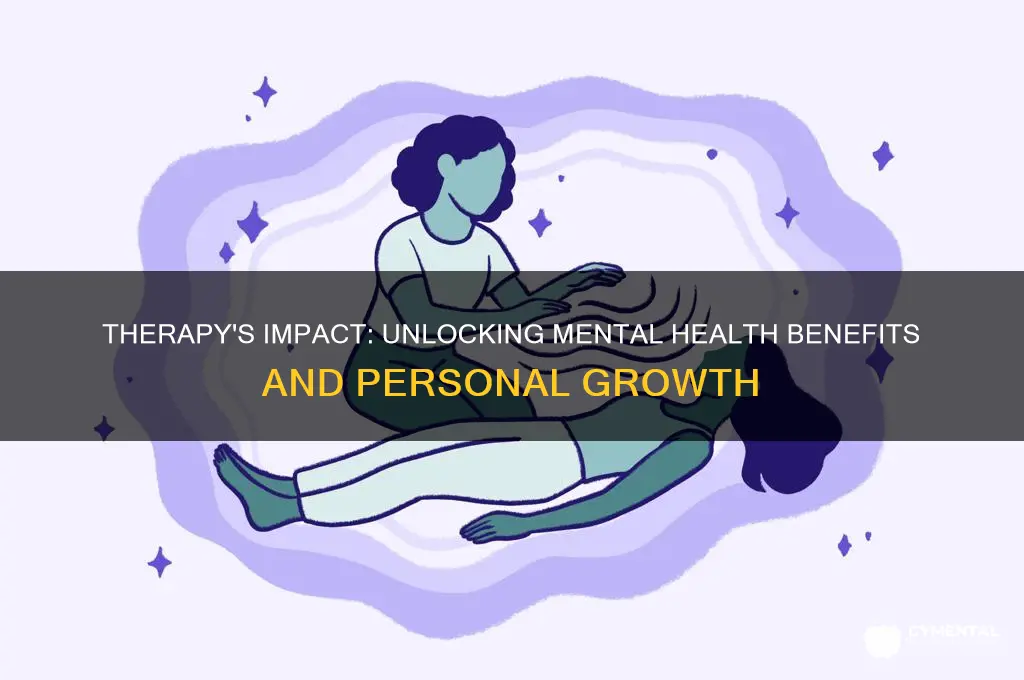
Therapy has emerged as a cornerstone in addressing mental health challenges, offering individuals a structured and supportive environment to explore their thoughts, emotions, and behaviors. Through evidence-based approaches like cognitive-behavioral therapy (CBT), dialectical behavior therapy (DBT), and psychodynamic therapy, individuals can gain insights into their struggles, develop coping strategies, and foster resilience. Research consistently demonstrates that therapy can significantly reduce symptoms of anxiety, depression, and other mental health disorders, while also improving overall well-being and quality of life. By providing a safe space for self-reflection and growth, therapy empowers individuals to navigate life’s complexities and build healthier relationships with themselves and others, making it an invaluable tool in the pursuit of mental health and emotional stability.
| Characteristics | Values |
|---|---|
| Effectiveness | Therapy is highly effective for mental health; approximately 75% of individuals benefit from psychotherapy, with many experiencing significant symptom reduction. |
| Types of Therapy | Cognitive Behavioral Therapy (CBT) is one of the most effective, reducing symptoms in 50-75% of cases. Other effective types include Dialectical Behavior Therapy (DBT), Psychodynamic Therapy, and Interpersonal Therapy. |
| Duration | Short-term therapy (8-12 sessions) can lead to noticeable improvements, while long-term therapy may be needed for chronic conditions. |
| Mental Disorders | Effective for depression, anxiety, PTSD, OCD, bipolar disorder, and eating disorders. CBT is particularly effective for anxiety and depression. |
| Cost | Varies widely; average cost per session ranges from $60 to $250. Insurance often covers therapy, reducing out-of-pocket expenses. |
| Accessibility | Teletherapy has increased accessibility, with 70% of therapists offering online sessions. However, barriers like cost and stigma persist. |
| Patient Outcomes | 50% of patients show improvement after 8 sessions; 75% improve by the end of treatment. Relapse rates are lower with therapy compared to medication alone. |
| Combination with Medication | Therapy combined with medication is more effective than either alone, especially for severe depression and anxiety. |
| Long-Term Benefits | Therapy provides lasting benefits, with many individuals maintaining improvements years after treatment ends. |
| Stigma Reduction | Public perception of therapy has improved, with 89% of Americans viewing therapy as effective, reducing stigma and increasing utilization. |
Explore related products




What You'll Learn
- Effectiveness of Therapy: Research shows therapy significantly reduces symptoms of anxiety, depression, and PTSD
- Types of Therapy: CBT, DBT, and psychodynamic therapy offer unique benefits for mental health
- Long-Term Benefits: Therapy fosters resilience, coping skills, and improved emotional regulation over time
- Accessibility Challenges: Cost, stigma, and availability limit therapy access for many individuals
- Therapy vs. Medication: Combining therapy with medication often yields better mental health outcomes

Effectiveness of Therapy: Research shows therapy significantly reduces symptoms of anxiety, depression, and PTSD
Therapy isn't just a buzzword—it's a proven tool for managing mental health conditions. Research consistently demonstrates its effectiveness in reducing symptoms of anxiety, depression, and PTSD. For instance, cognitive-behavioral therapy (CBT), a common therapeutic approach, has been shown to decrease anxiety symptoms by 50-75% in patients after 12-16 sessions. This isn't a quick fix but a structured process that rewires thought patterns and behaviors, offering long-term relief.
Consider the case of PTSD. A meta-analysis of trauma-focused therapies, such as Eye Movement Desensitization and Reprocessing (EMDR) and Prolonged Exposure (PE), found that 60-80% of participants experienced significant symptom reduction after 8-12 sessions. These therapies work by helping individuals process traumatic memories in a safe environment, reducing their emotional charge. For those aged 18-65, starting therapy within 3-6 months of trauma exposure can prevent chronic PTSD development, highlighting the importance of timely intervention.
Depression, too, responds well to therapeutic interventions. Interpersonal Psychotherapy (IPT) and CBT are particularly effective, with studies showing a 50% remission rate after 12-16 weeks of treatment. Combining therapy with medication can further enhance outcomes, especially for moderate to severe cases. Practical tips for maximizing therapy benefits include setting clear goals, practicing skills between sessions, and maintaining open communication with your therapist.
While therapy’s effectiveness is clear, it’s not one-size-fits-all. Factors like therapist-client rapport, treatment adherence, and individual readiness play critical roles. For example, younger adults (18-30) often respond better to shorter, goal-oriented therapies, while older adults (50+) may benefit from longer-term, insight-focused approaches. Tailoring therapy to individual needs ensures the best possible outcomes.
Incorporating therapy into a mental health regimen requires commitment but yields measurable results. Whether you’re dealing with anxiety, depression, or PTSD, research underscores therapy’s power to alleviate symptoms and improve quality of life. Start by consulting a mental health professional to determine the right type and duration of therapy for your specific needs. The evidence is clear: therapy works, and its impact can be life-changing.
Shiatsu Therapy: A Natural Approach to Mental Health and Wellness
You may want to see also
Explore related products

$6.79 $14.99


$10.88 $15.99

Types of Therapy: CBT, DBT, and psychodynamic therapy offer unique benefits for mental health
Therapy’s effectiveness in improving mental health is well-documented, but not all approaches are created equal. Cognitive Behavioral Therapy (CBT), Dialectical Behavior Therapy (DBT), and psychodynamic therapy each target distinct aspects of mental health, offering tailored benefits for different needs. Understanding these differences can help individuals choose the right approach for their specific challenges.
CBT: The Problem-Solver
CBT is structured, goal-oriented, and time-limited, typically spanning 12 to 20 sessions. It focuses on identifying and changing negative thought patterns and behaviors that contribute to mental health issues. For example, someone with anxiety might learn to challenge catastrophic thinking ("What if I fail?") by replacing it with evidence-based reasoning ("I’ve succeeded before, and I can prepare"). Studies show CBT reduces symptoms of depression and anxiety by 50–75% in adults, making it a first-line treatment for conditions like generalized anxiety disorder and major depressive disorder. Practical tips include keeping a thought journal and practicing mindfulness to reinforce new cognitive habits.
DBT: The Emotion Regulator
DBT, originally designed for borderline personality disorder, is particularly effective for individuals struggling with emotional dysregulation and self-harm. It combines CBT techniques with mindfulness practices, teaching skills like distress tolerance and interpersonal effectiveness. A typical DBT program includes weekly individual therapy, group skills training, and phone coaching for crises. For instance, someone prone to emotional outbursts might use the "DEAR MAN" technique to assertively communicate needs without escalating conflict. Research indicates DBT reduces self-harm behaviors by up to 50% and improves emotional stability in adolescents and adults. Its structured format makes it ideal for those needing both skill-building and emotional support.
Psychodynamic Therapy: The Insight Builder
Unlike CBT and DBT, psychodynamic therapy is open-ended and explores unconscious patterns rooted in early life experiences. Sessions often involve free association and dream analysis to uncover underlying conflicts. For example, a person with recurring relationship issues might discover unresolved childhood attachment patterns influencing their behavior. While less structured, this approach fosters deep self-awareness and long-term change. Studies show it’s particularly effective for chronic depression and personality disorders, with benefits often emerging after 12–24 sessions. However, it requires patience and a willingness to confront uncomfortable emotions, making it better suited for those seeking transformative rather than quick-fix solutions.
Choosing the Right Fit
The choice of therapy depends on the individual’s goals and challenges. CBT is ideal for those seeking practical tools to address specific symptoms, while DBT suits individuals needing both emotional regulation and crisis management. Psychodynamic therapy is best for those ready to explore deep-seated issues for lasting change. Combining approaches—such as using CBT for symptom management and psychodynamic therapy for insight—can also be effective. Ultimately, the unique benefits of each modality ensure that therapy remains a versatile and powerful tool for mental health improvement.
Move to Thrive: Physical Activity's Impact on Mental Well-Being
You may want to see also
Explore related products


Long-Term Benefits: Therapy fosters resilience, coping skills, and improved emotional regulation over time
Therapy isn’t a quick fix; it’s a long-term investment in mental health. Research shows that consistent engagement in therapeutic practices, such as cognitive-behavioral therapy (CBT) or dialectical behavior therapy (DBT), can rewire neural pathways over time. For instance, a study published in *Psychotherapy and Psychosomatics* found that individuals who completed 12 to 16 sessions of CBT demonstrated measurable changes in brain activity related to emotional processing. This neurological adaptation underscores why therapy’s benefits compound—it doesn’t just address symptoms; it reshapes how the brain responds to stress and adversity.
Consider resilience as a muscle: it strengthens with use. Therapy provides a structured environment to practice confronting challenges, whether through role-playing scenarios, journaling prompts, or exposure exercises. For example, a 30-year-old with generalized anxiety disorder might work with a therapist to gradually face feared situations, starting with smaller tasks like initiating a difficult conversation and progressing to larger ones like public speaking. Over 6 to 12 months, this systematic approach not only reduces anxiety but also builds a reservoir of confidence that extends beyond the therapy room. The takeaway? Resilience isn’t innate—it’s cultivated through deliberate, repeated effort.
Coping skills acquired in therapy are tools, not temporary bandages. A therapist might teach a teenager mindfulness techniques to manage exam stress, such as 5-minute breathing exercises before each study session. Initially, these practices feel awkward or ineffective, but with consistent use—say, 3 to 4 times daily for 2 months—they become second nature. Unlike generic advice like “stay positive,” these skills are tailored to the individual’s needs and context. A meta-analysis in *Clinical Psychology Review* highlights that such personalized coping strategies reduce relapse rates in depression and anxiety by up to 40% over 2 years, proving their durability.
Emotional regulation, another cornerstone of therapy, transforms how individuals navigate life’s highs and lows. Take the case of a 45-year-old professional who struggles with anger outbursts. Through emotion-focused therapy, they learn to identify triggers (e.g., feeling dismissed in meetings) and apply de-escalation techniques, such as counting to 10 or using “I” statements. After 8 months, not only do their workplace conflicts decrease, but they also report feeling more in control of their emotions overall. This isn’t about suppressing feelings—it’s about understanding and channeling them constructively, a skill that improves relationships and overall well-being.
The long-term benefits of therapy are clear, but they require commitment. Think of it as learning a language: sporadic attendance yields limited results, while regular practice leads to fluency. For optimal outcomes, aim for weekly sessions for at least 3 to 6 months, followed by biweekly or monthly maintenance sessions. Combine this with daily micro-practices, like journaling or 10-minute mindfulness exercises, to reinforce what’s learned. Therapy’s true power lies in its ability to equip individuals with the tools to not just survive but thrive—a process that unfolds over time, one session, one skill, one insight at a time.
Apple Cider Vinegar and Mental Health: Fact or Fiction?
You may want to see also
Explore related products


Accessibility Challenges: Cost, stigma, and availability limit therapy access for many individuals
Therapy’s effectiveness in improving mental health is well-documented, yet millions remain unable to access it due to systemic barriers. Cost is the most immediate obstacle: in the U.S., a single therapy session averages $100–$200 without insurance, and even with coverage, high deductibles or copays can make regular attendance unsustainable. For low-income individuals, this expense often competes with basic needs like rent or groceries, forcing them to choose between financial stability and mental health care. Meanwhile, in countries with public healthcare, long wait times—sometimes exceeding six months—delay critical treatment, worsening conditions like depression or anxiety. These financial and structural hurdles disproportionately affect marginalized communities, perpetuating inequities in mental health outcomes.
Stigma compounds these challenges, acting as an invisible barrier that discourages individuals from seeking help. In many cultures, admitting to mental health struggles is seen as a sign of weakness or failure, particularly among men and older adults. For example, a 2021 study found that 40% of men avoided therapy due to fear of judgment, while in collectivist societies, family shame often prevents individuals from pursuing treatment. Even when therapy is affordable and available, this internalized stigma can render it inaccessible. Employers and schools rarely address this issue, leaving individuals to navigate these societal pressures alone, further isolating them from potential support.
Availability of therapists is another critical issue, particularly in rural or underserved areas. In the U.S., 158 million people live in regions with a shortage of mental health professionals, forcing some to travel hours for care or settle for inconsistent telehealth options. Globally, the problem is starker: the World Health Organization reports that 75% of people in low-income countries receive no mental health treatment, often due to a near-total lack of providers. Even in urban centers, specialized therapists—those trained in trauma, LGBTQ+ issues, or cultural-specific care—are scarce, leaving many without appropriate support. This scarcity is exacerbated by high burnout rates among mental health professionals, further shrinking the available pool.
Addressing these barriers requires multifaceted solutions. Sliding-scale fees, government subsidies, and employer-sponsored mental health programs can alleviate financial strain, while public campaigns can challenge stigma by normalizing therapy as a routine aspect of self-care. Expanding telehealth services and training more providers in underserved areas could improve availability, though these measures must be paired with efforts to retain therapists in the field. Ultimately, dismantling these accessibility challenges is not just a matter of policy but of recognizing mental health care as a fundamental human right—one that should be as accessible as physical health care. Without such changes, therapy’s potential to transform lives will remain out of reach for far too many.
Pottery Therapy: Crafting Calm and Healing Minds Through Clay Creation
You may want to see also
Explore related products



Therapy vs. Medication: Combining therapy with medication often yields better mental health outcomes
Therapy and medication are often pitted against each other in mental health treatment, but research consistently shows that combining the two can produce more significant and lasting improvements. For instance, a study published in *JAMA Psychiatry* found that patients with depression who received both cognitive-behavioral therapy (CBT) and antidepressants (such as SSRIs at a standard dose of 20–40 mg daily) experienced a 60% remission rate, compared to 40% for medication alone and 43% for therapy alone. This synergy occurs because medication can stabilize brain chemistry, reducing symptoms like anxiety or low mood, while therapy addresses underlying thought patterns and behaviors, equipping individuals with long-term coping strategies.
Consider the case of a 32-year-old with generalized anxiety disorder. A psychiatrist might prescribe a low dose of an SSRI (e.g., sertraline 50 mg daily) to manage physiological symptoms like racing heart and insomnia. Simultaneously, a therapist could use CBT techniques to challenge catastrophic thinking and introduce mindfulness exercises. Over 12 weeks, the medication alleviates the immediate distress, allowing the patient to engage more effectively in therapy sessions. By week 16, they report not only reduced anxiety but also improved problem-solving skills and resilience, outcomes less likely with either approach in isolation.
However, combining therapy and medication isn’t a one-size-fits-all solution. For adolescents (ages 13–17), therapy often takes precedence due to concerns about medication side effects and developing brains. For example, a teen with mild to moderate depression might start with interpersonal therapy (IPT) to address relationship issues, while medication is reserved for severe cases or when therapy alone proves insufficient. Adults over 65, on the other hand, may require lower medication doses (e.g., half the standard dose of an SSRI) due to metabolic changes, paired with therapy tailored to life transitions or grief.
Practical tips for maximizing this combination include maintaining open communication between your therapist and psychiatrist to ensure treatment alignment. For instance, if a patient on an SNRI (like venlafaxine 75 mg daily) reports increased irritability, the therapist can incorporate anger management techniques while the psychiatrist monitors dosage. Additionally, patients should track symptoms daily using apps or journals to identify patterns and adjust treatment accordingly. Consistency is key—skipping therapy sessions or medication doses can disrupt progress, particularly in the first 6–8 weeks when changes are most fragile.
Ultimately, the goal of combining therapy and medication is not just symptom reduction but holistic recovery. While medication can provide a biochemical foundation, therapy fosters self-awareness and skill-building, reducing the likelihood of relapse. For example, a patient with panic disorder might use benzodiazepines (e.g., clonazepam 0.5 mg as needed) for acute attacks while learning exposure therapy techniques to confront fear triggers. Over time, reliance on medication decreases as therapeutic tools become second nature. This integrated approach doesn’t just treat mental health—it transforms it.
Unlocking Healing: How Mental Health Therapy Transforms Lives and Minds
You may want to see also
Frequently asked questions
Therapy is highly effective for many mental health conditions, with research showing significant improvements in symptoms for disorders like depression, anxiety, PTSD, and more. Its effectiveness often depends on the type of therapy, the therapist-client relationship, and the individual’s commitment to the process.
Therapy is beneficial for both mild and severe mental health concerns. It can help individuals manage stress, improve relationships, and develop coping strategies, even if they don’t have a diagnosed mental health disorder. Early intervention through therapy can also prevent mild issues from worsening.
The time it takes for therapy to show results varies depending on the individual and the nature of their concerns. Some people notice improvements within a few sessions, while others may take several months. Consistency and active participation in therapy are key factors in achieving positive outcomes.