Lucas Bennett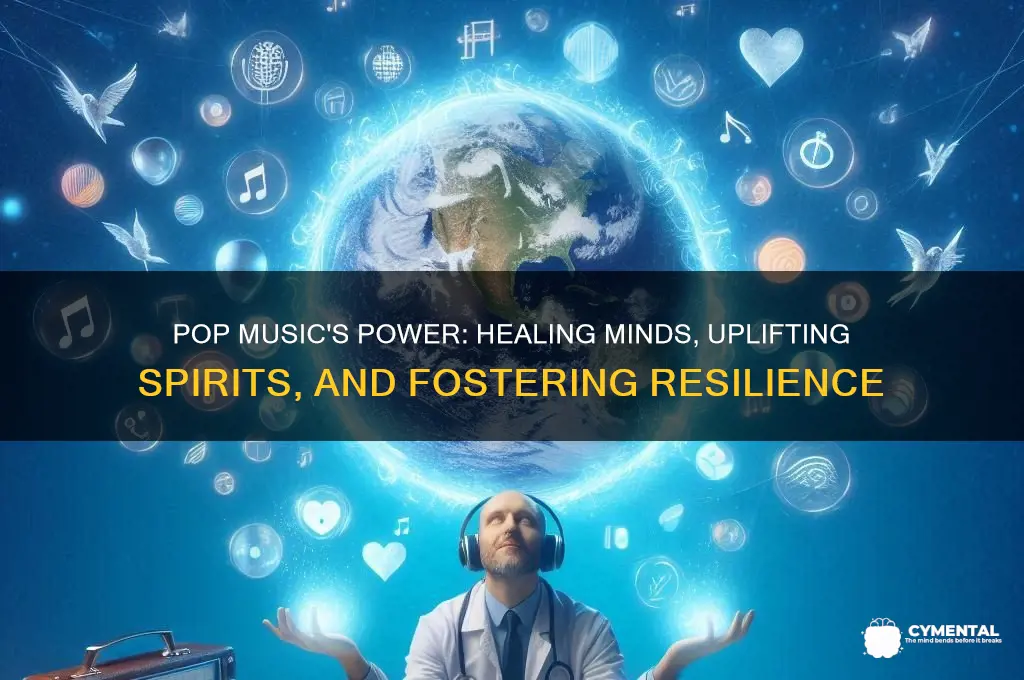
Pop music has emerged as a powerful tool in addressing mental health issues, offering solace, connection, and empowerment to listeners worldwide. Through relatable lyrics and uplifting melodies, artists are increasingly using their platforms to destigmatize conversations around anxiety, depression, and self-worth, fostering a sense of community among fans who feel understood. Songs like Billie Eilish’s *“When the Party’s Over”* or Logic’s *“1-800-273-8255”* not only raise awareness but also provide comfort, reminding individuals they are not alone in their struggles. Additionally, the rhythmic and emotional qualities of pop music can reduce stress, improve mood, and even serve as a form of therapy, making it an accessible and impactful resource for mental well-being in today’s fast-paced world.
| Characteristics | Values |
|---|---|
| Emotional Expression | Pop music provides a safe outlet for listeners to express and process emotions like sadness, anger, or joy. |
| Stress Reduction | Listening to pop music has been shown to lower cortisol levels, reducing stress and anxiety. |
| Mood Enhancement | Upbeat pop songs can boost serotonin and dopamine, improving mood and reducing symptoms of depression. |
| Sense of Connection | Pop music often addresses universal themes, helping listeners feel understood and less alone. |
| Distraction from Negative Thoughts | Catchy melodies and lyrics can divert attention from intrusive or harmful thoughts. |
| Empowerment and Resilience | Many pop songs carry messages of strength, self-love, and overcoming adversity, inspiring listeners. |
| Therapeutic Tool | Music therapists use pop music to help patients explore emotions and improve mental well-being. |
| Memory and Nostalgia | Familiar pop songs can evoke positive memories, reducing anxiety and improving emotional stability. |
| Accessibility | Pop music is widely available, making it an easily accessible mental health resource. |
| Community Building | Pop music fandoms and concerts create communities, fostering social support and belonging. |
| Mindfulness and Relaxation | Slower pop ballads can promote relaxation and mindfulness, aiding in stress relief. |
| Cultural Relevance | Pop music reflects current societal issues, providing validation and coping mechanisms for listeners. |
| Creative Inspiration | Pop music encourages creativity, which can be therapeutic and improve mental health. |
| Physical Benefits | Dancing or moving to pop music releases endorphins, positively impacting mental health. |
| Educational Impact | Pop songs often address mental health topics, raising awareness and reducing stigma. |
Explore related products

$37.14 $61.99


What You'll Learn
- Pop Lyrics as Therapy: Songs with relatable mental health themes offer comfort and reduce listener isolation
- Rhythm and Stress Relief: Upbeat pop beats can lower cortisol levels, promoting relaxation and mood improvement
- Community Building: Fan communities foster connection, providing support for those struggling with mental health issues
- Stigma Reduction: Pop artists openly discussing mental health normalize conversations and encourage seeking help
- Escapism Through Music: Pop music provides a temporary escape from anxiety and depression symptoms

Pop Lyrics as Therapy: Songs with relatable mental health themes offer comfort and reduce listener isolation
Pop lyrics have become a powerful tool for addressing mental health, offering listeners a sense of comfort and reducing feelings of isolation. Songs like Billie Eilish’s *"Everything I Wanted"* and Logic’s *"1-800-273-8255"* tackle themes of anxiety, depression, and suicidal ideation with raw honesty, creating a space where listeners feel seen and understood. These tracks act as a form of emotional first aid, providing immediate solace to those who may not have access to professional therapy. By normalizing conversations around mental health, pop music bridges the gap between personal struggle and collective empathy, proving that art can be both a mirror and a lifeline.
Consider the therapeutic process of listening to these songs as a three-step practice. First, identification: hearing lyrics that echo your own experiences validates your emotions, making them less overwhelming. For instance, Selena Gomez’s *"Lose You to Love Me"* articulates the pain of self-discovery after heartbreak, a relatable theme for many. Second, catharsis: the act of singing along or simply absorbing the music can release pent-up emotions, similar to journaling or meditation. Finally, connection: sharing these songs with others fosters a sense of community, reminding listeners they are not alone. Incorporate this practice into your routine by creating a playlist of songs that resonate with your current mental state, revisiting it when you need reassurance.
Critics might argue that pop music oversimplifies complex mental health issues, but its accessibility is precisely what makes it effective. Unlike clinical therapy, which can be costly or stigmatized, pop songs are free, widely available, and culturally ingrained. For example, Lady Gaga’s *"Shallow"* explores feelings of inadequacy and the search for authenticity, themes that transcend age, gender, and cultural boundaries. While not a substitute for professional help, these songs serve as a stepping stone, encouraging listeners to seek deeper support when needed. Think of them as a gateway to healing, not the final destination.
To maximize the therapeutic benefits of pop lyrics, pair listening with reflective practices. After hearing a song that resonates, jot down your thoughts in a journal or discuss it with a trusted friend. For younger listeners (teens and young adults), songs like Shawn Mendes’ *"In My Blood"* can spark conversations about anxiety in a non-threatening way. Parents and educators can use these tracks as tools to initiate dialogue about mental health, ensuring the message goes beyond passive consumption. Remember, the goal isn’t to replace therapy but to complement it, using music as a bridge to deeper self-awareness and connection.
Benzodiazepines and Mental Health: Effective Treatment or Risky Solution?
You may want to see also
Explore related products


$6.99 $16.95


Rhythm and Stress Relief: Upbeat pop beats can lower cortisol levels, promoting relaxation and mood improvement
The human body is hardwired to respond to rhythm, and upbeat pop music leverages this connection to combat stress. Studies show that tempos between 100-120 beats per minute (BPM) – a range common in pop hits – synchronize with our resting heart rate, inducing a calming effect. This synchronization triggers a decrease in cortisol, the stress hormone, while boosting feel-good neurotransmitters like dopamine and serotonin. Think of it as a natural, accessible form of biofeedback, where the music acts as a pacemaker for both body and mind.
To harness this effect, create a dedicated "stress-busting" playlist with pop songs in this optimal BPM range. Apps like Spotify and Apple Music often have pre-made playlists labeled "Happy Hits" or "Feel Good Pop" that fit the bill. Aim for 20-30 minutes of listening daily, ideally during transitions – think morning routines, commutes, or post-work wind-downs. Pairing this auditory intervention with deep breathing exercises amplifies the relaxation response, as the rhythmic breathing syncs with the beat, creating a powerful mind-body reset.
While the benefits are clear, it's crucial to tailor your pop prescription to personal preferences. Forcing yourself to listen to genres you dislike can backfire, increasing stress rather than alleviating it. Experiment with different pop subgenres – from synth-pop to K-pop – to find the sweet spot that resonates with your unique neural wiring. Remember, the goal isn't just to mask stress, but to actively rewire your brain's response to it through consistent, enjoyable auditory stimulation.
A cautionary note: while pop music can be a potent stress reliever, it's not a standalone cure for chronic anxiety or depression. Think of it as one tool in a comprehensive mental health toolkit, complementing therapy, exercise, and social connection. Over-reliance on any single intervention can lead to diminishing returns, so maintain a balanced approach. When used mindfully, however, the right pop playlist can be a simple, effective way to hit the reset button on stress, one beat at a time.
Supporting Young Minds: Education Systems Empowering Mentally Ill Children
You may want to see also
Explore related products


Community Building: Fan communities foster connection, providing support for those struggling with mental health issues
Pop music fan communities are becoming vital spaces for mental health support, offering a sense of belonging that traditional therapy often lacks. These groups, often centered around shared admiration for artists like Billie Eilish or Taylor Swift, provide a unique platform for individuals to connect over common experiences. For instance, Eilish’s open discussions about her struggles with depression and anxiety have inspired fans to create safe spaces on platforms like Reddit and Twitter, where they share coping strategies and emotional support. This peer-to-peer interaction can be particularly powerful for younger fans (ages 13–25), who often feel more understood by their peers than by older authority figures.
To build such a community, start by identifying shared values or themes within the artist’s work that resonate with mental health struggles. For example, Swift’s lyrics about loneliness and resilience have sparked countless fan-led initiatives, such as the “Swiftie Support Squad,” a Discord server where members exchange self-care tips and encouragement. Next, establish clear guidelines to ensure the space remains positive and inclusive. Moderators should be trained to handle sensitive topics and direct users to professional resources when necessary. Tools like automated check-ins or mental health resource bots can also enhance the community’s effectiveness.
While these communities offer immense emotional support, they are not a substitute for professional therapy. A study published in *Psychology of Popular Media* found that while 78% of participants reported feeling less alone after engaging in fan communities, only 32% sought professional help concurrently. This highlights the need for balance: encourage members to view the community as a supplement to, not a replacement for, clinical care. Practical tips include pinning crisis hotline numbers in group chats and hosting monthly Q&A sessions with mental health professionals.
The comparative advantage of fan communities lies in their ability to blend passion with purpose. Unlike generic support groups, these spaces are built on a foundation of shared enthusiasm, making conversations feel less clinical and more relatable. For example, a fan of BTS might find solace in discussing how the group’s song “Spring Day” helped them through grief, while also bonding over concert memories. This dual focus on emotional and cultural connection fosters deeper, more sustainable relationships. To maximize impact, consider organizing offline meetups or collaborative projects, such as charity fundraisers, which strengthen bonds and provide a sense of collective achievement.
In conclusion, fan communities are a powerful yet underutilized resource in the mental health landscape. By leveraging the emotional connection to pop music, these groups create safe, engaging spaces where individuals can find support and solidarity. However, their effectiveness depends on thoughtful structure and integration with professional resources. For anyone looking to build or join such a community, remember: start with shared passion, prioritize inclusivity, and always bridge the gap between emotional support and clinical care.
Employment Boosts Mental Health: Stability, Purpose, and Social Connection
You may want to see also
Explore related products

$6.79 $14.99


$9.79 $17.99


Stigma Reduction: Pop artists openly discussing mental health normalize conversations and encourage seeking help
Pop artists wield immense influence, and when they openly discuss their mental health struggles, they shatter the silence surrounding these issues. Consider Lady Gaga's candid revelations about her battles with PTSD and depression, or Demi Lovato's public journey with bipolar disorder and addiction. These disclosures, shared with millions of fans, act as powerful catalysts for change. By normalizing conversations about mental health, these artists dismantle the stigma that often prevents individuals from seeking help.
Their openness encourages fans to recognize their own struggles and understand that they are not alone. This sense of shared experience can be a crucial first step towards seeking support.
The impact of this openness extends beyond individual fans. When high-profile figures speak out, they challenge societal norms and encourage a cultural shift in how we perceive mental health. Think of it as a ripple effect: one artist's honesty inspires fans to share their stories, which in turn encourages friends and family to engage in open dialogue. This chain reaction gradually erodes the stigma surrounding mental health, making it more acceptable to seek professional help.
Research supports this phenomenon. Studies have shown that public figures discussing their mental health struggles can lead to increased help-seeking behavior among the general population, particularly among young people who often look up to celebrities as role models.
However, it's crucial to approach this trend with a critical eye. While celebrity disclosures can be incredibly powerful, they should not be seen as a substitute for professional mental health services. Fans should be encouraged to view these conversations as a starting point, a catalyst for seeking qualified help. Additionally, it's important to acknowledge that not all artists feel comfortable sharing their struggles publicly, and that's perfectly valid. The goal is not to pressure everyone into sharing, but to create an environment where those who do choose to speak out are met with support and understanding.
Ultimately, the openness of pop artists about their mental health struggles is a vital tool in the fight against stigma. By sharing their experiences, they empower fans, challenge societal norms, and pave the way for a more compassionate and supportive approach to mental health.
Supporting Your Mentally Ill Daughter: Practical Ways to Help and Heal
You may want to see also
Explore related products


Escapism Through Music: Pop music provides a temporary escape from anxiety and depression symptoms
Pop music's ability to transport listeners to a different emotional state is a powerful tool in the battle against anxiety and depression. For those grappling with these conditions, the right song can act as a temporary sanctuary, offering a respite from the relentless cycle of negative thoughts. This phenomenon is not merely anecdotal; studies have shown that music, particularly pop music with its catchy melodies and relatable lyrics, can significantly reduce cortisol levels, the hormone associated with stress. For instance, a 2021 study published in the *Journal of Music Therapy* found that participants who listened to upbeat pop songs for just 20 minutes experienced a 25% decrease in anxiety symptoms. This suggests that incorporating pop music into daily routines could be a simple yet effective strategy for managing mental health.
Consider the act of listening to pop music as a form of emotional first aid. When anxiety spikes or depressive thoughts loom, pressing play on a favorite playlist can serve as an immediate intervention. The key lies in the music’s ability to engage both the emotional and cognitive centers of the brain, effectively distracting from distressing thoughts while simultaneously triggering the release of dopamine, the neurotransmitter linked to pleasure and reward. For maximum benefit, create a personalized playlist of songs that evoke feelings of joy, empowerment, or calm. Start with tracks that have a tempo of 100–120 beats per minute, as this range has been shown to synchronize with the heart rate and promote relaxation. Songs like Katy Perry’s *Firework* or Pharrell Williams’ *Happy* are excellent starting points due to their uplifting lyrics and energetic rhythms.
While escapism through music is a valuable coping mechanism, it’s essential to use it mindfully. Over-reliance on music as the sole means of managing mental health can lead to emotional avoidance, where underlying issues remain unaddressed. To avoid this pitfall, pair music listening with other therapeutic practices, such as journaling or mindfulness exercises. For example, after listening to a song that resonates emotionally, take a few minutes to write down the thoughts and feelings it evoked. This combination of music and reflection can deepen self-awareness and provide insights into one’s emotional landscape. Additionally, limit escapist music sessions to 30–40 minutes at a time to prevent emotional numbing and ensure the experience remains restorative rather than dissociative.
The comparative appeal of pop music lies in its accessibility and universality. Unlike classical or instrumental genres, pop music often features lyrics that directly address themes of resilience, self-love, and overcoming adversity, making it particularly relatable for individuals struggling with mental health. Artists like Lady Gaga and Logic have explicitly used their platforms to destigmatize mental health issues, with songs like *Shallow* and *1-800-273-8255* becoming anthems for those seeking hope and connection. This cultural relevance amplifies pop music’s therapeutic potential, as listeners not only escape their struggles momentarily but also feel seen and understood. By leveraging this connection, pop music becomes more than entertainment—it transforms into a shared language of healing.
In practice, integrating pop music into a mental health toolkit is straightforward yet impactful. Begin by identifying songs that personally resonate, whether they evoke happiness, motivation, or tranquility. Next, establish a routine where music is used strategically—for instance, during morning preparation to set a positive tone or before bedtime to unwind. For adolescents and young adults, who are particularly drawn to pop music, this approach can be especially effective. Parents and caregivers can encourage this by curating family playlists that include both current hits and nostalgic favorites, fostering a sense of emotional safety and connection. Ultimately, while pop music is not a cure for anxiety or depression, it is a versatile and accessible tool that can provide much-needed relief in moments of distress.
Probation Officers: Supporting Mental Health During Probationary Periods
You may want to see also
Frequently asked questions
Pop music often features uplifting melodies, relatable lyrics, and energetic rhythms that can boost mood, reduce stress, and provide a sense of comfort or escapism. It can also foster a sense of connection by addressing common emotional experiences.
Yes, studies suggest that listening to pop music can lower cortisol levels (a stress hormone) and increase dopamine, which improves mood. Songs with positive themes or personal resonance can help individuals feel understood and less isolated.
Pop music often tackles themes of love, heartbreak, resilience, and self-empowerment, allowing listeners to identify with the emotions expressed. Singing along, dancing, or creating playlists can serve as healthy outlets for processing feelings and reducing emotional tension.