Lucas Bennett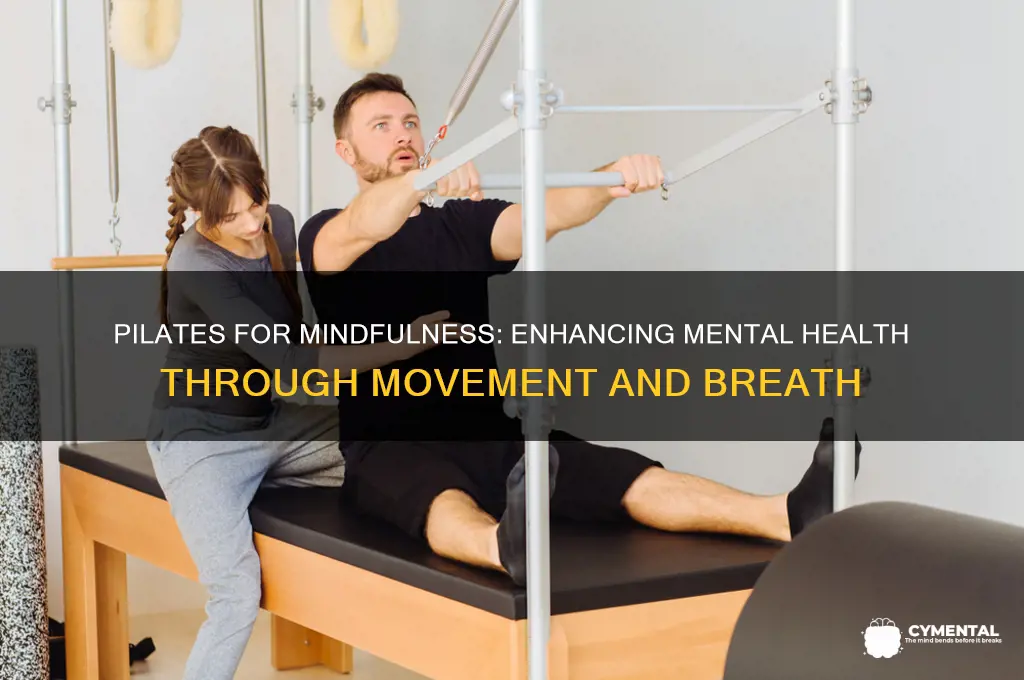
Pilates, often recognized for its physical benefits such as improved strength, flexibility, and posture, also plays a significant role in enhancing mental health. The mindful, controlled movements and emphasis on breathwork in Pilates help reduce stress and anxiety by promoting relaxation and grounding the mind in the present moment. Regular practice can boost mood by increasing endorphin levels and fostering a sense of accomplishment. Additionally, the focus required during Pilates sessions encourages mindfulness, which can improve mental clarity and reduce symptoms of depression. By creating a mind-body connection, Pilates not only strengthens the physical self but also nurtures emotional well-being, making it a holistic approach to mental health care.
Explore related products


What You'll Learn
- Stress Reduction: Pilates promotes relaxation, reduces cortisol levels, and alleviates daily stress through mindful movement
- Mind-Body Connection: Enhances mental clarity and focus by synchronizing breath, movement, and awareness
- Anxiety Relief: Controlled breathing and gentle exercises in Pilates help calm anxiety symptoms
- Mood Boost: Releases endorphins, improving mood and reducing symptoms of depression naturally
- Confidence Building: Achieving physical goals in Pilates fosters self-esteem and mental resilience

Stress Reduction: Pilates promotes relaxation, reduces cortisol levels, and alleviates daily stress through mindful movement
Stress is an inevitable part of modern life, but its cumulative effects on mental health can be mitigated through intentional practices like Pilates. Unlike high-intensity workouts that spike adrenaline, Pilates operates on the principle of mindful movement, synchronizing breath with deliberate, controlled motions. This approach activates the parasympathetic nervous system, signaling the body to shift from a "fight or flee" state to one of rest and recovery. Research indicates that cortisol levels—a key stress hormone—decrease significantly after consistent Pilates practice, often within 6–8 weeks of 2–3 sessions per week. This physiological change is not just a byproduct of exercise but a direct result of Pilates’ emphasis on precision, concentration, and fluidity.
To harness Pilates for stress reduction, start with foundational exercises like the "Breathing with Lateral Thoracic Expansion" or "Pelvic Curl." These movements are designed to engage the diaphragm and core muscles, fostering a deep, rhythmic breathing pattern that calms the mind. For instance, inhaling deeply through the nose while expanding the ribcage, followed by a slow exhale through the mouth during a controlled roll-up, can immediately lower heart rate and induce relaxation. Incorporating props like resistance bands or stability balls can enhance focus, as the brain prioritizes coordination over stress-induced rumination. Aim for 30–40 minutes per session, ensuring the pace remains steady and unhurried to maximize the meditative benefits.
A comparative analysis reveals that Pilates’ stress-reducing effects are distinct from those of yoga or cardio. While yoga emphasizes static poses and meditation, Pilates integrates dynamic movement with mental engagement, making it particularly effective for individuals who find stillness challenging. Similarly, cardio exercises release endorphins but often elevate cortisol temporarily, whereas Pilates maintains a balanced hormonal response. This makes it an ideal practice for high-stress professionals, caregivers, or anyone seeking a sustainable way to manage daily pressures. Studies show that participants aged 25–50 report a 30–40% reduction in perceived stress levels after adopting a regular Pilates routine.
Practical tips for integrating Pilates into a stress-reduction regimen include creating a dedicated space free from distractions, using guided videos or apps for consistency, and pairing sessions with calming music or aromatherapy. For those new to Pilates, start with beginner-friendly classes or private sessions to master proper form, as misalignment can negate relaxation benefits. Additionally, combining Pilates with journaling or mindfulness practices post-session can amplify its stress-alleviating effects by fostering self-awareness and emotional clarity. By treating Pilates not just as exercise but as a holistic ritual, individuals can transform their relationship with stress, turning it from an overwhelming force into a manageable aspect of daily life.
Marijuana's Potential: Exploring Cannabis Benefits for Mental Health Wellness
You may want to see also
Explore related products


Mind-Body Connection: Enhances mental clarity and focus by synchronizing breath, movement, and awareness
Pilates isn't just about sculpting a strong core or improving flexibility—it's a powerful tool for sharpening mental focus and clarity. At its core, Pilates emphasizes the synchronization of breath, movement, and awareness, creating a mind-body connection that fosters mental acuity. This deliberate coordination demands concentration, pulling your mind away from distractions and anchoring it in the present moment. Unlike exercises that allow your thoughts to wander, Pilates requires you to engage fully, making it a moving meditation that enhances cognitive function.
To harness this benefit, start with a simple Pilates breath: inhale deeply through your nose for a count of three, expanding your ribcage, and exhale forcefully through pursed lips for a count of five, engaging your core. Pair this breath with controlled movements like the "Hundred" exercise, where you lie on your back, lift your legs to a 45-degree angle, and pump your arms while maintaining steady breathing. This combination of breath and movement activates the parasympathetic nervous system, reducing stress and improving focus. Aim for 10–15 minutes daily to notice a difference in mental clarity.
Compare Pilates to high-intensity workouts like running or weightlifting, which often rely on momentum or repetition. While these activities have their merits, they rarely demand the same level of mental engagement as Pilates. The precision required in Pilates—whether aligning your spine during a roll-up or balancing in a side plank—trains your brain to stay alert and focused. This heightened awareness translates off the mat, improving concentration in tasks like work or studying.
For optimal results, incorporate Pilates into your routine 2–3 times per week, focusing on sessions that emphasize breath control and mindful movement. Beginners can start with guided classes or online tutorials, while advanced practitioners can explore more complex sequences like the "Teaser" or "Control Balance." Pair your practice with a digital detox—leave your phone aside during sessions to minimize distractions and deepen your focus. Over time, this mind-body synchronization will become second nature, enhancing not just your physical strength but your mental resilience.
Veganism and Mental Health: Exploring the Mind-Diet Connection
You may want to see also
Explore related products


Anxiety Relief: Controlled breathing and gentle exercises in Pilates help calm anxiety symptoms
Pilates, with its focus on controlled breathing and gentle, deliberate movements, offers a unique approach to managing anxiety. Unlike high-intensity workouts that can sometimes exacerbate stress, Pilates creates a calming environment where the mind and body work in harmony. This synergy is particularly effective for those seeking relief from anxiety symptoms, as it encourages mindfulness and reduces the physical tension often associated with stress.
Consider the breathing techniques central to Pilates, often referred to as "lateral breathing." This method involves inhaling deeply through the nose, allowing the ribs to expand sideways, and exhaling slowly through the mouth while engaging the core muscles. Research suggests that deep, diaphragmatic breathing activates the parasympathetic nervous system, which helps to lower heart rate and reduce cortisol levels—key factors in alleviating anxiety. Incorporating this breathing pattern into Pilates exercises not only enhances physical performance but also fosters a sense of calm that extends beyond the studio.
The gentle, low-impact movements in Pilates further contribute to anxiety relief by promoting relaxation without overwhelming the body. Exercises like the "Roll-Up," "Spine Stretch Forward," and "Cat-Cow" are designed to improve flexibility and release tension in the spine, shoulders, and neck—areas where stress often manifests physically. For instance, a study published in the *Journal of Physical Therapy Science* found that participants who engaged in regular Pilates sessions reported significant reductions in anxiety levels compared to a control group. These findings underscore the therapeutic potential of Pilates as a complementary practice for mental health.
To maximize the anxiety-relieving benefits of Pilates, consistency is key. Aim for 2–3 sessions per week, each lasting 45–60 minutes, to establish a routine that supports both physical and mental well-being. Beginners should start with foundational exercises and gradually progress to more complex movements as strength and confidence grow. Additionally, pairing Pilates with other mindfulness practices, such as meditation or journaling, can amplify its calming effects. For those with severe anxiety, consulting a mental health professional alongside incorporating Pilates is advisable for a holistic approach.
Incorporating Pilates into your routine doesn’t require expensive equipment or extensive time commitments. Many exercises can be performed with just a mat, making it accessible for all ages and fitness levels. Whether practiced in a studio or at home, Pilates offers a sustainable and effective way to manage anxiety, proving that sometimes, the gentlest movements can yield the most profound results.
Public vs. Private Care: Which Better Supports Chronic Mental Illness?
You may want to see also
Explore related products


Mood Boost: Releases endorphins, improving mood and reducing symptoms of depression naturally
Pilates, often celebrated for its physical benefits, is a powerful tool for enhancing mental well-being, particularly through its ability to release endorphins. These "feel-good" hormones are the body’s natural mood elevators, and Pilates, with its focus on controlled movements, deep breathing, and mindfulness, creates an ideal environment for their production. Unlike high-intensity workouts, Pilates combines strength and flexibility exercises with a meditative flow, making it accessible to all fitness levels while still triggering endorphin release. This natural chemical response not only lifts mood but also combats symptoms of depression, offering a holistic approach to mental health.
To maximize the mood-boosting benefits of Pilates, consistency is key. Aim for at least three 45-minute sessions per week, as regular practice has been shown to sustain elevated endorphin levels over time. Incorporate exercises like the "Hundred," "Roll-Up," and "Spine Stretch Forward," which engage multiple muscle groups and promote deep, rhythmic breathing. For those new to Pilates, start with beginner-friendly modifications and gradually increase intensity. Pairing Pilates with a balanced diet rich in omega-3 fatty acids and magnesium can further enhance endorphin production, amplifying its mental health benefits.
One of the most compelling aspects of Pilates is its ability to reduce stress, a common trigger for depression. The mindful movements and focus on breathwork activate the parasympathetic nervous system, which calms the mind and lowers cortisol levels. This dual action—reducing stress hormones while increasing endorphins—creates a synergistic effect that significantly improves mood. For individuals struggling with depression, Pilates offers a gentle yet effective way to reclaim emotional balance without relying solely on medication or therapy.
Practical tips can make Pilates even more effective for mental health. Practice in a quiet, well-ventilated space to enhance focus and relaxation. Incorporate essential oils like lavender or peppermint to create a soothing atmosphere. For those with busy schedules, even a 15-minute Pilates routine can provide a quick endorphin boost. Finally, consider joining a group class or working with a certified instructor, as social interaction and professional guidance can amplify both the physical and mental benefits of the practice.
In conclusion, Pilates is more than just a physical workout—it’s a natural mood enhancer that harnesses the body’s own chemistry to combat depression. By releasing endorphins through mindful movement and breath, Pilates offers a sustainable and accessible way to improve mental health. Whether practiced alone or in a group, this holistic approach empowers individuals to take control of their emotional well-being, one session at a time.
Annual Mental Health Support: How Many Seek Help Each Year?
You may want to see also
Explore related products


![Serenity [Blu-ray]](https://m.media-amazon.com/images/I/71ykK8motAL._AC_UY218_.jpg)


Confidence Building: Achieving physical goals in Pilates fosters self-esteem and mental resilience
Achieving physical goals in Pilates is a powerful catalyst for building confidence, a cornerstone of mental resilience. Each mastered movement, whether it’s holding a plank for an extra 10 seconds or transitioning seamlessly into a side plank, reinforces the belief in one’s ability to improve. This tangible progress translates into a deeper sense of self-efficacy, a psychological term for the conviction that you can succeed in challenging situations. For instance, a 45-year-old participant who initially struggled with balance might celebrate completing a full set of tree poses, a victory that spills over into tackling non-physical challenges with renewed optimism.
To maximize this confidence-building effect, set specific, measurable goals within your Pilates practice. For beginners, aim to attend three 45-minute sessions weekly for six weeks, tracking improvements in core strength or flexibility. Intermediate practitioners might focus on mastering advanced poses like the teaser or swan dive. Pair these physical milestones with reflective journaling to connect the dots between physical achievement and mental growth. Research suggests that individuals who link their physical progress to personal values—such as perseverance or self-care—experience a more profound boost in self-esteem.
However, caution against comparing your journey to others’. Pilates is inherently individualized, and progress varies based on factors like age, fitness level, and consistency. A 30-year-old with a background in dance may advance faster than a 60-year-old newcomer, but both can achieve transformative confidence by focusing on personal benchmarks. Instructors play a critical role here, offering tailored modifications and encouragement to ensure every student feels empowered, not overwhelmed.
The takeaway? Confidence built through Pilates is not just about physical prowess; it’s about cultivating a mindset that thrives on challenge and celebrates growth. By setting realistic goals, tracking progress, and embracing the process, practitioners develop mental resilience that extends far beyond the studio. Whether you’re a 20-something seeking stress relief or a 50-something prioritizing mobility, the confidence gained from achieving physical milestones in Pilates becomes a tool for navigating life’s uncertainties with grace and determination.
Do Mental Health Services Truly Deliver Effective Support and Recovery?
You may want to see also
Frequently asked questions
Pilates promotes stress relief by combining mindful movement, deep breathing, and focused concentration, which activates the parasympathetic nervous system and reduces cortisol levels.
Yes, Pilates enhances mood by releasing endorphins, the body’s natural "feel-good" chemicals, while its emphasis on controlled breathing and movement helps calm the mind and reduce anxiety.
Absolutely, Pilates requires mental engagement and precision, which sharpens focus and improves cognitive function, leading to greater mental clarity and mindfulness.


![Serenity (2005) [Blu-ray]](https://m.media-amazon.com/images/I/815I563v-LL._AC_UY218_.jpg)