Caleb Wright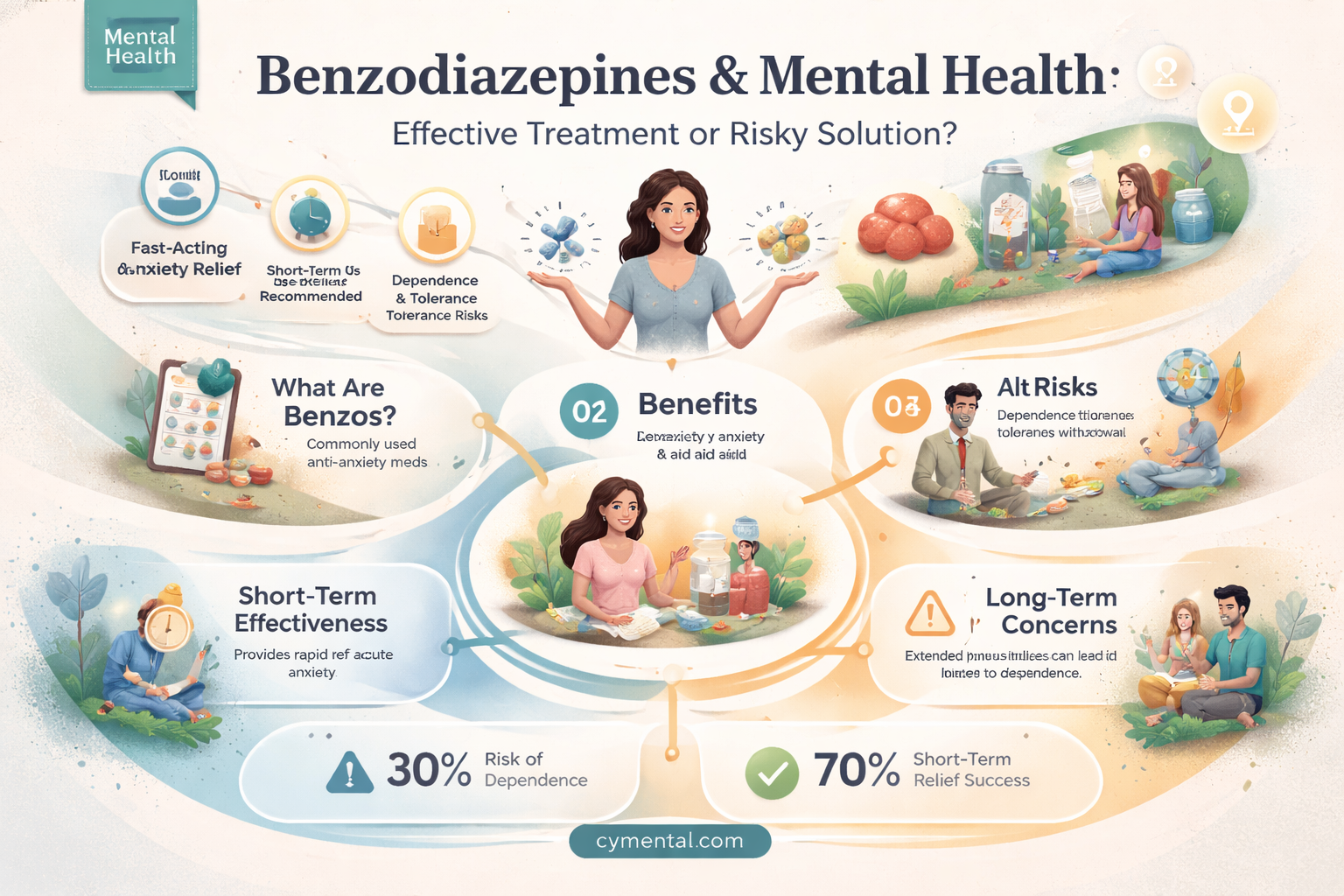
Benzodiazepines, commonly known as benzos, are a class of medications primarily prescribed to treat anxiety, insomnia, and seizures by enhancing the effect of the neurotransmitter GABA, which has a calming effect on the brain. While they can provide rapid relief for acute symptoms of mental health conditions, their long-term use remains controversial due to the risk of dependence, tolerance, and withdrawal symptoms. Research suggests that benzos may be effective in managing short-term anxiety and panic disorders but are generally not recommended as a first-line treatment for chronic mental health issues. Instead, they are often used in conjunction with therapy or other medications, and their use must be carefully monitored by healthcare professionals to balance potential benefits against significant risks.
| Characteristics | Values |
|---|---|
| Effectiveness | Benzodiazepines (benzos) can provide short-term relief for anxiety, insomnia, and panic disorders. They act quickly to calm the nervous system. |
| Limitations | Not recommended for long-term use due to risks of dependence, tolerance, and withdrawal symptoms. |
| Side Effects | Common side effects include drowsiness, dizziness, confusion, and impaired coordination. Long-term use may lead to cognitive decline, memory problems, and increased risk of falls in older adults. |
| Dependence Risk | High risk of physical and psychological dependence, especially with prolonged use or misuse. Withdrawal can be severe and may require medical supervision. |
| Mental Health Impact | While they may alleviate symptoms temporarily, benzos do not address the underlying causes of mental health issues. Prolonged use may worsen anxiety, depression, or other conditions over time. |
| Alternative Treatments | Safer long-term options include therapy (e.g., CBT), antidepressants, and non-pharmacological approaches like mindfulness, exercise, and lifestyle changes. |
| Medical Guidelines | Prescribed for short-term use (2-4 weeks) under strict medical supervision. Not a first-line treatment for most mental health conditions. |
| Population Risks | Higher risks for older adults, individuals with a history of substance abuse, and those with co-occurring mental health or medical conditions. |
| Research Findings | Studies show limited long-term benefits and emphasize the need for cautious prescribing due to potential harms. |
| Conclusion | Benzos may help manage acute symptoms of mental health issues but are not a sustainable solution. Their use should be carefully monitored and balanced with safer alternatives. |
Explore related products


What You'll Learn
- Anxiety Relief: Benzodiazepines can quickly reduce anxiety symptoms but may lead to dependence
- Panic Disorder Treatment: Short-term use helps manage panic attacks but is not a long-term solution
- Insomnia Aid: Benzos improve sleep temporarily but risk tolerance and withdrawal issues
- Depression Symptom Management: Limited use in depression, often combined with antidepressants, with caution
- PTSD Symptom Control: May alleviate hyperarousal in PTSD but does not address root causes

Anxiety Relief: Benzodiazepines can quickly reduce anxiety symptoms but may lead to dependence
Benzodiazepines, commonly known as benzos, are often prescribed for their rapid anxiolytic effects, providing relief within 30 minutes to an hour. This quick action makes them a go-to option for acute anxiety episodes, such as panic attacks or severe generalized anxiety. For instance, a 0.5 mg dose of alprazolam (Xanax) can effectively calm a patient experiencing a panic attack, restoring a sense of control in moments of overwhelming distress. However, this immediate relief comes with a caveat: the potential for dependence, especially with prolonged use.
Consider the mechanism behind benzos’ effectiveness: they enhance the activity of gamma-aminobutyric acid (GABA), a neurotransmitter that inhibits brain activity, producing a calming effect. While this is beneficial for short-term relief, the brain can adapt to the presence of the drug, leading to tolerance. For example, a patient initially prescribed 10 mg of diazepam (Valium) daily may find that the same dose becomes less effective over weeks, prompting higher doses or more frequent use. This cycle increases the risk of physical and psychological dependence, particularly in individuals with a history of substance use disorders or those taking benzos for longer than 4–6 weeks.
To mitigate these risks, clinicians often recommend benzos as a short-term solution, paired with long-term strategies like cognitive-behavioral therapy (CBT) or selective serotonin reuptake inhibitors (SSRIs). For instance, a patient with generalized anxiety disorder might use 2 mg of lorazepam (Ativan) as needed for breakthrough symptoms while concurrently engaging in CBT to address underlying triggers. Additionally, tapering off benzos under medical supervision is crucial to minimize withdrawal symptoms, which can include rebound anxiety, insomnia, and, in severe cases, seizures.
Practical tips for safe benzo use include adhering strictly to prescribed dosages, avoiding alcohol (which amplifies the sedative effects), and regularly reassessing the need for the medication with a healthcare provider. For older adults, who are more susceptible to side effects like confusion and falls, lower doses (e.g., 5 mg of oxazepam instead of 15 mg) are often recommended. While benzos can be a lifeline for those in acute distress, their use requires careful consideration of both their benefits and the potential pitfalls of dependence.
Biotin's Role in Mental Health: Potential Benefits and Limitations Explored
You may want to see also
Explore related products


Panic Disorder Treatment: Short-term use helps manage panic attacks but is not a long-term solution
Benzodiazepines, commonly known as benzos, are often prescribed for panic disorder due to their rapid onset of action in alleviating acute symptoms. For individuals experiencing panic attacks, medications like alprazolam (Xanax) or clonazepam (Klonopin) can provide immediate relief by calming the central nervous system. A typical starting dose for alprazolam is 0.25 to 0.5 mg, taken three times daily, while clonazepam may begin at 0.5 mg twice daily. These doses can be adjusted based on the severity of symptoms and patient response, but they are generally kept as low as possible to minimize side effects.
While benzos are effective in the short term, their use must be carefully managed. Prolonged use, often defined as beyond 2–4 weeks, increases the risk of dependence, tolerance, and withdrawal symptoms. For instance, abruptly discontinuing benzodiazepines after long-term use can lead to rebound anxiety, insomnia, and even seizures. This is why they are not considered a sustainable solution for panic disorder. Instead, they serve as a temporary bridge to more long-term treatments, such as selective serotonin reuptake inhibitors (SSRIs) or cognitive-behavioral therapy (CBT), which address the underlying causes of panic disorder without the same risks.
A practical approach for patients and clinicians is to use benzos as part of a structured treatment plan. For example, a 2–4 week course of benzodiazepines can help stabilize a patient experiencing frequent panic attacks, allowing them to engage more effectively in therapy. During this period, patients should be educated about the risks of long-term use and encouraged to taper off the medication under medical supervision. Combining benzos with CBT can be particularly effective, as the medication provides immediate relief while therapy equips patients with coping strategies for future episodes.
It’s crucial to tailor treatment to individual needs, especially considering factors like age, medical history, and concurrent medications. Younger adults and older individuals may metabolize benzos differently, requiring lower doses or alternative medications. For example, older adults are more susceptible to cognitive impairment and falls when taking benzodiazepines, making non-pharmacological interventions a safer first-line option. Additionally, patients with a history of substance use disorder should avoid benzos altogether, as they carry a higher risk of misuse.
In conclusion, while benzodiazepines offer quick relief for panic attacks, their short-term nature and potential risks make them unsuitable for long-term management. By integrating them into a comprehensive treatment plan that includes therapy and other medications, clinicians can help patients regain control over their symptoms without falling into the trap of dependence. The key is to use benzos strategically, with clear goals and a defined timeline, ensuring they serve as a stepping stone rather than a permanent crutch.
Children and Mental Health: Are They Aware of Available Support?
You may want to see also
Explore related products





Insomnia Aid: Benzos improve sleep temporarily but risk tolerance and withdrawal issues
Benzodiazepines, commonly known as benzos, are often prescribed to treat insomnia, offering quick relief by calming the nervous system and inducing sleep. For individuals struggling with acute sleep disturbances—such as those caused by stress, anxiety, or jet lag—low doses of short-acting benzos like triazolam (0.125–0.5 mg) or temazepam (7.5–30 mg) can be effective. These medications act on the GABA receptors in the brain, promoting relaxation and reducing the time it takes to fall asleep. However, their effectiveness is short-lived, typically lasting only 2–4 weeks, as the body quickly develops tolerance.
While benzos may seem like a miracle solution for insomnia, their use comes with significant risks. Prolonged or high-dose usage—often exceeding 4 weeks—can lead to physical dependence, making it difficult to stop without experiencing withdrawal symptoms. These symptoms may include rebound insomnia (worse sleep than before), anxiety, irritability, and in severe cases, seizures. For older adults, benzos pose additional dangers, such as increased risk of falls and cognitive impairment, making them less suitable for long-term use in this age group.
To minimize risks, benzos should be used as a short-term solution under strict medical supervision. Patients should start with the lowest effective dose and avoid combining them with alcohol or other central nervous system depressants. Gradually tapering off the medication, rather than stopping abruptly, can help manage withdrawal symptoms. For example, reducing the dose by 25% every 2 weeks allows the body to adjust slowly. It’s also crucial to address the underlying causes of insomnia—such as poor sleep hygiene, stress, or mental health disorders—through therapy, lifestyle changes, or alternative treatments like cognitive-behavioral therapy for insomnia (CBT-I).
Comparatively, non-pharmacological approaches offer safer, long-term solutions for insomnia. Practices such as maintaining a consistent sleep schedule, creating a relaxing bedtime routine, and limiting screen time before bed can significantly improve sleep quality. For those with chronic insomnia, CBT-I has proven to be highly effective, with benefits lasting beyond the treatment period. While benzos may provide temporary relief, their potential for tolerance and withdrawal underscores the importance of exploring sustainable alternatives to manage sleep disorders.
Gardening for Mental Health: Cultivating Peace and Well-Being Naturally
You may want to see also
Explore related products


Depression Symptom Management: Limited use in depression, often combined with antidepressants, with caution
Benzodiazepines, commonly known as benzos, are not typically the first-line treatment for depression due to their limited efficacy and potential risks. While they may offer short-term relief for specific symptoms, such as anxiety or insomnia, their role in depression management is highly circumscribed. Clinicians often reserve benzos for cases where antidepressants alone are insufficient or when immediate symptom control is critical, such as in severe agitation or panic. For instance, a low-dose benzodiazepine like lorazepam (0.5–1 mg) might be prescribed alongside an SSRI to manage acute anxiety while waiting for the antidepressant to take effect, which can take 4–6 weeks. However, this combination is always temporary and closely monitored due to the risk of dependence and tolerance.
The cautious approach to using benzos in depression stems from their pharmacological profile and potential side effects. Unlike antidepressants, which target neurotransmitters like serotonin and norepinephrine, benzos act on GABA receptors, producing sedative and anxiolytic effects. While this can alleviate symptoms like restlessness or sleep disturbances, it does not address the underlying neurochemical imbalances driving depression. Prolonged use, even at therapeutic doses (e.g., diazepam 2–10 mg/day), can lead to physical dependence, cognitive impairment, and paradoxical effects like increased anxiety or depression. For older adults, the risks are amplified, including falls, confusion, and drug interactions, making benzos particularly unsuitable for this age group.
Combining benzos with antidepressants requires careful consideration of drug interactions and patient-specific factors. For example, concurrent use of benzodiazepines and SSRIs or SNRIs can increase the risk of serotonin syndrome, a potentially life-threatening condition characterized by agitation, confusion, and autonomic instability. Patients with a history of substance use disorder are at higher risk of misuse, necessitating alternative strategies like cognitive-behavioral therapy or non-benzodiazepine anxiolytics (e.g., buspirone). When benzos are deemed necessary, the lowest effective dose should be used for the shortest duration possible, typically no longer than 2–4 weeks.
Practical tips for clinicians and patients include setting clear treatment goals, regularly reassessing the need for benzos, and tapering the dose gradually to minimize withdrawal symptoms. Patients should be educated about the risks and benefits, including the potential for psychological dependence. Non-pharmacological interventions, such as mindfulness-based stress reduction or sleep hygiene practices, can complement medication management and reduce reliance on benzos. Ultimately, while benzos may have a limited role in depression symptom management, their use must be judicious, time-bound, and integrated into a comprehensive treatment plan.
Shiatsu Therapy: A Natural Approach to Mental Health and Wellness
You may want to see also
Explore related products


PTSD Symptom Control: May alleviate hyperarousal in PTSD but does not address root causes
Benzodiazepines, commonly known as benzos, are often prescribed to manage acute symptoms of PTSD, particularly hyperarousal. This state of heightened anxiety, irritability, and exaggerated startle response can be debilitating, making daily life a constant battle. For individuals experiencing severe hyperarousal, benzos like clonazepam or lorazepam may provide rapid relief by calming the nervous system. Typically, doses range from 0.5 mg to 2 mg per day, depending on the severity of symptoms and individual tolerance. While this can offer immediate respite, it’s crucial to recognize that such relief is symptomatic, not curative.
The mechanism of benzos—enhancing the effect of GABA, a neurotransmitter that inhibits brain activity—explains their efficacy in reducing hyperarousal. However, this very mechanism underscores their limitation. By dampening neural activity, benzos address the surface-level manifestation of PTSD rather than the underlying trauma that drives it. For instance, a combat veteran experiencing flashbacks and hypervigilance might find temporary relief from benzos, but the root cause—the traumatic memories and emotional distress—remains unaddressed. This distinction is critical for both patients and clinicians to understand.
Relying solely on benzos for PTSD management carries risks. Prolonged use can lead to dependence, tolerance, and withdrawal symptoms, complicating the treatment landscape. Moreover, benzos may impair cognitive function and exacerbate depression, which are already common in PTSD. For these reasons, they are generally recommended for short-term use, often in conjunction with other therapies. Practical tips for patients include keeping a symptom journal to track the effectiveness of benzos and discussing alternative treatments like cognitive-behavioral therapy (CBT) or eye movement desensitization and reprocessing (EMDR) with their healthcare provider.
Comparatively, while benzos offer quick symptom control, trauma-focused therapies address the core of PTSD. For example, CBT helps reframe traumatic memories, while EMDR facilitates their processing. These approaches, though slower to yield results, offer long-term healing. Benzos, in contrast, are akin to placing a bandage on a deep wound—useful in the moment but insufficient for true recovery. Patients should view benzos as a temporary tool, not a standalone solution, and prioritize therapies that target the root causes of their PTSD.
In conclusion, benzos can be a valuable asset in managing hyperarousal in PTSD, particularly during acute episodes. However, their role is strictly palliative, and their use should be carefully monitored to avoid dependency. For lasting improvement, integrating benzos with trauma-focused therapies is essential. This dual approach ensures that while immediate symptoms are managed, the deeper work of healing can begin. Patients and providers alike must balance the need for quick relief with the commitment to long-term recovery.
Financial Assistance for Mental Health: Options and Resources to Explore
You may want to see also
Frequently asked questions
Yes, benzodiazepines can provide short-term relief for anxiety disorders by reducing symptoms like panic, excessive worry, and physical tension. However, they are generally prescribed for brief periods due to the risk of dependence and tolerance.
Benzodiazepines are not typically used as a primary treatment for depression, as they do not address the underlying causes. They may be prescribed temporarily to manage severe anxiety or insomnia associated with depression but are not a long-term solution.
No, benzodiazepines are not recommended for long-term use in managing mental health conditions due to their potential for dependence, withdrawal symptoms, and reduced effectiveness over time. Alternatives like therapy, antidepressants, or mood stabilizers are often preferred for sustained treatment.