Caleb Wright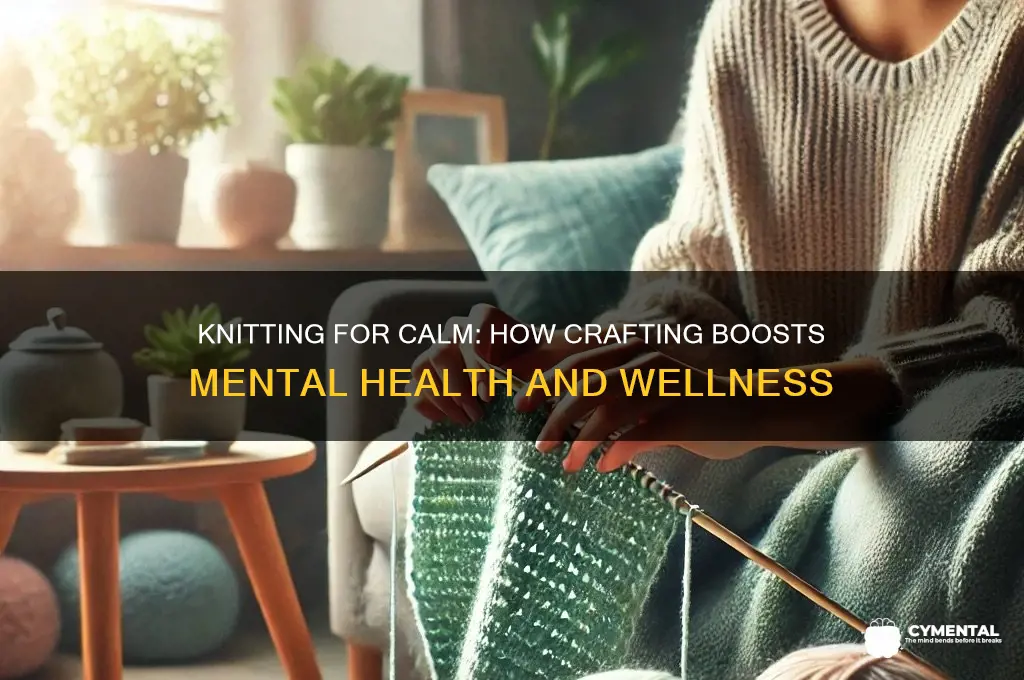
Knitting has emerged as a powerful tool for enhancing mental health, offering a unique blend of mindfulness, creativity, and relaxation. Engaging in this repetitive, rhythmic activity can induce a meditative state, reducing stress and anxiety by calming the nervous system. The focus required to follow patterns and count stitches helps distract the mind from negative thoughts, while the sense of accomplishment from completing a project boosts self-esteem and confidence. Additionally, knitting fosters a sense of community, whether through local knitting groups or online forums, providing social connections that combat feelings of isolation. The tactile nature of working with yarn and needles also grounds individuals in the present moment, promoting emotional well-being and a deeper sense of calm.
| Characteristics | Values |
|---|---|
| Stress Reduction | Knitting activates the parasympathetic nervous system, reducing cortisol levels and promoting relaxation. |
| Mindfulness | The repetitive nature of knitting encourages mindfulness, helping to focus on the present moment and reduce anxiety. |
| Cognitive Improvement | Knitting enhances fine motor skills, memory, and problem-solving abilities, potentially delaying cognitive decline. |
| Social Connection | Joining knitting groups fosters a sense of community, reduces loneliness, and provides emotional support. |
| Mood Enhancement | The release of dopamine and serotonin during knitting improves mood and reduces symptoms of depression. |
| Sense of Achievement | Completing a knitting project boosts self-esteem and provides a tangible sense of accomplishment. |
| Pain Management | Knitting can act as a distraction from chronic pain, reducing the perception of discomfort. |
| Accessibility | Knitting is a low-cost, portable activity accessible to people of all ages and skill levels. |
| Creative Outlet | It allows for self-expression and creativity, contributing to emotional well-being. |
| Sleep Improvement | The calming effects of knitting can improve sleep quality by reducing pre-sleep arousal. |
Explore related products


What You'll Learn
- Stress Reduction: Knitting lowers cortisol levels, promoting relaxation and reducing anxiety effectively
- Mindfulness Practice: Repetitive stitches enhance focus, grounding thoughts in the present moment
- Creative Outlet: Crafting boosts self-esteem and provides a sense of accomplishment and purpose
- Social Connection: Knitting groups foster community, reducing loneliness and improving emotional well-being
- Cognitive Benefits: Fine motor skills and pattern following enhance brain function and memory

Stress Reduction: Knitting lowers cortisol levels, promoting relaxation and reducing anxiety effectively
Knitting isn't just a hobby; it's a powerful tool for stress reduction, backed by science. Studies have shown that engaging in repetitive, rhythmic activities like knitting can significantly lower cortisol levels, the body's primary stress hormone. A 2018 study published in the *Journal of the American Psychiatric Nurses Association* found that participants who knitted experienced a notable decrease in cortisol levels, leading to a calmer, more relaxed state. This physiological response is key to understanding why knitting can be such an effective anxiety-reducer.
To harness knitting's stress-relieving benefits, consider incorporating it into your daily routine. Start with just 20–30 minutes a day, focusing on simple patterns to avoid frustration. For beginners, a basic scarf or dishcloth is ideal. As you knit, pay attention to the rhythm of your needles and the texture of the yarn. This mindfulness can help anchor you in the present moment, further enhancing relaxation. If you're short on time, even 10 minutes of knitting during a lunch break or before bed can make a difference.
Comparing knitting to other stress-relief methods highlights its unique advantages. Unlike passive activities like watching TV, knitting engages both hands and mind, promoting a meditative state without requiring formal meditation practice. Unlike high-intensity exercise, which can sometimes increase stress in the moment, knitting offers immediate relaxation without physical exertion. It’s also portable and accessible, making it a practical choice for stress relief anytime, anywhere.
For maximum effectiveness, pair knitting with other stress-reduction techniques. Combine it with deep breathing exercises—inhale as you lift the yarn, exhale as you stitch. Choose calming colors like blues or greens for your projects, as these hues are known to promote tranquility. If anxiety spikes, focus on the tactile sensation of the yarn to ground yourself. Over time, knitting can become a reliable coping mechanism, offering both a creative outlet and a scientifically-backed way to manage stress.
How to Tell Your Mom You Need Mental Health Support
You may want to see also
Explore related products


Mindfulness Practice: Repetitive stitches enhance focus, grounding thoughts in the present moment
The rhythmic click-clack of knitting needles isn't just a soothing sound; it's a gateway to mindfulness. Repetitive stitches, like a mantra, anchor your attention to the present moment. Each loop and pull demands focus, leaving little room for the mind's habitual wanderings into past regrets or future anxieties. This simple act of creation becomes a moving meditation, calming the nervous system and fostering a sense of tranquility.
Studies suggest that engaging in repetitive, goal-directed activities like knitting activates the parasympathetic nervous system, responsible for our "rest and digest" response. This counters the stress response, lowering cortisol levels and promoting relaxation.
Imagine your mind as a busy highway, thoughts zooming by like cars. Knitting acts as a traffic light, slowing the flow and allowing you to observe each thought without getting swept away. The tactile nature of the yarn, the visual rhythm of the stitches, and the auditory click of the needles combine to create a multisensory experience that grounds you in the here and now. This mindful engagement can be particularly beneficial for individuals struggling with anxiety or racing thoughts.
A 2018 study published in the Journal of the American Psychiatric Nurses Association found that knitting significantly reduced anxiety levels in participants. The study suggests that the repetitive nature of knitting, combined with its creative aspect, provides a sense of accomplishment and control, further contributing to its calming effects.
To harness the mindfulness benefits of knitting, start small. Choose a simple pattern with basic stitches, allowing yourself to focus on the process rather than the end product. Set aside dedicated time, even just 15-20 minutes a day, to knit without distractions. Notice the texture of the yarn, the rhythm of your movements, and the growing fabric beneath your fingers. When your mind wanders (as it inevitably will), gently bring your attention back to the stitches. Over time, this practice will train your mind to stay present, not just during knitting but in other areas of your life as well.
Reading for Resilience: How Books Boost Mental Health and Well-being
You may want to see also
Explore related products

$15.95 $16.99


$6.79 $14.99


Creative Outlet: Crafting boosts self-esteem and provides a sense of accomplishment and purpose
Knitting, often dismissed as a mere hobby, serves as a powerful tool for enhancing self-esteem and fostering a sense of accomplishment. Each stitch, row, and completed project becomes a tangible representation of one's creativity and perseverance. For instance, a beginner who starts with a simple scarf and progresses to a complex cable-knit sweater experiences a measurable growth in confidence. This progression mirrors personal development, proving that small, consistent efforts lead to significant achievements. Unlike abstract goals, knitting provides immediate feedback—a finished item that can be worn, gifted, or admired, reinforcing the belief in one’s capabilities.
Consider the process of crafting as a structured yet flexible activity. It demands focus but allows for improvisation, making it accessible to all skill levels. For adults aged 25–40, dedicating 30 minutes daily to knitting can reduce stress while building a portfolio of completed projects. Teenagers, who often struggle with self-worth, can benefit from starting with quick, achievable patterns like coasters or hats, which provide instant gratification. The act of creating something from scratch shifts the mindset from "I can’t" to "I made this," a transformation that extends beyond the craft table into other areas of life.
From a psychological standpoint, crafting activates the brain’s reward system, releasing dopamine—a neurotransmitter linked to pleasure and motivation. This biochemical response not only enhances mood but also reinforces the behavior, encouraging continued engagement. Studies show that individuals who engage in creative activities like knitting report higher levels of self-efficacy, the belief in one’s ability to succeed in specific situations. For those dealing with anxiety or depression, the repetitive motions of knitting can induce a meditative state, while the end product serves as a reminder of their resilience and skill.
Practical tips can maximize the self-esteem boost derived from knitting. First, set realistic goals—start with small projects and gradually increase complexity. Second, document progress through photos or a journal to visually track improvement. Third, share creations with others, whether through social media, local craft fairs, or as gifts. This external validation complements the internal sense of accomplishment. Finally, join a knitting group or online community to exchange ideas and receive encouragement, fostering a sense of belonging and purpose.
In essence, knitting is more than a pastime; it’s a transformative practice that builds self-esteem stitch by stitch. By providing a clear path to achievement, it empowers individuals to recognize their potential and apply that confidence to other challenges. Whether for a teenager seeking identity, an adult managing stress, or a senior combating loneliness, knitting offers a unique blend of structure, creativity, and fulfillment that enriches mental well-being.
Empowering Young Hearts: Children Supporting Seniors with Mental Health Challenges
You may want to see also
Explore related products


$8.99 $19.99


Social Connection: Knitting groups foster community, reducing loneliness and improving emotional well-being
Knitting groups are more than just a gathering of individuals with yarn and needles; they are vibrant communities that weave together social connections, one stitch at a time. These groups provide a unique space where people from diverse backgrounds unite under a shared passion, fostering a sense of belonging that can be a powerful antidote to loneliness. In a world where social isolation is increasingly prevalent, especially among older adults, knitting circles offer a simple yet effective solution to combat this modern-day epidemic.
The Power of Shared Activities
Engaging in a shared activity like knitting creates a natural bond between participants. As fingers deftly manipulate yarn, conversations flow, and relationships knit together as tightly as the fabric being created. This sense of camaraderie is not merely anecdotal; research supports the idea that group activities, particularly those involving creativity, can significantly enhance social connections. A study published in the *Journal of Aging Studies* found that older adults who participated in social knitting groups reported higher levels of social support and reduced feelings of loneliness compared to those who knitted alone. The repetitive nature of knitting, combined with the social interaction, creates a calming atmosphere where individuals can connect, share stories, and support one another.
Building a Community, Stitch by Stitch
Knitting groups often become micro-communities, offering a sense of identity and purpose. Members look forward to regular meetings, anticipating not just the progress on their projects but also the social interaction. These groups can be particularly beneficial for individuals facing life transitions, such as retirement or relocation, as they provide a consistent social structure. For example, a knitting circle in a local community center might become a lifeline for a recent retiree, offering a new social network and a sense of routine. Over time, these groups can evolve into close-knit communities, organizing social events, charity initiatives, or even trips, further strengthening the bonds between members.
Practical Tips for Knitting Group Success
To maximize the social benefits of knitting groups, consider the following:
- Regular Meetings: Consistency is key. Weekly or bi-weekly meetings provide a routine that members can rely on, fostering a sense of commitment and anticipation.
- Inclusive Environment: Ensure the group is welcoming to all skill levels. Beginners should feel encouraged, and experienced knitters can benefit from sharing their knowledge.
- Social Activities: Incorporate social elements beyond knitting. This could include sharing refreshments, celebrating birthdays, or organizing outings to yarn stores or craft fairs.
- Online Presence: Create a digital space for the group, such as a private social media page or messaging group, to maintain connections between meetings and share progress and ideas.
- Charity Projects: Collaborating on charity knitting projects can enhance the group's sense of purpose and community contribution.
In the tapestry of mental health support, knitting groups offer a unique thread, intertwining social connection and creative expression. By fostering a sense of community, these groups can effectively reduce loneliness and promote emotional well-being, one stitch and one conversation at a time. This simple yet powerful activity demonstrates how shared hobbies can become catalysts for meaningful social interactions, leaving participants with more than just a finished garment—they gain a network of support and friendship.
Empowering Minds: Social Workers Combating Mental Health Stigma Effectively
You may want to see also
Explore related products


Cognitive Benefits: Fine motor skills and pattern following enhance brain function and memory
Knitting isn’t just about creating scarves or socks—it’s a workout for your brain. The precise hand movements required to manipulate needles and yarn engage fine motor skills, which are governed by the cerebellum and connected neural pathways. Studies show that activities demanding such dexterity increase gray matter in the brain, improving neural connectivity and cognitive reserve. Think of it as strength training for your mind, where each stitch builds resilience against age-related decline.
Consider the act of following a pattern: it’s a cognitive juggling act. You must read instructions, visualize the end product, and execute steps in sequence while troubleshooting mistakes. This process activates multiple brain regions simultaneously, including the prefrontal cortex (responsible for planning) and the hippocampus (involved in memory). A 2019 study published in the *Journal of Neuropsychiatry* found that older adults who engaged in pattern-based crafts like knitting had a 30-50% reduced risk of mild cognitive impairment. The takeaway? Knitting isn’t just a hobby—it’s a preventative measure for memory loss.
To maximize these benefits, incorporate complexity into your projects. Start with simple patterns and gradually introduce cables, lacework, or color changes. Aim for 30 minutes of knitting daily; research suggests this "dose" is enough to stimulate neuroplasticity without overwhelming beginners. For older adults or those with arthritis, ergonomic needles and thicker yarn can reduce strain while maintaining the cognitive challenge. Pairing knitting with social interaction, such as joining a stitch-and-chat group, amplifies its brain-boosting effects by adding a layer of verbal and emotional engagement.
Contrast knitting with passive activities like scrolling through social media, which often fragment attention and provide minimal cognitive stimulation. Knitting demands focus, forcing the brain to stay present and problem-solve. Even the act of counting stitches or memorizing a repeat pattern strengthens working memory, a skill critical for daily tasks like following recipes or managing schedules. It’s a mindful practice disguised as a craft, offering both immediate calm and long-term mental sharpness.
Finally, knitting’s repetitive nature acts as a form of cognitive anchoring. The rhythmic motion of needles can induce a meditative state, reducing stress hormones like cortisol while keeping the brain actively engaged. This dual benefit—relaxation paired with mental exercise—makes knitting a unique tool for cognitive health. Whether you’re 25 or 75, picking up knitting isn’t just about making something tangible; it’s about weaving stronger neural connections, one stitch at a time.
Quitting Smoking: Unlocking Mental Health Benefits and Emotional Well-Being
You may want to see also
Frequently asked questions
Knitting promotes relaxation by engaging the hands in a repetitive, rhythmic motion, which activates the parasympathetic nervous system and reduces cortisol levels. This mindfulness-like activity helps shift focus away from stressors, calming the mind and easing anxiety.
Yes, knitting requires concentration and problem-solving, which stimulates the brain and enhances cognitive abilities. It also improves hand-eye coordination and can delay cognitive decline by keeping the mind active and engaged.
Knitting can foster a sense of accomplishment and boost self-esteem as projects are completed. It also encourages social connection through knitting groups or communities, reducing feelings of loneliness and providing emotional support.