Noah Parker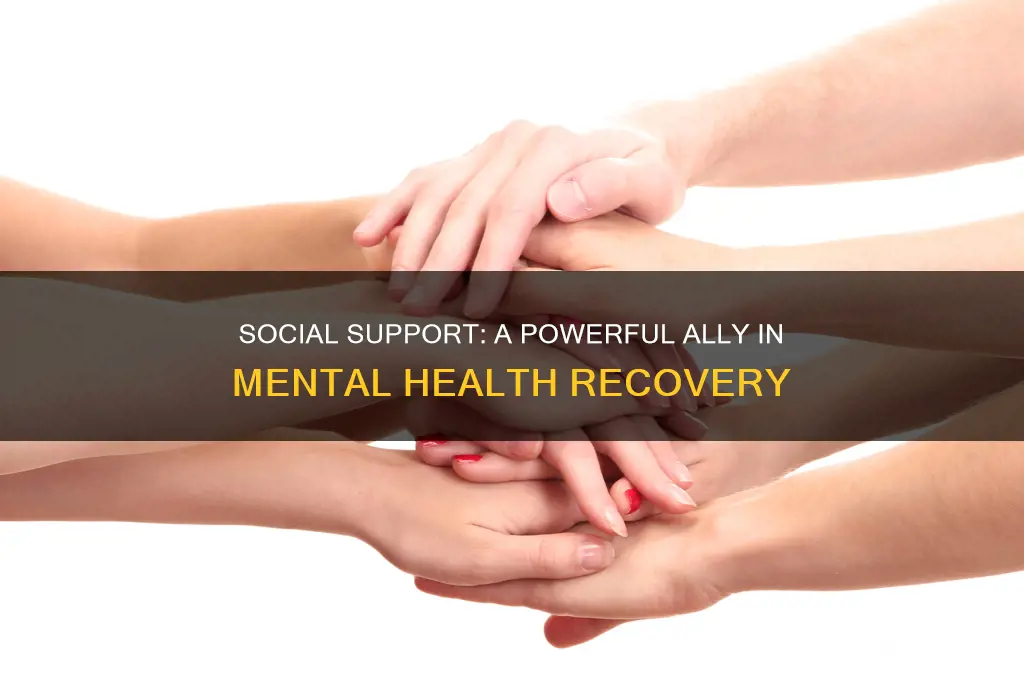
Social support plays a crucial role in managing and improving mental health by providing individuals with a sense of belonging, emotional reassurance, and practical assistance. Whether through family, friends, support groups, or community networks, having a reliable support system can significantly reduce feelings of isolation and stigma often associated with mental illness. Emotional support, such as listening and empathy, helps individuals feel understood and validated, while practical assistance, like help with daily tasks, can alleviate stress and create a more stable environment. Additionally, social connections encourage healthy behaviors, provide coping strategies, and foster resilience, ultimately enhancing overall well-being and aiding in the recovery process for those struggling with mental health challenges.
| Characteristics | Values |
|---|---|
| Reduces Stress | Social support helps buffer the effects of stress by providing emotional comfort, practical assistance, and a sense of belonging, which can lower cortisol levels and improve mental well-being. |
| Enhances Coping Mechanisms | Supportive relationships encourage adaptive coping strategies, such as problem-solving and emotional regulation, which are crucial for managing mental health challenges. |
| Boosts Self-Esteem | Positive social interactions and validation from others can improve self-worth and confidence, reducing symptoms of depression and anxiety. |
| Provides a Sense of Belonging | Feeling connected to a community or social network reduces feelings of loneliness and isolation, which are risk factors for mental illness. |
| Encourages Healthy Behaviors | Social support often promotes healthier lifestyle choices, such as regular exercise, better diet, and reduced substance abuse, which positively impact mental health. |
| Facilitates Access to Resources | Support networks can help individuals access mental health services, information, and practical resources, improving treatment outcomes. |
| Reduces Risk of Relapse | Consistent social support can prevent the recurrence of mental health issues by providing ongoing encouragement and monitoring. |
| Improves Emotional Regulation | Interacting with supportive individuals helps individuals process emotions more effectively, reducing emotional distress and improving mood stability. |
| Promotes Resilience | Social support fosters resilience by providing a safety net during difficult times, helping individuals bounce back from adversity. |
| Enhances Treatment Adherence | Individuals with strong social support are more likely to follow through with treatment plans, including therapy and medication, leading to better recovery outcomes. |
Explore related products


What You'll Learn
- Reducing Isolation: Social connections combat loneliness, fostering a sense of belonging and emotional support
- Stress Buffering: Support networks mitigate stress, lowering the risk of mental health deterioration
- Encouraging Treatment: Friends and family can motivate individuals to seek and adhere to therapy
- Emotional Validation: Support provides reassurance, helping individuals feel understood and less stigmatized
- Practical Assistance: Tangible help with daily tasks reduces overwhelm, easing mental health burdens

Reducing Isolation: Social connections combat loneliness, fostering a sense of belonging and emotional support
Loneliness isn't just a feeling; it's a public health crisis. Studies show chronic loneliness can increase the risk of depression by 50% and dementia by 40%. Social connections act as a powerful antidote, rewiring our brains to release oxytocin, the "love hormone," which reduces stress and promotes feelings of trust and bonding.
Consider the example of group therapy for anxiety disorders. Participants don't just learn coping mechanisms; they witness others facing similar struggles, normalizing their experiences and fostering a sense of "we're in this together." This shared vulnerability breaks down isolation, replacing it with a sense of belonging and collective resilience.
Even brief, regular social interactions can significantly impact mental well-being. A 2019 study found that individuals who engaged in just 15 minutes of meaningful conversation daily reported lower levels of loneliness and improved mood compared to those who didn't. Think of it as a social "vitamin" – small doses, consistently taken, yield noticeable benefits.
Building social connections requires intentionality. Join a book club, volunteer in your community, or attend local events. Online communities can also provide valuable support, especially for those with limited mobility or social anxiety. Remember, quality trumps quantity. Focus on cultivating relationships that feel authentic and mutually supportive.
Swimming's Impact: Boosting Mental Health and Well-Being Naturally
You may want to see also
Explore related products


Stress Buffering: Support networks mitigate stress, lowering the risk of mental health deterioration
Stress doesn’t discriminate—it affects everyone, but its impact on mental health varies dramatically based on the presence of social support. Research consistently shows that individuals with robust support networks experience lower levels of cortisol, the body’s primary stress hormone, during challenging situations. For instance, a study published in *Psychosomatic Medicine* found that participants with strong social ties exhibited a 10-14% reduction in cortisol levels compared to those with weaker connections. This physiological buffering effect underscores why loneliness is often a precursor to mental health decline, while social integration acts as a protective shield.
Consider the practical mechanics of stress buffering. When faced with a crisis, having someone to confide in doesn’t just provide emotional comfort—it alters how the brain perceives and responds to threats. For example, a friend’s reassurance during a job loss can shift the brain’s focus from catastrophic thinking to problem-solving, reducing the intensity of the stress response. This isn’t merely anecdotal; neuroimaging studies reveal that social support activates the ventral striatum, a brain region associated with reward and stress relief, effectively counteracting the amygdala’s alarm signals. The takeaway? A supportive conversation isn’t just nice—it’s neurologically transformative.
Building a stress-buffering network requires intentionality, not just proximity. Start by identifying 2-3 individuals who can provide consistent, nonjudgmental support—these are your "core allies." Schedule regular check-ins, even if it’s a 10-minute weekly call. For those over 65, intergenerational connections (e.g., mentoring a younger person) can be particularly effective, as they combat age-related isolation while fostering a sense of purpose. Caution: Avoid over-relying on a single person, as this can strain relationships. Diversify your support sources, including group activities like community classes or online forums, which provide collective buffering without the pressure of one-on-one interactions.
Critics might argue that not everyone has access to such networks, but even small, strategic interventions can yield significant results. For instance, a 2019 study in *The Lancet* found that group therapy sessions, which simulate social support, reduced stress-related symptoms by 30% in participants with anxiety disorders. Similarly, digital platforms like peer-support apps can bridge gaps for those in remote areas or with mobility limitations. The key is consistency: aim for at least one supportive interaction daily, whether it’s a text, a brief chat, or a shared activity. In the battle against stress, the cumulative effect of these micro-connections can be as powerful as any medication.
Supporting Reluctant Loved Ones: Strategies for Accessing Mental Health Care
You may want to see also
Explore related products


Encouraging Treatment: Friends and family can motivate individuals to seek and adhere to therapy
Social support is a cornerstone in the journey of managing mental illness, and one of its most impactful roles is in encouraging treatment. Friends and family can serve as catalysts for individuals to seek therapy and stick with it, often making the difference between recovery and relapse. Their influence is not just emotional but also practical, providing the nudge needed to overcome the stigma, fear, or inertia that often accompanies mental health struggles.
Consider the process of initiating therapy. For many, the first step is the hardest. Friends and family can play a pivotal role by normalizing the conversation around mental health, offering to help find a therapist, or even accompanying the individual to their first appointment. For instance, a study published in the *Journal of Consulting and Clinical Psychology* found that individuals with supportive partners were 60% more likely to attend therapy sessions consistently. This highlights the power of a simple yet profound action: being present. Practical tips include researching therapists together, discussing what to expect in sessions, and setting small, achievable goals like committing to three sessions before deciding whether to continue.
Adherence to therapy is another critical area where social support shines. Mental health treatment often requires long-term commitment, and motivation can wane over time. Here, friends and family can act as accountability partners, checking in regularly without being intrusive. For example, a weekly text asking, “How did your session go?” can reinforce the importance of therapy and provide an opportunity to celebrate progress or address challenges. It’s also essential to avoid judgment or pressure; instead, focus on empathy and encouragement. For adolescents, parental involvement in treatment plans has been shown to improve outcomes, particularly in cases of depression and anxiety, according to research from the *American Psychological Association*.
However, encouraging treatment isn’t without its challenges. Some individuals may resist help due to feelings of shame or a desire to handle things independently. In such cases, a gentle, non-confrontational approach is key. Sharing personal experiences with therapy or highlighting success stories can make the idea more relatable. For instance, saying, “I’ve found therapy really helpful for managing stress—I think it could be useful for you too,” frames therapy as a tool rather than a last resort. It’s also important to respect boundaries; pushing too hard can backfire, so patience and persistence are vital.
Ultimately, the role of friends and family in encouraging treatment is about creating a supportive ecosystem that fosters healing. By combining emotional backing with practical assistance, they can help dismantle barriers to therapy and reinforce its value. The takeaway is clear: social support isn’t just about being there—it’s about actively enabling the path to recovery. Whether through small gestures or significant interventions, the impact of such encouragement can be life-changing.
Furry Fandom and Mental Health: Exploring Emotional Benefits and Support
You may want to see also
Explore related products


Emotional Validation: Support provides reassurance, helping individuals feel understood and less stigmatized
Emotional validation is a cornerstone of social support for individuals grappling with mental illness. When someone acknowledges and accepts another’s feelings without judgment, it fosters a sense of being heard and understood. This simple act can dismantle the isolating walls of stigma, replacing them with a foundation of trust and empathy. For instance, a person struggling with anxiety might feel their fears are irrational, but a validating response like, “It makes sense that you’d feel overwhelmed in that situation,” can normalize their experience and reduce self-criticism.
Consider the mechanics of validation: it’s not about solving problems but about affirming emotions. Research shows that validated individuals are more likely to engage in open communication, a critical factor in managing mental health. For example, a study published in *Psychotherapy Research* found that clients who felt emotionally validated by their therapists reported greater progress in treatment. Practically, validation can be as straightforward as reflecting back what someone says—“I hear you saying you feel trapped”—or offering empathy without advice. Avoid dismissive phrases like “Just think positively” or “It’s not that bad,” which can invalidate experiences and deepen feelings of isolation.
Validation also plays a role in reducing stigma by humanizing mental health struggles. When friends, family, or peers respond with understanding rather than judgment, it challenges societal misconceptions about mental illness. For example, a teenager experiencing depression might feel ashamed until a parent says, “I can see how hard this is for you, and I’m here to help.” This shifts the narrative from one of weakness to one of shared humanity. Schools and workplaces can institutionalize validation by training staff in active listening and empathetic responses, creating environments where mental health is treated with the same urgency as physical health.
To incorporate validation into daily interactions, start with small, intentional steps. Ask open-ended questions like, “How does that feel for you?” instead of assuming you know. Use nonverbal cues—a nod, a gentle touch—to show you’re engaged. For caregivers, it’s crucial to manage your own emotional responses; if you’re overwhelmed, take a pause before replying. Remember, validation isn’t about agreeing with every feeling but about respecting the person’s right to feel it. Over time, this practice can build resilience, strengthen relationships, and create a safety net for those navigating mental health challenges.
In essence, emotional validation is a powerful tool that transforms how individuals perceive themselves and their struggles. By offering reassurance and understanding, it dismantles stigma and fosters a culture of compassion. Whether in personal relationships or institutional settings, validation is a low-cost, high-impact intervention that can significantly improve mental health outcomes. Start today—listen deeply, respond thoughtfully, and watch how a few words of genuine understanding can change someone’s world.
Superstitions and Mental Health: Unraveling the Psychological Comfort They Offer
You may want to see also
Explore related products


$33.9 $55.99


Practical Assistance: Tangible help with daily tasks reduces overwhelm, easing mental health burdens
Mental health struggles often manifest in the mundane—the pile of dishes in the sink, the unanswered emails, the unmade bed. These small, daily tasks can become monumental when depression, anxiety, or other conditions sap energy and motivation. Practical assistance, such as help with grocery shopping, meal preparation, or household chores, directly addresses this overwhelm. For instance, a study published in the *Journal of Community Psychology* found that individuals with depression who received tangible help with daily tasks reported a 30% reduction in feelings of helplessness within six weeks. This kind of support doesn’t just lighten the load; it restores a sense of control and normalcy, which are critical for mental health recovery.
Consider the case of a 32-year-old woman with generalized anxiety disorder who described her experience: “When my sister started picking up my kids from school twice a week, it wasn’t just about the time it saved me. It was about knowing I wasn’t failing them, that someone was there to fill the gaps.” This example underscores the emotional relief that comes with practical assistance. By removing the stress of unfinished tasks, individuals can redirect their energy toward self-care, therapy, or simply resting—all essential for healing. For caregivers, offering specific, actionable help (e.g., “I’ll cook dinner on Tuesdays” instead of “Let me know if you need anything”) ensures the support is both meaningful and sustainable.
However, providing practical assistance isn’t without its challenges. Caregivers must balance helping with fostering independence to avoid creating dependency. For example, a 2018 study in *Psychiatric Services* highlighted that overly intrusive assistance can erode self-efficacy, particularly in younger adults (ages 18–25). To mitigate this, adopt a collaborative approach: ask, “What would be most helpful for you today?” or suggest task-sharing (e.g., folding laundry together). Additionally, limit assistance to 2–3 tasks per week to prevent burnout for both parties. Tools like shared calendars or task apps can streamline coordination without adding pressure.
The impact of practical assistance extends beyond immediate relief. A longitudinal study in *The Lancet Psychiatry* found that individuals with schizophrenia who received consistent help with daily tasks were 40% more likely to adhere to medication regimens and attend therapy sessions. This ripple effect demonstrates how tangible support creates a foundation for broader mental health management. For older adults (ages 65+), combining practical help with social interaction—such as grocery shopping together—can combat isolation, a known risk factor for depression. The key is to tailor the assistance to the individual’s needs, ensuring it feels empowering, not patronizing.
Incorporating practical assistance into mental health support requires intentionality and empathy. Start small, observe what tasks are most burdensome, and offer help in a way that preserves dignity. For instance, instead of saying, “Your house is a mess,” frame it as, “I’d love to help you tidy up this weekend—what’s the best way to do that?” Remember, the goal isn’t to fix everything but to create breathing room. By reducing the weight of daily tasks, practical assistance becomes a powerful tool in the toolkit for managing mental illness, one folded laundry basket or cooked meal at a time.
Counseling for Mental Health: Effective Support or Overrated Solution?
You may want to see also
Frequently asked questions
Social support provides emotional reassurance, practical assistance, and a sense of belonging, which can reduce stress, loneliness, and symptoms of mental illness. It also encourages individuals to seek help and adhere to treatment plans.
Emotional support (e.g., empathy, listening), informational support (e.g., advice, guidance), and tangible support (e.g., financial or physical assistance) are all beneficial. A combination of these types often yields the best outcomes.
While it cannot guarantee prevention, strong social support can act as a protective factor by reducing risk factors like stress, isolation, and trauma, which are often linked to mental health issues.
Joining support groups, engaging in community activities, maintaining open communication with loved ones, and seeking professional help to improve social skills can all help build a supportive network. Online communities can also provide additional connections.