Noah Parker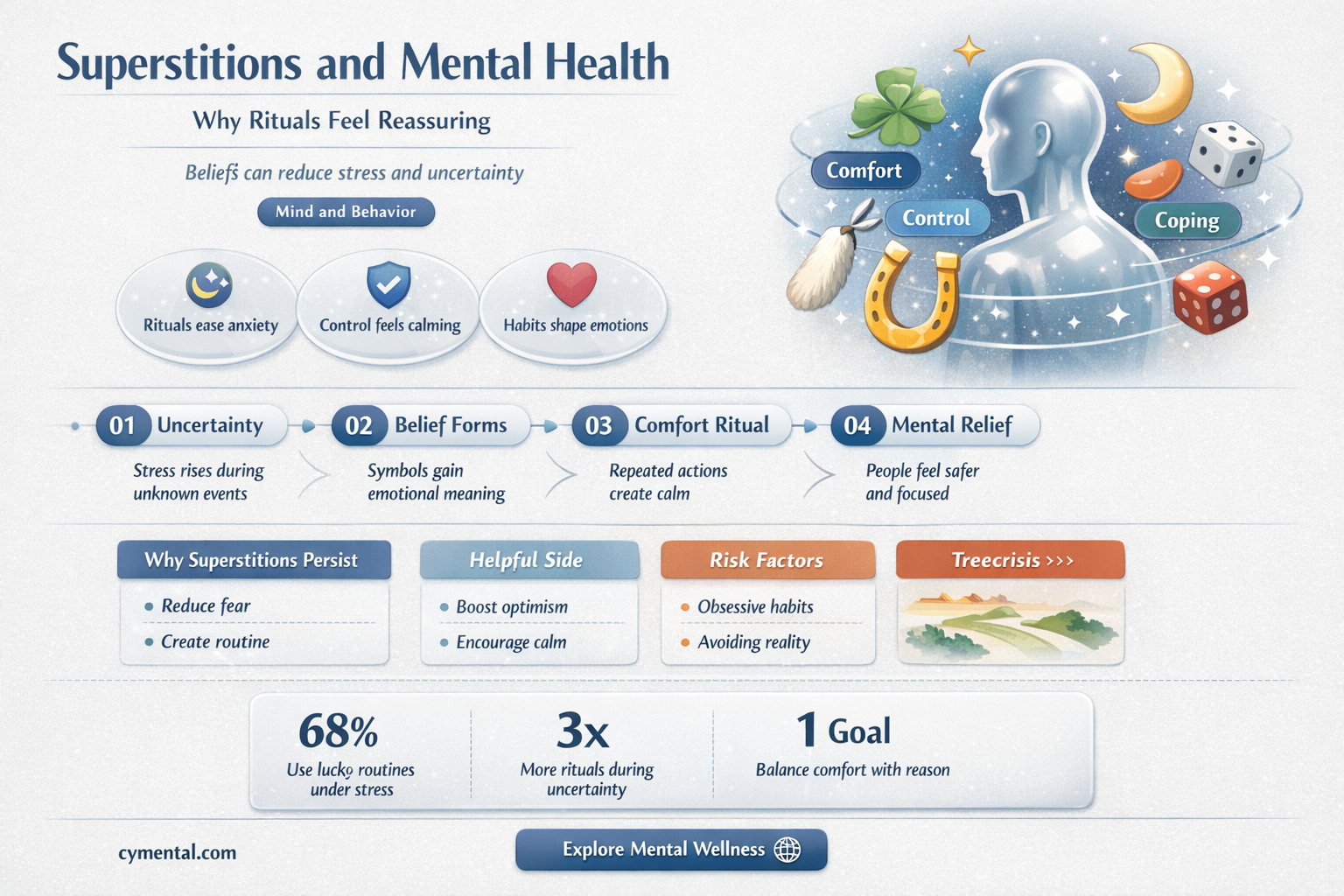
Superstitions, often dismissed as irrational beliefs, have long been a part of human culture, influencing behavior and decision-making across societies. While they are frequently associated with luck, fate, or supernatural forces, their impact on mental well-being is a fascinating and complex topic. Some argue that superstitions can provide a sense of control and comfort in uncertain situations, reducing anxiety and boosting confidence. For instance, rituals like knocking on wood or carrying a lucky charm may act as psychological coping mechanisms, offering a perceived safety net in stressful environments. However, others contend that relying on superstitions can reinforce a mindset of helplessness or irrationality, potentially hindering problem-solving skills and fostering dependency on external, often unfounded, beliefs. Exploring whether superstitions help or harm mental health requires examining their psychological effects, cultural significance, and the fine line between harmless tradition and detrimental reliance.
| Characteristics | Values |
|---|---|
| Psychological Comfort | Superstitions can provide a sense of control and predictability, reducing anxiety and stress in uncertain situations. |
| Coping Mechanism | They serve as a way to cope with stress, fear, or uncertainty by offering a perceived sense of order and meaning. |
| Performance Enhancement | Some studies suggest that superstitions can improve performance by boosting confidence and reducing performance anxiety. |
| Cultural and Social Bonding | Superstitions often reinforce cultural identity and social connections, providing a sense of belonging and shared values. |
| Placebo Effect | Believing in a superstition can lead to positive outcomes due to the placebo effect, where expectation influences results. |
| Cognitive Bias | Superstitions can stem from cognitive biases like confirmation bias, where individuals seek and interpret information that confirms their beliefs. |
| Potential Negative Impact | Over-reliance on superstitions can lead to irrational decision-making, increased anxiety, or avoidance of evidence-based solutions. |
| Individual Variability | The mental impact of superstitions varies widely among individuals, depending on personal beliefs, cultural background, and psychological traits. |
| Neurological Basis | Some research suggests that superstitions may be linked to brain regions involved in pattern recognition and reward processing. |
| Evolutionary Perspective | Superstitions may have evolved as a way to make sense of the environment and reduce uncertainty in early human societies. |
Explore related products


What You'll Learn
- Comfort in Uncertainty: Superstitions provide predictable patterns, reducing anxiety in ambiguous situations
- Control Illusion: Rituals create a sense of control over uncontrollable outcomes, easing stress
- Community Bonding: Shared superstitions foster belonging and social support, boosting mental well-being
- Positive Thinking: Lucky charms encourage optimism, potentially improving mood and resilience
- Coping Mechanism: Superstitions serve as psychological tools to manage fear and adversity

Comfort in Uncertainty: Superstitions provide predictable patterns, reducing anxiety in ambiguous situations
Superstitions often emerge as mental anchors in the tempest of uncertainty. Consider the athlete who wears the same socks for every game or the student who sits in the same exam seat for luck. These rituals create a sense of control in situations where outcomes are unpredictable. Psychologically, the brain craves patterns, and superstitions provide a framework that mimics predictability, even if the connection between action and result is illusory. This mental scaffolding can reduce anxiety by shifting focus from the ambiguous external environment to a familiar internal routine.
To harness this effect, identify small, repeatable actions that feel personally meaningful. For instance, a pre-interview ritual might involve wearing a specific piece of jewelry or listening to a particular song. The key is consistency—the brain thrives on repetition, and over time, these actions can become triggers for a calmer state. However, caution is necessary: rituals should enhance, not replace, preparation. A superstition is most effective when paired with tangible effort, such as studying for an exam rather than relying solely on a "lucky pen."
Comparatively, superstitions function similarly to coping mechanisms in cognitive-behavioral therapy, which often involves creating structured responses to stress. For example, a therapist might recommend deep breathing exercises to manage anxiety. Superstitions, though less scientifically grounded, serve a parallel purpose by offering a sense of order. Research suggests that individuals who engage in superstitious behavior report lower stress levels in high-pressure scenarios, such as athletes before a competition. This parallels the way mindfulness practices reduce anxiety by grounding individuals in the present.
Practically, integrating superstitions into daily life requires balance. Start by acknowledging areas of uncertainty that cause distress, such as public speaking or decision-making. Then, introduce a simple, symbolic action—like carrying a token or repeating a phrase—that feels personally empowering. Monitor its impact over time, adjusting as needed. For children or highly anxious individuals, this approach can be particularly beneficial, as it provides a tangible way to manage fear. However, be wary of over-reliance; superstitions should complement, not dominate, decision-making processes.
In conclusion, superstitions act as psychological tools that transform chaos into routine, offering comfort in uncertainty. By creating predictable patterns, they reduce anxiety and foster a sense of control. When used thoughtfully, these rituals can be a practical strategy for navigating life’s ambiguities, provided they remain one part of a broader toolkit for mental well-being.
Exploring CBD Oil's Potential Benefits for Mental Health Disorders
You may want to see also
Explore related products


Control Illusion: Rituals create a sense of control over uncontrollable outcomes, easing stress
Superstitions often involve rituals—lucky socks before a game, a specific route to work, or tapping a pen three times. These actions, though seemingly irrational, serve a profound psychological purpose: they create an illusion of control in unpredictable situations. When faced with uncertainty, the human brain craves order, and rituals provide a structured response, even if the outcome remains uncontrollable. This illusion of control can reduce stress by shifting focus from anxiety to action, transforming helplessness into agency.
Consider athletes who follow pre-game rituals. A study published in *Psychological Science* found that rituals, whether superstitious or not, enhance performance by reducing anxiety. The act of performing a ritual—like bouncing a basketball a certain number of times—redirects attention from the fear of failure to the familiar routine. This mental shift lowers cortisol levels, the stress hormone, and primes the brain for focus. For instance, a golfer who always marks their ball in a specific way before putting may feel more confident, even if the ritual has no direct impact on the shot’s outcome.
However, the effectiveness of this control illusion depends on its execution. Rituals must be consistent and personally meaningful to work. A ritual performed haphazardly or without belief loses its power. For example, a student who wears a “lucky” bracelet during exams but doesn’t genuinely associate it with success will gain no psychological benefit. The key is conviction—the stronger the belief in the ritual’s efficacy, the greater the stress relief. This is why superstitions often thrive in high-stakes scenarios, like exams, sports, or public performances.
Critics argue that relying on rituals can become maladaptive if it replaces practical problem-solving. For instance, a person who avoids taking medication for anxiety because they believe a charm will protect them risks worsening their condition. To avoid this, rituals should complement, not replace, rational strategies. A practical tip: pair rituals with actionable steps. If you’re nervous about a presentation, practice thoroughly *and* wear your “lucky” tie. This dual approach maintains the stress-relieving benefits of the ritual while ensuring preparedness.
In essence, the control illusion created by rituals is a double-edged sword. When used mindfully, it can be a powerful tool for managing stress in uncontrollable situations. But it requires balance—belief without blind reliance, routine without rigidity. For those seeking to harness this effect, start small: identify one stressful scenario and introduce a simple, meaningful ritual. Over time, observe how this practice shifts your mindset from anxiety to action, turning uncertainty into a canvas for control.
Addressing Mental Health: Are Our Efforts Truly Making a Difference?
You may want to see also
Explore related products


Community Bonding: Shared superstitions foster belonging and social support, boosting mental well-being
Shared superstitions often serve as unspoken rules within communities, subtly reinforcing group identity and fostering a sense of belonging. Consider sports teams that wear "lucky" socks or families that avoid cracking eggs on Tuesdays—these rituals create a shared language of belief. Psychologically, such practices activate the brain’s need for pattern recognition and control, reducing anxiety in uncertain situations. For instance, a study published in the *Journal of Experimental Psychology* found that individuals who engaged in pre-exam rituals reported feeling more confident and performed better, not because of the rituals themselves, but because they reduced stress through familiarity and group alignment. This highlights how shared superstitions act as social glue, binding individuals through collective action.
To leverage this phenomenon for mental well-being, start by identifying existing superstitions within your community or creating new ones that align with shared values. For example, a workplace might adopt a "high-five before meetings" ritual to foster camaraderie. The key is consistency—repetition reinforces the ritual’s significance. Caution, however, against superstitions that exclude or stigmatize. A ritual should be inclusive, like a neighborhood tradition of lighting candles on the first day of the month for collective hope, rather than singling out individuals for blame or luck. Practical tip: Pair rituals with positive affirmations to amplify their psychological benefits, such as saying, "We’ve got this" while performing the action.
Comparatively, communities without shared rituals often report higher levels of social fragmentation and individual stress. For instance, research on immigrant communities shows that those who maintain cultural superstitions experience greater emotional resilience and social support than those who abandon them. This isn’t about the superstition’s validity but its role as a cultural anchor. In contrast, forced or imposed rituals can backfire, leading to resentment rather than unity. The takeaway? Authenticity matters. Superstitions must emerge organically or be adapted thoughtfully to resonate with the group’s identity.
Finally, consider the long-term impact of shared superstitions on mental health. A longitudinal study in *Social Science & Medicine* found that communities with strong ritual practices exhibited lower rates of depression and anxiety over time. The mechanism? Rituals provide a sense of continuity and predictability, buffering against life’s unpredictability. For families, this could mean a weekly "gratitude circle" where members share one positive experience. For larger groups, annual events like a harvest festival or memorial day observance can deepen connections. The dosage? Aim for at least one shared ritual per week to maintain its psychological benefits without overloading participants. By embedding superstitions into community life, we not only preserve traditions but also nurture mental well-being through collective support.
Shiatsu Therapy: A Natural Approach to Mental Health and Wellness
You may want to see also
Explore related products




Positive Thinking: Lucky charms encourage optimism, potentially improving mood and resilience
Superstitions often get a bad rap for being irrational, but their psychological benefits are worth exploring. One intriguing aspect is how lucky charms can foster positive thinking, acting as tangible anchors for optimism. These objects—whether a rabbit’s foot, a four-leaf clover, or a cherished piece of jewelry—serve as reminders of hope and possibility. By associating them with good fortune, individuals may unconsciously shift their mindset toward expecting positive outcomes, a practice rooted in cognitive behavioral principles.
Consider the placebo effect, a well-documented phenomenon where belief in a treatment’s efficacy can produce real physiological and psychological improvements. Lucky charms operate similarly, acting as psychological placebos that encourage optimism. For instance, an athlete wearing a "lucky" headband might feel more confident during a competition, leading to improved performance. This isn’t about the object itself but the mindset it triggers—a mindset that can enhance mood and resilience in the face of challenges.
To harness this effect, start by choosing an object that holds personal significance. It could be a gift from a loved one, a memento from a happy time, or something that simply resonates with you. Carry it with you or place it in a visible spot, using it as a cue to reframe negative thoughts. For example, if you’re feeling anxious before a presentation, holding your lucky charm and recalling past successes can help shift your focus from fear to confidence. Consistency is key—the more you associate the object with positive thinking, the stronger its psychological impact.
However, it’s important to use lucky charms as tools, not crutches. Over-reliance on external objects can undermine self-efficacy, the belief in one’s ability to handle situations independently. Balance is crucial: let your lucky charm complement, not replace, internal coping strategies like mindfulness or self-affirmation. For children, this practice can be particularly beneficial when introduced as a way to build confidence rather than as a magical solution to problems.
Incorporating lucky charms into daily life can be a simple yet effective way to nurture optimism. Whether you’re preparing for a big event or navigating everyday stressors, these objects can serve as reminders that positivity is a choice. By leveraging their psychological power, you can cultivate a more resilient mindset, turning superstition into a practical tool for mental well-being.
Can Specific Frequencies Boost Your Mood and Mental Well-being?
You may want to see also
Explore related products


$9.99 $12.99


![Superstition [DVD]](https://m.media-amazon.com/images/I/51RJ99FTF6L._AC_UY218_.jpg)
Coping Mechanism: Superstitions serve as psychological tools to manage fear and adversity
Superstitions, often dismissed as irrational, can act as powerful psychological coping mechanisms. When faced with uncertainty or fear, the human mind seeks patterns and control. Superstitions provide a sense of predictability, even if illusory, which can reduce anxiety. For example, athletes who wear lucky socks or follow pre-game rituals often report feeling more confident and focused. This isn’t about the socks themselves but the mental reassurance they offer. By attributing outcomes to a ritual, individuals shift their focus from fear of failure to a manageable, actionable practice.
Consider the placebo effect, a well-documented phenomenon where belief in a treatment’s efficacy produces real physiological changes. Superstitions operate similarly, acting as mental placebos. A study published in *Psychological Science* found that participants who performed a "lucky" ritual before a task exhibited lower stress levels and improved performance. The ritual itself was meaningless, but its psychological impact was measurable. This suggests that superstitions can serve as practical tools for managing stress, particularly in high-pressure situations like exams, public speaking, or competitive sports.
However, the effectiveness of superstitions as coping mechanisms depends on their application. For adults aged 18–35, incorporating small, harmless rituals into daily routines—like tapping a desk three times before a meeting—can provide a sense of control without disrupting life. For older adults, superstitions tied to cultural or familial traditions may offer comfort and continuity. Caution is advised, though, as excessive reliance on superstitions can lead to compulsive behaviors. The key is moderation: use superstitions as a supplement to, not a replacement for, evidence-based coping strategies like mindfulness or therapy.
To harness superstitions effectively, start by identifying specific fears or stressors. For instance, if public speaking triggers anxiety, adopt a pre-speech ritual like holding a particular object or repeating a phrase. Pair this with deep breathing exercises for maximum benefit. Avoid rituals that interfere with daily functioning or cause distress. For parents, encouraging children to create their own "lucky charms" can teach them to manage fear creatively, but ensure they understand the difference between symbolic comfort and reality. Superstitions, when used mindfully, can be a practical, low-cost tool in the mental health toolkit.
Vitamin D's Role in Boosting Mental Health and Well-being
You may want to see also
Frequently asked questions
Superstitions can provide a sense of control and predictability, which may temporarily reduce anxiety for some individuals. However, this effect is often psychological and not based on real influence over outcomes.
Superstitions can offer comfort and a feeling of security, which may contribute to mental well-being for those who believe in them. However, they are not a substitute for evidence-based mental health practices.
While some superstitions are harmless, others can lead to obsessive or compulsive behaviors, especially if they interfere with daily life. In such cases, they may negatively impact mental health.
Yes, superstitions can act as a coping mechanism by offering a ritualistic or symbolic way to manage stress. However, their effectiveness varies widely among individuals.
Yes, relying on superstitions can create a false sense of security, as they do not guarantee outcomes. This can lead to disappointment or increased stress if expectations are not met.