Caleb Wright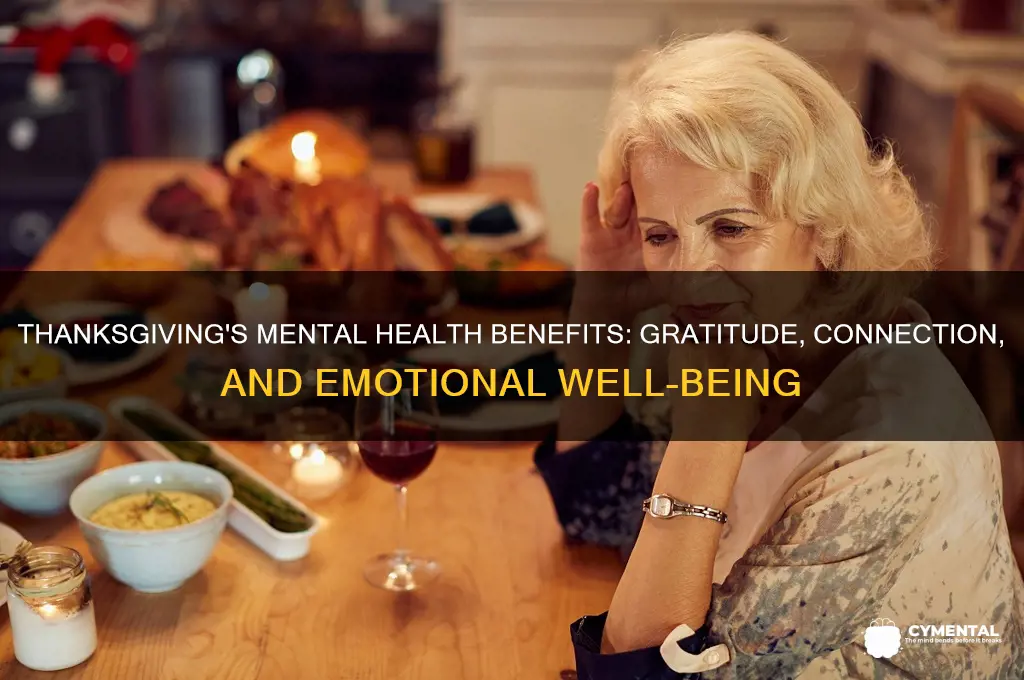
Thanksgiving, a holiday centered around gratitude and connection, offers profound mental health benefits by fostering a sense of appreciation, reducing stress, and strengthening social bonds. The act of reflecting on what we’re thankful for shifts focus from negativity to positivity, promoting a more optimistic mindset and reducing symptoms of anxiety and depression. Gathering with loved ones during this time combats feelings of loneliness, providing emotional support and a sense of belonging. Additionally, the rituals of preparing and sharing a meal create a sense of purpose and tradition, grounding individuals in the present moment. By encouraging mindfulness and gratitude, Thanksgiving serves as a powerful reminder of life’s blessings, enhancing overall mental well-being and resilience.
| Characteristics | Values |
|---|---|
| Gratitude Practice | Enhances mental well-being by fostering appreciation for life's blessings, reducing stress, and improving overall happiness. |
| Social Connection | Strengthens relationships through shared meals and conversations, combating loneliness and promoting emotional support. |
| Mindfulness | Encourages being present in the moment, reducing anxiety and improving mental clarity. |
| Positive Reflection | Promotes self-reflection on achievements and positive experiences, boosting self-esteem and resilience. |
| Stress Reduction | Provides a break from daily routines, lowering cortisol levels and alleviating mental fatigue. |
| Cultural and Family Traditions | Offers a sense of belonging and identity, contributing to emotional stability and mental health. |
| Acts of Kindness | Engaging in giving or volunteering increases oxytocin levels, reducing stress and improving mood. |
| Improved Sleep | Rituals and relaxation associated with Thanksgiving can enhance sleep quality, benefiting mental health. |
| Focus on Abundance | Shifts mindset from scarcity to abundance, reducing negative thought patterns and fostering optimism. |
| Memory Creation | Builds positive memories, which can serve as a mental buffer against future stress and adversity. |
Explore related products



What You'll Learn
- Gratitude Practice: Reflecting on blessings reduces stress, fosters positivity, and enhances overall mental well-being during Thanksgiving
- Social Connection: Gathering with loved ones combats loneliness, strengthens bonds, and boosts emotional support
- Mindful Eating: Savoring Thanksgiving meals promotes mindfulness, reduces overeating, and improves mental clarity
- Tradition & Routine: Familiar rituals provide comfort, stability, and a sense of purpose during the holiday
- Reflection & Growth: Thanksgiving encourages self-reflection, gratitude for progress, and a positive outlook on life

Gratitude Practice: Reflecting on blessings reduces stress, fosters positivity, and enhances overall mental well-being during Thanksgiving
Thanksgiving, a time traditionally marked by feasting and family gatherings, serves as a natural catalyst for gratitude practice. This period encourages individuals to pause and reflect on their blessings, a habit that has been scientifically linked to reduced stress and enhanced mental well-being. Research from the University of California, Davis, found that people who kept gratitude journals reported significantly better physical health, more optimism, and greater progress toward personal goals compared to those who recorded hassles or neutral events. During Thanksgiving, this practice becomes more than a routine—it transforms into a communal ritual, amplifying its psychological benefits.
To harness these benefits, consider incorporating structured gratitude exercises into your Thanksgiving routine. Start by setting aside 10–15 minutes each day leading up to the holiday to write down three specific things you’re grateful for. Be detailed—instead of noting “family,” reflect on a recent moment of connection, like a shared laugh or a supportive conversation. For families, create a gratitude jar where each member adds a note of thanks daily. On Thanksgiving Day, read these aloud as a group, fostering a collective sense of appreciation. Studies show that expressing gratitude socially not only strengthens relationships but also deepens the individual’s experience of positivity.
While gratitude practice is powerful, it’s essential to approach it authentically. Avoid treating it as a checklist or forcing positivity when you’re not feeling it. If you’re struggling to find something to be grateful for, start small—a warm cup of coffee, a sunny day, or even the ability to breathe. Psychologists emphasize that gratitude isn’t about ignoring challenges but about shifting focus to what sustains us. For those dealing with grief or loss, acknowledging pain while finding small moments of light can be particularly healing. Thanksgiving, with its emphasis on togetherness, provides a supportive environment for this balanced approach.
Comparing gratitude practice to other stress-reduction techniques highlights its unique advantages. While mindfulness encourages presence and meditation fosters calm, gratitude actively rewires the brain to notice and savor positive experiences. A study published in *Psychological Science* found that participants who wrote gratitude letters reported significantly better mental health four weeks and 12 weeks after the exercise. Unlike temporary fixes, gratitude builds emotional resilience over time. Thanksgiving offers a prime opportunity to initiate or deepen this practice, leveraging the holiday’s themes of abundance and connection.
Finally, the mental health benefits of gratitude extend beyond the individual, creating a ripple effect within communities. When gratitude becomes a shared practice, it strengthens social bonds and cultivates a culture of appreciation. For example, schools that incorporate gratitude activities report improved student well-being and classroom dynamics. Similarly, workplaces that encourage gratitude see higher employee satisfaction and productivity. This Thanksgiving, consider how your personal gratitude practice can inspire others—whether by sharing your reflections, volunteering, or simply expressing thanks to those around you. In doing so, you not only enhance your own mental well-being but also contribute to a more positive, connected world.
Australia's Innovative Mental Health Support: Initiatives and Impact
You may want to see also
Explore related products


Social Connection: Gathering with loved ones combats loneliness, strengthens bonds, and boosts emotional support
Thanksgiving gatherings serve as a powerful antidote to loneliness, a condition that affects nearly 25% of adults in the U.S. and is linked to increased risks of depression, anxiety, and even cardiovascular disease. By bringing together family and friends under one roof, these celebrations create a sense of belonging that momentarily eclipses feelings of isolation. The act of sharing a meal, engaging in conversation, and participating in traditions fosters an environment where individuals feel seen, heard, and valued. For those who may spend much of the year disconnected, this annual ritual can be a lifeline, offering a concentrated dose of social interaction that replenishes emotional reserves.
To maximize the mental health benefits of Thanksgiving gatherings, consider structuring the event to encourage meaningful connections. Start by assigning seating arrangements that mix different age groups or personalities, fostering cross-generational conversations. Incorporate activities like storytelling, games, or collaborative cooking that require interaction and cooperation. For those hosting, create a welcoming atmosphere by setting aside technology-free zones or suggesting a digital detox during the meal. Guests can contribute by actively listening, asking open-ended questions, and sharing personal experiences, ensuring everyone feels included. These intentional steps transform the gathering from a passive event into an active opportunity for connection.
A comparative analysis reveals that the emotional support gained from Thanksgiving gatherings is not just about the quantity of time spent together but the quality of interactions. Unlike casual encounters or virtual exchanges, face-to-face meetings during holidays engage multiple senses—the warmth of a hug, the aroma of shared food, the sound of laughter—deepening emotional bonds. Research shows that such multisensory experiences trigger the release of oxytocin, often called the "bonding hormone," which reduces stress and enhances feelings of trust. This biochemical response underscores why a single day of meaningful connection can have lasting effects, strengthening relationships long after the holiday ends.
For those who find large gatherings overwhelming or lack a traditional family structure, adapting the concept of "loved ones" can still yield mental health benefits. Friends, chosen families, or even community groups can serve as substitutes, providing the same sense of belonging and support. Volunteering at a local shelter or organizing a potluck with neighbors are alternative ways to combat loneliness while contributing to a larger cause. The key is to prioritize connection in whatever form feels authentic and comfortable. By reframing Thanksgiving as a celebration of gratitude and togetherness rather than a rigid tradition, individuals can tailor the experience to meet their emotional needs.
Addressing Mental Health Support for Children Living in Poverty
You may want to see also
Explore related products




Mindful Eating: Savoring Thanksgiving meals promotes mindfulness, reduces overeating, and improves mental clarity
Thanksgiving, a feast of abundance, often tempts us to devour without pause. Yet, mindful eating transforms this indulgence into an opportunity for mental nourishment. By savoring each bite, we engage our senses fully—noting the crispness of roasted vegetables, the richness of gravy, or the sweetness of cranberry sauce. This deliberate focus anchors us in the present, fostering mindfulness that extends beyond the table. Studies show that mindful eating reduces stress and enhances emotional well-being, making it a powerful tool during a holiday often fraught with familial or social pressures.
To practice mindful eating during Thanksgiving, start with a simple technique: take three deep breaths before picking up your fork. This pause signals a shift from autopilot to intention. Chew each bite at least 20 times—a practice backed by nutritionists to aid digestion and allow the brain to register fullness. Between bites, set your utensils down. This small act prevents mindless shoveling and encourages appreciation of flavors and textures. For families, consider a "no screens" rule during dinner, fostering connection and collective mindfulness.
Comparing mindful eating to its opposite reveals stark contrasts. Mindless eating—common during holiday feasts—leads to overeating, discomfort, and post-meal guilt. In contrast, mindfulness reduces calorie intake by up to 30%, according to research from the Journal of Nutrition Education and Behavior. It also improves mental clarity by lowering cortisol levels, the stress hormone often elevated during chaotic gatherings. Imagine leaving the table feeling satisfied, not stuffed, with a clear mind ready to engage in meaningful conversations or activities.
A practical tip for beginners: designate a "mindful minute" at the start of the meal. Close your eyes and take an inventory of aromas, sounds, and emotions. This ritual primes the brain for presence. For children, turn mindfulness into a game by asking them to describe their food using all five senses. Such engagement not only teaches healthy habits but also creates lasting holiday memories. By reframing Thanksgiving as a celebration of mindful indulgence, we nurture both body and mind, proving that the true feast lies in how we eat, not just what we eat.
Black Music's Healing Power: Boosting Mental Health and Well-being
You may want to see also
Explore related products



Tradition & Routine: Familiar rituals provide comfort, stability, and a sense of purpose during the holiday
Thanksgiving, with its predictable rhythms and cherished customs, anchors us in a sea of uncertainty. The annual recurrence of familiar rituals—setting the table with the same linen, preparing the turkey to a well-worn recipe, or gathering around the TV for the Macy’s parade—creates a psychological scaffold. Neuroscientific research underscores the value of routine: repetitive actions trigger the release of dopamine, a neurotransmitter linked to reward and pleasure, while reducing cortisol, the stress hormone. For children, especially those under 12, these rituals foster a sense of security, as their developing brains thrive on predictability. For adults, they offer a respite from the chaos of daily life, a mental "safe space" where roles and expectations are clear.
Consider the act of cooking traditional dishes as a form of therapeutic engagement. The tactile process of kneading dough, chopping vegetables, or basting a turkey engages the senses in a way that mimics mindfulness practices. A 2018 study published in the *Journal of Positive Psychology* found that individuals who engaged in "meaningful repetitive activities" reported lower levels of anxiety and higher levels of life satisfaction. Thanksgiving rituals, often intergenerational, amplify this effect by weaving personal history into the present. For instance, using a grandmother’s gravy boat or reciting a family grace connects individuals to a lineage, reinforcing identity and belonging.
However, the power of tradition isn’t without its pitfalls. Rigid adherence to rituals can become a source of stress, particularly when expectations clash with reality. A burnt pie or a last-minute cancellation shouldn’t derail the entire holiday. Psychologists recommend flexibility within structure: maintain core traditions (like the turkey dinner) but allow room for improvisation (perhaps a store-bought dessert or a virtual toast). For those hosting, delegating tasks can alleviate pressure while fostering communal participation. For guests, contributing a dish or game introduces novelty without disrupting the framework.
To maximize the mental health benefits of Thanksgiving traditions, start by identifying the rituals that hold the most meaning for you and your loved ones. If you’re crafting new traditions, begin small—a shared playlist, a gratitude jar, or a post-dinner walk. For families with young children, involve them in age-appropriate tasks, such as setting the kids’ table or decorating placemats, to instill a sense of contribution. For older adults, recording family stories during the holiday preserves legacy while deepening connections. The goal isn’t perfection but presence—engaging fully in the moment, knowing the structure of tradition holds you steady.
Ultimately, Thanksgiving’s rituals serve as a microcosm of resilience, a reminder that stability can coexist with change. They teach us that comfort isn’t found in immutability but in the intentional repetition of acts that matter. Whether you’re gathering with a crowd or celebrating solo, the act of honoring tradition—even in modified form—reinforces the holiday’s core message: gratitude for what endures. In a world that often feels unmoored, these rituals are more than customs; they’re lifelines.
Talking Therapy: Unlocking Healing and Hope for Mental Illness Patients
You may want to see also
Explore related products



Reflection & Growth: Thanksgiving encourages self-reflection, gratitude for progress, and a positive outlook on life
Thanksgiving, often associated with feasting and family gatherings, serves as a powerful catalyst for mental well-being by fostering self-reflection and personal growth. The act of pausing to acknowledge what we’re grateful for shifts our focus from what’s lacking to what’s abundant, rewiring our brains to perceive life more positively. Research in positive psychology shows that regular gratitude practices, like those encouraged during Thanksgiving, can reduce stress hormones by up to 23% and increase dopamine levels, enhancing overall mood. This holiday isn’t just about turkey and pie—it’s a structured opportunity to evaluate our progress, celebrate small victories, and recalibrate our mindset for the future.
To harness Thanksgiving’s reflective power, start by carving out 10–15 minutes of quiet time amidst the festivities. Use this moment to journal about three specific achievements or lessons from the past year, no matter how minor. For instance, mastering a new skill, mending a relationship, or simply surviving a challenging period all qualify. Pair each reflection with a tangible expression of gratitude, such as writing a thank-you note or sharing your appreciation aloud with someone. This dual practice of acknowledging progress and expressing thanks amplifies the mental benefits, creating a sense of closure and forward momentum.
A comparative analysis reveals that cultures with gratitude-focused traditions, like Thanksgiving in the U.S. or Japan’s *Kanshiki* (gratitude festivals), report higher levels of life satisfaction and resilience. The key lies in the ritual’s ability to interrupt autopilot living and encourage mindful evaluation. Unlike New Year’s resolutions, which often pressure us to start anew, Thanksgiving invites us to build upon existing foundations. This perspective reduces anxiety about the future by emphasizing growth over perfection, making it an ideal mental reset for all age groups, from teens navigating identity to seniors reflecting on legacy.
For maximum impact, extend the reflective practice beyond the holiday. Create a “gratitude anchor”—a physical object or daily habit that reminds you of your Thanksgiving insights. For example, a photo from the gathering, a saved journal entry, or a nightly ritual of listing three good things from the day. Studies show that consistency in gratitude practices, even just 3–5 minutes daily, can rewire neural pathways within 21 days, embedding a more optimistic outlook. By treating Thanksgiving as a starting point rather than a one-off event, you transform fleeting gratitude into a sustainable mindset shift.
Finally, beware of falling into the trap of toxic positivity, where gratitude becomes a tool to suppress negative emotions rather than process them. True reflection acknowledges struggles alongside successes, using both as fuel for growth. If you find yourself glossing over hardships, pause and reframe: “I’m grateful for the strength I discovered during that challenge.” This balanced approach ensures Thanksgiving’s mental benefits are deep-rooted, fostering resilience rather than superficial cheer. In a world that often rushes past milestones, this holiday reminds us that growth isn’t linear—and that’s something to celebrate.
Supporting Loved Ones: A Guide to Accessing Mental Health Care for Family
You may want to see also
Frequently asked questions
Thanksgiving fosters gratitude, which has been scientifically linked to reduced stress, improved mood, and increased life satisfaction. Reflecting on what you're thankful for can shift focus away from negativity and promote a positive mindset.
Yes, when approached mindfully. Social connections during Thanksgiving can combat loneliness and provide emotional support. Setting boundaries and focusing on meaningful interactions can help minimize stress while maximizing the mental health benefits of togetherness.
Acts of kindness and giving, common during Thanksgiving, release endorphins and boost serotonin, often referred to as "helper's high." This can reduce anxiety, increase happiness, and create a sense of purpose and fulfillment.
Absolutely. Thanksgiving traditions, such as sharing a meal or expressing gratitude, encourage mindfulness by grounding individuals in the present moment. This practice can reduce rumination and enhance overall mental clarity and calmness.