Noah Parker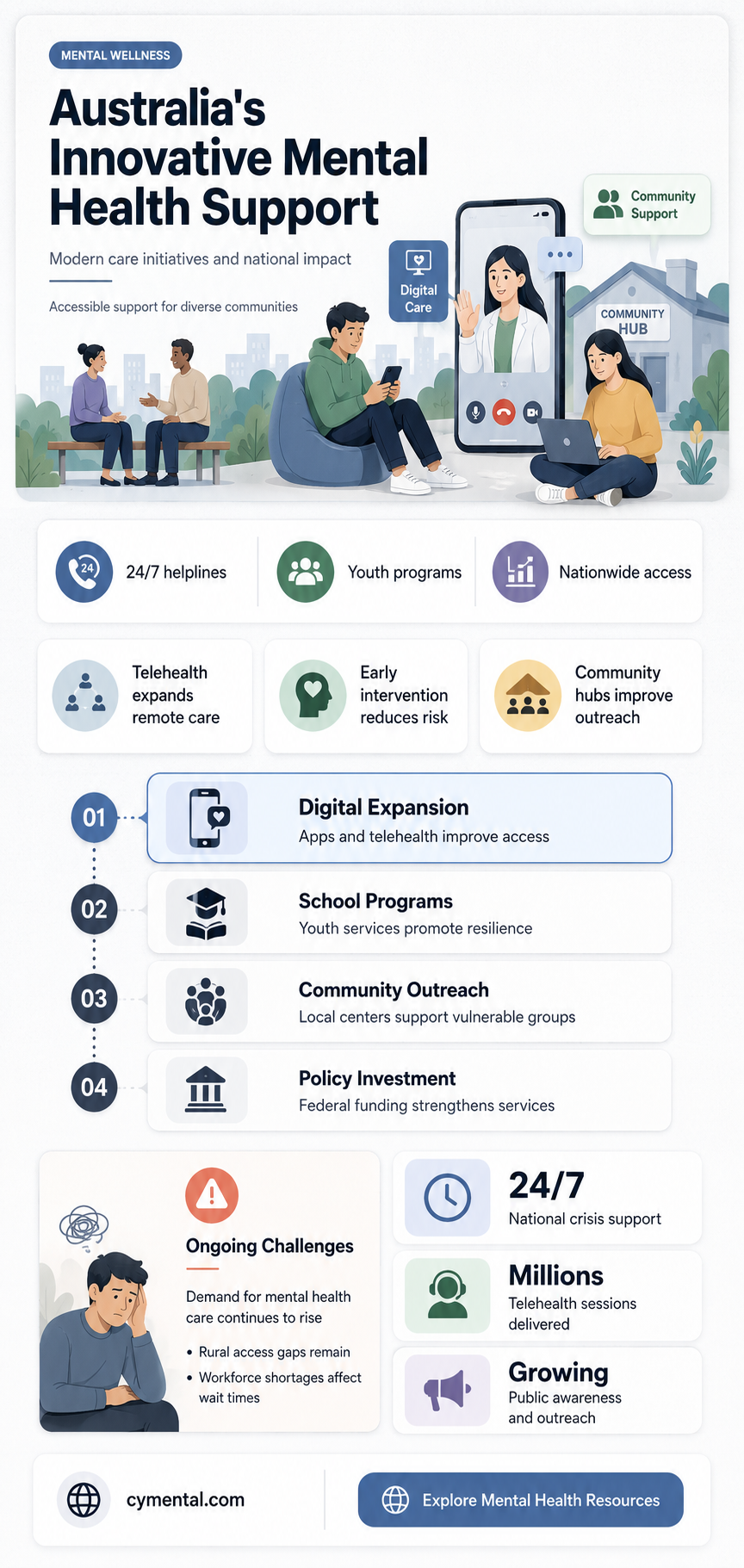
Australia is actively addressing mental health challenges through a multifaceted approach, combining government initiatives, community programs, and innovative technologies. The Australian government has invested significantly in mental health services, including the expansion of Medicare-subsidized therapy sessions and the establishment of dedicated mental health support hotlines like Beyond Blue and Lifeline. Additionally, initiatives such as the National Mental Health Commission and the Head to Health platform provide resources and guidance for individuals and families. Community-based programs, such as peer support groups and mental health first aid training, are also playing a crucial role in reducing stigma and fostering early intervention. Furthermore, Australia is leveraging digital health solutions, with apps like *Smiling Mind* and *This Way Up* offering accessible tools for managing mental well-being. These collective efforts reflect Australia’s commitment to improving mental health outcomes and ensuring support is available to all who need it.
Explore related products


What You'll Learn

Increased funding for mental health services
Australia has significantly ramped up its investment in mental health services, recognizing the growing demand for accessible and effective care. The federal government’s 2021-22 budget allocated over $2.3 billion to mental health initiatives, a substantial increase from previous years. This funding surge aims to address critical gaps in service delivery, particularly in rural and remote areas where access to care remains limited. By prioritizing financial support, Australia is not only expanding the availability of mental health services but also fostering innovation in treatment modalities and community-based programs.
One of the most impactful outcomes of this increased funding is the expansion of Headspace, a national youth mental health foundation. With additional resources, Headspace has been able to establish more centers across the country, targeting individuals aged 12 to 25. These centers offer a range of services, including counseling, group therapy, and vocational support, tailored to the unique needs of young people. For instance, a teenager struggling with anxiety in regional Queensland now has access to a Headspace center where they can receive evidence-based interventions without the need for lengthy travel to urban hubs.
However, increased funding alone is not a panacea. Effective allocation and monitoring are crucial to ensure resources reach those who need them most. The Australian government has introduced performance metrics for funded programs, requiring providers to demonstrate measurable improvements in patient outcomes. This accountability framework helps prevent wastage and ensures that every dollar invested translates into tangible benefits for individuals with mental health challenges. For example, funded programs must report on metrics such as reduced wait times, increased treatment adherence, and improved quality of life for participants.
To maximize the impact of this funding, collaboration between government, healthcare providers, and community organizations is essential. Initiatives like the National Mental Health Commission’s *Sharing Mind* program exemplify this collaborative approach, bringing together stakeholders to share best practices and address systemic barriers. By fostering partnerships, Australia is creating a more cohesive and responsive mental health ecosystem. For instance, a funded project in Victoria pairs mental health nurses with local GPs to provide integrated care, reducing the burden on emergency departments and improving long-term patient outcomes.
In conclusion, Australia’s increased funding for mental health services represents a proactive step toward addressing the nation’s mental health crisis. By expanding access, ensuring accountability, and promoting collaboration, this investment has the potential to transform lives. However, sustained commitment and adaptive strategies will be necessary to meet evolving needs and ensure no one is left behind. Practical steps for individuals include staying informed about available services, advocating for continued funding, and leveraging community resources to support mental well-being.
Supporting Your Partner: Strategies to Combat Mental Exhaustion Together
You may want to see also
Explore related products


Community-based support programs
Australia’s approach to mental health increasingly emphasizes community-based support programs, recognizing that recovery thrives in familiar, non-clinical environments. These initiatives shift care from hospitals to neighborhoods, leveraging local resources and social connections to foster resilience. For instance, the *Partners in Recovery* program, now integrated into broader frameworks, once coordinated tailored support for individuals with severe mental illness, involving families, GPs, and community organizations. Such models demonstrate how decentralized systems can address complex needs more holistically than traditional institutional care.
One standout example is the *Head to Health* centers, physical spaces where individuals can access free, walk-in mental health support without an appointment. Staffed by mental health professionals and peer workers, these centers bridge the gap between crisis services and long-term care. Notably, they incorporate digital tools like telehealth consultations, ensuring accessibility for rural Australians. This hybrid approach—combining face-to-face interaction with technology—reflects a pragmatic adaptation to geographic and resource constraints.
Peer support programs, such as those facilitated by *SANE Australia* and *Beyond Blue*, empower individuals with lived experience to mentor others. Research shows peer-led interventions reduce stigma and improve engagement, particularly among young adults aged 18–25, who often distrust formal systems. For example, *The Compass* program in Victoria trains peers to lead group sessions on coping strategies, with participants reporting a 30% increase in self-efficacy after 12 weeks. This model underscores the value of shared experience as a therapeutic tool.
However, community programs face challenges, including inconsistent funding and workforce shortages. A 2022 report by the *National Mental Health Commission* highlighted that 60% of such initiatives rely on short-term grants, hindering long-term planning. To sustain these efforts, policymakers must prioritize stable funding and integrate community programs into the NDIS and Medicare frameworks. Without this, the risk of fragmentation undermines their potential impact.
Practical tips for maximizing these programs include fostering partnerships between local councils and mental health NGOs, ensuring cultural sensitivity in Indigenous communities, and promoting awareness through schools and workplaces. For instance, the *Yarn Safe* initiative in NSW trains Aboriginal community members to facilitate mental health conversations, achieving a 40% increase in help-seeking behaviors. Such targeted strategies illustrate how community-based programs can be both inclusive and effective when tailored to specific demographics.
Affordable Mental Health Support: Finding Accessible Care Within Your Budget
You may want to see also
Explore related products





Telehealth and online counseling access
Australia has significantly expanded telehealth services, particularly in mental health, to address the growing demand for accessible care. Since the onset of the COVID-19 pandemic, Medicare-subsidized telehealth consultations have become a cornerstone of mental health support, with over 50 million telehealth services provided nationally as of 2023. This shift has been particularly beneficial for rural and remote communities, where access to in-person counseling was previously limited. Platforms like BetterAccess and Head to Health now offer online therapy sessions, ensuring individuals can connect with psychologists and psychiatrists from the comfort of their homes.
Consider the practical steps to access telehealth counseling in Australia. First, consult your general practitioner (GP) to obtain a Mental Health Treatment Plan, which allows up to 20 subsidized sessions per year. Alternatively, self-referral options are available through online platforms, though these may not be Medicare-subsidized. Ensure you have a stable internet connection and a private space for sessions. For those aged 12–25, specialized services like Kids Helpline and ReachOut offer tailored online counseling, addressing age-specific mental health challenges.
While telehealth has bridged gaps in accessibility, it’s not without limitations. Studies show that some individuals, particularly older adults, may struggle with technology barriers or prefer face-to-face interactions. Additionally, online counseling may not be suitable for severe mental health conditions requiring immediate intervention. To maximize effectiveness, patients should communicate openly with their providers about their needs and preferences. Pairing telehealth with other resources, such as mental health apps or local support groups, can enhance overall care.
A comparative analysis reveals that Australia’s telehealth model outperforms many global counterparts in terms of integration and accessibility. Unlike countries where telehealth remains a temporary pandemic measure, Australia has institutionalized it as a permanent fixture of its healthcare system. For instance, the UK’s NHS offers limited telehealth options for mental health, while Canada’s provincial systems vary widely in coverage. Australia’s approach, combining government funding, private platforms, and targeted youth services, sets a benchmark for comprehensive online mental health care.
The takeaway is clear: telehealth and online counseling have revolutionized mental health access in Australia, particularly for underserved populations. By leveraging technology, the country has addressed geographic and logistical barriers, making professional support more attainable than ever. However, ongoing efforts are needed to improve digital literacy, expand service coverage, and ensure equitable access for all. For individuals, understanding how to navigate these services is the first step toward harnessing their full potential.
Phones and Mental Health: A Double-Edged Digital Companion?
You may want to see also
Explore related products


$13.49 $25



Workplace mental health initiatives
Australian workplaces are increasingly recognizing the critical role they play in supporting employee mental health, with initiatives ranging from policy frameworks to hands-on programs. One standout example is the adoption of Mental Health First Aid (MHFA) training, a program developed in Australia and now globally recognized. This training equips employees with the skills to identify, understand, and respond to signs of mental illness in colleagues. Studies show that workplaces with MHFA-trained staff report a 15% increase in employees feeling supported, highlighting its effectiveness in fostering a proactive mental health culture.
Another key initiative is the integration of Employee Assistance Programs (EAPs), which offer confidential counseling services to staff. While EAPs are not new, Australian organizations are enhancing their accessibility by providing digital platforms and 24/7 support. For instance, companies like Telstra and Qantas have partnered with providers like Assure Programs to offer app-based counseling, ensuring employees can access help anytime, anywhere. However, research suggests that only 30% of employees utilize EAPs, indicating a need for better promotion and destigmatization of these services within workplace cultures.
A more innovative approach gaining traction is the design of mentally healthy workspaces. This goes beyond ergonomic chairs to include biophilic design elements, such as natural light and indoor plants, which have been shown to reduce stress by up to 15%. Companies like Lendlease are leading the way, incorporating wellness hubs and quiet zones into their offices. Such physical changes, combined with flexible work policies, create an environment that actively supports mental well-being, rather than merely reacting to issues as they arise.
Despite these advancements, challenges remain. Leadership buy-in is often cited as a critical factor in the success of workplace mental health initiatives. Without genuine commitment from senior management, programs risk becoming tokenistic. A 2022 survey by Beyond Blue found that 60% of employees believe their leaders need better training in mental health awareness. Addressing this gap through mandatory leadership training could amplify the impact of existing initiatives, ensuring they are embedded in organizational DNA rather than treated as optional add-ons.
In conclusion, Australia’s workplace mental health initiatives are evolving from reactive measures to holistic strategies that address prevention, support, and culture. By combining evidence-based programs like MHFA, accessible EAPs, and thoughtful workspace design, organizations can create environments where employees thrive. However, sustained success hinges on leadership commitment and ongoing evaluation to ensure these initiatives meet the diverse needs of the workforce.
Creatine and Cognitive Clarity: Enhancing Mental Focus with Supplements
You may want to see also
Explore related products


Youth-focused mental health campaigns
Australia has recognized the critical need to address mental health issues among its youth, who are particularly vulnerable to conditions like anxiety, depression, and stress. Youth-focused mental health campaigns have emerged as a cornerstone of this effort, leveraging innovative strategies to engage, educate, and support young Australians. These campaigns often combine digital platforms, peer-to-peer communication, and evidence-based interventions to create a supportive ecosystem for mental well-being.
One standout example is Headspace, Australia’s National Youth Mental Health Foundation, which operates as a one-stop shop for young people aged 12–25. Headspace centers provide counseling, health advice, and group activities in a youth-friendly environment. Their campaigns, such as *National Youth Mental Health Day*, use social media to destigmatize mental health conversations and encourage early intervention. For instance, their Instagram and TikTok accounts feature relatable content, including personal stories and practical tips for managing stress, which resonates with their target audience. A key takeaway is the importance of meeting young people where they are—both physically and digitally—to foster trust and accessibility.
Another innovative approach is the ReachOut platform, designed specifically for young people aged 14–25. ReachOut offers online tools, forums, and resources to help users navigate mental health challenges independently. Their campaigns, like *Tune In, Not Out*, focus on building resilience and coping skills through interactive modules and quizzes. For example, the platform provides a "Stress & Anxiety" toolkit with guided breathing exercises, mindfulness techniques, and a symptom checker. This self-directed model empowers youth to take charge of their mental health, a critical step in preventing more severe issues later in life.
While these campaigns are impactful, their success hinges on addressing barriers to engagement. For instance, rural and Indigenous youth often face limited access to mental health services. Campaigns like Kids Helpline tackle this by offering 24/7 phone and online counseling, ensuring support is available regardless of location. Additionally, culturally sensitive initiatives, such as The YARN Project, use storytelling and art to engage Indigenous youth in mental health discussions. These examples highlight the need for tailored approaches that consider diverse needs and contexts.
To maximize the effectiveness of youth-focused campaigns, collaboration is key. Schools, healthcare providers, and community organizations must work together to amplify messages and provide seamless support. For example, the Be You initiative equips educators with resources to promote mental health in schools, creating a supportive environment for students. Parents and caregivers can also play a role by staying informed about campaign resources and encouraging open conversations at home. By integrating these efforts, Australia’s youth-focused mental health campaigns can create a lasting impact, ensuring young people not only survive but thrive.
Social Media Bans: A Mental Health Solution for Teens?
You may want to see also
Frequently asked questions
Australia has launched several initiatives, including the National Mental Health Commission, Headspace centers for youth mental health, and the Beyond Blue support service, which provides resources and counseling for mental health issues.
Australia is expanding telehealth services, funding rural mental health programs, and training local healthcare workers to provide mental health support in underserved regions.
The Australian government allocates significant funding to mental health research through bodies like the National Health and Medical Research Council (NHMRC) and supports prevention programs aimed at reducing stigma and promoting early intervention.