Caleb Wright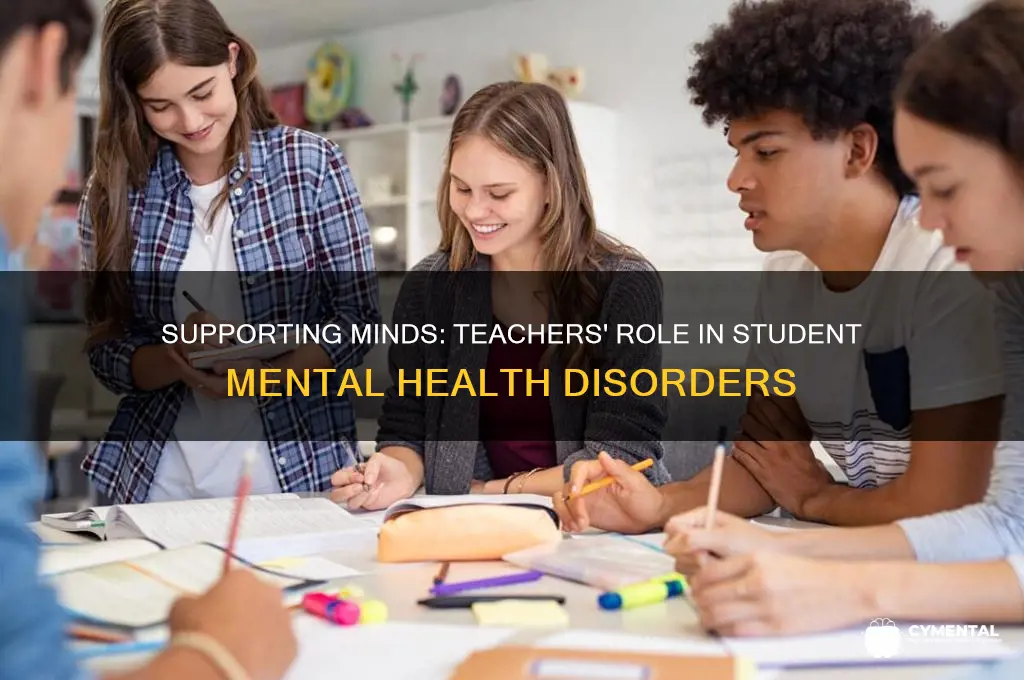
Teachers play a crucial role in supporting students with mental health disorders by creating a safe, inclusive, and understanding classroom environment. Through early recognition of signs such as changes in behavior, academic performance, or social interactions, educators can intervene and connect students with appropriate resources. They often act as trusted confidants, offering empathy and encouragement while maintaining confidentiality. Additionally, teachers adapt instructional strategies to accommodate individual needs, fostering resilience and self-esteem. By collaborating with school counselors, psychologists, and families, they ensure a holistic approach to student well-being, ultimately helping students manage their challenges and thrive academically and emotionally.
| Characteristics | Values |
|---|---|
| Creating a Safe Environment | Teachers foster a supportive and non-judgmental classroom where students feel secure. |
| Building Trust and Rapport | Developing strong relationships helps students feel comfortable sharing their struggles. |
| Early Identification | Teachers are often the first to notice changes in behavior, mood, or academic performance. |
| Referrals to Professionals | Teachers connect students with school counselors, psychologists, or external mental health resources. |
| Individualized Support | Tailoring teaching methods and accommodations to meet the unique needs of each student. |
| Promoting Self-Care | Encouraging healthy habits like sleep, exercise, and mindfulness practices. |
| Reducing Stigma | Teachers educate students and staff to foster understanding and empathy toward mental health issues. |
| Flexible Learning Options | Providing extensions, alternative assignments, or quiet spaces for students in distress. |
| Regular Check-Ins | Teachers maintain open communication to monitor students' well-being. |
| Collaborating with Families | Working with parents or guardians to ensure consistent support at home and school. |
| Crisis Intervention | Teachers are trained to handle emergencies and provide immediate support during crises. |
| Incorporating Social-Emotional Learning | Integrating lessons on emotional regulation, empathy, and resilience into the curriculum. |
| Modeling Healthy Behavior | Teachers demonstrate positive coping strategies and emotional management in the classroom. |
| Advocating for Resources | Teachers push for school policies and funding to support mental health initiatives. |
| Cultural Sensitivity | Addressing mental health in a way that respects diverse cultural backgrounds and beliefs. |
| Encouraging Peer Support | Fostering a classroom culture where students support and uplift one another. |
Explore related products


What You'll Learn
- Early Detection Signs: Teachers learn subtle cues to identify mental health struggles in students early
- Creating Safe Spaces: Foster inclusive classrooms where students feel comfortable sharing their feelings
- Referral Processes: Guide students to professional support services like counselors or psychologists
- Flexible Teaching Methods: Adapt lessons to accommodate students’ emotional and cognitive needs
- Building Resilience Skills: Teach coping strategies and emotional regulation techniques to empower students

Early Detection Signs: Teachers learn subtle cues to identify mental health struggles in students early
Teachers often notice when a student’s behavior shifts subtly—a once-engaged learner becomes withdrawn, or a quiet child starts lashing out. These changes, though small, can signal underlying mental health struggles. Early detection hinges on recognizing such cues, which require educators to move beyond surface-level observations. For instance, a student who consistently avoids eye contact or exhibits sudden changes in academic performance might be grappling with anxiety or depression. Training teachers to identify these signs isn’t just about spotting problems; it’s about creating a safety net for students before issues escalate.
Consider the case of a 14-year-old who begins skipping group activities or stops participating in class discussions. While these behaviors might seem like typical teenage moodiness, they could indicate social anxiety or emerging depression. Teachers trained in mental health awareness learn to ask targeted questions: *Has the student’s sleep pattern changed? Are they isolating themselves during breaks?* Pairing these observations with open-ended conversations can uncover deeper issues. For younger students (ages 8–12), teachers might notice increased irritability or regression to childlike behaviors, such as bedwetting, which could signal stress or trauma.
Implementing early detection strategies requires a structured approach. Educators can start by tracking behavioral patterns over time, using tools like anecdotal notes or checklists to document changes. For example, a teacher might note if a student’s attendance drops from 90% to 60% in a month or if they frequently visit the nurse’s office with vague complaints like headaches or stomachaches. Schools can also incorporate mental health training into professional development, teaching staff to differentiate between typical developmental behaviors and red flags. One practical tip: establish a “signal system” where teachers flag concerns to counselors discreetly, ensuring students don’t feel stigmatized.
Critics might argue that teachers aren’t mental health professionals, but this misses the point. Early detection isn’t about diagnosis—it’s about timely intervention. Teachers who recognize subtle cues can connect students to appropriate resources, such as school counselors or external therapists. For instance, a teacher noticing a student’s persistent sadness might initiate a referral to the school psychologist while fostering a supportive classroom environment. This dual approach ensures students receive both immediate care and long-term strategies to manage their mental health.
Ultimately, equipping teachers to identify early signs of mental health struggles transforms classrooms into proactive spaces. By fostering a culture of awareness, educators can intervene before minor issues become major crises. This isn’t just about academic success; it’s about nurturing resilient, healthy individuals. Schools that prioritize this training send a clear message: *We see you, we care, and we’re here to help.* In doing so, they lay the foundation for a generation better equipped to navigate life’s challenges.
Seeking Mental Health Support: Navigating Relationship Challenges with Your Girlfriend
You may want to see also
Explore related products




Creating Safe Spaces: Foster inclusive classrooms where students feel comfortable sharing their feelings
Students with mental health disorders often struggle in environments that feel judgmental or rigid. Creating a safe space in the classroom begins with setting clear, empathetic boundaries. Teachers can establish a "no-shame zone" by explicitly stating that all emotions are valid and welcome. For instance, a daily check-in system—such as a feelings chart or a quick journal entry—can normalize emotional expression. For younger students (ages 6–12), visual tools like emotion wheels help them identify and articulate feelings. For older students (ages 13–18), open-ended prompts like "What’s one thing you’re proud of today?" encourage reflection without pressure. The key is consistency; these practices must be integrated daily to build trust over time.
However, fostering safety isn’t just about words—it’s about actions. Teachers must model vulnerability by sharing appropriate personal experiences or admitting mistakes. For example, a teacher might say, "I felt overwhelmed planning this lesson, but I’m glad we’re here together." This humanizes the educator and shows students that imperfection is acceptable. Additionally, physical space matters. Arrange desks in a circle during discussions to promote equality, or create a "calm corner" with sensory tools (e.g., fidget toys, stress balls) for students who need a break. For students with anxiety or ADHD, allowing flexible seating options—like standing desks or floor cushions—can reduce stress and improve focus.
A common pitfall is assuming inclusivity is one-size-fits-all. Safe spaces must be tailored to diverse needs. For neurodivergent students, clear routines and visual schedules reduce anxiety. For students with trauma histories, avoid unexpected loud noises or physical contact without consent. Teachers should also be mindful of cultural differences in emotional expression; what’s considered "normal" in one culture may be stigmatized in another. Regularly survey students anonymously to understand their comfort levels and adjust practices accordingly. For instance, a teacher might ask, "What would make you feel safer in this classroom?" and implement feasible suggestions.
Finally, creating a safe space requires ongoing commitment and self-awareness. Teachers must recognize their biases and triggers to avoid inadvertently invalidating students. For example, a teacher who dislikes conflict might unintentionally shut down difficult conversations. Professional development in trauma-informed practices or cultural competency can help. Equally important is collaboration with school counselors and mental health professionals to ensure students receive appropriate support beyond the classroom. By combining empathy, structure, and adaptability, teachers can transform their classrooms into sanctuaries where students feel seen, heard, and valued—a critical step in supporting mental health.
Vape Pen Oil for Kids' Mental Health: Safe or Risky?
You may want to see also
Explore related products




Referral Processes: Guide students to professional support services like counselors or psychologists
Teachers often serve as the first line of defense in identifying students struggling with mental health disorders. While they are not therapists, their role in recognizing signs of distress and initiating referral processes is critical. A 2021 study by the American Psychological Association found that 70% of teachers report observing students with mental health concerns, yet only 40% feel adequately prepared to respond. This gap underscores the need for clear, actionable referral processes that connect students to professional support services like counselors or psychologists.
Step 1: Recognize the Signs
Teachers must first identify indicators of mental health issues, which can manifest as behavioral changes (e.g., withdrawal, aggression), academic decline, or emotional distress (e.g., persistent sadness, anxiety). For younger students (ages 6–12), look for regressive behaviors like bedwetting or clinginess, while adolescents (ages 13–18) may exhibit riskier behaviors or substance use. A 2020 CDC report highlights that 1 in 5 children aged 3–17 has a diagnosable mental, emotional, or behavioral disorder, emphasizing the urgency of early detection.
Step 2: Build Trust and Communicate
Once signs are recognized, teachers should approach students privately and empathetically. Phrases like, *"I’ve noticed you seem upset lately, and I’m here to help,"* can open dialogue without judgment. For younger students, use age-appropriate language, such as, *"Sometimes big feelings can be hard to handle. Let’s talk to someone who can help."* Document observations objectively (e.g., *"Student appeared tearful during class on 3/15"*) to provide counselors or psychologists with actionable information.
Step 3: Initiate the Referral
Schools typically have established protocols for referrals, often involving a school counselor or psychologist. Teachers should follow these steps promptly: notify the school’s mental health liaison, complete a referral form, and ensure parental consent (where required by law). In cases of immediate risk (e.g., suicidal ideation), bypass standard procedures and contact emergency services or the school’s crisis team. A 2019 NASP guideline recommends that referrals be made within 48 hours of identifying severe concerns to prevent escalation.
Cautions and Considerations
While referrals are essential, teachers must navigate potential pitfalls. Avoid overstepping professional boundaries by offering diagnoses or therapy; instead, focus on describing observed behaviors. Be mindful of cultural stigma surrounding mental health, particularly in communities where seeking help is taboo. For example, a 2022 study found that Latinx and Asian students are 30% less likely to access mental health services due to cultural barriers. Collaborate with school staff to provide culturally sensitive resources and involve parents early to foster trust.
Effective referral processes not only connect students to vital support but also reinforce a school’s commitment to holistic well-being. A 2021 meta-analysis in *School Psychology Review* revealed that students receiving timely mental health interventions show a 40% improvement in academic performance and a 50% reduction in behavioral incidents. By mastering these steps, teachers become catalysts for change, ensuring students receive the professional care they need to thrive.
Supporting Your Daughter's Mental Health: A Guide for Parents
You may want to see also
Explore related products




Flexible Teaching Methods: Adapt lessons to accommodate students’ emotional and cognitive needs
Teachers who embrace flexible teaching methods recognize that a one-size-fits-all approach can exacerbate challenges for students with mental health disorders. Anxiety, depression, ADHD, and other conditions can impair concentration, memory, and emotional regulation, making traditional classroom structures feel rigid and overwhelming. By adapting lessons to meet students where they are, educators can create an inclusive environment that fosters learning and well-being.
Consider a high school history class. A student with generalized anxiety disorder might struggle with open-ended essay prompts, feeling paralyzed by the fear of "getting it wrong." A flexible teacher could offer this student a choice: write a traditional essay, create a visual timeline, or record a podcast discussing the topic. This simple adjustment provides a sense of control and reduces anxiety while still assessing understanding. For younger students, say a 3rd grader with ADHD, incorporating movement breaks during lessons can be transformative. Instead of expecting them to sit still for 30 minutes, a teacher might pause every 10 minutes for a quick stretch or brain break activity, helping them refocus and engage.
Practical Tip: Use a visual timer to signal transitions, giving students with ADHD a clear sense of time passing and reducing anticipatory anxiety.
Flexibility also extends to pacing. A student experiencing a depressive episode may need more time to complete assignments. Allowing extensions or breaking projects into smaller, manageable chunks can prevent feelings of overwhelm and encourage persistence. Conversely, a student with bipolar disorder in a manic phase might benefit from structured, time-limited tasks to prevent overstimulation and maintain focus.
Caution: Be mindful of not singling out students when offering accommodations. Phrase adjustments as options available to the whole class, ensuring confidentiality and reducing stigma.
Ultimately, flexible teaching methods require teachers to be observant, responsive, and creative. It’s about recognizing that emotional and cognitive needs are not static and that what works for one student may not work for another. By embracing adaptability, educators can turn the classroom into a space where students with mental health disorders feel supported, understood, and empowered to learn.
Takeaway: Flexibility isn’t about lowering standards; it’s about removing barriers to achievement, ensuring every student has the opportunity to succeed on their own terms.
B12 and Mental Health: Unlocking the Connection for Better Well-Being
You may want to see also
Explore related products


Building Resilience Skills: Teach coping strategies and emotional regulation techniques to empower students
Students facing mental health challenges often struggle with emotional overwhelm, making even minor setbacks feel insurmountable. Teaching resilience isn’t about eliminating stress but equipping students with tools to navigate it. Coping strategies and emotional regulation techniques act as a psychological toolkit, allowing students to manage their responses to stress, anxiety, or adversity. For instance, deep breathing exercises, practiced for just 2-3 minutes daily, can activate the parasympathetic nervous system, reducing cortisol levels and fostering a sense of calm. Similarly, progressive muscle relaxation, where students tense and release different muscle groups, helps ground them in the present moment, disrupting spiraling thoughts. These techniques, when taught consistently and integrated into daily routines, become second nature, empowering students to self-regulate during moments of distress.
While individual techniques are valuable, their effectiveness lies in their application within a structured framework. Teachers can guide students through a three-step process: awareness, acceptance, and action. First, students learn to identify emotional triggers through journaling or emotion-tracking apps. This awareness breaks the cycle of automatic reactivity. Next, acceptance involves reframing negative emotions as temporary and manageable, rather than threats to be avoided. Finally, action includes deploying coping strategies like mindfulness, physical activity, or creative outlets. For younger students (ages 8-12), visual aids like emotion thermometers or mood charts can simplify this process. Older students (ages 13-18) may benefit from more nuanced techniques, such as cognitive reframing or goal-setting exercises, tailored to their developmental stage.
A common pitfall in teaching resilience is overloading students with too many strategies at once. Instead, focus on mastery over variety. Start with 2-3 techniques and practice them consistently until they become habitual. For example, a daily mindfulness bell in the classroom can signal a minute of silent breathing, reinforcing the practice. Caution against treating these strategies as quick fixes; emotional regulation is a skill that develops over time. Teachers should also model these behaviors, demonstrating how they manage stress in real-time. For instance, openly acknowledging a challenging situation and verbalizing a coping strategy (“I’m feeling overwhelmed, so I’m going to take a few deep breaths”) normalizes the process and encourages students to follow suit.
The ultimate goal of building resilience skills is to shift students’ mindset from victimhood to agency. By internalizing coping strategies, students learn to view challenges as opportunities for growth rather than insurmountable obstacles. Research shows that students who practice emotional regulation techniques exhibit higher academic performance, better peer relationships, and reduced symptoms of anxiety and depression. However, success requires a supportive environment. Teachers should collaborate with school counselors, parents, and mental health professionals to ensure a cohesive approach. For students with severe mental health disorders, these strategies should complement, not replace, professional therapy. When implemented thoughtfully, resilience-building becomes a transformative tool, not just for surviving adversity, but for thriving in spite of it.
Supporting Mental Health: Practical Ways to Help Loved Ones Heal
You may want to see also
Frequently asked questions
Teachers can identify students by observing changes in behavior, academic performance, attendance, or social interactions. Signs may include withdrawal, irritability, persistent sadness, or difficulty concentrating. Building trust and maintaining open communication with students and their families can also help in recognizing early warning signs.
Teachers can create a supportive environment by providing flexible deadlines, offering quiet spaces, and using positive reinforcement. They can also incorporate mindfulness activities, ensure clear and consistent expectations, and collaborate with school counselors or mental health professionals for additional support.
Teachers can balance support by implementing inclusive teaching practices that benefit all students, such as differentiated instruction and trauma-informed strategies. They can also seek assistance from support staff, use small group interventions, and prioritize self-care to maintain their own well-being while addressing diverse needs.
Teachers play a crucial role in connecting students to resources by referring them to school counselors, psychologists, or external mental health services. They can also educate students and families about available support systems, advocate for mental health awareness, and collaborate with professionals to ensure a coordinated approach to care.