Lucas Bennett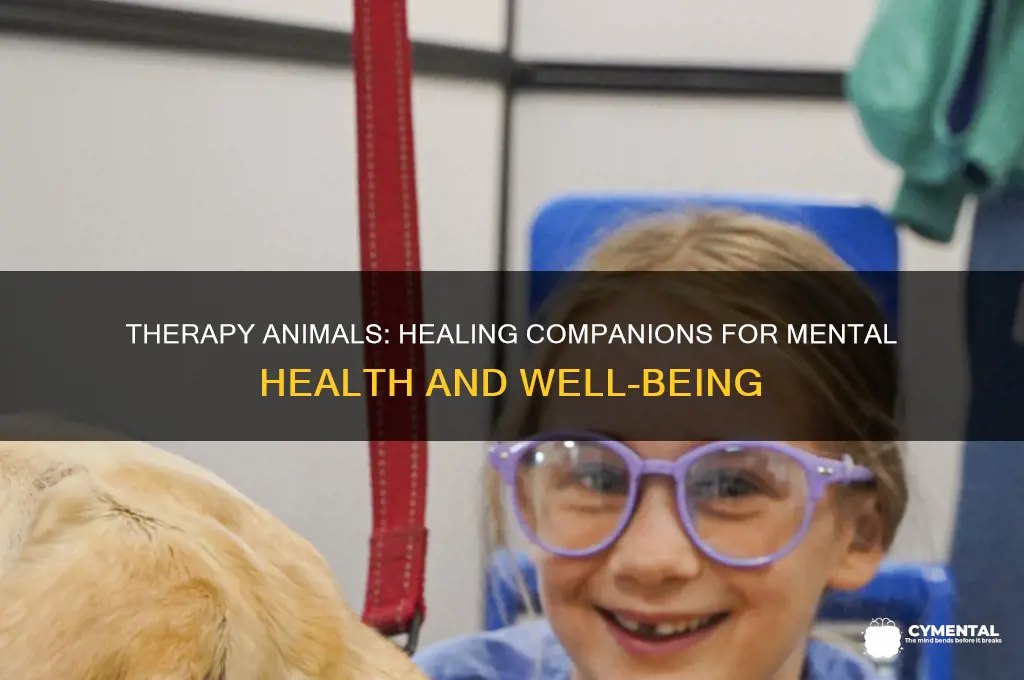
Therapy animals, such as dogs, cats, and even horses, play a significant role in supporting mental health by providing emotional comfort, reducing stress, and fostering a sense of connection. These animals are trained to interact with individuals in therapeutic settings, offering unconditional love and companionship that can alleviate symptoms of anxiety, depression, and loneliness. Their presence has been shown to lower cortisol levels, increase oxytocin (the feel-good hormone), and encourage social interaction, making them valuable tools in treatment plans for conditions like PTSD, autism, and chronic stress. Beyond their immediate calming effects, therapy animals also help individuals develop routines, build confidence, and improve overall well-being, highlighting their unique and powerful impact on mental health.
Explore related products

$14.95 $11.96


What You'll Learn
- Reducing Stress and Anxiety: Animals provide comfort, lowering cortisol levels and promoting relaxation in stressful situations
- Encouraging Social Interaction: Therapy animals help individuals connect with others, reducing feelings of loneliness and isolation
- Improving Mood and Happiness: Interacting with animals releases oxytocin and dopamine, boosting mood and emotional well-being
- Providing Routine and Purpose: Caring for animals creates structure, giving individuals a sense of responsibility and meaning
- Supporting Trauma Recovery: Animals offer non-judgmental companionship, aiding in emotional healing and reducing PTSD symptoms

Reducing Stress and Anxiety: Animals provide comfort, lowering cortisol levels and promoting relaxation in stressful situations
Stressful situations trigger the release of cortisol, a hormone linked to anxiety and tension. Therapy animals, however, have a remarkable ability to counteract this physiological response. Studies show that interacting with animals, even for brief periods, can significantly lower cortisol levels. For instance, a 15-minute session with a therapy dog has been observed to reduce cortisol by up to 24% in college students during exam periods. This biological shift is not merely anecdotal; it’s a measurable effect that underscores the power of animal companionship in managing stress.
Consider the mechanics of this interaction: the act of petting an animal promotes the release of oxytocin, often referred to as the "love hormone," which fosters feelings of calmness and trust. Simultaneously, the rhythmic motion of stroking fur or the gentle purring of a cat can induce a meditative state, slowing heart rate and easing muscle tension. These physical changes create a feedback loop where the body begins to relax, further diminishing the perception of stress. For individuals facing chronic anxiety, this can be a lifeline, offering a natural and immediate way to regain emotional balance.
Practical implementation of this stress-reduction strategy is surprisingly simple. For children, incorporating a therapy animal into homework or bedtime routines can ease anxiety around academic pressure or separation. Adults can benefit from short, structured interactions, such as a 10-minute petting session during work breaks, to reset their stress response. Even in clinical settings, hospitals and therapy offices are increasingly integrating animals to help patients manage pre-procedure jitters or PTSD-related anxiety. The key is consistency; regular exposure to therapy animals amplifies their calming effects over time.
However, it’s essential to tailor the approach to individual needs. For example, someone with sensory sensitivities might find a smaller, quieter animal like a rabbit more soothing than a boisterous dog. Similarly, group settings, such as animal-assisted therapy sessions, can provide additional social benefits, reducing isolation while combating stress. By personalizing the interaction, the therapeutic impact of animals can be maximized, turning a simple encounter into a powerful tool for mental well-being.
In conclusion, therapy animals offer a unique and accessible way to mitigate stress and anxiety by directly influencing our body’s stress response. Whether through hormonal shifts, physical relaxation, or emotional connection, their presence can create a sanctuary of calm in chaotic moments. By understanding and leveraging these mechanisms, individuals can harness the healing power of animals to build resilience against life’s pressures.
Mastering the Basics: Simple Practices for Sustaining Mental Well-Being
You may want to see also
Explore related products


Encouraging Social Interaction: Therapy animals help individuals connect with others, reducing feelings of loneliness and isolation
Loneliness is a silent epidemic, affecting millions worldwide and contributing to a range of mental health issues, from depression to anxiety. Therapy animals, particularly dogs, have emerged as powerful catalysts for social interaction, breaking down the barriers that isolate individuals. Consider the scene: a therapy dog enters a community center, and within minutes, strangers are smiling, sharing stories, and petting the animal. This simple act of connection can be transformative, especially for those who struggle with social engagement. Studies show that the presence of a therapy animal increases the likelihood of social interactions by up to 40%, as people are naturally drawn to the animal and, in turn, to each other.
To harness this benefit, structured programs like animal-assisted therapy (AAT) sessions in group settings are highly effective. For instance, in senior living facilities, therapy dogs are often brought into common areas during meal times or activities. Residents who might typically eat alone or remain in their rooms are encouraged to join, creating opportunities for conversation. A practical tip for caregivers or therapists is to pair the animal’s visit with a light activity, such as a group walk or a game, to further facilitate interaction. Even 30 minutes of such engagement twice a week can significantly reduce feelings of isolation, according to research from the University of California.
Contrast this with individual therapy sessions, where the focus is often on the bond between the person and the animal. While this is valuable, group settings amplify the social benefits. For children with autism, for example, therapy animals in group play sessions can act as "social lubricants," encouraging communication and cooperation. A study published in the *Journal of Pediatric Nursing* found that children in these sessions were 25% more likely to initiate conversations with peers when a therapy dog was present. This highlights the animal’s role not just as a companion, but as a bridge to human connection.
However, it’s crucial to consider the animal’s well-being and the context of interaction. Overstimulation can stress therapy animals, so sessions should be limited to 45–60 minutes, with breaks for the animal to rest. Additionally, not everyone is comfortable around animals, so always assess participants’ preferences beforehand. For those hesitant to join group activities, start with smaller, controlled settings, gradually increasing exposure as comfort grows. The goal is to create a safe, welcoming environment where both the individual and the animal can thrive.
In conclusion, therapy animals are more than just emotional support—they are social facilitators, fostering connections that combat loneliness. By integrating them into group activities and being mindful of both human and animal needs, we can maximize their impact. Whether in a senior center, a school, or a mental health clinic, these animals remind us that connection is a fundamental human need, and sometimes, the simplest interactions can lead to the most profound healing.
Journaling for Mental Health: Unlocking Emotional Healing Through Diary Writing
You may want to see also
Explore related products


Improving Mood and Happiness: Interacting with animals releases oxytocin and dopamine, boosting mood and emotional well-being
The simple act of petting a dog or cat can trigger a cascade of feel-good chemicals in the brain. Oxytocin, often called the "love hormone," surges, fostering feelings of bonding and trust. Simultaneously, dopamine, the brain's reward chemical, spikes, creating a sense of pleasure and satisfaction. This powerful one-two punch is a natural and effective way to combat feelings of sadness, anxiety, and loneliness.
Studies show that even brief interactions with animals can significantly elevate mood. A 2019 study found that just 10 minutes of petting a dog or cat led to measurable increases in oxytocin levels and self-reported happiness in participants. This suggests that incorporating short, regular animal interactions into daily routines could be a simple yet impactful strategy for boosting overall well-being.
Imagine this: a stressed college student, buried under a mountain of assignments, takes a 15-minute break to visit the campus therapy dog. The act of stroking the dog's soft fur, feeling its warm breath, and experiencing its unconditional acceptance provides a much-needed respite from the pressure. The student returns to their studies feeling calmer, more focused, and with a renewed sense of optimism. This scenario illustrates the tangible benefits of animal interaction, highlighting its potential as a readily accessible tool for managing stress and improving mood.
It's important to note that the mood-boosting effects of animal interaction aren't limited to specific age groups or demographics. Children, adults, and seniors alike can benefit from the presence of animals. For elderly individuals facing isolation or loneliness, a pet can provide companionship and a sense of purpose, leading to increased happiness and a more positive outlook on life.
Incorporating animal interaction into mental health treatment plans can be a valuable adjunct to traditional therapies. While not a replacement for professional help, the natural mood-enhancing properties of animal companionship can significantly contribute to overall well-being. Whether it's owning a pet, volunteering at a shelter, or simply spending time with a friend's animal, finding ways to connect with animals can be a powerful step towards a happier, healthier life.
CBD and Mental Health: Exploring Its Potential Benefits and Effects
You may want to see also
Explore related products


Providing Routine and Purpose: Caring for animals creates structure, giving individuals a sense of responsibility and meaning
Caring for a therapy animal imposes a daily rhythm that can be a lifeline for those struggling with mental health. Feeding, walking, grooming—these tasks demand consistency, anchoring individuals in a routine that transcends their internal chaos. For someone battling depression, the alarm clock might as well be silent, but a dog’s hungry whine at 7 a.m. is impossible to ignore. This forced structure isn’t just about meeting the animal’s needs; it’s about rebuilding the caregiver’s own sense of order, one meal, one walk, one brushstroke at a time.
Consider the case of a veteran with PTSD who adopts a service dog. The dog’s reliance on them for exercise and care creates a non-negotiable schedule. A 30-minute walk twice daily, for instance, becomes a ritual that not only benefits the animal but also exposes the veteran to fresh air and physical activity—both proven mood boosters. Over time, this routine can help recalibrate their body’s internal clock, reducing insomnia and anxiety. The predictability of these tasks acts as a counterweight to the unpredictability of their mental health symptoms.
Critics might argue that relying on an animal for structure could become a crutch, but the data suggests otherwise. Studies show that pet ownership is associated with lower levels of loneliness and higher self-esteem, particularly in adults over 65. For younger individuals, especially those with ADHD or bipolar disorder, the responsibility of pet care can serve as a grounding force. A cat’s litter box needs cleaning every other day, a fish tank requires weekly water changes—these small, manageable tasks provide a sense of accomplishment without overwhelming the caregiver.
Practical implementation is key. Start small: a low-maintenance pet like a hamster or a fish can be a stepping stone for someone hesitant to take on a larger commitment. For those ready for more, a dog or cat offers a higher level of interaction and responsibility. Pairing pet care with other therapeutic activities, such as journaling after a walk or practicing mindfulness during grooming, can amplify the benefits. The goal isn’t to create a burden but to establish a rhythm that fosters stability and self-worth.
Ultimately, the routine of caring for a therapy animal isn’t just about the animal—it’s about reclaiming agency in one’s own life. Each task completed, no matter how small, reinforces the caregiver’s ability to contribute, to care, to matter. In a world where mental health struggles often strip away purpose, the simple act of feeding a pet can become a profound reminder: you are needed, and you are capable.
Light Rail's Impact: Enhancing Mental Health Access and Well-being
You may want to see also
Explore related products


Supporting Trauma Recovery: Animals offer non-judgmental companionship, aiding in emotional healing and reducing PTSD symptoms
Trauma survivors often struggle with trust, emotional regulation, and reintegration into daily life. Animals, particularly therapy dogs, offer a unique form of support by providing consistent, non-judgmental companionship. Unlike humans, animals do not ask questions, pass judgment, or expect explanations. This unconditional acceptance creates a safe emotional space for individuals to process their experiences without fear of rejection or misunderstanding. For example, a veteran with PTSD might find solace in the silent presence of a service dog during moments of heightened anxiety, allowing them to ground themselves in the present rather than reliving past traumas.
The physiological benefits of animal interaction further enhance trauma recovery. Studies show that spending time with animals can lower cortisol levels, reduce blood pressure, and increase oxytocin, the "bonding hormone." These biological changes create a calmer, more receptive state for emotional healing. For instance, a structured therapy session involving a horse (equine-assisted therapy) can help trauma survivors rebuild confidence and assertiveness through guided interactions with the animal. Practical tips for incorporating animals into recovery include starting with short, supervised sessions and gradually increasing duration as comfort levels improve.
One of the most compelling aspects of animal-assisted therapy is its ability to reduce PTSD symptoms. Dogs trained in psychiatric service can interrupt panic attacks, provide tactile grounding through touch, and create a sense of security in public spaces. For children, therapy animals like rabbits or guinea pigs can serve as transitional objects, helping them express emotions they might otherwise suppress. A key takeaway is that animals act as emotional bridges, facilitating connections between trauma survivors and their human support systems. However, it’s crucial to match the animal and therapy type to the individual’s needs—not all animals or methods work for everyone.
To maximize the benefits of animal companionship in trauma recovery, consider these steps: first, consult a mental health professional to determine if animal-assisted therapy aligns with your treatment goals. Second, research certified therapy programs or organizations that specialize in trauma recovery. Third, establish a routine that includes consistent interaction with the animal, whether through formal therapy sessions or personal pet ownership. Cautions include ensuring the animal is well-trained and the environment is safe for both the individual and the animal. When implemented thoughtfully, animal companionship can be a transformative tool in the journey toward emotional healing.
Positive Relationships: A Powerful Tool for Mental Health and Well-Being
You may want to see also
Frequently asked questions
Therapy animals, such as dogs or cats, release oxytocin in humans during interaction, which promotes relaxation and reduces cortisol levels, the hormone associated with stress. Their presence provides a calming effect, distracts from anxious thoughts, and fosters a sense of comfort and security.
Yes, therapy animals offer unconditional love and companionship, which can combat feelings of loneliness and isolation. Interacting with them encourages routine, physical activity, and social engagement, all of which are beneficial for managing symptoms of depression.
Therapy animals provide a non-judgmental presence, allowing individuals to express emotions freely. Their consistent and responsive behavior helps individuals practice patience, empathy, and self-awareness, which are key components of emotional regulation and mental well-being.