Harper Lewis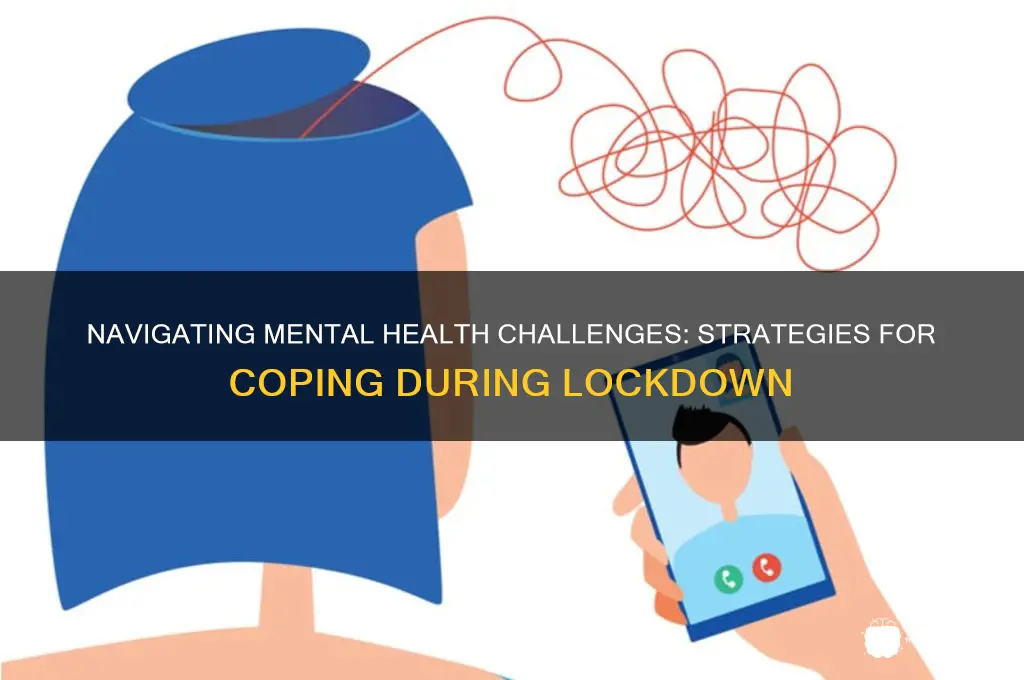
Dealing with mental health issues during lockdown can be particularly challenging, as isolation, uncertainty, and disrupted routines often exacerbate stress, anxiety, and depression. The lack of social interaction, limited access to support systems, and increased screen time can further strain emotional well-being. To navigate these difficulties, it’s essential to establish a structured daily routine, prioritize self-care through exercise, mindfulness, and adequate sleep, and stay connected with loved ones via virtual platforms. Seeking professional help, whether through online therapy or mental health hotlines, is also crucial. Additionally, setting realistic goals, practicing gratitude, and limiting exposure to negative news can help maintain a positive mindset during this unprecedented time.
Explore related products


What You'll Learn
- Stay Connected Virtually: Use video calls, social media, and messaging to maintain relationships and reduce isolation
- Establish a Routine: Create daily schedules for work, meals, exercise, and sleep to provide structure and stability
- Practice Mindfulness: Incorporate meditation, deep breathing, or yoga to manage stress and stay grounded
- Limit News Consumption: Set specific times to check updates and avoid excessive exposure to reduce anxiety
- Seek Professional Help: Access online therapy, helplines, or mental health apps for support and guidance

Stay Connected Virtually: Use video calls, social media, and messaging to maintain relationships and reduce isolation
Human connection is a fundamental need, and its absence can exacerbate mental health struggles. During lockdowns, physical isolation can lead to feelings of loneliness, anxiety, and depression. Virtual tools like video calls, social media, and messaging apps become lifelines, bridging the physical gap and fostering emotional closeness.
A study by the American Psychological Association found that individuals who maintained social connections during the pandemic reported higher levels of well-being and resilience.
Prioritize Face-to-Face Interaction: While texting is convenient, video calls offer a richer experience. Seeing facial expressions, hearing tone of voice, and observing body language provide crucial non-verbal cues that strengthen bonds. Schedule regular video chats with loved ones, treating them like sacred appointments. Platforms like Zoom, Skype, and FaceTime offer free options, and many allow group calls for virtual gatherings.
For families with young children, consider incorporating interactive activities during calls, like reading a story together or playing a simple game, to keep engagement high.
Leverage Social Media Mindfully: Social media can be a double-edged sword. While it connects us to a wider network, excessive scrolling can lead to comparison and negativity. Curate your feed to prioritize meaningful interactions. Join online communities related to your interests, participate in discussions, and share updates about your life. Remember, authenticity fosters genuine connections. Avoid the trap of presenting a curated, perfect life online; vulnerability can lead to deeper, more supportive relationships.
If you find yourself feeling overwhelmed or negatively impacted by social media, consider setting time limits or taking periodic breaks.
Embrace Asynchronous Communication: Not everyone is available for real-time conversations. Messaging apps allow for asynchronous communication, letting you send thoughts, photos, or voice notes whenever inspiration strikes. This can be particularly helpful for maintaining connections across time zones or with individuals who have busy schedules. Create group chats with friends or family to share daily highlights, funny memes, or simply check in on each other's well-being.
Be Proactive and Consistent: Don't wait for others to reach out. Take the initiative to schedule virtual meetups, send thoughtful messages, and engage in online activities together. Consistency is key; regular contact, even brief check-ins, strengthens bonds and provides a sense of stability during uncertain times. Remember, virtual connection is not a replacement for physical interaction, but it's a powerful tool to combat isolation and nurture mental well-being during lockdowns.
Breaking the Silence: Overcoming Isolation in Mental Health Struggles
You may want to see also
Explore related products



Establish a Routine: Create daily schedules for work, meals, exercise, and sleep to provide structure and stability
Lockdowns disrupt the natural rhythm of life, leaving many feeling adrift in a sea of uncertainty. Establishing a daily routine acts as a lifeline, providing structure and predictability in a time of chaos. Think of it as scaffolding for your mental well-being, offering a sense of control and purpose when external factors feel beyond your grasp.
Without the external cues of commuting, office hours, or social engagements, our internal clocks can easily become skewed. This disruption can lead to irregular sleep patterns, erratic eating habits, and a blurring of boundaries between work and personal time, all of which exacerbate stress and anxiety.
Creating a schedule doesn't mean rigidly timetabling every minute. It's about establishing anchors throughout your day. Start by setting consistent wake-up and bedtime hours, aiming for 7-9 hours of sleep for adults. This simple act regulates your body's natural circadian rhythm, improving sleep quality and overall mood. Next, designate specific blocks for work, ensuring clear boundaries to prevent burnout. Incorporate dedicated time for meals, prioritizing nutritious options to fuel your body and mind.
Even a modest 30 minutes of moderate exercise, such as brisk walking or online yoga, can significantly boost mood and reduce stress hormones. Remember, consistency is key. Aim for the same exercise time each day to build a sustainable habit.
While structure is essential, flexibility is equally important. Life happens, and unexpected events will arise. Don't let a missed workout or a late meal derail your entire routine. View your schedule as a guide, not a straitjacket. Allow for adjustments and be kind to yourself when things don't go according to plan.
Think of your routine as a personalized toolkit for navigating the challenges of lockdown. It's not about achieving perfection, but about creating a framework that supports your mental well-being. By providing structure and stability, a daily schedule can help you weather the storm, fostering resilience and a sense of control in uncertain times.
Understanding Mental Health Challenges in Tennessee: Prevalence and Insights
You may want to see also
Explore related products


Practice Mindfulness: Incorporate meditation, deep breathing, or yoga to manage stress and stay grounded
The mind, when left untethered, can become a labyrinth of anxiety, especially during periods of isolation like lockdown. Mindfulness practices—meditation, deep breathing, and yoga—act as anchors, grounding us in the present and mitigating the overwhelming tide of stress. These techniques, rooted in ancient traditions, have been scientifically validated for their ability to reduce cortisol levels, enhance emotional regulation, and improve overall mental clarity. By dedicating even a few minutes daily to these practices, individuals can cultivate resilience against the mental health challenges exacerbated by confinement.
Consider meditation as a starting point. Begin with just 5–10 minutes daily, focusing on your breath or using guided apps like Headspace or Calm. For those new to meditation, start with body scan techniques, where you mentally traverse your body from head to toe, noticing sensations without judgment. Advanced practitioners might explore mindfulness-based stress reduction (MBSR) programs, which combine meditation with cognitive strategies to address chronic stress. The key is consistency; even brief sessions can rewire neural pathways to favor calm over chaos.
Deep breathing exercises, such as diaphragmatic breathing or the 4-7-8 technique, offer immediate relief during acute stress episodes. Inhale deeply through your nose for 4 seconds, hold for 7, and exhale slowly through your mouth for 8. This pattern activates the parasympathetic nervous system, signaling to your body that it’s safe to relax. Incorporate this practice 2–3 times daily, or whenever you feel tension rising. For added focus, pair breathing with sensory grounding techniques, like naming five things you can see, four you can touch, and so on.
Yoga bridges the physical and mental, offering a holistic approach to mindfulness. A 20-minute session of Hatha or Yin yoga can alleviate both physical stiffness from prolonged inactivity and mental restlessness. Poses like Child’s Pose or Legs-Up-the-Wall are particularly effective for stress relief. For those with limited space or mobility, chair yoga provides accessible alternatives. Pair your practice with calming playlists or nature sounds to enhance the meditative effect.
While mindfulness practices are powerful, they’re not one-size-fits-all. Skeptics might find initial attempts frustrating, and overzealous beginners risk burnout by overcommitting. Start small, experiment with different modalities, and be patient with yourself. Mindfulness is a skill, not a quick fix, and its benefits compound over time. By integrating these practices into your lockdown routine, you’ll not only manage stress but also build a foundation for long-term mental well-being.
Stigma Behind Bars: Society's Perception of Mental Health in Prisons
You may want to see also
Explore related products


Limit News Consumption: Set specific times to check updates and avoid excessive exposure to reduce anxiety
The constant stream of news during a lockdown can feel like a double-edged sword. While staying informed is crucial, the relentless flow of information, often negative, can significantly impact our mental well-being. Studies have shown a direct link between excessive news consumption and increased anxiety, particularly during times of crisis.
A 2020 study published in the *Journal of Anxiety Disorders* found that individuals who consumed more than 3 hours of COVID-19 related news daily reported higher levels of anxiety and distress. This highlights the importance of setting boundaries and practicing mindful news consumption.
Think of news consumption like a diet. Just as we need a balanced intake of nutrients, we need a balanced intake of information. Constantly grazing on news, especially negative headlines, can lead to information overload and heightened stress.
Here's a practical approach:
- Designate specific times: Allocate 15-30 minutes, twice a day, to catch up on news from reliable sources. Stick to these designated times and avoid checking updates outside of them.
- Choose quality over quantity: Opt for reputable news outlets known for factual reporting. Avoid sensationalized headlines and social media feeds that often amplify anxiety.
- Diversify your sources: Don't rely on a single source. Compare information from different outlets to gain a more comprehensive understanding and avoid bias.
- Engage critically: Question the information you consume. Consider the source, the context, and potential biases. This active engagement helps prevent feeling overwhelmed by fear-mongering narratives.
Remember, staying informed doesn't mean constantly being plugged in. By setting boundaries and consuming news mindfully, you can stay informed while protecting your mental health during challenging times.
Pets and Mental Health: How Furry Friends Heal Minds
You may want to see also
Explore related products



Seek Professional Help: Access online therapy, helplines, or mental health apps for support and guidance
Lockdowns can exacerbate mental health issues, leaving many feeling isolated and overwhelmed. Seeking professional help isn’t a sign of weakness—it’s a proactive step toward recovery. Online therapy, helplines, and mental health apps offer accessible, often affordable, and effective support tailored to individual needs. These resources bridge the gap created by physical distancing, ensuring you’re not alone in navigating your struggles.
Analytical Perspective: Online therapy platforms like BetterHelp, Talkspace, or Calm have seen a surge in users during lockdowns, reflecting a growing acceptance of digital mental health care. Studies show that teletherapy can be as effective as in-person sessions for conditions like anxiety and depression. Helplines, such as the Crisis Text Line or Samaritans, provide immediate relief for acute distress, while apps like Headspace or Moodpath offer tools for daily emotional regulation. The key lies in their accessibility—no commute, flexible scheduling, and often lower costs compared to traditional therapy.
Instructive Steps: Start by researching platforms that align with your needs. For therapy, consider whether you prefer video, voice, or text-based sessions. Most platforms offer a brief assessment to match you with a licensed therapist. For helplines, save emergency numbers in your phone and familiarize yourself with their operating hours. Mental health apps often include free trials; test a few to find one that suits your lifestyle. For instance, if you struggle with sleep, apps like Sleep Cycle can track patterns and offer improvements. Consistency is crucial—schedule therapy sessions weekly and dedicate time daily for app-based exercises.
Persuasive Argument: Skeptical about online therapy? Consider this: a 2021 study published in *JAMA Psychiatry* found that virtual cognitive-behavioral therapy (CBT) significantly reduced symptoms of depression and anxiety during the pandemic. Helplines provide anonymity, which can encourage openness, while apps offer evidence-based techniques like mindfulness and CBT in bite-sized formats. Ignoring your mental health can lead to long-term consequences, but taking action today can foster resilience and recovery.
Practical Tips: If cost is a concern, many platforms offer sliding-scale fees or financial aid. For example, BetterHelp provides discounted rates based on income. Helplines are typically free, and apps like Insight Timer offer extensive free content. For teens and young adults, platforms like TeenCounseling specialize in age-appropriate support. Parents can explore apps like Wimzie, designed to help children manage emotions. Always verify the credentials of therapists and the privacy policies of apps to ensure your data is protected.
Comparative Insight: While in-person therapy remains valuable, online options excel in convenience and variety. Helplines offer instant support but lack ongoing care, whereas apps provide self-paced tools but may lack personalization. Combining these resources—say, weekly therapy sessions, a helpline for emergencies, and daily app exercises—creates a comprehensive support system. The goal is to find what works for you, not to adhere to a one-size-fits-all approach.
In a time when physical isolation is the norm, digital mental health resources are lifelines. They empower you to take control of your well-being, offering professional guidance at your fingertips. Don’t wait for symptoms to worsen—reach out, explore, and commit to a path that prioritizes your mental health.
Unraveling the Psychological Complexities Behind Nazi Leadership and Followers
You may want to see also
Frequently asked questions
Establish a daily routine, practice mindfulness or meditation, limit exposure to news, stay connected with loved ones virtually, and engage in physical activity like yoga or home workouts.
Reach out to friends and family via video calls, join online communities or support groups, maintain social connections, and consider adopting a pet for companionship.
Set clear boundaries between work and personal time, create a dedicated workspace, take regular breaks, and prioritize self-care activities like hobbies or relaxation techniques.
Stick to a consistent sleep schedule, engage in activities that bring joy, seek professional help through teletherapy, and expose yourself to natural light and fresh air daily.
Listen actively without judgment, encourage open communication, help them access professional resources, and engage in shared activities to foster connection and support.