Lucas Bennett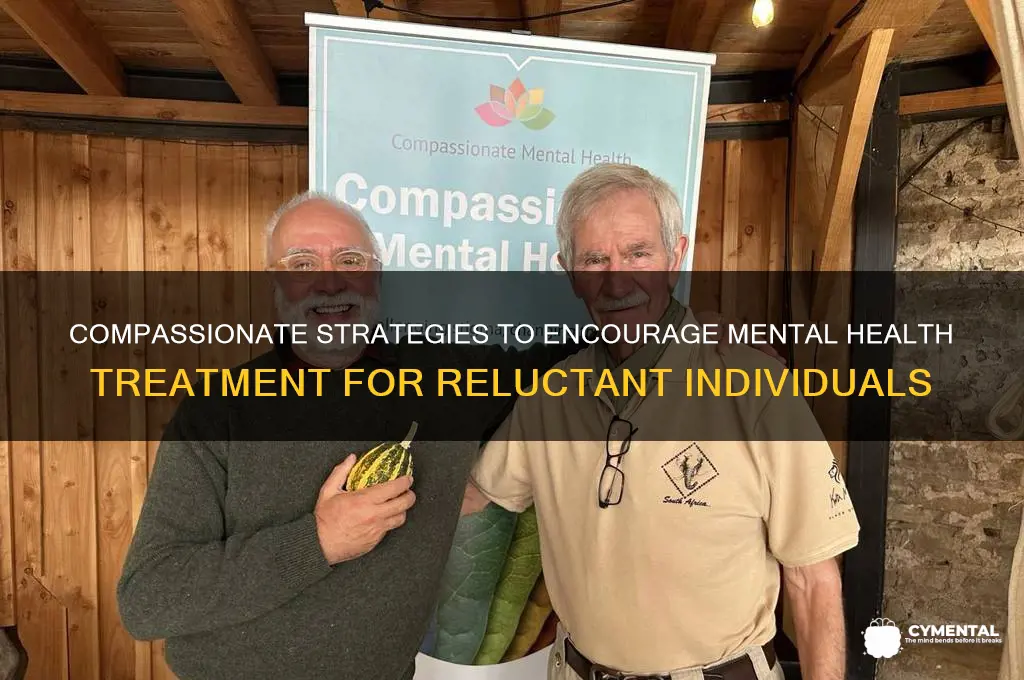
Addressing the challenge of how to encourage individuals with mental illness to seek help requires a delicate balance of empathy, understanding, and strategic intervention. Mental health conditions often impair insight, making it difficult for individuals to recognize their need for assistance, while stigma, fear, or distrust of treatment can further deter them from accepting support. While coercion is generally discouraged, there are ethical and compassionate approaches, such as crisis intervention, involving trusted individuals, or leveraging legal frameworks like involuntary commitment in extreme cases, that prioritize safety and well-being. Ultimately, fostering open communication, reducing barriers to care, and promoting a culture of understanding are essential to guiding those struggling with mental illness toward the help they need.
Explore related products


What You'll Learn
- Recognizing Warning Signs: Identify behaviors indicating severe mental health issues requiring immediate intervention
- Legal Options: Understand involuntary commitment laws and processes for emergency situations
- Building Trust: Approach with empathy to encourage voluntary acceptance of treatment
- Crisis Intervention: Use professional help during acute episodes to ensure safety
- Support Systems: Involve family, friends, and mental health advocates to provide consistent encouragement

Recognizing Warning Signs: Identify behaviors indicating severe mental health issues requiring immediate intervention
Severe mental health crises often announce themselves through behavioral changes that deviate sharply from an individual’s baseline. Look for sudden, persistent alterations in daily functioning: unexplained absence from work or school, neglect of personal hygiene, or drastic shifts in sleep patterns (e.g., insomnia or sleeping 12+ hours daily). These disruptions, particularly when combined, signal a breakdown in coping mechanisms and may indicate conditions like major depression or bipolar disorder. Documenting these changes over time provides critical context for intervention, as isolated incidents are less alarming than a pattern spanning weeks.
In the realm of communication, pay attention to language that reflects distorted thinking. Explicit statements like *"I wish I wasn’t here"* or *"Everyone would be better off without me"* are red flags for suicidal ideation, requiring immediate action. Less overt signs include frequent references to hopelessness, guilt, or worthlessness, which may align with depressive episodes. In psychotic disorders, listen for nonsensical statements or claims of hearing voices—hallucinations often manifest in schizophrenia or severe bipolar episodes. The presence of such symptoms warrants urgent professional assessment, particularly if the individual becomes unresponsive to reasoning.
Aggressive or impulsive behaviors demand swift intervention, especially when uncharacteristic. Examples include sudden physical altercations, reckless driving, or self-harm (e.g., cutting, burning). For adolescents (ages 15–25), heightened risk-taking—such as substance abuse or unsafe sexual practices—may coincide with emerging psychosis or borderline personality traits. In older adults (50+), new-onset agitation or paranoia could signal neurocognitive disorders like dementia with psychotic features. Always prioritize safety: remove weapons or harmful objects from the environment and contact emergency services if violence is imminent.
Social withdrawal, while often misunderstood, becomes concerning when it accompanies other symptoms. A person isolating themselves for weeks, avoiding previously enjoyed activities, or displaying flat affect may be experiencing severe depression or catatonic states. In contrast, manic episodes (common in bipolar I disorder) present as hyper-social behavior paired with irritability or grandiosity (e.g., *"I don’t need sleep; I’m invincible"*). Both extremes disrupt relationships and require targeted interventions: for withdrawal, gently encourage engagement; for mania, de-escalate environments and seek psychiatric evaluation within 24–48 hours.
Finally, recognize systemic signs that accompany severe mental illness. Rapid weight loss (10+ lbs in a month) or gain, unexplained bruises, or medical non-compliance (e.g., skipping diabetes medication) often correlate with untreated conditions. For instance, anorexia nervosa’s physical deterioration necessitates hospitalization if BMI drops below 15. Similarly, psychotic individuals may neglect chronic illnesses, exacerbating conditions like hypertension. Caregivers should monitor vitals (blood pressure, heart rate) during acute episodes and collaborate with healthcare providers to address dual medical-psychiatric needs.
Gymnastics: Boosting Mental Health, Focus, and Resilience Through Movement
You may want to see also
Explore related products


Legal Options: Understand involuntary commitment laws and processes for emergency situations
Involuntary commitment, often a last resort, is a legal process that allows for the temporary detention and treatment of individuals experiencing severe mental health crises who are unable or unwilling to seek help voluntarily. This measure is not about control but about ensuring safety and providing critical care when a person’s judgment is impaired by their condition. Understanding the laws and procedures governing this process is essential for anyone who might need to intervene in an emergency.
The first step in navigating involuntary commitment is to familiarize yourself with the specific laws in your jurisdiction. These laws vary widely by state or country but generally require evidence that the individual poses an imminent danger to themselves or others, or is gravely disabled due to their mental illness. For example, in California, the Lanterman-Petris-Short (LPS) Act outlines criteria for 72-hour holds, while in New York, the process involves a physician’s certification and a court order. Researching these statutes or consulting a legal professional can provide clarity on what constitutes a valid case for involuntary commitment.
Once you understand the legal framework, the next step is to identify the appropriate authorities to contact in an emergency. This typically involves law enforcement, mental health professionals, or crisis intervention teams. In some regions, mobile crisis units can assess the situation on-site and determine if involuntary commitment is necessary. For instance, in Oregon, the Oregon Health Authority provides resources for initiating an emergency hold through local hospitals or community mental health programs. Having these contacts readily available can save critical time during a crisis.
It’s important to approach this process with empathy and caution. Involuntary commitment can be traumatic for the individual, so it should only be pursued when all other options have been exhausted. Documenting the person’s behavior leading up to the decision can strengthen your case and demonstrate that the action is justified. For example, noting instances of self-harm, threats of violence, or an inability to care for basic needs can provide a clear rationale for intervention.
Finally, be prepared for the emotional and logistical challenges that follow. Involuntary commitment is not a permanent solution but a temporary measure to stabilize the individual. After the initial hold, a court hearing is typically required to determine if further treatment is necessary. Families and caregivers should seek support through advocacy groups or counseling to navigate this complex process. While it’s a difficult decision, involuntary commitment can be a lifeline for someone in crisis, offering them a chance to receive the care they need.
Restorative Yoga: A Gentle Path to Teen Mental Wellness
You may want to see also
Explore related products

$39.14 $59.99


Building Trust: Approach with empathy to encourage voluntary acceptance of treatment
Empathy is the cornerstone of fostering trust with individuals experiencing mental illness, a critical step toward encouraging voluntary acceptance of treatment. Unlike coercion, which often breeds resistance and resentment, an empathetic approach acknowledges the person’s humanity, fears, and struggles. Research shows that individuals are more likely to engage with treatment when they feel heard, understood, and respected. For instance, a study published in the *Journal of Psychiatric and Mental Health Nursing* found that patients who perceived their caregivers as empathetic were 40% more likely to adhere to treatment plans. This isn’t about placating or enabling; it’s about creating a safe space where the individual feels valued, not judged.
To build trust through empathy, start by actively listening without interrupting or imposing solutions. Use open-ended questions like, “How does this feel for you?” or “What’s been the hardest part of this experience?” Reflect their emotions back to validate their experience, such as, “It sounds like you’re feeling overwhelmed, and that makes sense given what you’re going through.” Avoid minimizing their struggles with phrases like “It could be worse” or “Just think positively.” Instead, acknowledge the reality of their pain while offering hope. For example, “This must be incredibly difficult, but I believe there are ways we can work together to find relief.”
Practical strategies include involving the individual in decision-making processes. Offer them choices within the treatment framework, such as selecting therapy modalities or medication options (if applicable). For instance, a 25-year-old with anxiety might prefer cognitive-behavioral therapy over medication, while a 40-year-old with depression may opt for a combination of both. Providing autonomy reduces feelings of powerlessness, a common trigger for resistance. Additionally, maintain consistency in your interactions. Show up reliably, follow through on commitments, and avoid making promises you can’t keep. Trust is built over time through small, consistent actions, not grand gestures.
A cautionary note: empathy does not mean enabling harmful behaviors or neglecting boundaries. It’s essential to balance compassion with firmness, especially in situations where the individual poses a risk to themselves or others. For example, if someone refuses treatment while actively suicidal, involve crisis intervention services while expressing concern and support. The goal is to communicate, “I care about you, and I’m here to help, even when it’s hard.” This dual approach—empathy paired with appropriate boundaries—demonstrates genuine care without sacrificing safety.
Ultimately, building trust through empathy is a long-term investment in the individual’s recovery. It requires patience, consistency, and a willingness to meet the person where they are, not where you wish them to be. By fostering a relationship rooted in understanding and respect, you create an environment where voluntary acceptance of treatment becomes not just possible, but probable. Remember, the goal isn’t to “force” help but to make it a collaborative, dignified choice.
Happiness Boosts Mental Health: Doctors Reveal Surprising Benefits
You may want to see also
Explore related products




Crisis Intervention: Use professional help during acute episodes to ensure safety
During acute episodes of mental illness, the risk of self-harm, harm to others, or severe deterioration increases exponentially. Crisis intervention by trained professionals is not just beneficial—it’s often critical to de-escalate situations and stabilize the individual. Unlike general support, crisis intervention involves structured protocols, such as the Psychiatric Emergency Response Team (PERT) model, which pairs law enforcement with mental health clinicians to assess and manage high-risk scenarios. This approach ensures safety while minimizing trauma, as untrained individuals may inadvertently escalate the crisis through miscommunication or fear-based reactions.
Consider the steps involved in activating professional crisis intervention. First, recognize the signs of an acute episode: severe agitation, suicidal ideation, psychotic breaks, or violent behavior. Second, contact emergency services or a local crisis hotline (e.g., 988 in the U.S.) immediately. When communicating with responders, provide clear, concise details about the individual’s behavior, any known diagnoses, and recent changes in medication or environment. For example, stating, “My brother is experiencing a psychotic episode, believes people are trying to kill him, and has a history of schizophrenia,” helps responders prepare appropriately. Third, follow their instructions, which may include creating a safe physical distance or administering prescribed PRN (as-needed) medications if authorized by a healthcare provider.
A common misconception is that forcing help during a crisis violates autonomy. However, legal frameworks like involuntary commitment or emergency holds exist to protect individuals incapable of making safe decisions. For instance, in California, a 5150 hold allows for 72-hour detention for assessment if a person is deemed a danger to themselves or others. While controversial, these measures are temporary and focus on stabilization rather than punishment. The key is to balance compassion with urgency, ensuring the individual receives care before the situation becomes irreversible.
Practical tips for caregivers include keeping a crisis plan readily available, including emergency contacts, medication lists, and de-escalation strategies. For example, a calm, low-toned voice and non-threatening body language can reduce agitation. Avoid arguments or attempts to reason during psychotic episodes, as logic often fails in such states. Instead, rely on professionals trained in techniques like verbal de-escalation or, in extreme cases, the use of chemical restraints (e.g., intramuscular haloperidol 5–10 mg for acute agitation, under medical supervision). Post-crisis, advocate for follow-up care, such as outpatient therapy or medication management, to prevent recurrence.
In comparative terms, crisis intervention differs from long-term treatment by prioritizing immediate safety over root-cause resolution. While therapy and medication address underlying conditions, crisis teams act as first responders, akin to paramedics in medical emergencies. Their role is to assess, stabilize, and refer, not to solve chronic issues. For instance, a crisis team might administer a single dose of lorazepam (1–2 mg) to manage acute anxiety but would not prescribe ongoing medication. Understanding this distinction helps caregivers navigate the system effectively, ensuring the right type of help at the right time.
Can Advil Ease Emotional Pain? Exploring the Mind-Body Connection
You may want to see also
Explore related products


![The Art of Advocacy: Briefs, Motions, and Writing Strategies of America's Best Lawyers [Connected eBook] (Aspen Coursebook)](https://m.media-amazon.com/images/I/71nFTPUXCiL._AC_UL320_.jpg)
Support Systems: Involve family, friends, and mental health advocates to provide consistent encouragement
Mental illness often isolates individuals, creating a barrier to seeking help. Involving a support system—family, friends, and mental health advocates—can break this isolation by providing consistent encouragement. These individuals act as a bridge, offering emotional reassurance and practical assistance to guide the person toward treatment. Their presence alone can counteract the stigma and fear that often deter individuals from accepting help.
Consider the role of family and friends as a safety net. They can initiate conversations about mental health in a non-confrontational manner, using "I" statements to express concern without blame. For example, saying, "I’ve noticed you’ve been struggling, and I’m worried about you," opens the door for dialogue. Pairing this with specific observations, such as changes in behavior or mood, makes the conversation more grounded and less abstract. Friends and family can also offer to accompany the individual to appointments, reducing the anxiety associated with seeking help alone.
Mental health advocates, whether professionals or trained volunteers, bring expertise to the table. They can educate the support system on effective communication strategies, such as active listening and validating emotions. Advocates can also help navigate resources, such as finding therapists, support groups, or crisis hotlines. For instance, organizations like the National Alliance on Mental Illness (NAMI) offer family support programs that teach caregivers how to encourage treatment while maintaining healthy boundaries. These advocates ensure that the support system itself remains informed and resilient.
Consistency is key. Encouragement must be ongoing, not a one-time effort. This involves regular check-ins, celebrating small victories, and avoiding judgment when setbacks occur. For example, a friend might send a weekly text asking, "How are you feeling this week?" or suggest low-pressure activities like a walk or coffee to maintain connection. Over time, this persistence can build trust and reduce resistance to seeking help.
However, it’s crucial to balance encouragement with respect for autonomy. Forcing treatment can backfire, deepening distrust and withdrawal. Instead, focus on creating an environment where the individual feels safe to explore their options. For instance, sharing stories of others who’ve benefited from treatment can normalize the process without coercion. Ultimately, the goal is to empower the individual to make their own decision, supported by a network that believes in their ability to heal.
Yoga and Meditation: Powerful Tools for Mental Health and Wellness
You may want to see also
Frequently asked questions
Laws vary by location, but in many places, involuntary treatment is possible if the person is deemed a danger to themselves or others, or is unable to care for themselves. This typically requires a court order or evaluation by mental health professionals.
Approach the conversation with empathy, express concern for their well-being, and offer support in finding resources. Avoid confrontation and focus on active listening. Suggest small steps, like speaking to a therapist or joining a support group, and emphasize that seeking help is a sign of strength.
In a crisis, prioritize safety. Contact emergency services or a crisis hotline for immediate assistance. Professionals can assess the situation and intervene if necessary, such as through involuntary hospitalization, depending on the severity and local laws.


![A Practical Guide to Appellate Advocacy: [Connected eBook] (Aspen Coursebook Series)](https://m.media-amazon.com/images/I/811nfMmBU6L._AC_UL320_.jpg)