Lucas Bennett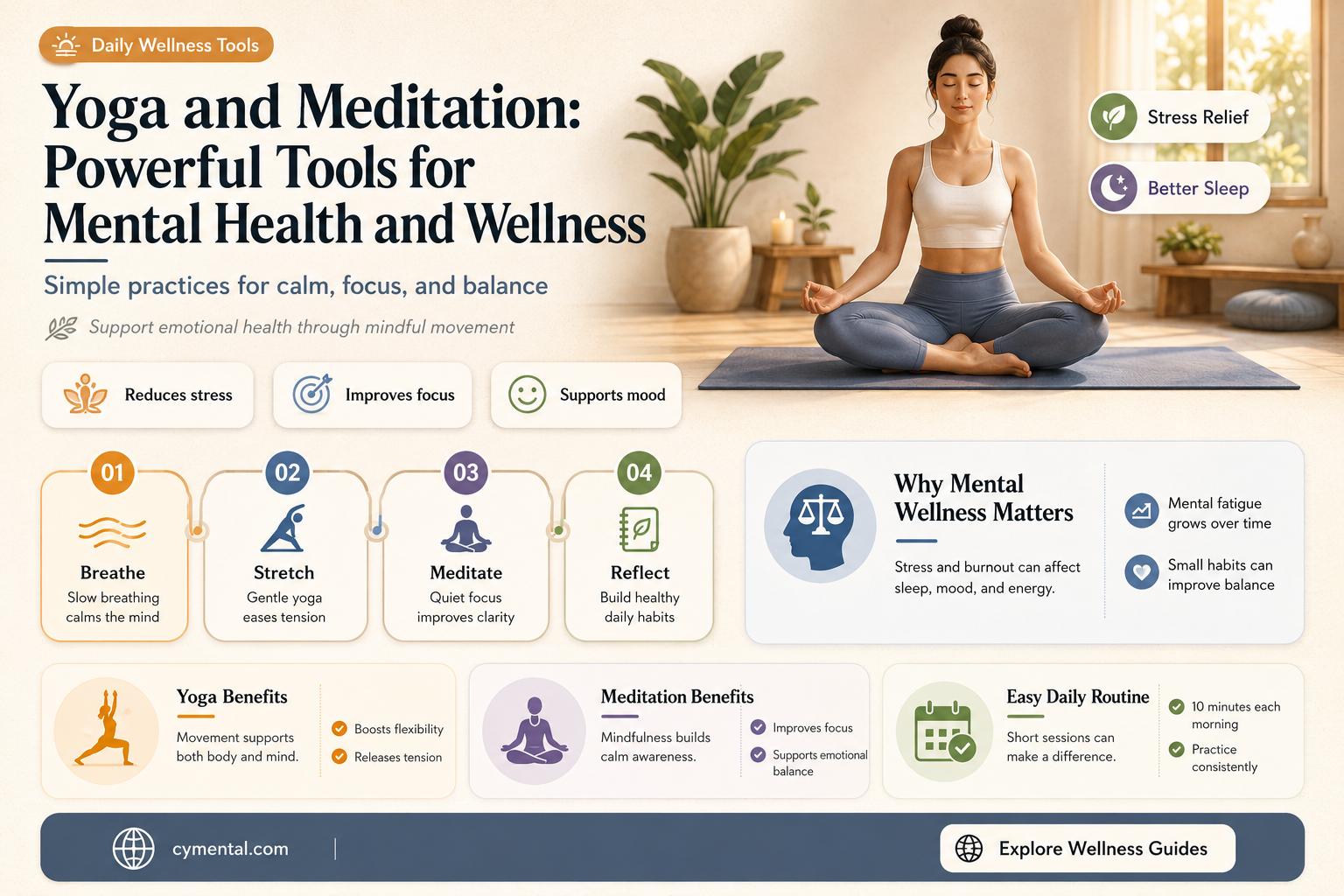
Yoga and meditation have gained widespread recognition as powerful tools for enhancing mental health and well-being. Rooted in ancient practices, these disciplines combine physical postures, breath control, and mindfulness to promote relaxation, reduce stress, and improve emotional balance. Research suggests that regular yoga and meditation can alleviate symptoms of anxiety, depression, and PTSD by regulating the nervous system, lowering cortisol levels, and fostering a sense of inner calm. Additionally, they encourage self-awareness and emotional resilience, helping individuals navigate life’s challenges with greater clarity and composure. As mental health concerns continue to rise globally, yoga and meditation offer accessible, holistic approaches to support psychological well-being and foster a healthier mind-body connection.
| Characteristics | Values |
|---|---|
| Stress Reduction | Yoga and meditation activate the parasympathetic nervous system, reducing cortisol levels and promoting relaxation. Studies show significant decreases in perceived stress. |
| Anxiety Relief | Mindfulness-based meditation and yoga have been linked to reduced symptoms of anxiety disorders, with meta-analyses reporting moderate to large effect sizes. |
| Depression Management | Regular practice of yoga and meditation can alleviate symptoms of depression by increasing serotonin levels and improving mood regulation. Effectiveness is comparable to some antidepressant treatments. |
| Improved Emotional Regulation | These practices enhance self-awareness and emotional resilience, helping individuals manage negative emotions more effectively. |
| Enhanced Cognitive Function | Yoga and meditation improve attention, memory, and executive function by promoting neuroplasticity and increasing gray matter density in brain regions associated with cognition. |
| Better Sleep Quality | Both practices reduce insomnia and improve sleep duration and quality by calming the mind and reducing nighttime awakenings. |
| Reduction in PTSD Symptoms | Mindfulness-based interventions, including yoga, have shown promise in reducing hyperarousal and intrusive thoughts in individuals with PTSD. |
| Increased Mindfulness | Regular practice cultivates present-moment awareness, reducing rumination and improving overall mental well-being. |
| Physical Health Benefits | Yoga improves flexibility, strength, and cardiovascular health, which indirectly supports mental health by reducing physical stressors. |
| Social Connection | Group yoga and meditation sessions foster a sense of community and belonging, which can mitigate feelings of loneliness and isolation. |
| Long-Term Mental Resilience | Consistent practice builds psychological resilience, enabling individuals to better cope with life’s challenges and stressors. |
| Evidence-Based Support | Numerous randomized controlled trials (RCTs) and meta-analyses support the mental health benefits of yoga and meditation, with growing recognition in clinical settings. |
| Accessibility | Yoga and meditation are accessible to people of all ages and fitness levels, with various styles and formats available (e.g., in-person, online, apps). |
| Cost-Effectiveness | Compared to traditional therapies, yoga and meditation are often more affordable and can be self-directed, making them a viable option for many. |
| Complementary to Traditional Therapy | These practices are increasingly integrated into mental health treatment plans as complementary therapies, enhancing the effectiveness of conventional approaches. |
Explore related products


$14.99 $19.99


What You'll Learn

Stress reduction through mindfulness practices
Stress, an inevitable companion in modern life, often feels like an unshakeable burden. Yet, mindfulness practices—rooted in yoga and meditation—offer a scientifically backed antidote. Studies show that just 10 minutes of daily mindfulness meditation can significantly reduce cortisol levels, the hormone associated with stress. This simple, time-efficient practice doesn’t require special equipment or a specific setting, making it accessible to anyone, anywhere. By focusing on the present moment, mindfulness interrupts the cycle of worry and rumination, providing immediate relief and long-term resilience.
Consider the mechanics of mindfulness in stress reduction. When you engage in mindful breathing—inhaling deeply for a count of four, holding for four, and exhaling for six—you activate the parasympathetic nervous system, which calms the body’s fight-or-flight response. Pair this with a yoga pose like Child’s Pose, which stretches the back and shoulders, and you create a physical release of tension. This combination of breath and movement is particularly effective for individuals aged 18–65, as research highlights its benefits for working adults and students facing chronic stress.
However, mindfulness isn’t a one-size-fits-all solution. For some, sitting in silence can feel overwhelming, especially if stress is tied to trauma or anxiety disorders. In such cases, guided mindfulness apps or group yoga classes can provide structure and support. Start with shorter sessions—5 minutes daily—and gradually increase duration as comfort grows. Consistency is key; practicing mindfulness sporadically yields minimal results, while regular engagement rewires the brain to respond to stress more calmly.
A comparative look at mindfulness versus traditional stress management methods reveals its unique advantages. While medication offers quick symptom relief, it often comes with side effects and doesn’t address the root cause. Therapy, though effective, requires time and financial commitment. Mindfulness, on the other hand, is cost-free, self-directed, and empowers individuals to manage stress independently. For instance, a study published in *JAMA Internal Medicine* found that mindfulness-based stress reduction programs were as effective as cognitive-behavioral therapy in reducing anxiety symptoms.
Incorporating mindfulness into daily life doesn’t require drastic changes. Begin with mindful moments during routine activities—focus on the sensation of brushing your teeth, the taste of your morning coffee, or the rhythm of your footsteps while walking. For those with busy schedules, integrating mindfulness into transitions—like taking three deep breaths before answering an email—can create pockets of calm. Over time, these small practices accumulate, fostering a sustained sense of tranquility. The takeaway? Mindfulness isn’t about eliminating stress but transforming how you relate to it, turning it from an adversary into a manageable aspect of life.
Free Clinics and Mental Health: Accessible Support or Limited Services?
You may want to see also
Explore related products




Anxiety relief via yoga breathing techniques
Breathing is the body's natural rhythm, yet in moments of anxiety, it often becomes shallow, rapid, and almost invisible. Yoga breathing techniques, or pranayama, offer a counterbalance by intentionally slowing and deepening the breath, activating the parasympathetic nervous system to calm the mind and relax the body. One of the simplest yet most effective techniques is Diaphragmatic Breathing, also known as Belly Breathing. To practice, sit or lie down comfortably, place one hand on your chest and the other on your abdomen, and inhale deeply through your nose for a count of four, allowing your belly to rise. Exhale slowly through your mouth for a count of six, letting your abdomen fall. Repeat this cycle for 5–10 minutes, focusing on the sensation of the breath. This technique is particularly useful for those experiencing acute anxiety, as it can be done anywhere and requires no equipment.
While Diaphragmatic Breathing is foundational, Alternate Nostril Breathing (Nadi Shodhana) offers a more structured approach to balancing the nervous system. This technique involves using your thumb and ring finger to alternately close one nostril while inhaling and exhaling through the other. Start by sitting upright, closing your right nostril with your right thumb, and inhaling slowly through your left nostril for a count of four. Close your left nostril with your ring finger, release your thumb, and exhale through your right nostril for a count of four. Inhale through the right nostril, then switch sides, exhaling through the left. Repeat this cycle for 5–10 minutes. This practice is especially beneficial for individuals with chronic anxiety, as it promotes mental clarity and emotional equilibrium. Studies suggest that consistent use of Nadi Shodhana can reduce cortisol levels, the hormone associated with stress.
For those seeking a more dynamic approach, Breath of Fire (Kapalabhati) is a vigorous pranayama technique that energizes the body while expelling tension. To perform, sit with a straight spine and take a deep inhale. Exhale sharply and forcefully through your nose, pulling your navel toward your spine, while keeping your inhale passive. Aim for 1–2 rounds of 10–20 rapid breaths, followed by a deep inhale and exhale. This technique is not recommended for pregnant individuals or those with high blood pressure but can be a powerful tool for others to release pent-up anxiety. Its intensity stimulates the release of endorphins, providing immediate relief from stress and anxiety symptoms.
Despite the accessibility of these techniques, it’s crucial to approach pranayama with mindfulness and caution. Overdoing practices like Breath of Fire or forcing the breath can lead to dizziness or hyperventilation. Beginners should start with shorter sessions (2–3 minutes) and gradually increase duration as comfort allows. Additionally, individuals with respiratory conditions such as asthma should consult a healthcare provider before attempting advanced techniques. Pairing pranayama with gentle yoga poses or meditation can enhance its anxiety-relieving effects, creating a holistic approach to mental well-being.
Incorporating yoga breathing techniques into daily life doesn’t require hours of practice—even 5–10 minutes a day can yield noticeable benefits. Apps or guided videos can provide structure for beginners, while setting reminders can help establish consistency. Over time, these practices train the body to respond to stress with calm rather than panic, offering a sustainable tool for managing anxiety. As research continues to validate the connection between breath control and mental health, pranayama stands out as a simple yet profound method for reclaiming peace in an anxious world.
Animal Companionship: Boosting Mental Health and Emotional Well-Being in Humans
You may want to see also
Explore related products


$13.09 $21.99


Meditation's impact on depression symptoms
Depression, a pervasive mental health condition affecting millions globally, often resists conventional treatment alone. Meditation, an ancient practice rooted in mindfulness and focused attention, has emerged as a complementary tool to alleviate depressive symptoms. Research indicates that regular meditation can reduce the severity of depression by fostering emotional regulation, enhancing self-awareness, and altering brain structures associated with mood. For instance, studies show that mindfulness-based cognitive therapy (MBCT) significantly lowers relapse rates in individuals with recurrent depression, rivaling the efficacy of antidepressant medication in some cases.
To harness meditation’s benefits for depression, consistency is key. Experts recommend practicing mindfulness meditation for 20–30 minutes daily, focusing on breath awareness or body scans. Beginners can start with shorter sessions, gradually increasing duration as focus improves. Apps like Headspace or Calm offer guided meditations tailored to mental health, making the practice accessible for all ages, including adolescents and older adults. Pairing meditation with yoga amplifies its effects, as physical movement enhances serotonin production, a neurotransmitter linked to mood regulation.
However, meditation is not a one-size-fits-all solution. Individuals with severe depression or trauma histories may find certain practices triggering. For example, focusing on breath or emotions can exacerbate anxiety in some cases. It’s crucial to approach meditation with caution and seek guidance from a mental health professional when integrating it into a treatment plan. Combining meditation with therapy or medication often yields the best outcomes, as it addresses both the cognitive and physiological aspects of depression.
A comparative analysis reveals that meditation’s impact on depression is distinct from traditional treatments. While antidepressants target neurotransmitter imbalances, meditation rewires neural pathways associated with stress and negative thinking. For instance, studies using MRI scans show increased activity in the prefrontal cortex—the brain’s decision-making center—and reduced activity in the amygdala, which governs fear responses, after consistent meditation practice. This neurological shift explains why meditators often report greater emotional resilience and reduced rumination.
Incorporating meditation into daily life requires practical strategies. Start by designating a quiet space free from distractions. Use a timer to avoid fixation on duration, and wear comfortable clothing to minimize discomfort. For those struggling with focus, incorporating mantras or gentle background music can enhance concentration. Group meditation sessions or online communities provide accountability and support, particularly for individuals feeling isolated due to depression. Over time, meditation cultivates a sense of inner calm, empowering individuals to navigate depressive episodes with greater clarity and self-compassion.
Personal Training: A Powerful Tool for Mental Health Improvement
You may want to see also
Explore related products




Yoga's role in improving emotional regulation
Yoga's ability to enhance emotional regulation stems from its unique combination of physical postures, breath control, and mindfulness practices. Research suggests that regular yoga practice can reduce activity in the amygdala, the brain's "fear center," while increasing connectivity in areas responsible for emotional control, such as the prefrontal cortex. This neurological shift translates to a greater ability to manage stress, anxiety, and mood fluctuations. For instance, a study published in the *Journal of Clinical Psychology* found that participants who engaged in yoga for 60 minutes, three times a week, reported significant improvements in emotional resilience compared to a control group.
To harness yoga's benefits for emotional regulation, focus on practices that emphasize breath awareness and gentle movement. Pranayama techniques, such as diaphragmatic breathing (inhale for 4 counts, exhale for 6 counts), activate the parasympathetic nervous system, promoting calmness. Pair this with restorative poses like Child’s Pose or Legs-Up-The-Wall for 5–10 minutes daily. For those new to yoga, starting with 20-minute sessions and gradually increasing duration can make the practice more sustainable. Avoid overexertion, as intense physical strain may counteract the calming effects.
A comparative analysis reveals that yoga’s impact on emotional regulation surpasses that of traditional exercise alone. While aerobic activities like running release endorphins, they often lack the mindfulness component that yoga provides. Yoga’s integration of body and mind fosters self-awareness, allowing individuals to recognize emotional triggers before they escalate. For example, a study in *Frontiers in Psychiatry* highlighted that yoga practitioners demonstrated better emotional recovery after exposure to stressful stimuli compared to those who only engaged in cardio workouts.
Incorporating yoga into daily routines doesn’t require a studio membership. Simple practices like seated spinal twists or mindful standing poses can be done at home or work. For children and adolescents, yoga can be particularly beneficial in developing emotional regulation skills early. Schools that implemented 15-minute yoga sessions during the day reported reduced classroom disruptions and improved student focus. Adults over 50 can also benefit, as yoga’s low-impact nature makes it accessible while addressing age-related stress and anxiety.
The takeaway is clear: yoga is a powerful tool for emotional regulation, offering both immediate relief and long-term resilience. By consistently integrating breathwork, mindful movement, and self-awareness, individuals can navigate emotional challenges with greater ease. Start small, stay consistent, and adapt the practice to your needs—whether you’re 10 or 70, yoga has something to offer in the journey toward emotional balance.
Writing as Therapy: Unlocking Mental Health Benefits Through Self-Expression
You may want to see also
Explore related products


$9.9 $16.99



Enhanced focus and cognitive function benefits
Yoga and meditation are not just about flexibility and relaxation; they are powerful tools for sharpening the mind. Studies show that regular practice can significantly enhance focus and cognitive function, rivaling the effects of some traditional brain-training methods. For instance, a 2018 study published in the *Journal of Cognitive Enhancement* found that participants who engaged in just 20 minutes of yoga daily for three months demonstrated improved attention span and working memory compared to a control group. This suggests that even short, consistent sessions can yield measurable cognitive benefits.
To harness these benefits, consider incorporating specific yoga poses and meditation techniques into your routine. Poses like *Dhanurasana* (Bow Pose) and *Vrikshasana* (Tree Pose) require balance and concentration, naturally engaging the mind while strengthening the body. Pair these with mindfulness meditation, where you focus on your breath for 10–15 minutes, to train your brain to stay present and reduce mental clutter. For beginners, start with guided sessions using apps like Headspace or Calm, which provide structured programs tailored to improving focus.
One of the most compelling aspects of yoga and meditation is their ability to counteract the cognitive decline associated with aging. Research from the *Harvard Medical School* highlights that older adults who practice these disciplines regularly exhibit better executive function—skills like decision-making and problem-solving—than their non-practicing peers. This is attributed to increased blood flow to the brain and the reduction of stress hormones like cortisol, which can impair cognitive performance. For individuals over 50, gentle yoga styles like Hatha or Yin, combined with short meditation sessions, can be particularly effective in maintaining mental sharpness.
However, it’s essential to approach these practices with realistic expectations. While yoga and meditation are beneficial, they are not a cure-all. Consistency is key; sporadic practice may yield minimal results. Aim for at least three to four sessions per week, each lasting 20–30 minutes, to experience noticeable improvements in focus and cognitive function. Additionally, combine these practices with a healthy lifestyle—adequate sleep, a balanced diet, and regular physical activity—to maximize their impact.
Incorporating yoga and meditation into your daily routine doesn’t require a drastic overhaul. Start small: dedicate five minutes to deep breathing exercises in the morning, or end your day with a brief meditation. Over time, gradually increase the duration and complexity of your practice. By doing so, you’ll not only enhance your focus and cognitive function but also cultivate a sense of mental clarity and resilience that extends beyond the mat.
Iowa Mental Health Laws: Can You Force Someone to Get Help?
You may want to see also
Frequently asked questions
Yes, yoga and meditation have been shown to improve mental health by reducing stress, anxiety, and symptoms of depression. They promote relaxation, enhance mindfulness, and increase emotional regulation.
Consistent practice yields the best results. Aim for at least 10–20 minutes of meditation daily and 2–3 yoga sessions per week. Even short, regular sessions can provide noticeable mental health improvements.
While yoga and meditation are powerful tools for mental well-being, they should not replace professional treatment like therapy or medication. They can complement traditional approaches and support overall mental health.