Noah Parker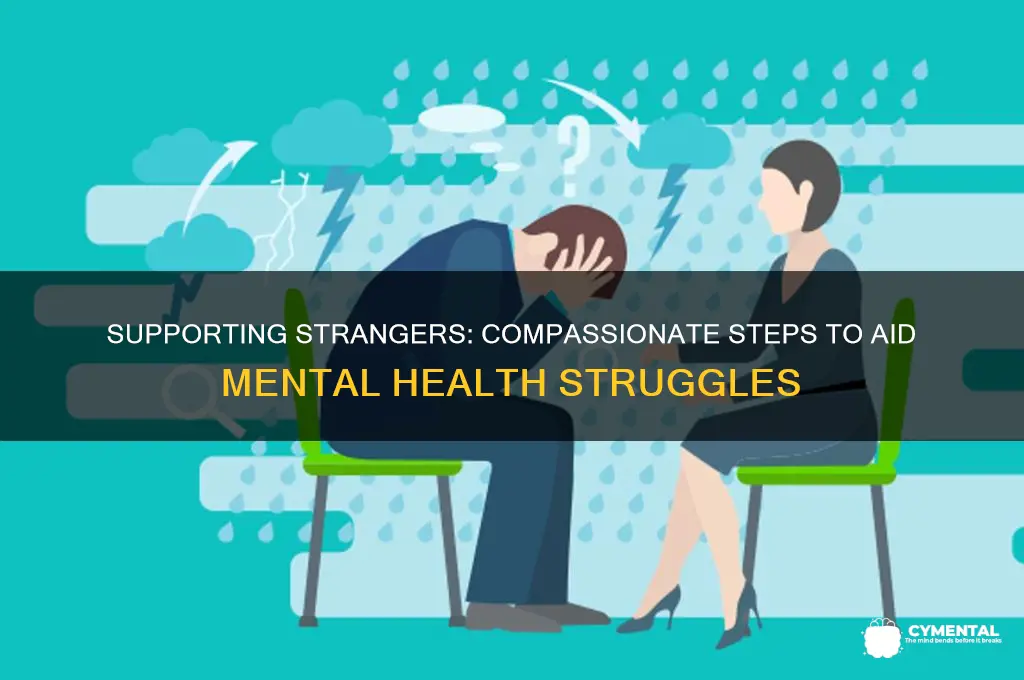
Helping a stranger with mental illness requires empathy, sensitivity, and awareness of boundaries. Start by approaching them in a calm, non-judgmental manner, using open-ended questions to show genuine concern and willingness to listen. Avoid making assumptions or offering unsolicited advice, and instead focus on creating a safe, supportive space for them to express themselves. If they seem open, gently suggest resources like crisis hotlines, mental health organizations, or local support services, but respect their autonomy if they decline. Remember, your role is to offer compassion and guidance, not to diagnose or fix their struggles, and always prioritize their dignity and privacy in the interaction.
Explore related products


What You'll Learn
- Recognize Warning Signs: Learn common indicators like withdrawal, mood swings, or erratic behavior to identify potential mental health issues
- Approach with Empathy: Use calm, non-judgmental language and show genuine concern to build trust and encourage openness
- Offer Immediate Support: Provide resources like crisis hotlines, local mental health services, or accompany them to seek help
- Listen Actively: Avoid interrupting; focus on understanding their feelings and validating their experiences without offering quick fixes
- Encourage Professional Help: Gently suggest therapy or counseling, emphasizing it’s a sign of strength, not weakness

Recognize Warning Signs: Learn common indicators like withdrawal, mood swings, or erratic behavior to identify potential mental health issues
Mental health crises often announce themselves through subtle yet distinct changes in behavior. Withdrawal from social activities, for instance, can be an early red flag. Imagine a colleague who once enthusiastically joined after-work gatherings now consistently declines invitations, citing vague excuses. This shift, especially when coupled with decreased communication, warrants attention. It’s not about invading privacy but noticing patterns that deviate from their baseline behavior.
Mood swings, another critical indicator, can manifest as rapid shifts from euphoria to despair or irritability. While everyone experiences mood fluctuations, the intensity and frequency in someone struggling with mental health can be disproportionate. For example, a stranger on public transit alternating between laughing loudly and crying silently within minutes may be exhibiting signs of bipolar disorder or severe emotional distress. Context matters—what’s unusual for one person might be normal for another, so observe relative to their typical demeanor.
Erratic behavior, such as sudden aggression, incoherent speech, or neglect of personal hygiene, demands immediate attention. A person pacing erratically in a park, talking to themselves in a disorganized manner, or wearing inappropriately layered clothing in extreme weather could be experiencing psychosis or severe anxiety. In such cases, safety is paramount—both theirs and yours. Approach cautiously, if at all, and prioritize involving trained professionals like crisis intervention teams.
Recognizing these signs isn’t about diagnosing but about being prepared to respond compassionately. For instance, if you notice a young adult consistently skipping meals and appearing frail, it could signal an eating disorder. A simple, non-judgmental question like, “I’ve noticed you haven’t eaten much lately—is everything okay?” can open a dialogue. Pair observation with empathy, avoiding assumptions or unsolicited advice.
The takeaway? Train your eye to spot deviations from normalcy, but always act with sensitivity. Keep resources like crisis hotlines (e.g., 988 in the U.S.) or local mental health services handy. Being aware of warning signs equips you to be a potential lifeline, not a bystander, in someone’s moment of need.
Mental Illness and Plea Bargaining: A Negotiation Strategy or Hindrance?
You may want to see also
Explore related products


Approach with Empathy: Use calm, non-judgmental language and show genuine concern to build trust and encourage openness
Empathy begins with language. The words we choose can either build a bridge or erect a wall. When approaching a stranger struggling with mental illness, opt for calm, measured tones that signal safety. Avoid phrases like “What’s wrong with you?” or “Just snap out of it,” which can feel dismissive or accusatory. Instead, use open-ended questions like, “How are you feeling right now?” or “Can I sit with you for a moment?” These invite dialogue without imposing assumptions. Research shows that non-judgmental language reduces defensiveness and increases the likelihood of someone opening up. Think of your words as tools—use them to create space, not tension.
Consider the power of body language and tone. A rushed pace or a raised voice can inadvertently communicate impatience or anxiety, which may overwhelm someone already in distress. Slow your speech, maintain a steady volume, and adopt a relaxed posture. Mirroring their tone, if they’re speaking softly or hesitantly, can subtly convey that you’re attuned to their emotional state. For example, if they say, “I don’t know what’s happening to me,” respond with, “It sounds like you’re going through a lot—I’m here to listen.” This combination of verbal and non-verbal cues reinforces your sincerity and helps establish trust.
Genuine concern isn’t just about what you say—it’s about how you listen. Active listening involves fully concentrating, not just waiting for your turn to speak. Paraphrase their thoughts to show you’re engaged, such as, “It seems like you’re feeling really alone right now—is that right?” Avoid interrupting or offering quick fixes like, “Have you tried meditation?” Instead, validate their emotions with statements like, “That sounds incredibly difficult.” Studies indicate that validation reduces feelings of isolation and encourages individuals to share more freely. Your goal isn’t to solve their problem but to make them feel heard and understood.
Practical empathy also means recognizing boundaries. While your intentions may be good, not everyone will be receptive to your approach. If they pull away or seem uncomfortable, respect their space without taking it personally. Say something like, “I’m here if you need me,” and leave the door open for future interaction. For instance, if you’re in a public setting, offer a small gesture, such as handing them a resource card for local mental health services, and let them decide whether to engage further. Empathy isn’t about forcing connection—it’s about creating an environment where connection is possible.
Finally, remember that empathy is a skill, not an innate trait. It requires practice and self-awareness. Before approaching someone, check your own emotional state—are you calm and present, or are you bringing your own stress into the interaction? If you’re unsure how to respond, it’s okay to say, “I’m not sure what to say, but I’m here for you.” Authenticity trumps perfection. By consistently practicing calm, non-judgmental communication and genuine concern, you can become a safe presence for someone in need, even if you’re a stranger to them.
Exercise Boosts Elderly Mental Health: Benefits and Strategies for Wellbeing
You may want to see also
Explore related products


Offer Immediate Support: Provide resources like crisis hotlines, local mental health services, or accompany them to seek help
In moments of crisis, a stranger’s mental health can teeter on the edge of urgency, demanding swift and informed action. Offering immediate support isn’t just about goodwill—it’s about bridging the gap between despair and professional care. Crisis hotlines, such as the National Suicide Prevention Lifeline (988 in the U.S.), are lifelines in these moments, providing trained counselors who can de-escalate situations and offer coping strategies. Local mental health services, often found through community health centers or online directories, can connect individuals to therapists, psychiatrists, or support groups tailored to their needs. If the situation allows, accompanying the person to seek help—whether to an emergency room or a clinic—can remove barriers like fear or logistical confusion, making professional intervention more accessible.
Consider the scenario of encountering someone expressing suicidal thoughts in a public space. Your first step should be to remain calm and empathetic, acknowledging their pain without judgment. Next, offer the 988 hotline as an immediate resource, explaining it’s free, confidential, and available 24/7. If they’re hesitant to call, suggest you dial together or offer to stay with them while they speak to a counselor. For non-emergency but urgent situations, such as severe anxiety or psychotic episodes, research local crisis stabilization units or mobile mental health teams, which can provide on-site assessments and short-term care. Practical tips include keeping a list of local resources on your phone or in your wallet, ensuring you’re prepared to act without delay.
The effectiveness of immediate support lies in its ability to meet people where they are—both emotionally and physically. For instance, a young adult experiencing a panic attack in a crowded mall might feel too overwhelmed to navigate resources alone. By offering to call a crisis line or accompany them to a quiet space, you provide both emotional reassurance and logistical assistance. Similarly, older adults or those without internet access may struggle to find local services; having printed materials or knowledge of nearby clinics can be invaluable. The key is to avoid overstepping boundaries while demonstrating genuine care, ensuring the person feels supported rather than pressured.
However, offering immediate support isn’t without challenges. Some individuals may resist help due to stigma, fear, or distrust. In such cases, persistence must be balanced with respect for autonomy. For example, if someone declines a hotline, suggest alternative resources like text-based crisis services (e.g., Crisis Text Line by texting HOME to 741741) or peer support groups. Additionally, be mindful of your own limitations; while accompanying someone to seek help is commendable, prioritize your safety and emotional well-being. If the situation escalates, don’t hesitate to involve emergency services, as professional intervention is sometimes non-negotiable.
Ultimately, offering immediate support is about being a conduit to care, not a substitute for it. By equipping yourself with knowledge of crisis hotlines, local services, and practical strategies, you can transform a moment of vulnerability into an opportunity for healing. Remember, the goal isn’t to “fix” the person but to guide them toward the help they need. In doing so, you become a vital link in the chain of support, proving that even strangers can make a profound difference in someone’s mental health journey.
Empowering Mental Health: The Vital Role of Community Health Workers
You may want to see also
Explore related products


Listen Actively: Avoid interrupting; focus on understanding their feelings and validating their experiences without offering quick fixes
Active listening is a cornerstone of supporting someone with mental illness, especially when they are a stranger. It begins with a simple yet profound act: letting them speak without interruption. This isn’t about waiting for your turn to talk but fully immersing yourself in their words, tone, and emotions. Research shows that uninterrupted speech allows individuals to process their thoughts more clearly, fostering a sense of safety and trust. For instance, a study published in the *Journal of Counseling Psychology* found that clients who felt heard reported greater emotional relief and willingness to engage in further conversations. Practically, this means setting aside your phone, maintaining eye contact (if culturally appropriate), and using nonverbal cues like nodding to signal engagement.
Understanding their feelings goes beyond hearing their words—it requires empathy and curiosity. Instead of assuming you know what they’re experiencing, ask open-ended questions like, “How does that make you feel?” or “Can you tell me more about that?” This approach validates their emotions and shows genuine interest in their perspective. For example, if a stranger mentions feeling overwhelmed by anxiety, avoid phrases like, “Just relax,” which can minimize their experience. Instead, say, “That sounds really difficult. I can’t imagine how hard that must be.” Such responses acknowledge their struggle without imposing solutions, creating a space where they feel seen and understood.
Validation is a powerful tool in active listening, particularly for strangers who may feel isolated or judged. It involves recognizing their experiences as real and meaningful, even if you’ve never faced similar challenges. For instance, if someone shares that they’re struggling with depression, respond with, “It makes sense that you’d feel that way given what you’re going through.” This doesn’t mean you agree with every detail but that you respect their reality. A cautionary note: avoid phrases like, “At least it’s not worse,” which can invalidate their pain. Instead, focus on affirming their feelings, which can help build rapport and encourage further openness.
Resisting the urge to offer quick fixes is perhaps the most challenging aspect of active listening. Human nature often compels us to solve problems, but mental health struggles rarely have simple solutions. For example, telling someone with chronic anxiety to “just think positively” can feel dismissive and unhelpful. Instead, acknowledge their complexity by saying, “It sounds like this has been going on for a while, and it’s not something that can be fixed overnight.” This approach honors their experience and avoids creating unrealistic expectations. The takeaway? Your role isn’t to fix but to provide a safe, nonjudgmental space where they feel heard and understood.
In practice, active listening with strangers requires patience, humility, and a willingness to step outside your comfort zone. Start small: offer a few minutes of your undivided attention, ask thoughtful questions, and validate their emotions. Remember, the goal isn’t to become their therapist but to humanize their struggle and show compassion. By doing so, you may provide a moment of relief or even encourage them to seek professional help. As one mental health advocate puts it, “Sometimes, the greatest gift you can give someone is the space to be themselves without fear of judgment.” In a world where many feel unseen, active listening can be a transformative act of kindness.
Seeking Support: Effective Ways to Get Help When You Need It Most
You may want to see also
Explore related products


Encourage Professional Help: Gently suggest therapy or counseling, emphasizing it’s a sign of strength, not weakness
Recognizing the signs of mental illness in a stranger can be challenging, but offering support by encouraging professional help is a powerful way to make a difference. When you notice someone struggling—perhaps they’re visibly overwhelmed, withdrawn, or expressing distress—a gentle suggestion to seek therapy or counseling can be a lifeline. Frame it as a sign of strength, not weakness. For instance, you might say, “It takes courage to ask for help, and speaking with a professional can provide tools to feel better.” This approach validates their struggle while normalizing mental health care.
The stigma surrounding therapy often prevents people from seeking help, especially in cultures or communities where mental health is misunderstood. By reframing therapy as an act of self-care rather than a last resort, you can shift their perspective. Compare it to visiting a doctor for physical pain—just as one wouldn’t ignore a broken bone, emotional pain deserves attention too. Share a relatable example, like, “A friend of mine started therapy and said it helped them understand themselves better—it’s like having a guide for your mind.” This makes the idea more approachable and less intimidating.
Practical steps can make your suggestion actionable. Offer to help them find resources, such as local clinics, online therapy platforms, or helplines. For instance, suggest, “There’s a great counseling center nearby, or if you prefer, online sessions are flexible and private.” If affordability is a concern, mention sliding-scale fees or free community services. Be mindful of their reaction—if they seem hesitant, avoid pushing. Instead, leave them with a positive thought: “Taking that first step is hard, but it’s worth it for the peace of mind it can bring.”
Encouraging professional help isn’t about solving their problems but empowering them to take control. It’s a delicate balance of empathy and assertiveness. Avoid phrases like “You need help” or “You should see someone,” which can feel judgmental. Instead, use “I” statements to express concern: “I’ve noticed you’ve been going through a tough time, and I think talking to a professional might help.” This shows you care without overstepping boundaries. Remember, your goal is to plant a seed of possibility, not force a decision.
Finally, be a role model by normalizing therapy in your own life. Share your experiences if appropriate, or mention how therapy has benefited someone you know. This humanizes the process and reduces its mystique. For example, “I started therapy last year, and it’s been a game-changer for managing stress.” By leading with openness and compassion, you not only encourage a stranger to seek help but also contribute to a broader culture of mental health acceptance. Small conversations can have a ripple effect, turning a moment of connection into a catalyst for change.
Supporting Guardians: Essential Resources for Mental Illness Caregivers
You may want to see also
Frequently asked questions
Approach them calmly and respectfully, using a friendly and non-judgmental tone. Start with a simple question like, “Are you okay?” or “Can I help you with something?” Be mindful of their comfort level and give them space if they seem hesitant.
Stay calm and call for professional help, such as emergency services or a crisis hotline, if the situation is severe. Speak gently and avoid making sudden movements. If they’re receptive, offer to stay with them until help arrives, but prioritize your safety as well.
Keep your assistance simple and respectful. Offer resources like a helpline number or suggest they speak to a trusted person. Avoid giving unsolicited advice or prying into their personal life. Let them know you care without pressuring them.
If they become agitated, maintain a safe distance and avoid confrontation. Reassure them gently and continue to seek professional help. If they’re unresponsive, focus on ensuring their immediate safety and involve authorities or mental health professionals as needed.