Ava Ramirez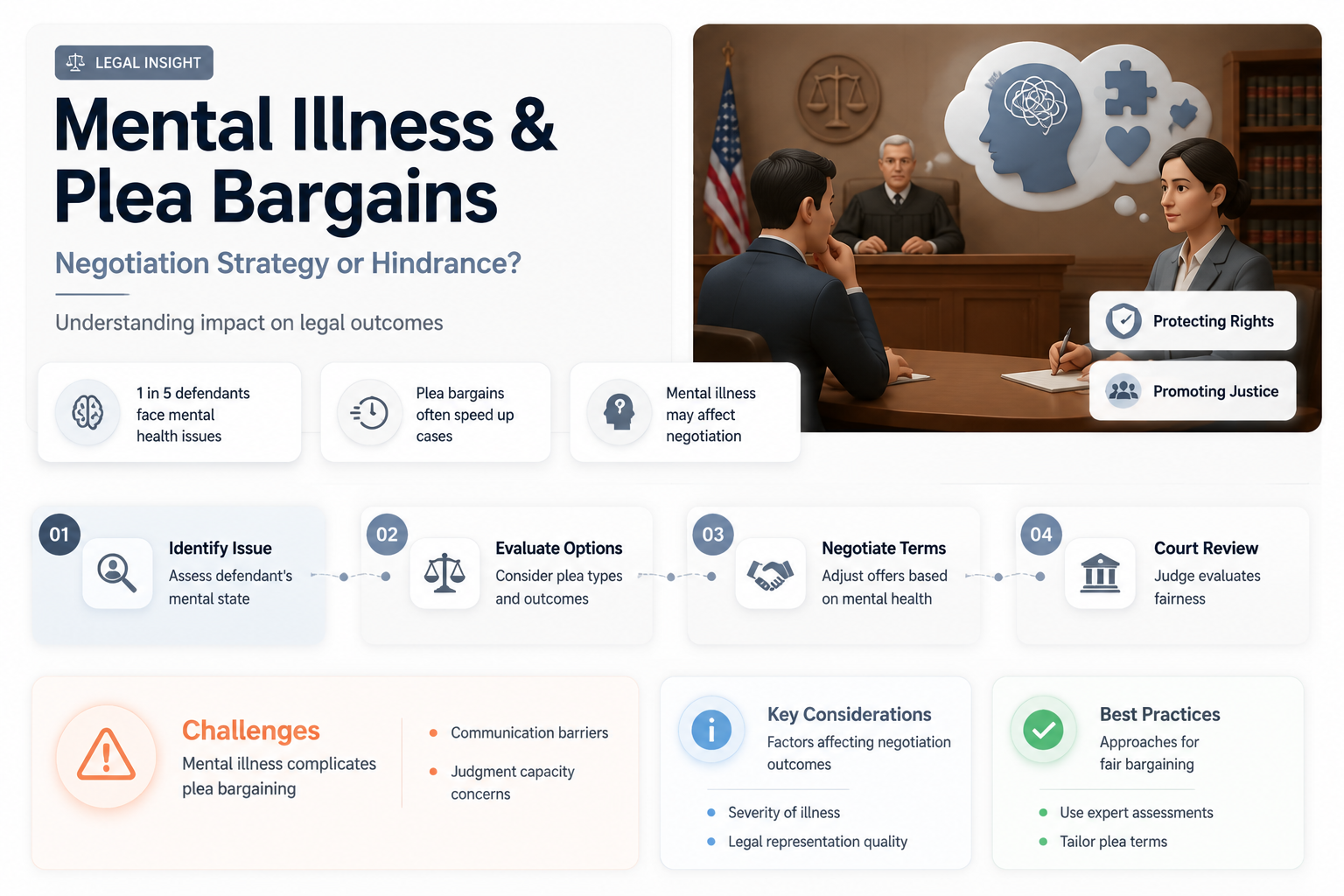
The intersection of mental illness and the legal system raises complex questions, particularly regarding plea bargaining. Advocates argue that mental illness can be a mitigating factor, potentially leading to reduced sentences or alternative dispositions, as it may influence an individual's culpability or capacity for rehabilitation. However, critics contend that mental health issues could be exploited or misunderstood, potentially resulting in unfair agreements or inadequate support for defendants. This nuanced topic demands careful consideration of ethical, legal, and psychological dimensions to ensure justice is served while addressing the unique needs of mentally ill individuals within the criminal justice system.
Explore related products


What You'll Learn

Impact of mental illness on plea bargaining decisions
Mental illness can significantly alter the dynamics of plea bargaining, often introducing complexities that demand nuanced legal and psychological considerations. For instance, defendants with conditions like schizophrenia or bipolar disorder may exhibit impaired decision-making, raising questions about their competency to plead guilty. In such cases, courts frequently order evaluations to determine whether the defendant understands the charges and consequences, a threshold requirement for plea agreements. This initial step underscores the delicate balance between ensuring justice and accommodating vulnerabilities.
Consider the case of a defendant diagnosed with severe depression, whose symptoms include persistent hopelessness and suicidal ideation. During negotiations, their attorney might argue that the defendant’s mental state warrants leniency, such as reduced charges or alternative sentencing like probation coupled with mandatory mental health treatment. Prosecutors, while focused on accountability, may view this as an opportunity to avoid the unpredictability of a trial involving a mentally ill defendant. Here, mental illness becomes a bargaining chip, not out of exploitation, but as a practical acknowledgment of the defendant’s diminished capacity and societal interests in rehabilitation.
However, this approach is not without risks. Overemphasis on mental illness can inadvertently stigmatize defendants, reducing them to their diagnosis rather than addressing the specifics of their case. For example, a defendant with anxiety disorder might be portrayed as inherently unreliable, even if their condition has no bearing on the crime committed. Attorneys must tread carefully, ensuring that mental health arguments are directly relevant to the case and supported by expert testimony, such as psychiatric evaluations detailing the defendant’s functional limitations at the time of the offense.
Practical strategies for leveraging mental illness in plea bargaining include framing the defendant’s condition as a mitigating factor rather than an excuse. For instance, a defendant with PTSD stemming from military service might receive more favorable terms if their trauma is presented as a contributing factor to their actions, coupled with a commitment to treatment. Additionally, attorneys can propose structured plea deals that include mental health court programs, which offer supervised treatment in lieu of incarceration. These programs, available in over 400 jurisdictions across the U.S., have shown recidivism rates up to 30% lower than traditional sentencing, providing a compelling argument for their inclusion in plea agreements.
Ultimately, the impact of mental illness on plea bargaining decisions hinges on context, strategy, and advocacy. While it can open doors to more compassionate outcomes, it requires careful navigation to avoid perpetuating stereotypes or undermining the defendant’s agency. By grounding arguments in evidence and tailoring solutions to individual needs, legal professionals can harness mental illness as a tool for justice, not just negotiation.
Biotin's Role in Mental Health: Potential Benefits and Limitations Explored
You may want to see also
Explore related products


Legal considerations for mentally ill defendants in negotiations
Mental illness can significantly impact a defendant's ability to participate in plea negotiations, raising critical legal considerations that balance fairness, competency, and public safety. Courts must assess whether a defendant’s mental state impairs their capacity to understand the charges, the consequences of a plea, or to assist in their defense. For instance, a defendant with schizophrenia may struggle to comprehend the long-term implications of a plea deal, while someone with severe depression might lack the motivation to engage in negotiations. These factors necessitate careful evaluation to ensure due process is upheld.
One key legal consideration is the competency evaluation, a formal assessment to determine if a defendant is fit to stand trial or negotiate a plea. This process often involves psychiatric or psychological experts who examine the defendant’s ability to rationally participate in legal proceedings. For example, a defendant diagnosed with bipolar disorder might require stabilization through medication like lithium (dosage typically 900–1,200 mg/day) before being deemed competent. If found incompetent, the court may delay proceedings until the defendant’s condition improves, often through treatment in a secure facility.
Another consideration is the potential for mental illness to mitigate sentencing, even if competency is established. Defense attorneys may argue that a defendant’s mental health issues contributed to the offense, advocating for leniency or alternative sentencing such as mental health court programs. For instance, a defendant with PTSD might receive a reduced sentence if their condition is linked to the crime. However, prosecutors may counter that public safety concerns outweigh mitigating factors, particularly in cases involving violence. This tension highlights the need for individualized assessments that weigh both accountability and rehabilitation.
Practical tips for attorneys representing mentally ill defendants include early identification of mental health issues, collaboration with mental health professionals, and thorough documentation of the defendant’s condition. Attorneys should also explore plea agreements that incorporate treatment plans, such as probation with mandatory therapy or medication management. For example, a plea deal for a defendant with severe anxiety might include regular counseling sessions and access to anti-anxiety medications like sertraline (starting at 50 mg/day). Such tailored approaches can address underlying issues while holding defendants accountable.
In conclusion, navigating plea negotiations for mentally ill defendants requires a nuanced understanding of legal and psychological complexities. By prioritizing competency evaluations, considering mitigating factors, and crafting agreements that address mental health needs, the justice system can strive for outcomes that are both fair and rehabilitative. Attorneys, judges, and prosecutors must work collaboratively to ensure that mental illness is not a barrier to justice but a factor that informs compassionate and effective resolutions.
Plant-Based Diets and Mental Health: Exploring the Mind-Body Connection
You may want to see also
Explore related products


Role of competency evaluations in plea agreements
Competency evaluations play a pivotal role in plea agreements by assessing whether a defendant is mentally fit to participate in legal proceedings. These evaluations determine if the individual understands the charges, can assist in their defense, and can make informed decisions about pleading guilty or going to trial. Without competency, a plea agreement cannot be legally binding, as it would violate due process rights. This assessment is not about guilt or innocence but rather about the defendant’s capacity to engage meaningfully in their own defense.
Consider the case of a defendant diagnosed with schizophrenia who faces charges for a nonviolent offense. A competency evaluation might reveal that their symptoms impair their ability to comprehend legal strategies or communicate effectively with their attorney. In such instances, the evaluation could lead to a plea agreement that includes mental health treatment as a condition, rather than incarceration. This approach not only addresses the defendant’s needs but also aligns with public safety and judicial efficiency.
However, competency evaluations are not without challenges. They require collaboration between legal and mental health professionals, and their outcomes can vary based on the evaluator’s methodology or bias. For example, a defendant with borderline intellectual functioning might be deemed incompetent by one evaluator but competent by another, depending on the criteria used. This inconsistency underscores the need for standardized protocols and ongoing training for evaluators.
Practical tips for attorneys navigating competency evaluations include requesting evaluations early in the case to avoid delays, ensuring the evaluator has access to comprehensive medical records, and advocating for alternatives like competency restoration programs if the defendant is found unfit. For defendants, understanding the purpose of the evaluation and cooperating with the process can lead to more favorable outcomes, such as diversion into mental health courts or treatment-based plea deals.
In conclusion, competency evaluations serve as a critical safeguard in plea agreements, ensuring that mental illness does not undermine a defendant’s rights. While they present challenges, their proper use can transform the legal process into a tool for rehabilitation rather than punishment. By prioritizing accuracy and fairness in these evaluations, the justice system can better serve individuals with mental health conditions while maintaining legal integrity.
Metabolic Screening: A New Tool for Mental Health Diagnosis?
You may want to see also
Explore related products



Ethical concerns in leveraging mental illness for deals
The practice of leveraging mental illness in plea negotiations raises profound ethical dilemmas, particularly regarding the potential for exploitation and the erosion of justice. Consider a defendant diagnosed with severe depression or schizophrenia: their condition might be used to argue for leniency, suggesting diminished capacity or heightened vulnerability. However, this approach risks reducing complex medical diagnoses to bargaining chips, undermining the integrity of both legal and mental health systems. If mental illness becomes a strategic tool rather than a genuine factor in sentencing, it could incentivize manipulation or even feigned symptoms, distorting the purpose of plea agreements.
From an analytical perspective, the ethical concern lies in the unequal power dynamics between prosecutors and defendants. Mental illness often places individuals in a position of disadvantage, making them more susceptible to coercion or pressure to accept deals that may not serve their best interests. For instance, a defendant with bipolar disorder might be persuaded to plead guilty to avoid a trial, even if evidence of their guilt is weak, due to the stress and unpredictability of court proceedings. This exploitation of vulnerability not only violates principles of fairness but also perpetuates systemic injustices, particularly for marginalized groups who are overrepresented in both the criminal justice and mental health systems.
A comparative examination reveals that leveraging mental illness in plea deals contrasts sharply with ethical standards in other fields. In medicine, for example, a patient’s condition is never used as leverage to extract concessions; instead, it guides treatment with compassion and respect. Similarly, in legal ethics, attorneys are bound by rules to act in their clients’ best interests, not to exploit their vulnerabilities for tactical gain. The legal system’s divergence from these norms in plea negotiations highlights a troubling double standard, where mental illness is weaponized rather than addressed as a health issue.
To address these ethical concerns, practical steps must be taken. First, courts should mandate independent psychiatric evaluations to verify claims of mental illness, ensuring diagnoses are not fabricated or exaggerated. Second, judges and prosecutors should receive training on the ethical implications of considering mental health in plea deals, emphasizing the need to balance leniency with accountability. Finally, defendants with mental illness should have access to competent legal counsel and mental health advocates who can protect their rights and ensure decisions are made in their best interest. Without such safeguards, the system risks becoming a tool for exploitation rather than justice.
Hypnosis and Mental Health: Exploring Its Potential as a Therapeutic Tool
You may want to see also
Explore related products

$40.5 $45


Effectiveness of mental health advocacy in plea outcomes
Mental health advocacy in plea negotiations can significantly alter outcomes by humanizing defendants and highlighting systemic failures. For instance, a defendant with schizophrenia may have their charges reduced from a felony to a misdemeanor if advocates successfully argue that their actions were a direct result of untreated psychosis. This approach shifts the narrative from culpability to care, framing the legal issue as a public health concern. By presenting comprehensive mental health evaluations and treatment plans, advocates provide judges and prosecutors with a viable alternative to incarceration, often leading to diversion programs or probation. Such outcomes not only benefit the individual but also reduce recidivism rates, as evidenced by a 2019 study showing that mentally ill defendants in diversion programs had a 30% lower reoffending rate compared to those sentenced to prison.
Effectiveness, however, hinges on the quality of advocacy and the receptiveness of the legal system. Advocates must navigate a delicate balance between medical evidence and legal strategy, ensuring that mental health is not exploited as a mere bargaining chip but is instead central to the case’s equity. For example, a defense team might submit a detailed psychiatric report alongside testimony from a mental health professional to establish a clear link between the defendant’s condition and their actions. In jurisdictions with mental health courts, this approach is more likely to succeed, as these courts are specifically designed to address the needs of mentally ill offenders. Yet, in areas lacking such infrastructure, advocates must be prepared to educate legal stakeholders, often requiring persistence and creativity to secure favorable plea deals.
A critical caution is the risk of stigmatization. While mental health advocacy can be powerful, it can also inadvertently label defendants as "dangerous" or "unpredictable," particularly if their condition is misunderstood or misrepresented. Advocates must therefore frame mental illness as a mitigating factor rather than a defining characteristic. For instance, emphasizing that a defendant’s bipolar disorder was exacerbated by lack of access to medication humanizes their struggle and avoids perpetuating harmful stereotypes. Additionally, advocates should collaborate with community mental health organizations to ensure continuity of care post-plea, as this strengthens the argument for leniency and demonstrates a commitment to long-term rehabilitation.
Ultimately, the effectiveness of mental health advocacy in plea outcomes depends on its ability to bridge the gap between legal and medical systems. By reframing criminal behavior as a symptom of systemic neglect, advocates can secure outcomes that prioritize treatment over punishment. Practical steps include early intervention—engaging mental health professionals at the outset of a case—and leveraging data to illustrate the cost-effectiveness of diversion programs. For example, a 2020 report found that every dollar invested in mental health diversion saved $2.50 in incarceration costs. Armed with such evidence, advocates can make a compelling case for plea agreements that not only benefit the defendant but also serve the broader interests of justice and public welfare.
Cooking for Calm: How Kitchen Therapy Boosts Mental Well-Being
You may want to see also
Frequently asked questions
Yes, a mental illness diagnosis can sometimes influence plea negotiations, as it may be considered a mitigating factor by prosecutors or judges, potentially leading to reduced charges or sentencing.
Mental illness may affect a defendant's ability to negotiate effectively if it impairs their decision-making or understanding of the legal process, requiring additional support from their attorney.
Yes, in some cases, plea agreements may include provisions for mental health treatment as an alternative to incarceration or as a condition of probation.
No, a history of mental illness does not guarantee a favorable plea deal, as the outcome depends on the specifics of the case, the severity of the charges, and the discretion of the prosecutor and judge.
Disclosing mental illness during plea negotiations can be strategic, as it may highlight mitigating circumstances, but it should be done with legal counsel to ensure it is presented effectively and does not harm the case.