Harper Lewis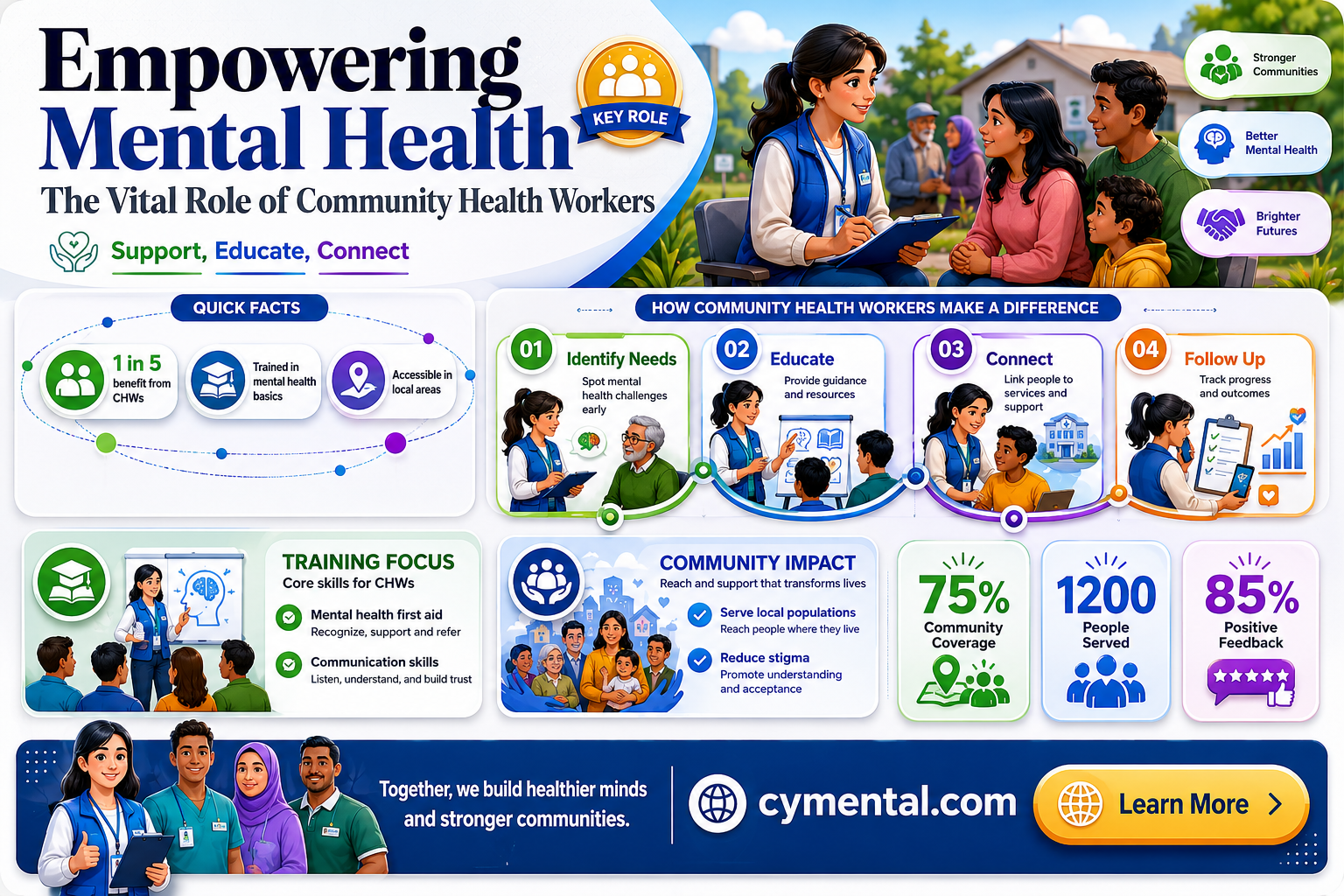
Community health care workers play a vital role in supporting the mental health sector by serving as accessible, culturally competent, and trusted liaisons between individuals and professional mental health services. Often embedded within the communities they serve, these workers are uniquely positioned to identify early signs of mental health issues, reduce stigma through education and awareness, and connect individuals to appropriate resources. Their ability to provide ongoing support, such as counseling, crisis intervention, and follow-up care, bridges gaps in access to mental health services, particularly in underserved or rural areas. By fostering trust and leveraging their understanding of local cultures and needs, community health care workers not only improve mental health outcomes but also contribute to building resilient, mentally healthy communities.
| Characteristics | Values |
|---|---|
| Early Intervention & Prevention | Community health workers (CHWs) can identify individuals at risk for mental health issues through regular contact and trust-built relationships. They can provide basic mental health education, promote healthy coping mechanisms, and connect individuals to professional help early on, potentially preventing more severe conditions. |
| Improved Access to Care | CHWs bridge the gap between communities and mental health services, particularly in underserved areas. They can provide culturally sensitive outreach, navigate complex healthcare systems, and assist with appointment scheduling and transportation, making mental health care more accessible. |
| Cultural Competence & Trust | CHWs often share cultural backgrounds and languages with the communities they serve, fostering trust and understanding. This cultural competence allows them to address mental health stigma, tailor interventions to specific cultural beliefs, and provide more effective support. |
| Social Support & Connection | CHWs can connect individuals to community resources, support groups, and social activities, combating isolation and promoting social connectedness, which are crucial for mental well-being. |
| Health Literacy & Education | CHWs can provide basic mental health education, dispel myths and misconceptions, and empower individuals to manage their own mental health. They can also assist with understanding treatment plans and medication adherence. |
| Follow-up & Continuity of Care | CHWs can provide ongoing support and monitoring after initial treatment, ensuring individuals stay engaged with their care plans and addressing any emerging concerns. |
| Data Collection & Advocacy | CHWs can collect valuable data on community mental health needs, identify service gaps, and advocate for policy changes to improve mental health resources and accessibility. |
| Cost-Effectiveness | Utilizing CHWs can be a cost-effective way to expand mental health services, particularly in resource-limited settings. |
Explore related products


What You'll Learn
- Early Mental Health Screening: Conducting basic screenings to identify potential mental health issues in communities
- Awareness Campaigns: Educating communities about mental health stigma and available resources
- Referral Services: Connecting individuals to specialized mental health professionals and support systems
- Crisis Intervention: Providing immediate support during mental health emergencies until professional help arrives
- Follow-Up Care: Ensuring continuity of care and monitoring progress after initial mental health interventions

Early Mental Health Screening: Conducting basic screenings to identify potential mental health issues in communities
Community health care workers are uniquely positioned to bridge the gap between underserved populations and mental health services. By conducting early mental health screenings, they can identify potential issues before they escalate, ensuring timely intervention and support. This proactive approach not only reduces the burden on specialized mental health services but also fosters a culture of prevention within communities.
Steps to Implement Early Mental Health Screening:
- Training and Tools: Equip community health workers with standardized screening tools like the PHQ-9 for depression or GAD-7 for anxiety. These tools are designed to be simple, quick, and effective, requiring minimal training to administer.
- Integration into Routine Care: Incorporate screenings into existing health checks, such as prenatal visits, chronic disease management, or school health programs. For example, a 5-minute screening during a diabetes follow-up can reveal co-occurring depression.
- Age-Specific Approaches: Tailor screenings to age groups. For children, use tools like the Strengths and Difficulties Questionnaire (SDQ), while for older adults, include questions about loneliness and cognitive decline.
Cautions and Considerations:
While screenings are valuable, they must be handled sensitively. False positives can cause unnecessary alarm, while false negatives may delay care. Ensure workers are trained to communicate results empathetically and refer individuals to appropriate resources. Additionally, cultural stigma around mental health may deter participation, so framing screenings as part of overall wellness can improve acceptance.
Practical Tips for Success:
- Dosage and Frequency: Screen annually for adults and semi-annually for high-risk groups like adolescents or postpartum women.
- Privacy and Trust: Conduct screenings in private settings and assure participants that their responses are confidential.
- Follow-Up: Develop a clear referral pathway. For instance, if a screening indicates moderate depression, connect the individual to a local counselor or telehealth service within 72 hours.
Impact and Takeaway:
Early mental health screening by community health workers can transform care delivery, particularly in resource-limited settings. By identifying issues early, they enable interventions that prevent severe mental illness, reduce healthcare costs, and improve quality of life. This approach not only addresses individual needs but also strengthens community resilience, proving that prevention is indeed better than cure.
Texas State Services for Mentally Disabled Individuals: Available Resources and Support
You may want to see also
Explore related products


Awareness Campaigns: Educating communities about mental health stigma and available resources
Mental health stigma remains a pervasive barrier to care, often rooted in misinformation and cultural taboos. Community health care workers (CHWs) are uniquely positioned to dismantle this stigma through targeted awareness campaigns. By leveraging their local knowledge and trust within communities, CHWs can design initiatives that resonate culturally and linguistically, ensuring messages are accessible and impactful. For instance, in rural areas, campaigns might use storytelling or local dialects to normalize conversations about mental health, while urban settings could employ social media and community events to reach diverse audiences. The key is to tailor the approach to the community’s needs, ensuring the message is not just heard but understood and internalized.
One effective strategy is to pair stigma reduction with resource education. CHWs can create campaigns that not only challenge misconceptions but also inform individuals about available mental health services, such as counseling, support groups, and crisis hotlines. For example, a campaign might highlight that anxiety and depression are treatable conditions, not signs of weakness, while simultaneously providing contact information for local mental health clinics. This dual focus empowers individuals to seek help by addressing both the fear of judgment and the lack of knowledge about where to turn. Practical tips, like offering step-by-step guides on how to schedule a first therapy appointment, can further reduce barriers to care.
However, awareness campaigns must be implemented thoughtfully to avoid unintended consequences. For instance, overemphasizing severe mental illnesses might inadvertently reinforce stereotypes, while neglecting milder but common conditions like stress or mild depression could leave gaps in understanding. CHWs should adopt a balanced approach, addressing a spectrum of mental health issues and emphasizing that everyone, regardless of age or background, can benefit from mental health support. For children and adolescents, campaigns could focus on stress management and emotional resilience, while for older adults, they might highlight the link between mental and physical health.
To maximize impact, CHWs should collaborate with local leaders, schools, and organizations to amplify their message. For example, partnering with religious institutions can help bridge cultural divides, as faith leaders often hold significant influence in their communities. Schools can serve as hubs for youth-focused campaigns, integrating mental health education into existing programs. Additionally, CHWs can use data to measure campaign effectiveness, such as tracking increases in helpline calls or clinic visits, to refine strategies over time. By combining cultural sensitivity, practical information, and strategic partnerships, awareness campaigns led by CHWs can transform community attitudes and behaviors toward mental health.
Hospitalization for Mental Health: Impact on SSDI Case Approval
You may want to see also
Explore related products


Referral Services: Connecting individuals to specialized mental health professionals and support systems
Community health care workers often serve as the first point of contact for individuals seeking mental health support, particularly in underserved areas where access to specialized care is limited. One of their most critical roles is facilitating referral services, which act as a bridge between those in need and the appropriate mental health professionals or support systems. Without this connection, many individuals might remain untreated or receive inadequate care, exacerbating their conditions. By understanding the landscape of available resources and knowing how to navigate them, these workers can ensure timely and effective interventions.
Consider the process of making a referral: it begins with a thorough assessment of the individual’s needs, which requires active listening and empathy. For instance, a community health worker might identify symptoms of anxiety in a 35-year-old patient during a routine check-up. Instead of dismissing it as "stress," they would document the severity (e.g., frequency of panic attacks, duration of symptoms) and refer the patient to a licensed therapist specializing in cognitive-behavioral therapy (CBT). This targeted approach increases the likelihood of successful treatment, as CBT is evidence-based for anxiety disorders. Practical tips for workers include maintaining an updated directory of local mental health providers, including their areas of expertise, availability, and whether they accept insurance or offer sliding-scale fees.
However, referral services are not without challenges. A common barrier is the stigma surrounding mental health, which may prevent individuals from accepting a referral. To address this, community health workers can employ persuasive communication strategies, framing the referral as a proactive step toward overall well-being rather than a sign of weakness. For example, they might say, "Many people find talking to a counselor helps them manage stress better, just like how exercise improves physical health." Additionally, workers should be prepared to provide logistical support, such as helping patients schedule appointments or arranging transportation, especially for older adults or those without reliable mobility options.
A comparative analysis reveals that communities with robust referral systems experience better mental health outcomes. In rural Kenya, for instance, a program that trained community health workers to identify and refer cases of depression led to a 40% increase in treatment initiation within six months. In contrast, areas lacking such systems often report higher rates of untreated mental illness. This highlights the importance of not only making referrals but also following up with patients to ensure they engage with the recommended services. A simple yet effective strategy is to check in with the individual a week after the referral, asking, "How did your first session go? Is there anything I can do to support you further?"
In conclusion, referral services are a cornerstone of community health care workers’ contributions to the mental health sector. By combining analytical assessment, persuasive communication, and practical support, these workers can connect individuals to specialized care that might otherwise remain out of reach. The key takeaway is that effective referrals require more than just handing out a phone number—they demand a holistic approach that addresses both clinical and logistical barriers. With proper training and resources, community health workers can transform lives, one referral at a time.
Boost Your Mental Health: The Role of B Vitamins Explained
You may want to see also
Explore related products


Crisis Intervention: Providing immediate support during mental health emergencies until professional help arrives
Mental health emergencies demand swift, compassionate action, and community health care workers are often the first responders in these critical moments. Their role in crisis intervention is not to replace professional mental health services but to bridge the gap, offering immediate support that can stabilize individuals until specialized help arrives. This immediate response can be the difference between escalation and de-escalation, between despair and hope.
Consider a scenario where a person is experiencing a severe panic attack or suicidal ideation. Community health care workers trained in crisis intervention can employ techniques such as active listening, grounding exercises, and safety planning. For instance, they might guide the individual through deep breathing exercises—inhale for 4 seconds, hold for 4 seconds, exhale for 6 seconds—to reduce hyperventilation. They can also help identify a trusted contact or a safe space, ensuring the person feels less isolated. These actions, though simple, are evidence-based and can prevent the situation from worsening.
However, crisis intervention is not without its challenges. Community health care workers must balance empathy with boundaries, ensuring they do not overextend themselves emotionally. They should also be aware of their limitations; for example, they are not qualified to diagnose or prescribe medication. Instead, their focus should be on creating a safe environment, assessing risk levels, and contacting emergency services if necessary. A key takeaway is that their role is to provide a human connection during a moment of extreme vulnerability, which can be as vital as any clinical intervention.
To maximize effectiveness, community health care workers should undergo specialized training in mental health first aid. Programs like Mental Health First Aid (MHFA) teach participants how to recognize signs of mental health crises, such as persistent sadness in adolescents or sudden aggression in adults, and respond appropriately. Additionally, they should carry resource lists with local crisis hotlines, emergency contacts, and follow-up care options to ensure continuity of support. By equipping themselves with these tools, they can act as a lifeline in moments when every second counts.
In conclusion, crisis intervention by community health care workers is a critical yet often overlooked aspect of mental health support. Their ability to provide immediate, practical, and empathetic assistance can mitigate the severity of emergencies and pave the way for professional treatment. With proper training and resources, they become indispensable allies in the fight against mental health crises, proving that sometimes, the most important help is the help that arrives first.
Effective Strategies to Help Others: A Comprehensive Guide to Support
You may want to see also
Explore related products

![Ultra Breathable Work Back Brace for Men & Women [Upgraded Medical-Grade Support] Lower Back Support Belt with Removable Suspenders - Pain Relief for Lifting, Warehouse, Construction, Moving](https://m.media-amazon.com/images/I/71KtwEZCXVL._AC_UL320_.jpg)


Follow-Up Care: Ensuring continuity of care and monitoring progress after initial mental health interventions
Effective follow-up care is the linchpin of sustained mental health recovery, yet it remains one of the most overlooked aspects of care delivery. After initial interventions—whether medication, therapy, or crisis stabilization—patients often face a void where ongoing support should be. Community health care workers (CHWs) are uniquely positioned to bridge this gap, acting as the connective tissue between acute care and long-term wellness. Their role in follow-up care is not just about checking boxes but about fostering trust, identifying early warning signs, and ensuring that patients feel seen and supported in their journey.
Consider the case of a 28-year-old patient recently discharged after a first-time psychotic episode. Despite stabilization, the transition back to daily life can be fraught with challenges—medication adherence, social isolation, and the fear of relapse. Here, a CHW can step in with a structured follow-up plan: weekly home visits for the first month, biweekly check-ins thereafter, and a clear protocol for escalating concerns to a mental health professional. The CHW’s role is both practical—reminding the patient to take their 20mg daily dose of aripiprazole—and emotional, offering a listening ear during moments of doubt. This dual focus on clinical and human elements is what makes CHWs indispensable in follow-up care.
However, implementing effective follow-up care is not without challenges. CHWs must navigate limited resources, patient reluctance, and the complexity of mental health conditions. For instance, a 45-year-old patient with treatment-resistant depression may require more nuanced monitoring, such as tracking mood fluctuations on a 1-10 scale during each visit. CHWs must also be trained to recognize subtle signs of deterioration, such as a sudden drop in self-care or increased irritability, and know when to involve a psychiatrist. This requires not just empathy but also a structured framework—tools like the PHQ-9 for depression or GAD-7 for anxiety can provide objective data to guide interventions.
To maximize impact, CHWs should adopt a proactive rather than reactive approach. This means anticipating challenges before they escalate. For a teenager recovering from an anxiety disorder, a CHW might collaborate with school counselors to monitor attendance and academic performance, two key indicators of mental health stability. Practical tips include using digital tools for reminders—a simple text message to take medication or attend therapy—and involving family members in care plans where appropriate. The goal is to create a safety net that catches patients before they fall, not after.
In conclusion, follow-up care is where the promise of initial interventions is either fulfilled or lost. CHWs, with their community-rooted approach, are ideally suited to ensure continuity, monitor progress, and provide the human connection that mental health recovery demands. By combining structured protocols with personalized care, they can transform follow-up from an afterthought into a cornerstone of mental health support.
Seeking Support: A Guide to Finding Help When You Need It Most
You may want to see also
Frequently asked questions
Community health care workers can bridge gaps in mental health care by providing outreach services, identifying individuals in need, and connecting them to appropriate resources. They can also offer basic mental health education and support, reducing barriers like stigma and lack of awareness.
Community health care workers are often the first point of contact in underserved areas. They can screen for early signs of mental health issues, provide initial support, and refer individuals to specialized care, ensuring timely intervention and prevention of severe conditions.
These workers can assist in monitoring patients’ progress, providing emotional support, and helping individuals adhere to treatment plans. They also facilitate community-based programs that promote mental well-being, foster social connections, and reduce isolation.