Ava Ramirez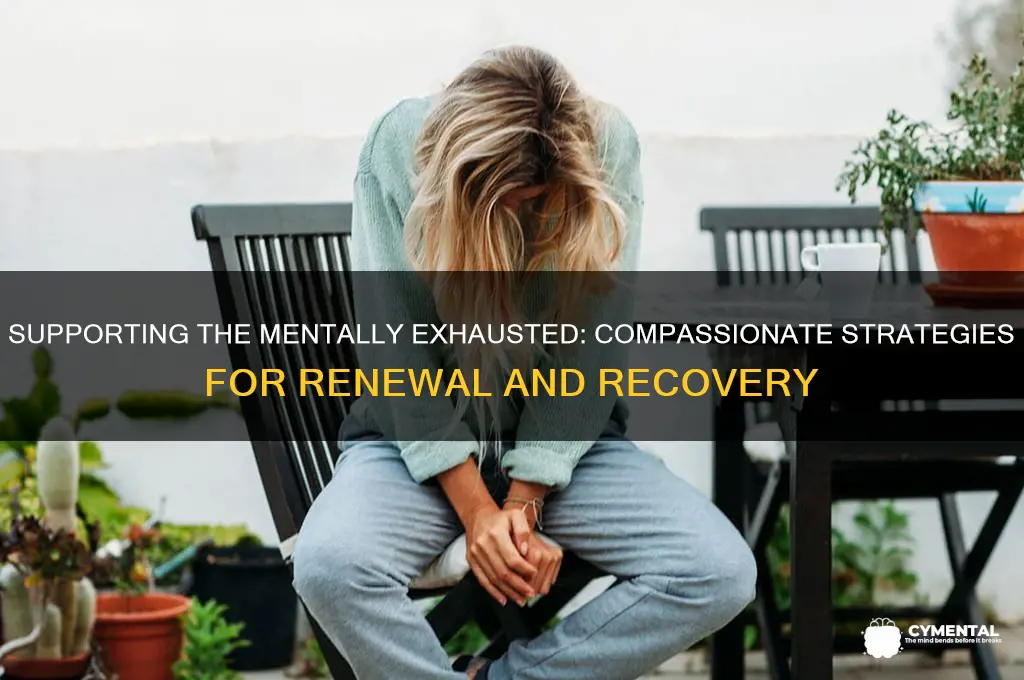
Helping a mentally exhausted person requires empathy, patience, and understanding. Start by creating a safe, non-judgmental space where they feel comfortable expressing their feelings without fear of criticism. Encourage active listening by giving them your undivided attention and validating their emotions, even if you don’t fully understand their experience. Offer practical support, such as helping with daily tasks or suggesting small, manageable steps to alleviate stress. Encourage self-care practices like adequate sleep, healthy eating, and gentle exercise, while also respecting their boundaries and avoiding pushing them too hard. Suggest professional help, such as therapy or counseling, if their exhaustion persists, and remind them that seeking support is a sign of strength, not weakness. Above all, let them know they are not alone and that you are there to support them through their journey to recovery.
Explore related products


What You'll Learn
- Listen Actively, Non-Judgmentally: Create safe space, focus fully, validate feelings without advice unless asked
- Encourage Self-Care: Suggest rest, hydration, nutrition, and gentle activities like walks or hobbies
- Offer Practical Support: Help with tasks, errands, or responsibilities to reduce their burden
- Promote Professional Help: Gently suggest therapy or counseling as a supportive resource
- Be Patient and Present: Avoid pressure, stay consistent, and show you’re there without expectations

Listen Actively, Non-Judgmentally: Create safe space, focus fully, validate feelings without advice unless asked
Mental exhaustion often silences its sufferers, not because they lack words, but because they fear judgment or dismissal. To counter this, create a safe space where their feelings are acknowledged without criticism. Start by choosing a quiet, private setting—a calm room, a secluded park bench, or even a brief phone call where distractions are minimized. Avoid interruptions like phones or background noise. Your body language speaks volumes: maintain eye contact (when culturally appropriate), nod occasionally, and lean in slightly to signal engagement. These small actions dismantle barriers, inviting them to share without fear of being misunderstood or condemned.
Active listening goes beyond silence; it demands full presence. When they speak, resist the urge to formulate responses or relate their experiences to your own. Instead, focus on their tone, pace, and choice of words. Reflect back what you hear to confirm understanding: *"It sounds like you’re feeling overwhelmed by the constant demands at work—is that right?"* This technique not only clarifies their message but also reassures them that their words are being absorbed, not just heard. Time your responses to their pauses, not your impatience. For instance, if they trail off mid-sentence, wait several seconds before gently prompting, *"Take your time—I’m here when you’re ready."*
Validation is the antidote to emotional isolation. Phrases like *"That must be incredibly hard"* or *"Anyone in your situation would feel the same"* normalize their struggles without minimizing them. Avoid the trap of offering solutions unless explicitly asked. Unsolicited advice, even well-intentioned, can imply their feelings are problems to be fixed rather than experiences to be respected. For example, instead of saying, *"You should take a vacation,"* try, *"It makes sense you’re exhausted after everything you’ve been handling."* This approach honors their autonomy while reinforcing that their emotions are valid and worthy of acknowledgment.
Comparisons or dismissals—*"At least you have a job"* or *"Others have it worse"*—erode trust and deepen their reluctance to open up. Similarly, avoid questioning their coping mechanisms unless there’s immediate harm. If they mention skipping meals due to stress, for instance, respond with, *"That sounds like a heavy burden to carry alone,"* rather than, *"Why aren’t you taking care of yourself?"* The goal is to foster a judgment-free zone where their reality is accepted as it is, not as it "should" be. Over time, this consistency builds trust, encouraging deeper, more vulnerable conversations.
Finally, remember that active, non-judgmental listening is a skill, not an innate trait. It requires practice and self-awareness. If you catch yourself interrupting or preparing advice, gently redirect your focus back to them. Post-conversation, reflect on what you’ve learned and how you can improve next time. For caregivers, setting boundaries is crucial: limit sessions to 30–45 minutes to prevent emotional overload, and seek support if their struggles trigger your own stress. Done consistently, this approach not only aids the exhausted individual but also strengthens the connection between you, fostering resilience in both parties.
TRT and Mental Health: Unlocking Emotional Well-Being and Clarity
You may want to see also
Explore related products


Encourage Self-Care: Suggest rest, hydration, nutrition, and gentle activities like walks or hobbies
Mental exhaustion often manifests as a relentless fog, clouding judgment, sapping energy, and distorting priorities. In this state, even the most basic self-care practices can feel insurmountable. That’s why external encouragement becomes critical—not as a nagging reminder, but as a compassionate nudge toward restoration. Start by normalizing rest, not as a luxury, but as a non-negotiable pillar of recovery. Suggest short, structured breaks throughout the day—20-minute naps, 10-minute stretches, or even a few minutes of deep breathing. For those resistant to "doing nothing," reframe rest as a productivity tool: a recharged mind works more efficiently than an overtaxed one.
Hydration and nutrition, though seemingly mundane, are biochemical cornerstones of mental resilience. Dehydration alone can impair cognitive function, mimicking symptoms of exhaustion. Encourage the person to keep a reusable water bottle within reach, aiming for 8–10 cups daily, adjusted for activity level and climate. Pair this with nutrient-dense, easily digestible meals—think oatmeal with nuts, vegetable smoothies, or grilled chicken with quinoa. Avoid the trap of quick-fix sugary snacks, which spike energy temporarily but deepen fatigue later. For those overwhelmed by meal prep, suggest batch cooking on less stressful days or opting for pre-cut veggies and pre-cooked proteins.
Gentle activities serve as a bridge between inertia and engagement, offering movement without pressure. A 10-minute walk, even at a leisurely pace, boosts circulation and releases endorphins, counteracting the lethargy of exhaustion. For those who find walks monotonous, suggest pairing it with an audiobook or podcast. Hobbies, too, play a dual role: they distract from stressors while fostering a sense of accomplishment. Encourage low-stakes, process-oriented activities like sketching, knitting, or tending to a small plant collection. The goal isn’t mastery, but immersion—a mental respite from the weight of exhaustion.
However, caution against overloading the person with suggestions. Too many options can paralyze, defeating the purpose of self-care. Instead, offer one or two actionable ideas at a time, tailored to their preferences and energy levels. For instance, if they enjoy music, recommend a 15-minute playlist paired with a glass of water and a handful of almonds. Or, if they’re nature-oriented, suggest a brief garden sit with a herbal tea. The key is to meet them where they are, not where you think they should be. Small, consistent steps, not grand gestures, pave the way to recovery.
Supporting Adult Children: Strategies to Encourage Mental Health Treatment
You may want to see also
Explore related products


Offer Practical Support: Help with tasks, errands, or responsibilities to reduce their burden
Mental exhaustion often manifests as an overwhelming sense of being buried under an unmanageable to-do list. Even small tasks, like grocery shopping or responding to emails, can feel insurmountable. This is where practical support becomes a lifeline. By stepping in to handle tangible responsibilities, you directly alleviate the pressure on their mental bandwidth, allowing them to focus on rest and recovery.
Practical support isn’t just about doing things for someone; it’s about identifying the specific tasks that drain their energy the most. For instance, if they’re a parent, offering to pick up their kids from school or prepare dinner for a few nights can free up hours of mental and physical effort. If they’re a professional, taking over a time-consuming errand like dry cleaning or running work-related errands can significantly reduce their daily stress. The key is to observe or ask what tasks feel most burdensome and target those first.
A persuasive argument for this approach lies in its immediate impact. Unlike emotional or financial support, practical help provides instant relief. For example, spending two hours cleaning their apartment not only removes a chore from their list but also creates a calmer, more organized environment, which can improve their mental state. Similarly, offering to handle a week’s worth of meal prep ensures they have nutritious food without the mental labor of planning and cooking. This kind of tangible assistance demonstrates care in a way that words alone cannot.
However, offering practical support requires sensitivity and awareness. Avoid making assumptions about what they need; instead, ask directly or pay attention to subtle cues. For instance, if they mention being overwhelmed by laundry, volunteer to do a load or two. Be mindful of their pride or reluctance to accept help—frame your offer as a collaborative effort rather than a charity act. For example, say, “I’m heading to the store; what can I pick up for you?” instead of “You look like you need help.”
In conclusion, practical support is a powerful tool for aiding a mentally exhausted person, but its effectiveness lies in its specificity and delivery. Tailor your help to their most pressing needs, communicate openly, and approach it as a partnership rather than a rescue mission. By lightening their load in measurable ways, you provide not just temporary relief but also a reminder that they’re not alone in navigating their exhaustion.
Ginseng's Potential Role in Supporting Mental Health and Wellness
You may want to see also
Explore related products





Promote Professional Help: Gently suggest therapy or counseling as a supportive resource
Mental exhaustion often stems from prolonged stress, burnout, or unresolved emotional struggles, making it difficult for individuals to see a way forward on their own. While offering a listening ear or practical support is helpful, there comes a point where professional intervention becomes necessary. Therapy or counseling provides structured, evidence-based strategies to address underlying issues, offering tools that friends or family, no matter how well-intentioned, cannot. Recognizing this need is the first step in promoting professional help as a vital resource.
Approaching the topic of therapy requires sensitivity and timing. Start by normalizing the conversation around mental health, using phrases like, “It’s completely normal to seek help when things feel overwhelming,” or “Many people find therapy helpful, even if they’re not in crisis.” Avoid framing it as a last resort or a sign of weakness. Instead, position it as a proactive step toward self-care, akin to seeing a doctor for physical health. For instance, you might say, “Just like we’d see a specialist for a persistent physical issue, talking to a therapist can provide expert guidance for mental exhaustion.”
When suggesting therapy, be mindful of potential barriers, such as stigma, cost, or accessibility. Offer practical solutions where possible, like recommending sliding-scale clinics, online therapy platforms, or employee assistance programs. If the person expresses hesitation, validate their concerns without dismissing them. For example, “I understand it might feel daunting, but many therapists offer free consultations to help you decide if it’s the right fit.” Providing concrete options can make the idea feel less abstract and more achievable.
Finally, emphasize that seeking professional help is not a reflection of failure but a courageous act of self-preservation. Share anecdotes or statistics if appropriate, such as, “Research shows that therapy can significantly reduce symptoms of burnout and improve overall well-being.” Encourage them to view it as an investment in their long-term mental health, rather than a temporary fix. By framing therapy as a supportive resource, you empower the individual to take a meaningful step toward recovery, while respecting their autonomy in the decision-making process.
Early Rising: Boosting Mental Health Through Morning Routines
You may want to see also
Explore related products


Be Patient and Present: Avoid pressure, stay consistent, and show you’re there without expectations
Mental exhaustion doesn’t heal on a timetable. Pushing someone to “snap out of it” or setting deadlines for their recovery only deepens their stress. Instead, adopt the mindset of a gardener tending a fragile plant: consistent care, no rush, and trust in the process. This means avoiding questions like, “Are you feeling better yet?” or statements like, “You just need to try harder.” Pressure, even well-intentioned, can make them feel more inadequate or misunderstood.
Consistency is the silent language of support. Show up in small, predictable ways—a daily text, a weekly check-in, or a standing invitation for coffee. For example, if they’re struggling with work burnout, offer to handle one recurring task (like picking up groceries) every Friday. This creates a sense of stability without demanding emotional labor in return. Avoid sporadic, grand gestures that might overwhelm; instead, focus on steady, low-effort actions that signal, “I’m here, and this isn’t going away.”
Being present without expectations means resisting the urge to “fix” or analyze. If they share their struggles, respond with validation, not solutions. Phrases like, “That sounds really hard,” or, “I’m so sorry you’re going through this,” acknowledge their pain without shifting the focus to problem-solving. For instance, if they confide about a stressful project, avoid saying, “Have you tried prioritizing tasks?” Instead, say, “It’s okay to take breaks—I’m here if you need to talk.” This creates a safe space where they don’t feel judged or obligated to perform gratitude.
Compare this approach to how we care for physical injuries. You wouldn’t tell someone with a broken leg to “just walk it off” or constantly ask if they’re healed yet. Mental exhaustion requires the same gentleness: no pressure, steady support, and acceptance of the healing process. For practical application, set boundaries around your own availability—let them know when you’re free to listen, but don’t overcommit. This ensures your presence remains sustainable and genuine, not a source of added stress for either of you.
The takeaway is simple but transformative: your role isn’t to accelerate their recovery but to create an environment where healing can occur. By avoiding pressure, staying consistent, and offering presence without strings attached, you become a quiet anchor in their storm. Over time, this approach fosters trust and reduces the isolation that often accompanies mental exhaustion. Remember, the goal isn’t to see immediate progress—it’s to let them know they’re not alone, one small, patient moment at a time.
Empowering Minds: Social Workers Combating Mental Health Stigma Effectively
You may want to see also
Frequently asked questions
Signs of mental exhaustion include persistent fatigue, irritability, difficulty concentrating, withdrawal from social activities, changes in sleep or appetite, and a sense of hopelessness. Pay attention to subtle changes in behavior or mood.
Offer a listening ear without judgment, encourage rest and self-care, help with small tasks to reduce their burden, and gently suggest professional help if needed. Avoid pressuring them to "snap out of it."
No, avoid forcing conversations. Let them know you’re available to talk when they’re ready. Instead, focus on creating a safe and supportive environment where they feel comfortable opening up.
Set boundaries, prioritize your own self-care, and seek support if needed. Offer help in manageable ways and remember that you can’t fix their exhaustion—your role is to provide understanding and encouragement.