Caleb Wright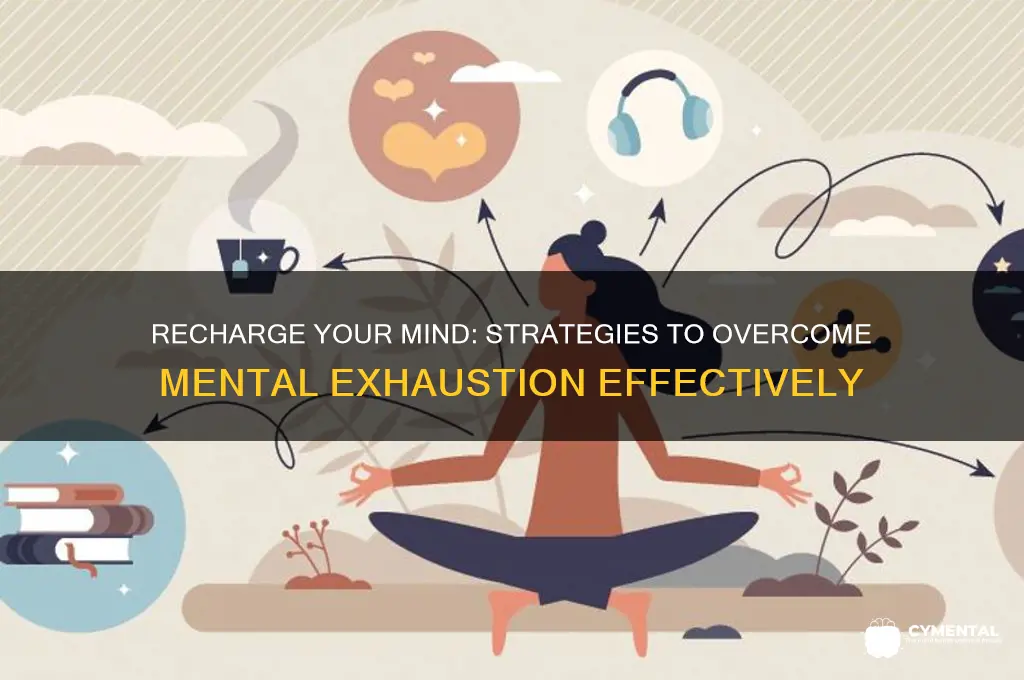
Feeling mentally drained is a common experience in today’s fast-paced world, often stemming from prolonged stress, overwork, or emotional exhaustion. It can manifest as fatigue, difficulty concentrating, irritability, or a sense of detachment from daily activities. To combat mental drain, it’s essential to prioritize self-care and implement strategies that restore balance and energy. This includes setting boundaries to manage workload, practicing mindfulness or meditation to calm the mind, and ensuring adequate sleep and nutrition. Engaging in activities that bring joy, connecting with supportive relationships, and seeking professional help when needed are also crucial steps. By addressing the root causes and adopting healthy habits, individuals can regain mental clarity and resilience, ultimately fostering a more sustainable and fulfilling lifestyle.
Explore related products





What You'll Learn
- Prioritize Self-Care: Schedule regular breaks, exercise, and healthy meals to recharge and maintain energy levels
- Set Boundaries: Learn to say no to avoid overcommitting and protect your mental and emotional space
- Practice Mindfulness: Use meditation or deep breathing to stay present and reduce stress and overwhelm
- Organize Tasks: Break tasks into smaller steps and use lists to manage workload efficiently
- Seek Support: Talk to friends, family, or a therapist to share feelings and gain perspective

Prioritize Self-Care: Schedule regular breaks, exercise, and healthy meals to recharge and maintain energy levels
Mental exhaustion often stems from neglecting basic physiological needs, mistaking productivity for self-worth, and treating rest as a luxury rather than a necessity. The body’s energy reserves are not infinite; without deliberate refueling, cognitive function declines, emotional resilience fractures, and physical health deteriorates. Prioritizing self-care isn’t selfish—it’s a strategic investment in sustained performance and well-being.
Step 1: Schedule Breaks with Intentionality
The human brain operates in ultradian cycles, typically peaking in focus for 90–120 minutes before requiring recovery. Ignoring this rhythm leads to decision fatigue and diminished creativity. Implement the Pomodoro Technique: work for 25 minutes, then take a 5-minute break. After four cycles, extend the break to 15–30 minutes. Use these intervals for activities that detach you from stressors—a short walk, stretching, or deep breathing. Avoid scrolling through social media, as it mimics work by engaging the prefrontal cortex.
Step 2: Exercise as a Non-Negotiable
Physical activity is a biochemical reset button. A 20-minute brisk walk increases blood flow to the brain, while 30 minutes of moderate aerobic exercise (e.g., cycling, swimming) elevates endorphins and reduces cortisol. Strength training twice weekly improves sleep quality, a cornerstone of mental recovery. For those with sedentary jobs, set hourly movement reminders. Even micro-movements—like standing during calls or desk stretches—accumulate benefits. Consistency trumps intensity; aim for daily activity rather than sporadic marathons.
Step 3: Fuel with Nutrient-Dense Meals
Mental energy is directly tied to blood glucose stability. Skip processed foods that spike and crash blood sugar, opting instead for complex carbohydrates (quinoa, sweet potatoes), lean proteins (salmon, tofu), and healthy fats (avocado, nuts). Hydration is equally critical; dehydration impairs concentration and mood. Carry a water bottle, aiming for 2–3 liters daily. Meal prep on weekends to avoid decision fatigue during the week. For example, batch-cook grilled chicken, roasted vegetables, and brown rice for quick, balanced meals.
Cautions and Adaptations
Overloading self-care routines can backfire. Avoid the trap of treating exercise or meal prep as another task to perfect. If 30 minutes of exercise feels daunting, start with 10. Similarly, if cooking stresses you, simplify with pre-cut veggies or canned beans. Tailor practices to your lifestyle—a parent might schedule breaks during nap times, while a student could study near a gym for post-session workouts.
Integrating breaks, exercise, and nutrition isn’t about achieving perfection but creating a resilient framework. View these practices as non-negotiable appointments with yourself, as vital as any work commitment. Over time, they rewire your body’s stress response, enhance cognitive clarity, and restore emotional equilibrium. The goal isn’t to eliminate mental drain but to build capacity to recover from it—one intentional choice at a time.
AI's Role in Mental Health: Support, Challenges, and Future Potential
You may want to see also
Explore related products


Set Boundaries: Learn to say no to avoid overcommitting and protect your mental and emotional space
Saying yes to every request, whether at work, in friendships, or within family dynamics, can lead to a rapid depletion of your mental and emotional resources. The act of setting boundaries is not about being selfish; it’s about recognizing your limits and prioritizing your well-being. When you overcommit, you spread yourself too thin, leaving little energy for self-care or the tasks that truly matter to you. Start by identifying areas where you consistently overextend yourself—perhaps it’s taking on extra projects at work, agreeing to social plans when you’d rather rest, or absorbing others’ emotional burdens. Once you pinpoint these patterns, you can begin to establish clear limits.
To effectively set boundaries, practice the art of saying no with confidence and clarity. Instead of offering vague excuses, be direct yet kind. For example, “I’m not able to take on that project right now, but I appreciate you thinking of me” or “I’m focusing on my own commitments this week, but let’s reconnect next week.” Remember, a simple “no” is a complete sentence—you don’t owe anyone a lengthy explanation. Start small by declining one non-essential request per week, gradually building the habit of prioritizing your own needs. Over time, this practice will help you reclaim mental space and reduce the strain of overcommitting.
A common misconception is that setting boundaries will harm relationships or career opportunities. In reality, it often strengthens them. When you protect your mental and emotional energy, you show up more fully in the areas where you do choose to engage. For instance, declining a social invitation to rest allows you to be more present and engaged in the next interaction. Similarly, at work, saying no to tasks outside your capacity ensures you can deliver high-quality results on your core responsibilities. Boundaries create a sustainable rhythm, preventing burnout and fostering deeper, more authentic connections.
Practical tools can make boundary-setting easier. Keep a calendar or planner to visualize your commitments, ensuring you don’t overbook yourself. Use phrases like “Let me check my schedule and get back to you” to buy time before agreeing to anything. If you struggle with guilt, remind yourself that your time and energy are finite resources that deserve protection. For those in caregiving roles, set specific hours for availability and communicate them clearly. For example, “I’m available to help between 4–6 PM, but after that, I need to focus on my own tasks.” Consistency is key—the more you enforce boundaries, the more others will respect them.
Ultimately, setting boundaries is an act of self-preservation in a world that often glorifies busyness. It requires self-awareness, assertiveness, and a willingness to prioritize your mental health. Start by reflecting on what truly matters to you and letting go of the need to please others at your own expense. Over time, saying no will feel less like a rejection and more like a reaffirmation of your values. By protecting your mental and emotional space, you create room for growth, creativity, and genuine connection—all of which are impossible when you’re running on empty.
Hop to Happiness: How Rabbits Can Boost Your Mental Health
You may want to see also
Explore related products


Practice Mindfulness: Use meditation or deep breathing to stay present and reduce stress and overwhelm
Mental exhaustion often stems from a mind constantly racing between past regrets and future anxieties. Mindfulness, particularly through meditation and deep breathing, anchors you in the present, breaking this cycle. By focusing on the here and now, you interrupt the mental chatter that drains your energy, allowing your brain to reset and recharge.
Consider this simple practice: find a quiet space, sit comfortably, and close your eyes. Inhale deeply through your nose for a count of four, hold for four, exhale through your mouth for six. Repeat this pattern for five minutes. This technique, known as the 4-4-6 method, activates the parasympathetic nervous system, promoting relaxation. Research shows that even brief daily sessions can reduce cortisol levels, the hormone associated with stress, by up to 14%. Consistency is key—aim for twice daily, ideally upon waking and before bed, to maximize benefits.
While meditation often feels abstract, its effects are measurable. A study published in *JAMA Internal Medicine* found that mindfulness meditation reduces symptoms of anxiety and depression by 30% in adults over eight weeks. For beginners, guided apps like Headspace or Calm offer structured sessions as short as three minutes. Start small; even a minute of focused breathing can disrupt the overwhelm and provide clarity. Think of it as a mental palate cleanser, preparing you to tackle tasks with renewed focus.
However, mindfulness isn’t a one-size-fits-all solution. For those with trauma or severe anxiety, unguided meditation can sometimes amplify distress. If this occurs, pair mindfulness with grounding techniques, such as naming five objects you see or feel, to stay tethered to the present without becoming overwhelmed. Additionally, combining mindfulness with physical activity, like yoga or walking, can enhance its effectiveness by engaging both body and mind.
Incorporating mindfulness into daily routines transforms it from a chore into a habit. For instance, use red lights as reminders to take three deep breaths, or practice mindful eating by savoring each bite during meals. Over time, this rewires your brain to default to presence rather than autopilot, reducing mental fatigue. Remember, the goal isn’t to empty your mind but to observe thoughts without judgment, letting them pass like clouds in the sky. With practice, mindfulness becomes less about effort and more about being.
ADA Support for Mental Health: Empowering Accessibility and Inclusion
You may want to see also
Explore related products



Organize Tasks: Break tasks into smaller steps and use lists to manage workload efficiently
Mental exhaustion often stems from the overwhelming perception of tasks as monolithic, insurmountable challenges. Breaking them into smaller, manageable steps transforms this dynamic, reducing cognitive load and fostering a sense of progress. For instance, instead of facing "write a report" as a single task, dissect it into "research data," "outline structure," "draft introduction," and "edit final version." Each micro-task requires less mental energy, making the overall project feel less daunting.
The act of creating a list serves as both a cognitive offload and a visual roadmap. Writing down tasks externalizes them, freeing up mental space previously occupied by worry or forgetfulness. Use digital tools like Trello or Notion for flexibility, or opt for a physical notebook if tactile engagement enhances focus. Prioritize tasks using the Eisenhower Matrix (urgent/important, not urgent/not important) to ensure energy is allocated efficiently. For example, a student might label "submit assignment" as urgent/important, while "organize desk" falls into the not urgent/not important quadrant.
However, beware of the trap of over-granularization. Breaking tasks into excessively small steps can lead to decision fatigue or a sense of triviality. Aim for steps that take 15–30 minutes to complete, striking a balance between brevity and meaningful progress. For instance, "write email to client" might split into "draft subject line," "compose body," and "attach files," but further dividing "compose body" into "write greeting" and "write closing" could feel counterproductive.
Pair task segmentation with time-blocking for optimal results. Allocate specific time slots for each micro-task, ensuring focus without burnout. For example, dedicate 9–9:30 AM to "research data," followed by a 10-minute break before tackling the next step. This structured approach prevents tasks from bleeding into one another, maintaining mental clarity. Experiment with tools like the Pomodoro Technique (25 minutes of work, 5-minute break) to find a rhythm that suits your cognitive endurance.
Ultimately, organizing tasks into smaller steps and using lists is not merely about productivity—it’s about reclaiming mental bandwidth. By systematically dismantling large tasks, you reduce the psychological weight of your workload, making room for creativity, rest, and presence. Start today: pick one overwhelming task, break it into three actionable steps, and watch as the path forward becomes clearer, one manageable piece at a time.
Supporting Your Adult Son’s Mental Health: Practical Steps for Parents
You may want to see also
Explore related products



Seek Support: Talk to friends, family, or a therapist to share feelings and gain perspective
Mental exhaustion often thrives in isolation, where unspoken struggles fester and perspective narrows. Sharing your feelings with trusted individuals acts as a pressure valve, releasing built-up tension and allowing fresh air into your mental space. Friends, family, or a therapist can offer not just a listening ear, but a mirror reflecting your experiences from a different angle, helping you see solutions you might have missed alone.
Think of it as a mental decluttering session: you bring the emotional baggage, they provide the objective viewpoint, and together you sort through the mess, discarding unnecessary worries and reorganizing thoughts into a more manageable arrangement.
This isn't about seeking advice (though that can be helpful too). It's about the simple act of voicing your struggles, of giving them form and releasing them from the echo chamber of your mind. A 2017 study published in the journal *Social Cognitive and Affective Neuroscience* found that sharing negative experiences with empathetic listeners activates brain regions associated with pain relief and emotional regulation. Essentially, talking about your mental drain can physically soothe your brain.
But who to talk to? Consider the nature of your drain. For everyday stressors, a close friend or family member who understands your personality and history might be ideal. For deeper, more complex issues, a therapist provides a safe, non-judgmental space and professional tools to navigate the terrain. Remember, vulnerability is strength, not weakness. Reaching out is a proactive step towards reclaiming your mental well-being.
Don't underestimate the power of a good listener. Active listening, where the listener focuses fully on the speaker without interruption or judgment, is a skill not everyone possesses. Look for someone who makes you feel heard, understood, and accepted, even if they don't have all the answers. Sometimes, just being witnessed in your struggle is enough to lighten the load.
Finally, remember that seeking support is an ongoing process, not a one-time fix. Schedule regular check-ins with your chosen confidante, whether it's a weekly coffee date with a friend or monthly therapy sessions. Consistency is key to building a support system that helps you weather the storms of mental exhaustion and emerge stronger on the other side.
Mental Therapists and SSI Disability: Can Therapy Strengthen Your Claim?
You may want to see also
Frequently asked questions
Take a short break to rest, practice deep breathing or meditation, hydrate, and step away from stressors. Prioritize self-care activities like a walk or listening to calming music.
Set boundaries, manage your workload, and prioritize tasks. Incorporate regular exercise, adequate sleep, and a balanced diet into your routine. Make time for hobbies and social connections.
Yes, seeking support from friends, family, or a professional is crucial. Sharing your feelings can lighten the burden and provide new perspectives or solutions.
Absolutely. Mindfulness and meditation reduce stress, improve focus, and promote emotional balance. Even a few minutes daily can help recharge your mental energy.