Noah Parker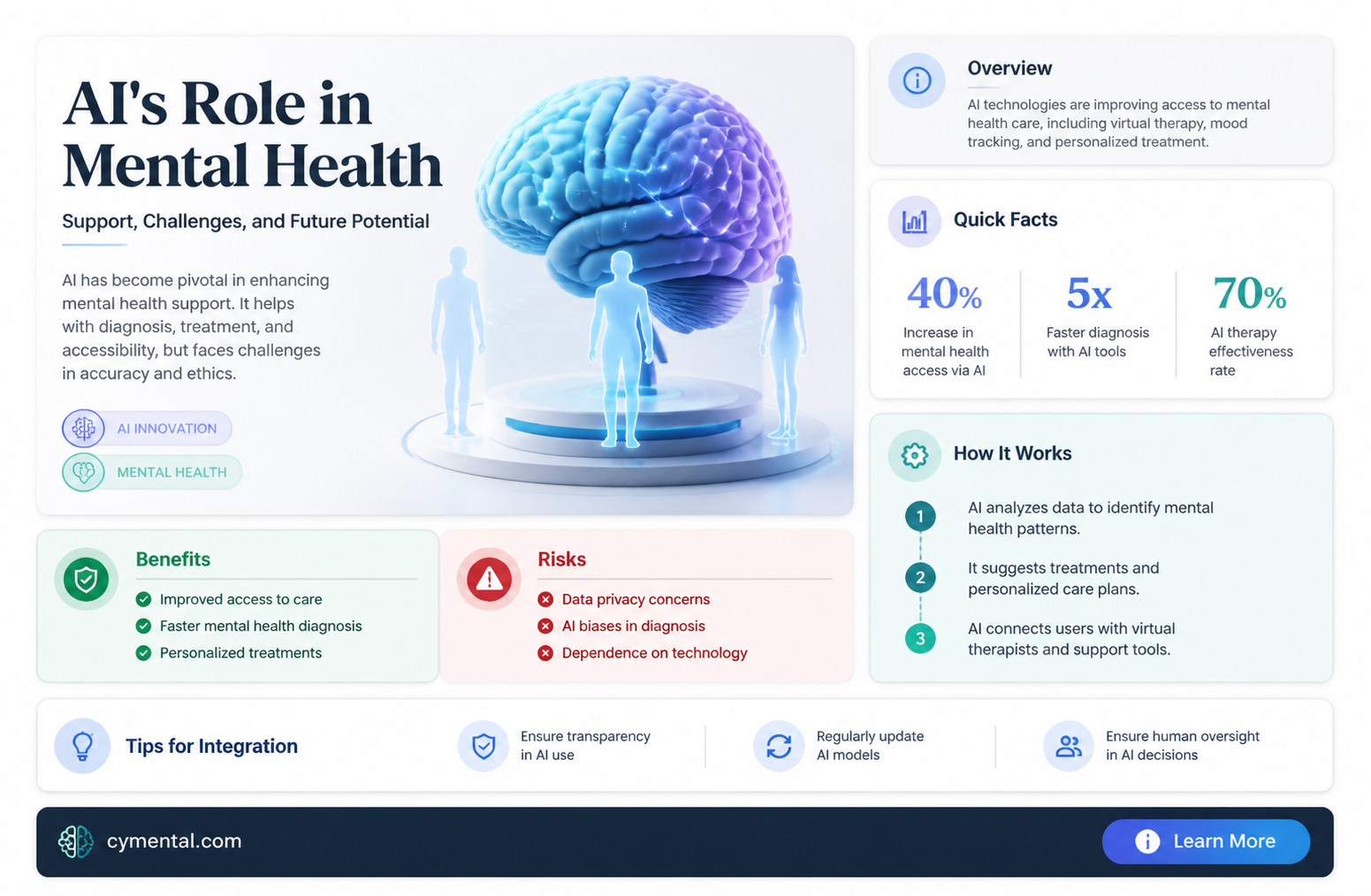
Artificial Intelligence (AI) is increasingly being explored as a tool to support mental health, offering innovative solutions to address the growing global demand for accessible and effective care. From chatbots providing immediate emotional support to machine learning algorithms analyzing patterns in behavior and speech, AI technologies are being developed to assist in early detection, personalized treatment, and ongoing management of mental health conditions. While AI cannot replace human therapists, its ability to provide 24/7 assistance, reduce stigma, and complement traditional therapies holds significant promise. However, ethical considerations, such as data privacy and the potential for over-reliance on technology, must be carefully addressed to ensure AI’s role in mental health is both beneficial and responsible.
Explore related products


What You'll Learn

AI-powered therapy chatbots for accessible mental health support
AI-powered therapy chatbots are revolutionizing mental health support by offering immediate, accessible, and stigma-free assistance to users worldwide. These chatbots leverage natural language processing and machine learning to simulate therapeutic conversations, providing coping strategies, emotional validation, and guided exercises for stress, anxiety, and depression. For instance, platforms like Woebot and Wysa use evidence-based techniques such as cognitive-behavioral therapy (CBT) to engage users in daily check-ins, mood tracking, and mindfulness practices. While not a replacement for human therapists, these tools serve as a first line of support, particularly for individuals in underserved areas or those hesitant to seek traditional therapy.
Consider the practical application: a 25-year-old experiencing work-related stress can open a chatbot app during a lunch break, receive guided breathing exercises, and log their emotions in under 10 minutes. Over time, the chatbot adapts to their responses, offering personalized strategies like reframing negative thoughts or setting boundaries. Studies show that consistent engagement with such tools can reduce symptoms of anxiety by up to 20% within six weeks. However, effectiveness depends on user commitment—aim for daily interactions of 5–15 minutes to build a routine.
Critics argue that AI lacks the empathy and nuance of human therapists, but proponents counter that chatbots fill a critical gap in accessibility. For example, in rural areas where mental health professionals are scarce, or for individuals with social anxiety, chatbots provide a low-pressure entry point. They also offer 24/7 availability, a stark contrast to the weeks-long wait times for traditional therapy appointments. To maximize benefits, pair chatbot use with self-care practices like journaling or physical activity, and view it as a supplement rather than a standalone solution.
A comparative analysis reveals that while human therapists excel in complex emotional exploration, AI chatbots shine in consistency and scalability. For mild to moderate symptoms, chatbots can be highly effective, but severe cases—such as suicidal ideation or PTSD—require professional intervention. Developers are addressing this by integrating crisis hotlines and escalation protocols into chatbot platforms. For instance, if a user expresses severe distress, the bot can immediately connect them to emergency resources.
In conclusion, AI-powered therapy chatbots are a game-changer for democratizing mental health support, offering timely, personalized, and non-judgmental assistance. To harness their potential, start with a clear goal (e.g., managing stress or improving sleep), commit to regular use, and monitor progress over time. While not a panacea, these tools empower individuals to take proactive steps toward mental well-being, bridging the gap until professional help is accessible.
Family Doctors: Your First Line in Mental Health Support?
You may want to see also
Explore related products

$16.69 $29.99

$10.28 $19.99


Predictive analytics to identify mental health risks early
Early detection of mental health risks can be transformative, and predictive analytics is emerging as a powerful tool in this endeavor. By analyzing patterns in behavioral, social, and even physiological data, algorithms can flag potential issues before they escalate. For instance, a study published in *JAMA Psychiatry* demonstrated that machine learning models could predict depression onset with 73% accuracy by examining factors like sleep patterns, social media activity, and self-reported mood data. This level of precision opens the door to proactive interventions, potentially reducing the burden on individuals and healthcare systems.
Implementing predictive analytics in mental health requires a structured approach. Step one involves data collection from diverse sources, such as wearable devices, electronic health records, and digital communication platforms. Next, this data is processed using machine learning algorithms trained to recognize risk indicators, like sudden changes in communication frequency or prolonged periods of inactivity. Finally, actionable insights are delivered to healthcare providers or individuals themselves, often via alerts or personalized recommendations. For example, a teenager exhibiting signs of social withdrawal might trigger a notification for their counselor, enabling timely support.
While the potential of predictive analytics is immense, ethical considerations cannot be overlooked. Privacy concerns arise when handling sensitive data, necessitating robust encryption and anonymization techniques. Additionally, there’s a risk of false positives, which could lead to unnecessary anxiety or over-medicalization. To mitigate this, models must be continuously validated and refined, ensuring they remain accurate and fair across diverse populations. Transparency in how data is used and shared is also critical to building trust among users.
Comparing predictive analytics to traditional mental health screening methods highlights its advantages and limitations. Conventional approaches, like self-report questionnaires, rely heavily on individual awareness and willingness to disclose symptoms, which can be unreliable. Predictive analytics, on the other hand, leverages objective data, reducing bias and capturing subtle changes that might go unnoticed. However, it lacks the human touch of empathetic dialogue, which remains irreplaceable in mental health care. Combining both approaches could offer a more holistic solution, blending technological precision with human compassion.
In practice, predictive analytics is already making strides in specific contexts. For example, colleges are using it to monitor student well-being by analyzing academic performance, attendance, and social engagement data. Similarly, workplaces are deploying tools to detect burnout risks by tracking email patterns and productivity metrics. These applications underscore the versatility of predictive analytics, though they also emphasize the need for tailored solutions. A one-size-fits-all approach won’t suffice; models must be adapted to the unique dynamics of each setting, whether it’s a university campus or a corporate office.
Ultimately, predictive analytics holds the promise of revolutionizing early mental health risk identification, but its success hinges on responsible implementation. By balancing innovation with ethical rigor, we can harness its potential to foster a proactive, data-driven approach to mental well-being. As technology evolves, so too must our strategies for integrating it into care frameworks, ensuring it serves as a complement to, not a replacement for, human expertise.
Post-Pandemic Mental Health: Are Younger Generations Seeking More Support?
You may want to see also
Explore related products


$22.35 $26.99


Personalized treatment plans using AI data analysis
AI-driven data analysis is revolutionizing personalized mental health treatment by identifying patterns and insights that traditional methods often miss. For instance, machine learning algorithms can analyze vast datasets—including patient histories, genetic information, and real-time biometric data—to predict which therapies or medications are most likely to succeed for an individual. A study published in *Nature Biotechnology* demonstrated that AI models could predict treatment outcomes for depression with 70% accuracy, significantly outperforming standard clinical assessments. This precision allows clinicians to tailor interventions, reducing trial-and-error periods that can exacerbate patient distress.
Consider a 35-year-old patient with treatment-resistant depression. Traditional approaches might involve cycling through multiple antidepressants, a process that can take months or years. With AI, data from wearable devices (e.g., sleep patterns, heart rate variability) and self-reported mood logs are integrated to recommend a specific medication dosage—say, 20 mg of escitalopram paired with cognitive-behavioral therapy. The AI system continuously monitors progress, adjusting the plan if symptoms plateau or worsen. For example, if the patient’s sleep quality deteriorates after two weeks, the system might suggest adding a low-dose melatonin supplement or adjusting therapy sessions to focus on insomnia.
However, implementing AI-driven personalized plans requires careful navigation of ethical and practical challenges. Data privacy is paramount; sensitive mental health information must be anonymized and stored securely to comply with regulations like HIPAA or GDPR. Clinicians must also remain in the loop, ensuring AI recommendations align with professional judgment. For instance, while an AI might suggest a higher dosage of an SSRI based on genetic markers, a psychiatrist might opt for a lower dose if the patient has a history of medication side effects. Transparency in how AI reaches conclusions is critical to building trust with both providers and patients.
To integrate AI into practice effectively, start with small-scale pilots. Clinics can begin by using AI tools to analyze patient-reported outcomes (PROs) from standardized questionnaires like the PHQ-9 for depression. Over time, incorporate more complex data streams, such as voice analysis during therapy sessions to detect emotional nuances. For pediatric populations (ages 12–18), AI can help identify early signs of anxiety or ADHD by analyzing school performance data and social media activity, but parental consent and strict data safeguards are essential. Always pair AI insights with human expertise to ensure treatments remain empathetic and context-aware.
The ultimate takeaway is that AI data analysis is not a replacement for human clinicians but a powerful tool to enhance decision-making. By leveraging its ability to process and interpret complex data, mental health professionals can move beyond one-size-fits-all approaches. For example, a patient with bipolar disorder might receive a personalized mood stabilization plan that includes lithium at 900 mg/day, adjusted based on real-time blood level monitoring and AI-detected mood fluctuations. As technology advances, the key will be balancing innovation with ethical rigor, ensuring AI serves as a bridge to more effective, compassionate care.
Canine Companions: How Dogs Support Mental Health and Well-being
You may want to see also
Explore related products


Virtual reality therapy enhanced by AI technology
Virtual reality therapy (VRT) has emerged as a transformative tool in mental health treatment, offering immersive environments that simulate real-life scenarios to address conditions like anxiety, PTSD, and phobias. When enhanced by AI technology, VRT becomes even more dynamic and personalized. AI algorithms analyze user responses in real-time, adjusting the virtual environment to optimize therapeutic outcomes. For instance, if a patient shows heightened anxiety during a social interaction simulation, the AI can gradually reduce the complexity of the scenario or introduce calming elements like softer lighting or soothing background sounds. This adaptive approach ensures that therapy remains effective and tailored to individual needs.
Consider the application of AI-enhanced VRT in treating specific phobias, such as fear of flying. Traditional exposure therapy requires gradual, real-world exposure, which can be costly and logistically challenging. With VRT, patients can repeatedly experience a simulated flight, from boarding to turbulence, in a controlled setting. AI enhances this process by tracking physiological responses like heart rate and skin conductance, adjusting the intensity of the simulation to prevent overwhelming the patient. Studies have shown that this method can reduce phobia symptoms by up to 70% after just 6–8 sessions, each lasting 30–45 minutes. For best results, therapists should combine VRT with cognitive-behavioral techniques, reinforcing coping strategies learned during sessions.
One of the most compelling advantages of AI-enhanced VRT is its ability to provide data-driven insights into patient progress. AI systems can analyze patterns in user behavior, identifying triggers and tracking improvements over time. This data can be shared with therapists to inform treatment plans, ensuring a more collaborative and evidence-based approach. For example, if a patient with PTSD consistently shows increased anxiety during nighttime simulations, the therapist might focus on sleep hygiene and relaxation techniques in subsequent sessions. Practical tips for therapists include integrating VRT sessions into broader treatment plans and encouraging patients to journal their experiences to reflect on progress.
Despite its promise, AI-enhanced VRT is not without challenges. The technology requires significant upfront investment, and not all patients may feel comfortable with virtual environments. Additionally, ethical considerations arise regarding data privacy and the potential for over-reliance on technology. Therapists should ensure patients understand the purpose of data collection and provide options for those who prefer traditional methods. For optimal outcomes, VRT sessions should be limited to 30–60 minutes to prevent sensory overload, and patients should be at least 13 years old, as younger children may struggle with the immersive nature of the experience.
In conclusion, AI-enhanced virtual reality therapy represents a cutting-edge approach to mental health treatment, offering personalized, data-driven interventions that adapt to individual needs. By combining the immersive power of VR with the analytical capabilities of AI, therapists can address complex conditions more effectively. While challenges remain, the potential for improved accessibility and outcomes makes this technology a valuable addition to the mental health toolkit. Therapists and patients alike can benefit from exploring this innovative approach, keeping in mind practical considerations to ensure safe and effective use.
Music's Power: Boosting Middle Schoolers' Mental Health and Well-Being
You may want to see also
Explore related products


AI tools for tracking mood and mental health trends
AI-powered mood tracking apps are no longer a futuristic concept—they’re here, and they’re reshaping how we monitor mental health. Tools like *Moodpath* and *Sanvello* use machine learning to analyze daily inputs such as sleep patterns, activity levels, and self-reported emotions. These apps don’t just log data; they identify trends over time, flagging potential red flags like prolonged sadness or anxiety spikes. For instance, *Moodpath* can detect symptoms of depression with 84% accuracy, according to a 2020 study. While not a replacement for therapy, these tools offer a proactive way to catch mental health shifts early, especially for those who may not recognize subtle changes themselves.
To maximize the benefits of these tools, consistency is key. Users should aim to log their mood at least once daily, ideally at the same time, to ensure accurate trend analysis. Pairing mood tracking with journaling features can deepen insights, as AI can analyze text for emotional tone and recurring themes. For example, phrases like “feeling overwhelmed” or “struggling to focus” might correlate with specific triggers, such as work deadlines or social interactions. However, it’s crucial to avoid over-reliance on these apps; they should complement, not replace, professional care. For teens and young adults, parental involvement can help interpret data responsibly, ensuring trends are addressed constructively.
One of the most compelling aspects of AI mood trackers is their ability to personalize interventions. Apps like *Wysa* use conversational AI to suggest coping strategies based on detected trends. If the app notices a user’s anxiety peaks in the evening, it might recommend mindfulness exercises or sleep hygiene tips. Similarly, *Daylio* allows users to tag activities (e.g., exercise, socializing) alongside mood entries, enabling AI to identify patterns like “mood improves after 30 minutes of walking.” Such tailored insights empower users to make informed lifestyle adjustments, though it’s important to verify AI suggestions with a healthcare provider, especially for severe symptoms.
Despite their promise, AI mood trackers aren’t without limitations. Privacy concerns loom large, as sensitive mental health data is often shared with third parties for analysis. Users should scrutinize app privacy policies and opt for tools that encrypt data and comply with regulations like GDPR or HIPAA. Additionally, AI algorithms can perpetuate biases if trained on non-diverse datasets, potentially misinterpreting cultural expressions of emotion. For instance, stoicism in some cultures might be misread as depression. To mitigate this, developers must prioritize inclusive data collection and transparent algorithms. When used thoughtfully, however, these tools can democratize access to mental health monitoring, offering a lifeline to those who might otherwise go unnoticed.
Melodies of Healing: Music's Powerful Impact on Mental Well-Being
You may want to see also
Frequently asked questions
Yes, AI can assist in diagnosing mental health conditions by analyzing patterns in speech, text, or behavioral data. Tools like natural language processing (NLP) can detect signs of depression, anxiety, or PTSD, but it should always be used alongside professional clinical judgment.
AI-powered chatbots and virtual therapists, like Woebot or Wysa, provide 24/7 emotional support, guided exercises, and coping strategies. They complement traditional therapy by offering accessible, on-demand assistance for mild to moderate mental health concerns.
AI can analyze large datasets to tailor treatment plans based on individual needs, such as recommending specific therapies, medications, or lifestyle changes. This personalization can improve outcomes, but it requires collaboration with healthcare professionals.
Yes, using AI for mental health raises privacy concerns, as sensitive data must be securely stored and processed. Users should ensure platforms comply with regulations like HIPAA or GDPR and prioritize data encryption and anonymization.
No, AI cannot replace human therapists. While AI can provide support, it lacks empathy, intuition, and the ability to understand complex human emotions. It is best used as a supplementary tool to enhance, not replace, human-led care.