Harper Lewis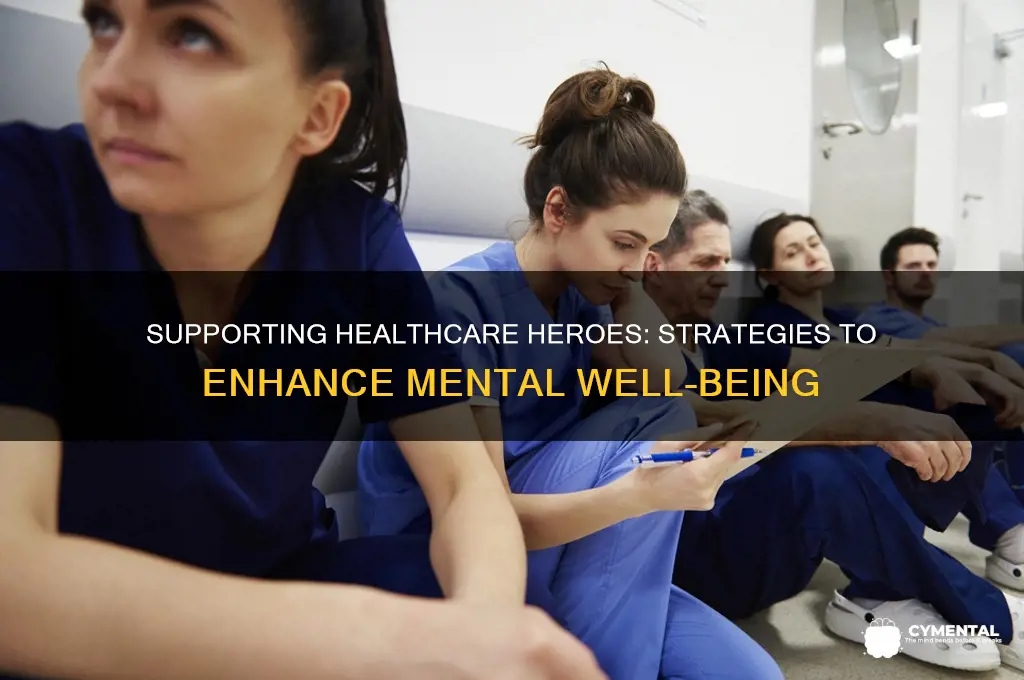
Healthcare workers face immense physical and emotional demands, often leading to high levels of stress, burnout, and mental health challenges. The COVID-19 pandemic has further exacerbated these issues, highlighting the urgent need for systemic support. To help healthcare workers maintain their mental well-being, organizations must prioritize initiatives such as providing access to mental health resources, fostering a culture of openness and support, implementing flexible work schedules, and offering regular opportunities for self-care and stress management. Additionally, peer support programs, resilience training, and destigmatizing conversations around mental health are crucial steps in creating a sustainable and compassionate healthcare environment. Addressing these needs not only benefits individual workers but also enhances the quality of patient care and the overall resilience of the healthcare system.
| Characteristics | Values |
|---|---|
| Access to Mental Health Services | Provide free or subsidized mental health services, including therapy, counseling, and psychiatric support, tailored to healthcare workers' schedules. |
| Peer Support Programs | Establish peer support groups and mentorship programs to foster a sense of community and reduce feelings of isolation. |
| Workplace Flexibility | Implement flexible scheduling, reduced workloads, and adequate staffing to minimize burnout and promote work-life balance. |
| Resilience Training | Offer training programs focused on building emotional resilience, stress management, and coping strategies. |
| Stigma Reduction Campaigns | Launch awareness campaigns to reduce the stigma around mental health issues and encourage seeking help. |
| Safe Reporting Mechanisms | Create confidential channels for reporting workplace stress, harassment, or mental health concerns without fear of retaliation. |
| Regular Check-Ins | Conduct regular, mandatory mental health check-ins with supervisors or mental health professionals. |
| Wellness Programs | Provide wellness initiatives such as mindfulness sessions, yoga, fitness programs, and access to wellness apps. |
| Recognition and Appreciation | Regularly acknowledge and reward healthcare workers for their efforts to boost morale and job satisfaction. |
| Crisis Support | Offer immediate crisis intervention services, including hotlines and emergency mental health resources. |
| Education and Awareness | Provide ongoing education on mental health, self-care, and the importance of seeking support. |
| Physical Health Support | Ensure access to healthy meals, rest areas, and physical health screenings to support overall well-being. |
| Policy Advocacy | Advocate for policies that protect healthcare workers' mental health and ensure fair working conditions. |
| Family Support | Offer resources and support for healthcare workers' families, including counseling and childcare assistance. |
| Digital Detox Initiatives | Encourage breaks from technology and provide spaces for relaxation and disconnection from work-related stress. |
Explore related products


What You'll Learn
- Provide accessible mental health services tailored to healthcare workers' schedules and needs
- Promote workplace support systems like peer counseling and stress management programs
- Encourage regular self-care practices such as mindfulness, exercise, and adequate sleep
- Reduce stigma around seeking help through awareness campaigns and leadership advocacy
- Ensure fair workloads and breaks to prevent burnout and improve work-life balance

Provide accessible mental health services tailored to healthcare workers' schedules and needs
Healthcare workers often face irregular shifts, long hours, and high-stress environments, making traditional 9-to-5 mental health services impractical. To address this, mental health support must be redesigned to fit their unique schedules and needs. For instance, offering teletherapy sessions during overnight shifts or providing on-site counseling services at hospitals can eliminate barriers to access. Additionally, mobile apps with self-guided tools and crisis hotlines tailored for healthcare professionals can offer immediate support when formal sessions aren’t feasible.
Consider the logistical challenges: a nurse working 12-hour night shifts cannot attend a daytime therapy appointment. A practical solution is to implement 24/7 virtual counseling services with providers trained in healthcare-specific stressors, such as burnout, trauma, and moral injury. Hospitals could also partner with mental health organizations to offer drop-in sessions during shift changes or quiet periods. For example, a 30-minute mindfulness workshop between patient rounds or a peer support group after a particularly demanding shift can provide timely relief.
The effectiveness of these services hinges on flexibility and relevance. Healthcare workers are more likely to engage if the support acknowledges their professional realities. For instance, a therapist who understands the emotional toll of losing a patient can offer more targeted coping strategies than a generalist. Similarly, workshops on resilience or stress management should incorporate scenarios specific to healthcare, such as managing patient aggression or navigating ethical dilemmas.
To ensure sustainability, institutions must invest in these programs as part of their core offerings, not optional perks. This includes allocating budget for trained professionals, secure digital platforms, and physical spaces within healthcare facilities. Leadership should also normalize seeking help by openly promoting these services and modeling self-care behaviors. For example, a hospital CEO sharing their experience with therapy can reduce stigma and encourage staff to prioritize their mental health.
In conclusion, accessible mental health services for healthcare workers require a shift from one-size-fits-all models to tailored, flexible solutions. By integrating support into their work environments and schedules, we can remove barriers and foster a culture of well-being. The goal isn’t just to provide help—it’s to make it so seamless that seeking support becomes a natural part of their routine.
Fitting In vs. Standing Out: Impact on Mental Health Explored
You may want to see also
Explore related products



Promote workplace support systems like peer counseling and stress management programs
Healthcare workers face relentless pressure, from long shifts to emotionally taxing patient interactions, making burnout and mental health struggles pervasive. To combat this, organizations must embed robust support systems directly into the workplace. Peer counseling programs, for instance, leverage the power of shared experience. By training staff members to provide confidential, empathetic support to colleagues, these programs foster a culture of trust and understanding. Unlike external resources, peer counselors are inherently familiar with the unique stressors of healthcare, making their guidance more relatable and actionable.
Stress management programs, on the other hand, take a proactive approach by equipping workers with tools to mitigate stress before it escalates. These programs often include mindfulness sessions, resilience training, and access to mental health apps like Headspace or Calm. For maximum impact, such initiatives should be integrated into daily routines—for example, offering 10-minute guided meditation breaks during shifts or providing on-site yoga classes. Research shows that consistent practice of these techniques can reduce cortisol levels by up to 20%, improving both mental and physical well-being.
However, implementing these systems requires careful planning. Peer counseling programs must ensure counselors receive adequate training in active listening, boundary-setting, and crisis intervention. Stress management programs should be tailored to different roles—a nurse’s stressors differ from those of an administrator, so one-size-fits-all solutions fall short. Additionally, leadership buy-in is critical. Managers must not only endorse these programs but also model participation, signaling that seeking support is a sign of strength, not weakness.
The success of these initiatives hinges on accessibility and normalization. Peer counseling should be available 24/7, recognizing that crises don’t adhere to a 9-to-5 schedule. Stress management resources should be free, easily accessible, and promoted through multiple channels—intranet portals, posters in break rooms, and regular team meetings. By embedding these systems into the fabric of the workplace, organizations can shift from a reactive to a preventive approach, safeguarding the mental health of their most valuable asset: their people.
Crafting Calm: How Creative Hobbies Boost Mental Well-Being
You may want to see also
Explore related products


Encourage regular self-care practices such as mindfulness, exercise, and adequate sleep
Healthcare workers often prioritize patient care over their own well-being, leading to burnout and mental exhaustion. Encouraging regular self-care practices such as mindfulness, exercise, and adequate sleep can significantly mitigate these risks. Mindfulness, for instance, has been shown to reduce stress and improve emotional regulation. A study published in the *Journal of Occupational Health Psychology* found that just 10 minutes of mindfulness meditation daily can lower anxiety levels in high-stress professions. Implementing short, guided mindfulness sessions during breaks or before shifts can help healthcare workers reset mentally and approach their tasks with renewed focus.
Exercise is another critical component of self-care that is often overlooked due to demanding schedules. Even moderate physical activity, such as a 20-minute brisk walk or a quick yoga session, can release endorphins and reduce cortisol levels. For healthcare workers, incorporating movement into their routine doesn’t require a gym membership—stretching during short breaks, taking the stairs instead of the elevator, or performing bodyweight exercises at home can be equally effective. Employers can support this by providing access to on-site fitness facilities or offering discounted gym memberships, making it easier for staff to prioritize physical health.
Adequate sleep is perhaps the most undervalued yet essential aspect of self-care. Chronic sleep deprivation exacerbates stress, impairs decision-making, and weakens the immune system—all of which are detrimental in a healthcare setting. Adults require 7–9 hours of sleep per night, but shift work and long hours often disrupt this. Healthcare workers can improve sleep quality by establishing a consistent bedtime routine, avoiding caffeine and screens at least an hour before sleep, and using blackout curtains or white noise machines to create a restful environment. Employers can also help by optimizing schedules to minimize rapid shift changes and providing nap rooms for those working extended hours.
Combining these practices—mindfulness, exercise, and sleep—creates a holistic approach to self-care that addresses both mental and physical health. For example, a healthcare worker might start their day with a 10-minute mindfulness exercise, take a 20-minute walk during lunch, and wind down with a sleep-focused routine in the evening. Over time, these habits can build resilience against the emotional and physical demands of the job. Organizations play a vital role in fostering this culture by offering resources, such as mindfulness apps, wellness programs, and flexible scheduling, that empower employees to take charge of their well-being.
Ultimately, encouraging self-care isn’t just about individual responsibility—it’s a systemic shift that requires support from both healthcare workers and their employers. By integrating mindfulness, exercise, and adequate sleep into daily routines, professionals can sustain their mental health and continue delivering high-quality care. Small, consistent changes yield significant long-term benefits, proving that self-care isn’t a luxury but a necessity in high-stress environments.
Gratitude's Power: Enhancing Mental Health and Emotional Well-being
You may want to see also
Explore related products


Reduce stigma around seeking help through awareness campaigns and leadership advocacy
Healthcare workers face immense pressure, yet many hesitate to seek mental health support due to fear of judgment or career repercussions. This silence perpetuates a cycle of suffering, as untreated stress, burnout, and trauma erode their well-being and patient care quality. Breaking this cycle requires dismantling the stigma surrounding mental health conversations, a task achievable through targeted awareness campaigns and visible leadership advocacy.
Consider the power of storytelling. Campaigns featuring real healthcare workers sharing their struggles and triumphs with mental health challenges humanize the issue. A nurse recounting how therapy helped manage PTSD after a traumatic patient case, or a physician explaining how mindfulness practices improved their resilience, offers relatable examples that challenge stereotypes of weakness. Pairing these narratives with data-driven insights, such as the 40% of healthcare workers reporting burnout symptoms, reinforces the urgency and normalizes seeking help.
Leadership advocacy serves as the backbone of these efforts. When hospital CEOs, department heads, or influential figures openly prioritize their mental health—whether by taking wellness days, attending counseling, or sharing personal strategies—they model vulnerability and permission. For instance, a medical director instituting "wellness Wednesdays" with protected time for self-care sends a clear message: mental health is non-negotiable. Policies like confidential counseling services, flexible scheduling for therapy appointments, and peer support programs further institutionalize this commitment.
However, caution is necessary. Tokenistic gestures, such as one-off seminars or superficial slogans, risk trivializing the issue. Campaigns must be sustained, culturally sensitive, and backed by actionable resources. For example, a mental health awareness month could include workshops on stress management techniques, access to free apps like Headspace, and clear pathways to professional support. Leaders must also address systemic barriers, such as punitive attendance policies or lack of staffing, that discourage help-seeking behaviors.
In conclusion, reducing stigma requires a dual approach: amplifying authentic voices through campaigns and embedding mental health prioritization into organizational culture via leadership actions. By treating mental health with the same urgency as physical health, healthcare institutions can foster an environment where seeking help is not just accepted, but expected. This shift not only protects individual workers but strengthens the entire healthcare ecosystem.
Empowering Recovery: How Mental Health Care Facilities Transform Lives
You may want to see also
Explore related products


Ensure fair workloads and breaks to prevent burnout and improve work-life balance
Healthcare workers often face relentless demands, with studies showing that over 50% report symptoms of burnout. One of the most direct ways to mitigate this is by ensuring fair workloads and adequate breaks. When shifts are excessively long or staffing is insufficient, the risk of mental exhaustion skyrockets. For instance, nurses working 12-hour shifts without sufficient breaks are 40% more likely to experience emotional depletion. Addressing this issue requires a systemic approach, not just individual resilience.
To implement fair workloads, start by conducting a workload analysis. Measure the average number of patients per staff member and compare it against industry benchmarks. For example, the American Nurses Association recommends a 1:4 nurse-to-patient ratio in medical-surgical units. If your facility exceeds this, advocate for additional staffing or redistribute tasks. Use scheduling software to ensure no employee works more than 60 hours per week, a threshold beyond which burnout risk doubles. Pair this with mandatory 15-minute breaks every 2 hours, as research shows this interval improves focus and reduces stress.
However, fair workloads alone aren’t enough; the quality of breaks matters too. Encourage employees to step away from clinical areas during downtime. Provide designated break rooms equipped with comfortable seating, natural light, and access to healthy snacks. Discourage checking emails or taking work calls during breaks, as this undermines their restorative purpose. For night shift workers, offer access to quiet, darkened spaces for naps, as even 20 minutes of rest can improve cognitive function by 30%.
A cautionary note: simply adding staff or enforcing breaks won’t solve the problem if the organizational culture doesn’t support it. Leaders must model healthy behaviors, such as taking their own breaks and leaving on time. Address the stigma around "weakness" in seeking rest by openly discussing its benefits. For example, a hospital in Sweden reduced burnout rates by 25% after implementing a campaign emphasizing that "rest is resilience, not laziness."
In conclusion, ensuring fair workloads and meaningful breaks is a cornerstone of supporting healthcare workers’ mental health. By combining data-driven staffing adjustments, structured breaks, and cultural shifts, organizations can create an environment where employees thrive, not just survive. The investment pays off: hospitals with better work-life balance report 15% higher patient satisfaction and 20% lower turnover rates. This isn’t just a moral imperative—it’s a strategic one.
Supporting Loved Ones: Practical Ways to Aid Their Mental Health Journey
You may want to see also
Frequently asked questions
Organizations can implement regular mental health screenings, provide access to confidential counseling services, offer flexible scheduling, and foster a supportive workplace culture that encourages open communication about mental health.
Reducing burnout involves ensuring adequate staffing levels, providing opportunities for breaks and rest, offering professional development, and promoting work-life balance through policies like paid time off and wellness programs.
Colleagues can check in regularly, listen without judgment, share resources for mental health support, and create a culture of empathy and understanding by normalizing discussions about stress and emotional challenges.
Leadership should prioritize mental health by modeling self-care, providing resources, reducing stigma, and creating policies that support well-being, such as mental health days and access to professional help.
Healthcare workers can practice self-care by setting boundaries, engaging in regular physical activity, seeking social support, practicing mindfulness or meditation, and prioritizing sleep and nutrition.