Noah Parker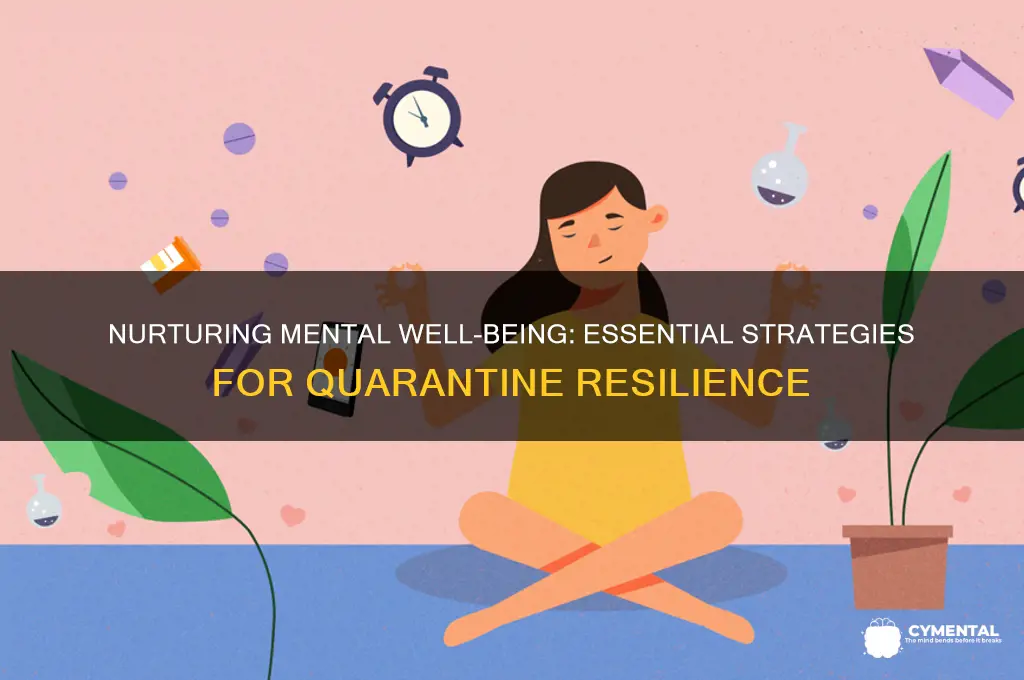
Quarantine, while essential for public health, can take a significant toll on mental well-being, as isolation, uncertainty, and disrupted routines often lead to increased stress, anxiety, and loneliness. To support mental health during this challenging time, it is crucial to establish a structured daily routine that includes regular physical activity, healthy eating, and sufficient sleep to maintain stability. Staying connected with loved ones through virtual means, practicing mindfulness or meditation, and engaging in hobbies or creative outlets can also provide emotional relief. Limiting exposure to news and social media to avoid overwhelming information, while seeking reliable updates, helps manage anxiety. Additionally, reaching out to mental health professionals or support groups can offer valuable guidance and reassurance, ensuring that individuals feel supported and less alone in navigating the unique pressures of quarantine.
Explore related products


What You'll Learn
- Stay Connected Virtually: Regular video calls with friends and family maintain social bonds and reduce feelings of isolation
- Establish a Routine: Create a daily schedule to provide structure, stability, and a sense of purpose
- Limit News Exposure: Reduce anxiety by setting specific times to check updates and avoid excessive media consumption
- Practice Mindfulness: Use meditation, deep breathing, or yoga to stay grounded and manage stress effectively
- Engage in Physical Activity: Exercise daily to boost mood, reduce tension, and improve overall mental well-being

Stay Connected Virtually: Regular video calls with friends and family maintain social bonds and reduce feelings of isolation
Human connection is a fundamental need, and quarantine can threaten this by physically isolating us from our support networks. While phone calls and text messages offer some solace, they lack the richness of face-to-face interaction. This is where video calls become invaluable. Seeing facial expressions, body language, and even the familiar surroundings of a loved one's home provides a deeper sense of connection than audio alone.
Consider scheduling regular video call "dates" with friends and family. Treat these calls as you would any other social engagement – block out dedicated time, minimize distractions, and be fully present. For younger children, incorporate interactive elements like playing games, reading stories together, or even virtually cooking the same meal. Teenagers and adults might enjoy virtual movie nights, online game sessions, or simply catching up over a cup of coffee. Aim for at least two to three video calls per week, with each call lasting around 30 minutes to an hour, depending on the age and attention span of the participants.
It's important to acknowledge that virtual interaction isn't a perfect substitute for in-person contact. Technical difficulties, screen fatigue, and the lack of physical touch can be limiting factors. However, when used intentionally and consistently, video calls can significantly reduce feelings of loneliness and isolation. They provide a sense of routine, allow for shared experiences, and remind us that we are not alone in navigating the challenges of quarantine.
Community Service: A Powerful Boost for Mental Health and Well-being
You may want to see also
Explore related products


Establish a Routine: Create a daily schedule to provide structure, stability, and a sense of purpose
Unpredictability breeds anxiety, and quarantine often strips away the familiar rhythms of daily life. Establishing a routine acts as a psychological anchor, grounding you in a sea of uncertainty. It's not about rigid schedules or military precision; it's about creating a framework that provides a sense of control and normalcy.
Think of it as scaffolding for your mental well-being, allowing you to navigate the challenges of isolation with greater resilience.
Start by identifying your non-negotiables: sleep, meals, and personal hygiene. These are the pillars of your routine, the bedrock upon which you build structure. Aim for consistency in wake-up and bedtime, even on weekends. This regulates your body's internal clock, improving sleep quality and overall energy levels. Meal times should be regular, too, with a focus on nutritious foods that fuel your body and mind.
Don't underestimate the power of a shower and getting dressed, even if it's just into comfortable clothes. These simple acts signal to your brain that the day has begun, promoting a sense of purpose and engagement.
Next, allocate time for activities that nourish your mind and body. Dedicate a block for physical exercise, whether it's a home workout, yoga, or a brisk walk (if permitted). Exercise releases endorphins, natural mood boosters that combat stress and anxiety. Schedule time for hobbies and interests, be it reading, painting, or learning a new skill. These activities provide a sense of accomplishment and enjoyment, crucial for maintaining mental well-being. Don't forget social connection. Allocate time for virtual catch-ups with friends and family, even if it's just a quick video call. Human interaction is vital for our emotional health, and technology allows us to bridge the physical distance.
Remember, flexibility is key. Life happens, and some days your routine will inevitably be disrupted. Don't let this derail you. View your schedule as a guide, not a rigid set of rules. If you miss a workout or oversleep, don't beat yourself up. Simply adjust and get back on track. The goal is not perfection, but consistency and a sense of control in an unpredictable time.
Seeking Support: A Guide to Finding Help When You Need It Most
You may want to see also
Explore related products

$10.57 $19.99


$9.86 $16.99


Limit News Exposure: Reduce anxiety by setting specific times to check updates and avoid excessive media consumption
Constant news alerts and endless scrolling through updates can fuel a cycle of anxiety, especially during uncertain times like quarantine. The brain, wired to seek out threats, fixates on negative information, amplifying stress and hindering our ability to cope.
Step 1: Designate News Windows
Allocate specific times of day—perhaps 15 minutes in the morning and evening—to check reputable news sources. Stick to trusted outlets and avoid sensationalist headlines. Use a timer to enforce boundaries and prevent mindless browsing.
Step 2: Curate Your Sources
Limit exposure to speculative or alarmist content. Opt for fact-based updates from health organizations like the WHO or CDC. Unfollow accounts or mute keywords that trigger distress. Remember, staying informed doesn’t require constant consumption.
Caution: The Overload Trap
Excessive media intake can lead to "mean world syndrome," where individuals perceive the world as more dangerous than it is. This distorted view can exacerbate feelings of helplessness and anxiety, particularly in vulnerable populations such as adolescents or those with pre-existing mental health conditions.
Practical Tip: Create a News-Free Zone
Designate certain areas of your home, like the bedroom or dining table, as news-free zones. Keep these spaces sacred for relaxation, hobbies, or quality time with loved ones. This spatial boundary reinforces mental separation from the barrage of updates.
Limiting news exposure isn’t about ignoring reality—it’s about preserving mental clarity. By setting structured times for updates and curating sources, you reclaim control over your emotional landscape. This small but intentional shift can significantly reduce anxiety and foster resilience during quarantine.
Mind Over Pain: Mental Strategies to Ease Chronic Discomfort
You may want to see also
Explore related products


$10.7 $15.99

$11.6 $14.99


Practice Mindfulness: Use meditation, deep breathing, or yoga to stay grounded and manage stress effectively
Uncertainty and isolation during quarantine can heighten stress, making it crucial to anchor yourself in the present moment. Mindfulness practices like meditation, deep breathing, and yoga offer powerful tools to combat these effects by calming the nervous system and fostering emotional resilience.
Research shows that even brief mindfulness exercises can significantly reduce cortisol levels, the hormone associated with stress.
Consider this simple deep breathing technique: Find a quiet space, sit comfortably, and close your eyes. Inhale slowly through your nose for a count of four, feeling your belly rise. Hold your breath for a count of four, then exhale slowly through your mouth for a count of six. Repeat this cycle for 5-10 minutes daily, gradually increasing the duration as you become more comfortable. This diaphragmatic breathing activates the parasympathetic nervous system, promoting relaxation and reducing anxiety.
For a more structured approach, guided meditations are readily available online, catering to various needs and experience levels. Apps like Headspace and Calm offer short, accessible sessions designed to manage stress, improve sleep, and cultivate gratitude.
Yoga, combining physical postures with mindful breathing, provides a holistic approach to stress management. Even basic poses like Child’s Pose or Cat-Cow can alleviate tension and improve focus. Online classes tailored to beginners or specific concerns, such as anxiety or insomnia, make yoga accessible to all ages and fitness levels. Consistency is key; aim for 15-30 minutes daily to experience lasting benefits.
While mindfulness practices are generally safe, it’s essential to listen to your body and avoid pushing beyond your limits. If you have pre-existing medical conditions or experience discomfort during meditation or yoga, consult a healthcare professional for guidance. Remember, mindfulness is not about achieving perfection but about cultivating awareness and compassion toward yourself, especially during challenging times.
Exercise and Mental Health: Can Physical Activity Alleviate Psychological Issues?
You may want to see also
Explore related products


$8.49 $16.99


Engage in Physical Activity: Exercise daily to boost mood, reduce tension, and improve overall mental well-being
Physical inactivity can exacerbate feelings of anxiety and depression, particularly during prolonged periods of isolation like quarantine. The World Health Organization recommends at least 150 minutes of moderate-intensity aerobic exercise or 75 minutes of vigorous-intensity activity per week for adults aged 18–64. During quarantine, meeting these guidelines can be challenging but is crucial for maintaining mental health. Incorporating daily movement, even in short bursts, can significantly reduce stress hormones like cortisol while increasing endorphins, the body’s natural mood lifters.
To make exercise a sustainable habit during quarantine, start with small, manageable routines. For instance, a 10-minute morning yoga session or a 20-minute brisk walk around your neighborhood can be effective. If outdoor access is limited, bodyweight exercises like squats, push-ups, or planks require no equipment and can be done in a small space. Apps like Nike Training Club or YouTube channels offer free guided workouts tailored to all fitness levels. Consistency is key—aim to exercise at the same time daily to establish a routine that feels natural rather than forced.
Children and adolescents, who may struggle with restlessness or frustration during quarantine, can benefit from structured physical activity. The WHO recommends at least 60 minutes of moderate-to-vigorous physical activity daily for this age group. Turning exercise into a game, such as indoor obstacle courses or dance-offs, can make it more engaging. For older adults, low-impact activities like tai chi, stretching, or chair exercises can improve mobility and reduce feelings of isolation when done virtually with others.
While exercise is a powerful tool for mental well-being, overdoing it can lead to burnout or injury, particularly if you’re new to physical activity. Listen to your body and avoid pushing beyond your limits. If you’re feeling overwhelmed, start with lighter activities like walking or gentle stretching. Pairing exercise with mindfulness practices, such as focusing on your breath during movement, can enhance its stress-relieving benefits. Remember, the goal isn’t to achieve peak fitness but to use physical activity as a means to stabilize and uplift your mental state during challenging times.
Unseen Struggles: Children with Mental Disorders Left Without Support
You may want to see also
Frequently asked questions
Establish a daily schedule that includes regular sleep, meals, work or study time, exercise, and relaxation. Consistency helps create a sense of normalcy and reduces anxiety.
Use video calls, social media, or messaging apps to maintain relationships. Schedule virtual meetups, join online communities, or participate in group activities to combat feelings of isolation.
Practice mindfulness, meditation, or deep breathing exercises. Limit exposure to news and social media, engage in hobbies, and seek professional support if needed, such as online therapy or counseling.